
The Cheese Blog
What the bleep is a tomme style cheese anyhow? 4 things to know
Thomasville Tomme. Tomme de Savoie. Point Reyes Toma. Cumberland Tomme. Tomme de Crayeuse.

What is a tomme?
Does it need a French accent?
What is a tomme style cheese?
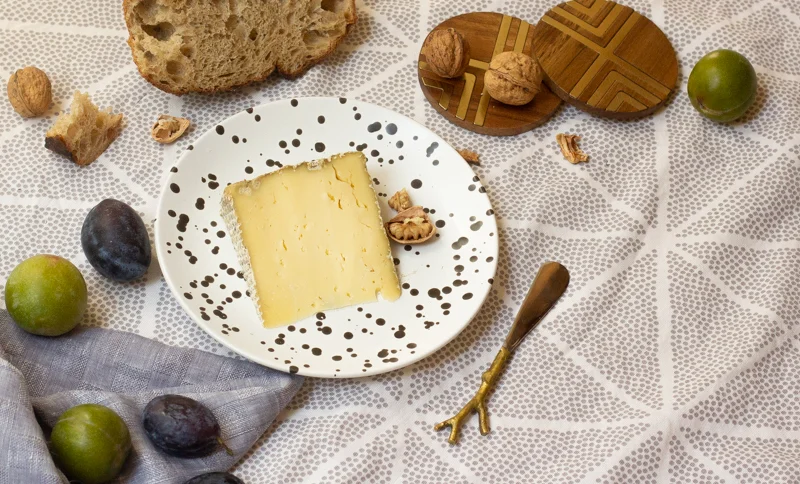
Tomme de Savoie. Thomasville Tomme (pictured here). Point Reyes Toma. Tomme Crayeuse. Cumberland Tomme. Square Tomme. If you’ve ever looked at a wheel wondered “how do I know if this is a tomme or toma just… cheese?” you are not alone.
Is it where it’s made? It’s family background? Who it hangs out with? Sometimes! Here are four things to ask yourself about that wedge in front of you to know if you should address it with a French or Italian accent.
If your cheese is one of these 4 things, there’s a good chance it’s a tomme or toma.

1. It is from the French, Swiss, or Italian mountains
(EU passport pending)
1. Your cheese could be a tomme or toma if is from from the French, Swiss or Italian mountains but is not as big as an Alpine cheese like Gruyere or Raclette, Appenzeller, or Bitto.
Tommes or tomas (French or Swiss vs Italian) are made in mountain regions just like their bigger sisters, but tend to be smaller. Think 5-11 pounds versus 60-80 pounds (!). European dairy farmers generally send their milk to the village cheesemaker to craft into wheels like Gruyere or Comté, but traditionally they make tommes themselves. Tommes started off being the little cheeses farmers made for their families, then they started selling them because they were so delicious! 🙏.
Automatic tomme status also applies if it is a cheese that is made in the style of the European mountains, like Thomasville Tomme featured above.
2. It tastes sweet and buttery and has a pleasantly musty flavor like a wild mushroom just picked off the forest floor, or a touch of washed-rind funk.
Tommes and tomas are inherently lovable and subtle with an earthy underbite. A bite of Savoie, Crayeuse, or Cumberland reveals notes of sweet creme fraiche, cultured butter, and deepens into flavors of sautéed morels and melted butter. When the cheese has matured a couple months longer you can pick up earthier spices.

3. It has a natural rind.
(it hangs out in your grandmother’s attic)
3. It is semi-firm and has a mottled, natural, dusty looking rind.
Most tommes have rinds that look like they’ve been stuffed into an attic than forgotten about for a couple years. Powdery and dusty or rippled and moldy, their rinds have been unadulterated and left to take on the molds and character of whatever cave they’ve been aged in. Some say that’s why they take on a deeper wild mushroomy taste. Typically most tommes haven’t been rubbed with booze as they’ve aged like Époisses, wrapped in cloth like farmhouse cheddars, or doused with wax like goudas.
4. If the cheese is labeled as a tomme or toma.
You knew this, right? Okay, fair enough! But it brings me to the point that the label tomme or toma is actually more of a mindset. All of the aforementioned 3 questions are good things to refer to, but being a tomme is a choice. Tomme can be a style of cheese, a cheese that tastes a certain way, a cheese that is small and rustic, or, as Point Reyes says, a cheese that “made by a farmer.” If the answers to 1, 2, and 3, are yes, you definitely have a tomme. But here in cheese land, we honor what the cheesemaker intended. If a cheese is just 2 or 3, we’ll call it a tomme or toma and eat it just the same!
If you haven’t tried the tommes listed in this post, do! They’re delicious! Pair with a rich white wine or mountain white, rosé, or a Beaujoulais, Alto Adige red, or Pinot.

Think you're rocking Feta & Watermelon Salad right? Try Turkish Raki.
Trust me, your feta and watermelon game could be stronger. Meet raki.
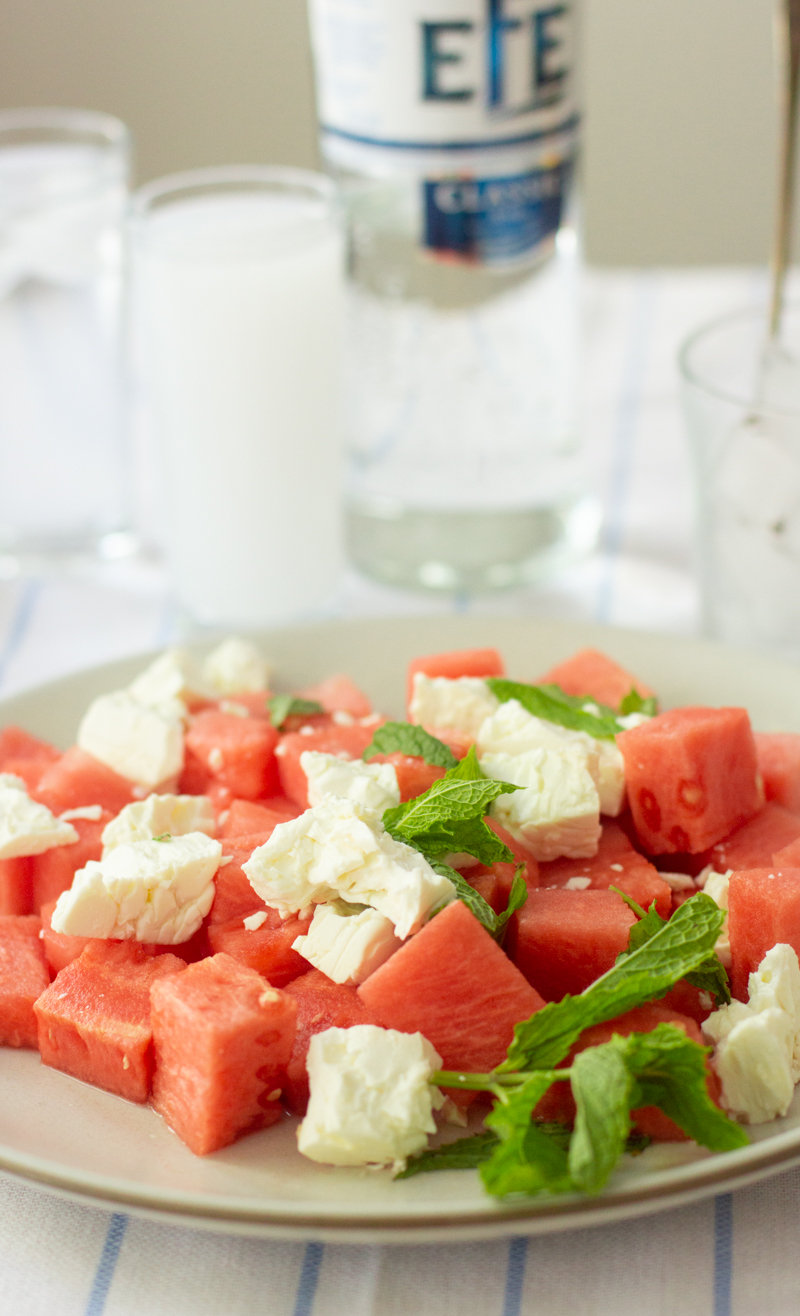
For years I thought I was serving the perfect feta and watermelon salad. Cubed melon and feta. Chiffonade of mint or basil. Salt and pepper. Maybe a few oil-cured olives if I was feeling fancy. Then I tried feta and watermelon salad with raki and realized that I was doing it all wrong.
The night I met Raki.
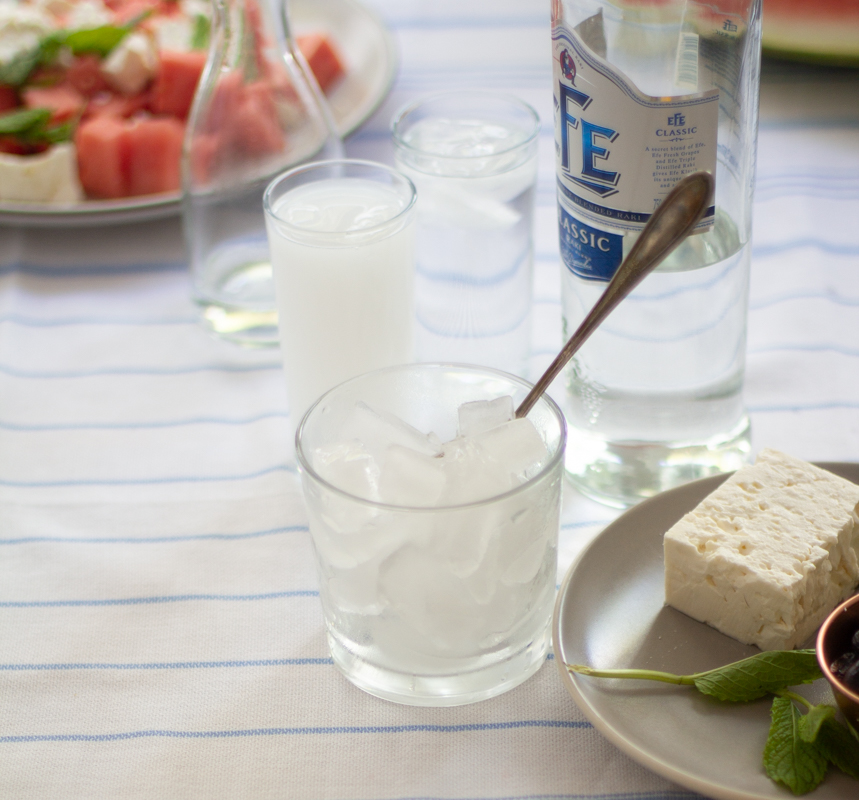
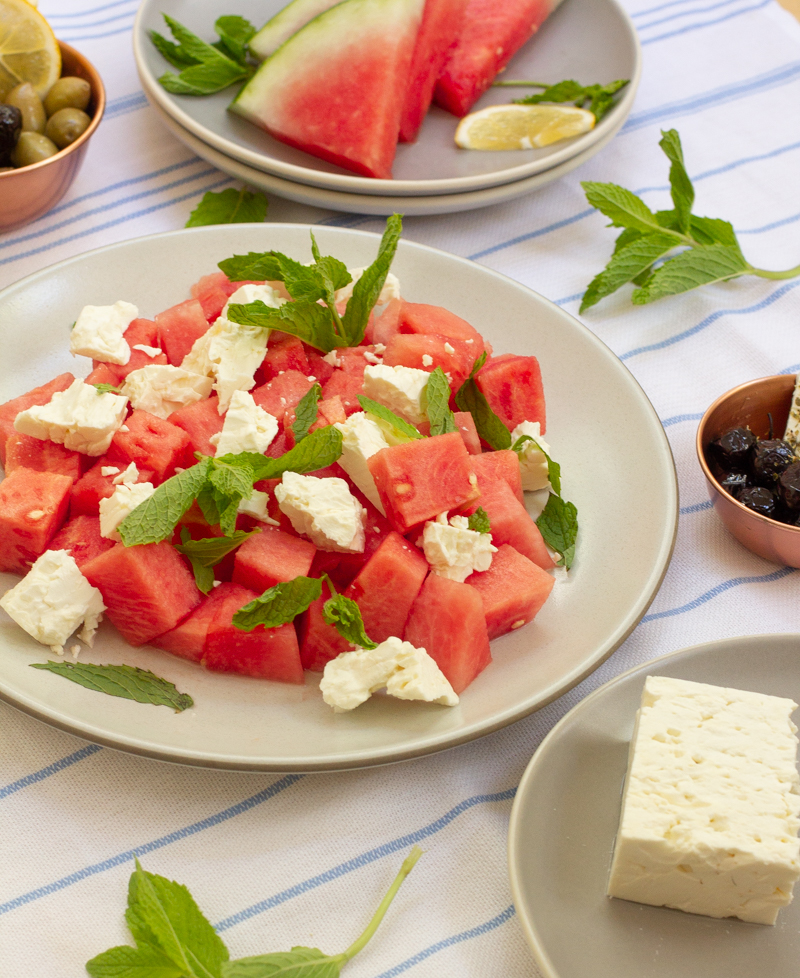
The first summer night my then-boyfriend-now-husband and I hung out together he took me to the roof of his San Francisco apartment with a whole watermelon, feta, and raki. As we waited for the city lights to appear and I wondered where all the herbs and spices were that I normally used for the salad, Berk prepared the raki set-up. This, he told me, was the national Turkish drink. His parents in Turkey drank it nearly every night.
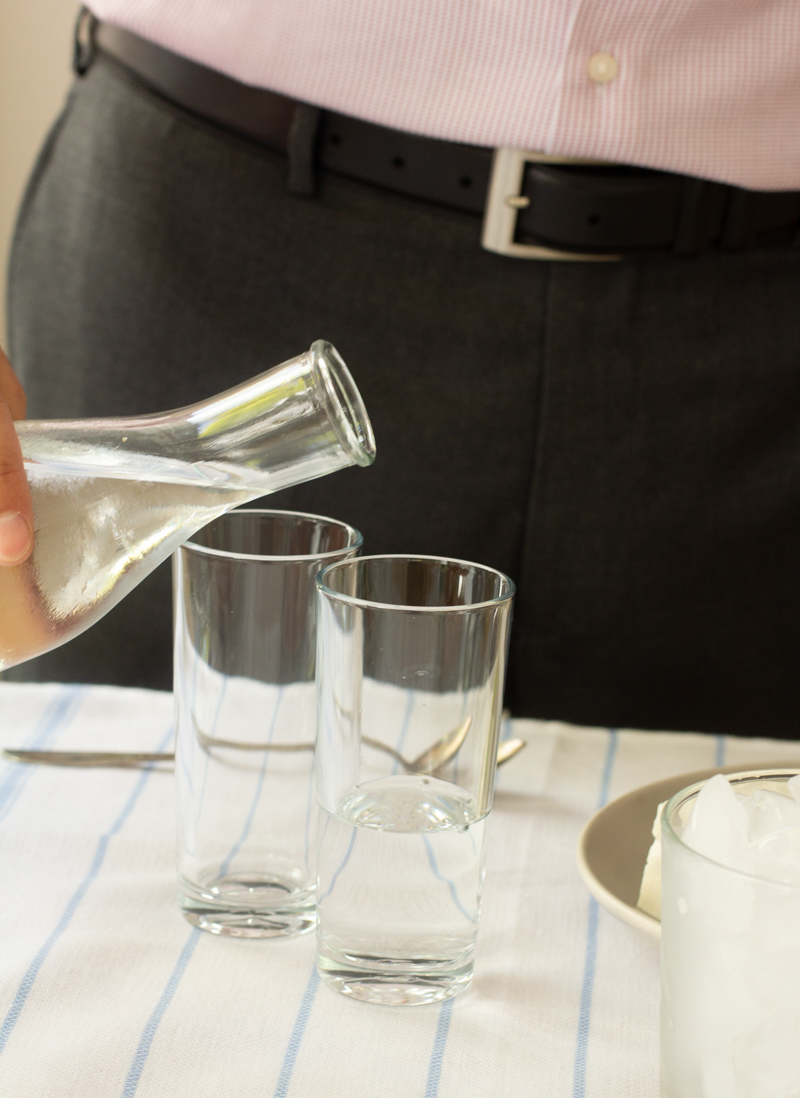
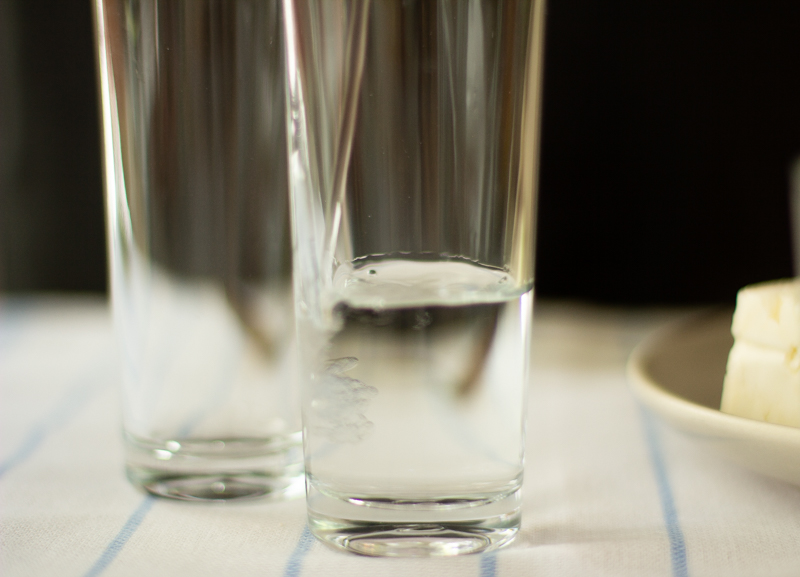
After placing two slim glasses in front of each of us, he filled the first one with ice water, then the second a-third full with raki. Matching the amount of raki, Berk then poured iced water into the raki glass. With just a splash of water the raki became milky and cloudy and released notes of fresh fennel.
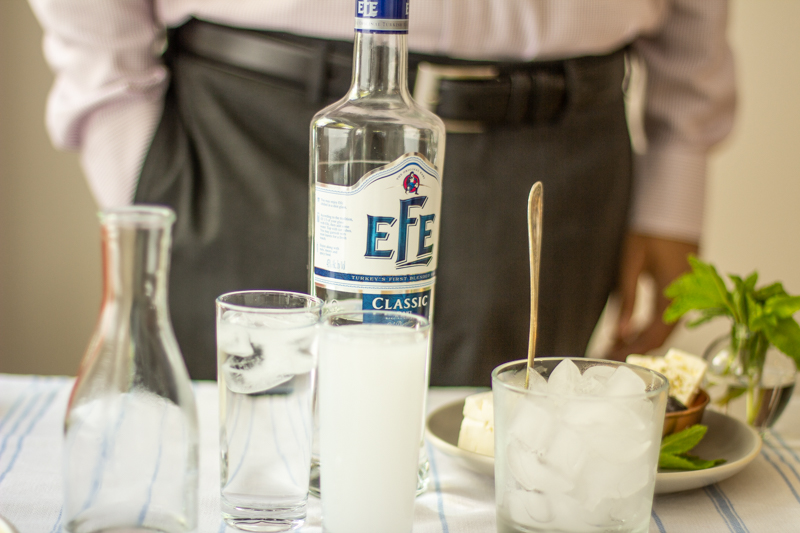
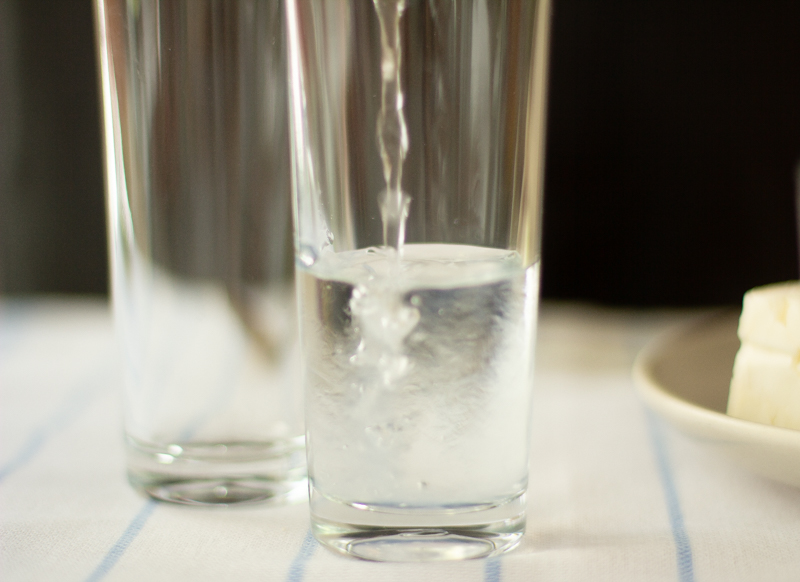
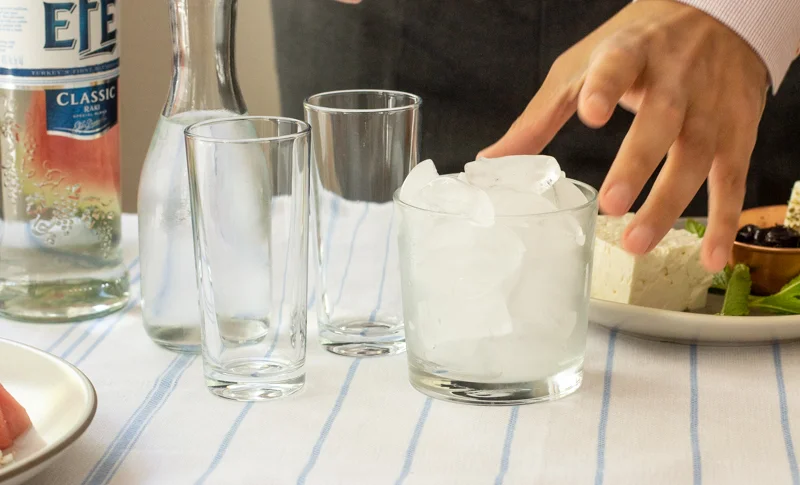
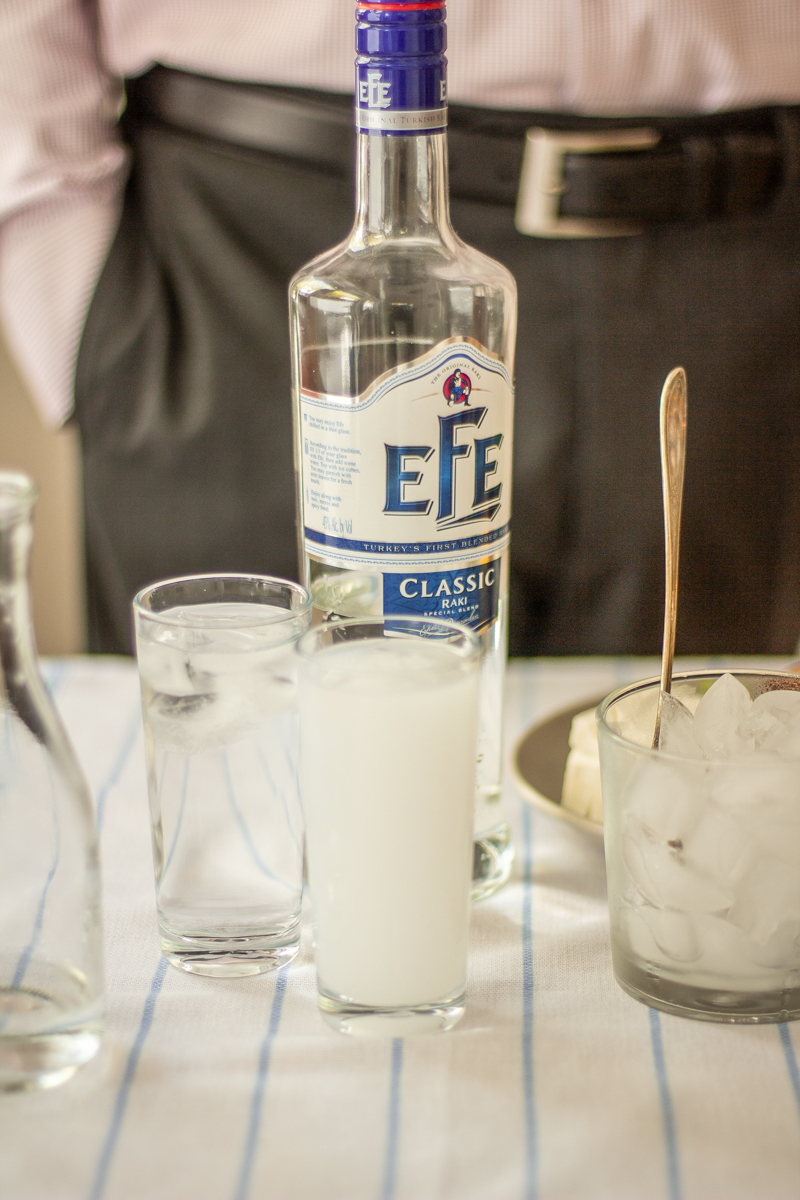
Like the anise candy I was raised eating as a child, but with booze, raki is like pastis but slightly less herbal, like ouzo but not as sweet, and the candy and fennel seed mix you toss on your tongue to freshen your breathe at the door leaving an Indian restaurant. It is also STRONG (40-50% proof).
Next Berk handed me the sliced watermelon he covered with feta cubes and told me to place it on my tongue, then take a sip of raki. Within an instant I realized that, sure, raki was the national drink of Turkey, but it also clearly served a higher purpose.
One bite knocked caprese salad and prosecco out of the park. The ripe and crunchy watermelon sweetened the briney, lightly tart and fatty feta and the fennel-like raki offered a spark to the combo like a mint or basil. The alcohol cut and highlighted cheese’s richness at the same time. Skills.
A classic combo in Turkish summer houses, feta (beyaz peynir) and watermelon is served during the mezze hour before the main meal (feta is actually called “white cheese” in Turkey because of EU rules revolving Greece’s ownership claim to the cheese). The combo is almost always accompanied by bread (unless it is the rare occasion that raki is served before 5pm) and olives. Watermelon is often bought off street purveyors shouting “karpuz,” “ karpuz.” And raki? Well raki can be bought almost everywhere, and it never served without food.
raki serving & pairing notes:
If like me, you’re a lover of melon and cheese and anise or fennel, you’ll adore this combo. If you’re a little squeamish about licorice flavors, you might not. But try it anyway.
Raki is STRONG. When first trying it, start with 1.5 oz (a little less than the standard pour in Turkey). Then match it to equal amounts of iced water, as raki is traditionally served in Turkey.
Berk didn’t even salt or pepper our watermelon salad, he just served it crudo, but we’ve played around and both love the addition or fresh mint or basil.
Feta & Watermelon Salad with Raki
Salad:
1 watermelon, about 2 pounds
ounces feta
Cube the watermelon flesh. Lightly chunk, not crumble, the feta (if you crumble the feta it won’t keep its briny flavor or rich texture). Right before serving, place the watermelon on a large plate or bowl in a thick layer. Sprinkle the feta, then mint over the fruit. Serve with raki.
Raki:
1.5 ounces raki
A glass of iced water
Prepare one raki glass with 1.5 ounces raki. Fill the other glass with iced water.
When ready to drink, fill the raki glass with an equal amount of water to raki ratio, making sure to keep the ice in the glass. The raki will become cloudy. This is good. Enjoy with watermelon and feta.
Pair this salad with raki, a summer night, an Aegean sea or two, and friends or family.
Your BLT wants a funky cheese in its life 🍅
From now on, it’s bacon, lettuce, tomatoes, and washed rind cheese.
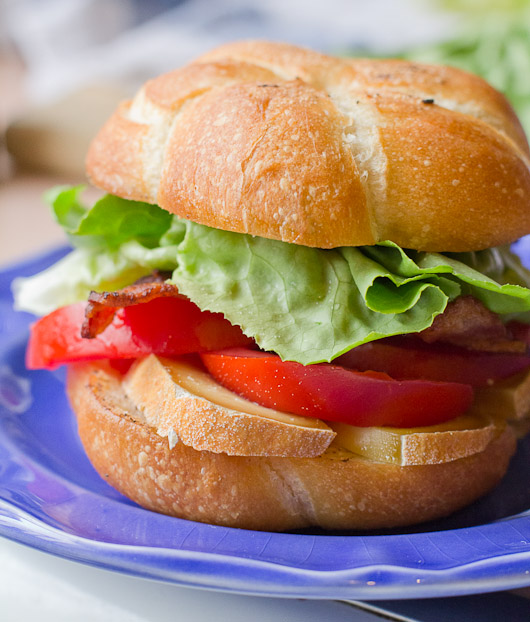
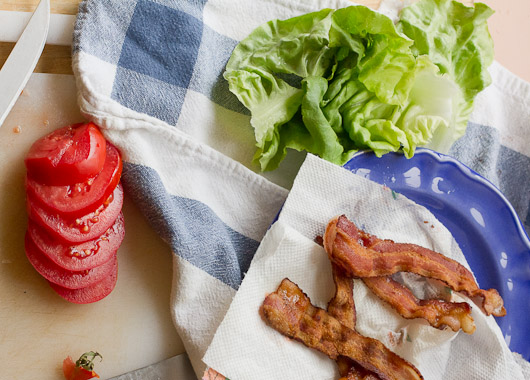
Bacon, lettuce, tomato, and, cheese.
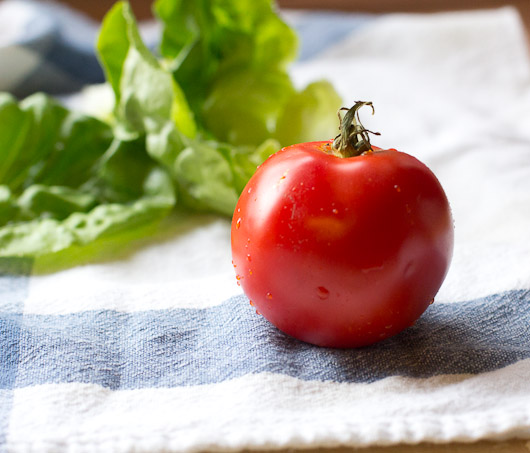
As summer approached this year I had a serious sit-down discussion with myself. It's tomato season. Meaning it is BLT season. Meaning it is the time of year that we stuff some of the best tasting foods ever between 2 slices of bread. So I asked myself... What have we been doing?
Why have we been leaving 🧀 out of it?
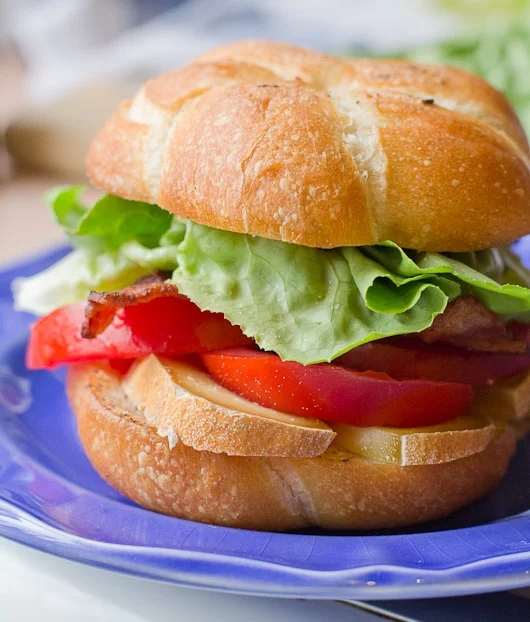
This year, let’s treat our BLTs right. Avocados, go find yourself some toast to be squished on. This year we’re adding funky, bacony, custardy cheeses like Meadow Creek Grayson, Tallegio, Époisses, or Red Hawk between to our BLTs. Offering meaty richness with a splash of earthiness to the sweetness of tomato and bacon, washed rinds transform this already fantastic treat into the season’s best sandwich.
Read more about washed rinds here.
Enjoy your sandwich!
BLTCs
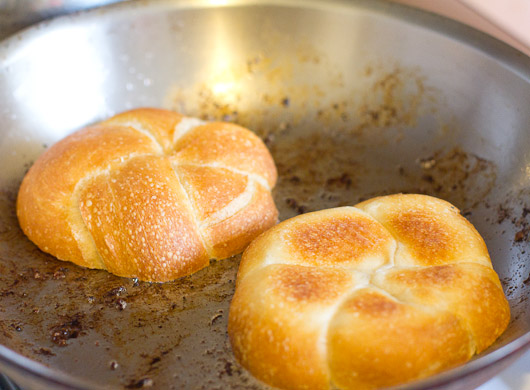
Here I used a french roll, but a country sourdough would go very well too. The recipe calls for "green lettuce," meaning I've used anything from butter lettuce and red romaine to arugula and have been happy with every outcome. Though traditional for lunch, this BLT is one of my favorite breakfast dishes in late summer and early fall. Eat whenever possible.
Serves one
3 pieces bacon
2 leaves green lettuce, cleaned
1 small tomato
1/4 teaspoon salt
freshly ground pepper
1 roll
2 ounces washed-rind cheese
1 teaspoon dijion mustard
Place your bacon slices in a heavy-bottomed sauté pan. Bring to medium heat. Flip after five minutes. After 10-15 minutes or until the bacon looks brown and crispy, remove the bacon from the pan and rest on a plate covered with a paper towel. Pour all but a tablespoon of the bacon fat from the pan into a ramekin or jar to save for later use.
Cut the tomato into one-third to quarter-inch slices with a sharp knife. Sprinkle with the salt and freshly ground pepper to taste.
Slice the roll in half. Bring the bacon pan to medium heat. Lightly toast the inside part of each bun in the pan. Flip over the buns. Layer the cheese on the toasted side of the bottom bun. Cook for two more minutes, using your spatula to press the Grayson into the bread. Remove.
Spread the dijon inside of the top bun. Top the Grayson bun with the tomatoes, then the bacon, then the lettuce. Cover with the dijion bun. Eat.
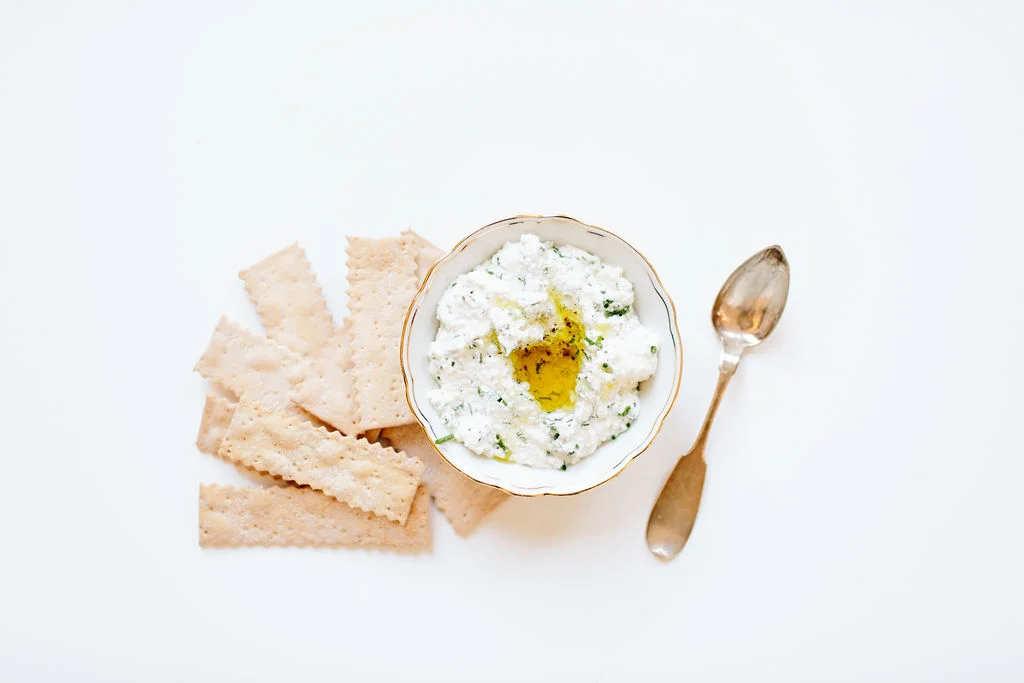
Summer is When Fromage Blanc Parties Don't Stop
Like inflatable swans in celebrity pool photos, blush wine, and grilled corn drizzled with lime, homemade fromage blanc is made for summer.
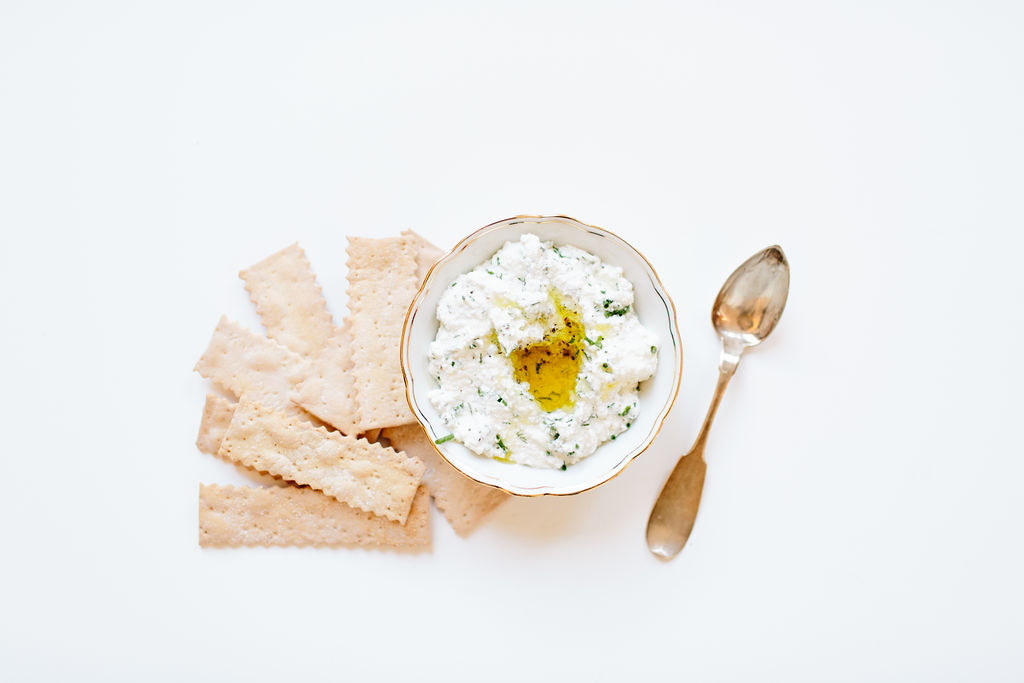
Photos by Erica Garlieb
Like inflatable swans in celebrity pool photos, blush wine, and grilled corn drizzled with lime, fromage blanc is made for summer. It's simple and quick to spruce up for parties if store-bought, easy to make at home even on warm days, and always, always impressive (but I promise to keep how easy it is to make secret if you do). It is also delicious.
A few months ago a good friend of mine, macaron master, and cooking teacher Lindsay of Food La La asked me to share 3 of my most delicious cheese tips with her readers. My first tip was that a fromage blanc party doesn't stop. Perfect for summer, the only heat that’s involved in making this cheese is warming the milk to 86 degrees. If you feel like making it from scratch. See below. You don’t have to!
Here are 2 easy-peasy recipes for party-friendly fromage blanc on a hot summer’s day. No cooking required. Store bought cheese welcome! If you’re feeling like making your own fromage blanc from scratch, scroll down for a simple recipe.
Thanks for featuring me, Lindsay!
HERBED & CARDAMOM HONEY FROMAGE BLANCS

These two party tricks are the easiest ways to serve fromage blanc, ever. Serve the savory version as an appetizer before dinner or passed during brunch alongside crostini or crusty bread. The sweet version is perfect served for dessert with a side of a crisp cookie like shortbread, or gingersnaps (serve this with a light desert wine and you’ll be everyone’s best friend).
Herbed Fromage Blanc
1 cup fromage blanc
1/8 teaspoon salt
1/8 teaspoon freshly ground pepper
1 tablespoons fresh dill, chopped
1 tablespoons fresh chives, chopped
1 1/2 teaspoon extra virgin olive oil
Steps:
Once drained and salted, add one cup fromage blanc to a small mixing bowl. Add the salt, black pepper, and fresh herbs. Gently stir the mixture with a wooden spoon until the fromage blanc is evenly flecked with herbs.
Spoon into a cute container, drizzle with the olive oil, and set out with crostini or crusty bread.
Cardamom & honey fromage blanc
1 cup fromage blanc
2 tablespoons honey
1/8 teaspoon cardamon
1/8 tsp cinnamon
Steps:
In a small mixing bowl, combine the honey, cardamom and honey. Gently stir with a wooden spoon until everything is evenly incorporated, then taste the cheese. Is it sweet enough for you? If not, add some extra honey a teaspoon at a time until the flavor suits you.
Spoon the fromage black into a cute container and set out with shortbread cookies or gingersnaps.

DYI Fromage Blanc
Ingredients:
1 gallon low fat or whole milk *
2 tablespoons cultured buttermilk
2 drops calcium chloride
2 drops rennet
2 teaspoons salt
Note: Kirstin recommends this source for some of these specialty ingredients!
Steps:
Pour milk into a thick-bottomed, stainless steel or enamel pot. While stirring over medium heat with a spatula, bring milk to 86 degrees F. Once at 86, remove pot from heat.
While stirring gently for 20 seconds, add the buttermilk to the pot. Repeat with the calcium chloride. Move the pot to a draft and agitation-free location between 60 and 80 degrees (wrap a bath towel around the pot to keep the milk warm if necessary) where the pot can remain untouched for up to 24 hours. Move the milk before adding rennet or the curd may not set properly.
Add the rennet to the pot. Stirring gently only to combine, stir slowly for 15 seconds in one direction, then reverse the motion for 1 to 2 seconds just to stop the motion of the milk.
Cover the pot and leave it in your safe place for 12-24 hours. After 12-18 hours, the milk will smell and look like yogurt—if it doesn’t, let it sit for a couple more hours. The warmer the room and the longer the milk sits, the more acidic it becomes, so let the curd sit longer if you like a super-lemony fromage blanc!
Once yogurt-like, gently ladle the curd into a colander lined with finely textured cheese cloth (fold the cloth twice if its holes are too big). After all the curd is in the cloth, gather the corners and knot the cloth around the end of a wooden spoon to form a bag. Hang the pouch-bag from the wooden spoon over a bowl to catch the whey. Drain at room temperature for 5 hours or until desired firmness.
Once drained, transfer the fromage blanc to a large bowl. Using a wooden spoon or spatula, add the salt and gently mix the cheese to distribute moisture and homogenize the texture (add the salt even if you’re making a sweet cheese later).
Add your desired delicious seasonings as follow. Will keep refrigerated for up to 7 days
PSST! A FEW RECIPE NOTES:
*Use low-fat milk for a silkier and fluffier cheese, and whole for a richer, thicker fromage blanc. Raw, or pasteurized milk are both great for this recipe, but do not use ultra or flash-pasteurized milk (it will say on the carton)—it won’t form a curd!
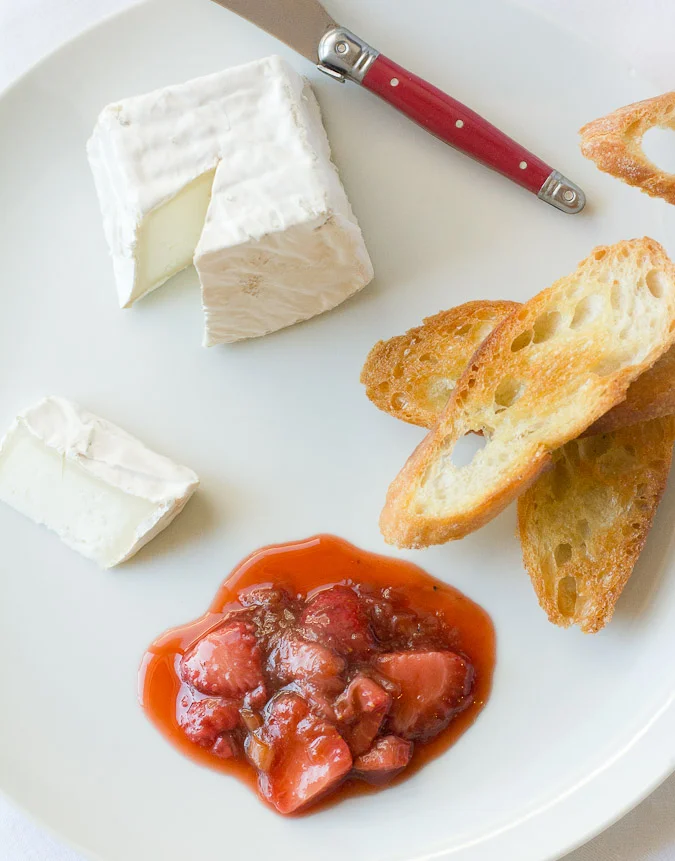
What Loves Spring Cheese? 🍓 & Rhubarb Compote.
In honor of fresh spring cheeses and the sweetest strawberries I've tasted in years…

Strawberry & Rhubarb Compote
LOVES seasonal spring cheeses
In honor of fresh spring cheeses and the sweetest strawberries I've tasted in years, I want to share one of my favorite recipes for this season’s cheese: strawberry-rhubarb compote
To learn more about what spring cheese is, read here.
I adore the combo of strawberries and rhubarb. And I love pie. Though I see which dessert direction someone else might have gone with this, because I am worse at making pie dough than I am at doing pull-ups and I love cheese, I created a strawberry-rhubarb compote that pairs excellently with this season's tastiest dairy! Win-win?
YESSS!!
The compote is dessert-like, but has enough freshness that you could spoon it over your oatmeal in the morning and feel like you were getting a full serving of fruit. If you need to feel that way. It plays well with cheese because its sweet-tartness highlights the rich butterfat and fresh flavors of younger spring cheeses. The recipe follows, and HAPPY SPRING!


Strawberry Rhubarb Compote
1/2 pound rhubarb, sliced 1/2-inch thick
1/4 cup plus 1 tablespoon white sugar
1 tablespoon honey
1/8 tablespoon freshly ground pepper
3 tablespoons balsamic vinegar
2 cups strawberries, sliced 1/4 inch thick
Stirring with a wooden spoon in a medium saucepan, bring the rhubarb, sugar, pepper, honey, and balsamic to a boil over high heat. Once bubbly, reduce heat to medium-low and cover, leaving the lid slightly ajar so steam can escape. Cook for 7 to 10 minutes, or until half of the rhubarb in the pan has become soft and dissolved. Stir occasionally.
After the rhubarb has softened, add the strawberries. Cook for 10 to 15 minutes more, or until the strawberries are tender. Cool, then serve with your favorite spring cheese!

3 Reasons Why Pairing 🍺 with 🧀 is Easier than Wine

Beer and Cheese Pairing = ❤️
After years of teaching wine and cheese pairing classes I've noticed one thing from some students when I talk of the glories of beer and cheese pairing: surprise.
See that look on my face above while I drink (tinted) beer in a German beer garden? Yes. I ate some cheese right before that. This is what beer and cheese taste like together! Glorious.
If you are someone that has always assumed that there's no way anything can snuggle up to cheese quite like wine, maybe it is time for you to take a trip to the sudsy side.
Like Bettie White and comedy, beer and cheese are the perfect pairing.
If you're in the bay area, join me at my March 14th Suds & Curds: Beer & Cheese Pairing 101class at 18 Reasons. If you're further out or, just want to know why beer and cheese rock together before pairing it with me, check out my ode to beer and cheese, below.


An Ode to Beer & Cheese Pairing
3 Reasons why the lovers are meant to be
The suds. That's right. The carbonation.If you've ever heard me talk about how glorious sparkling wine and cheese are together, this may sound familiar. Carbonation takes cheese to a happy place. The bubbles cut through the fat and both balance out and highlight a cheese's richness. And beer, bless its heart, it always is carbonated.
Sometiiiiiimes beer is more consistent than wine = easier to pair.Wine has vintages that taste different based on the weather and farming, right? Well, unless it's a superstar beer unicorn, beer does not. Unlike winemakers who know they're at the whims of the harvest that year, brewers pride themselves on a consistent product. This makes it easier to know that a nut brown amber beer from your favorite brewer will nearly always taste the same-therefore it will always go with your cheesemonger's artisan manchego. Thank you, brewers.
Grains + cheese already like each other. Take the grain that was to become bread, add more yeast, ferment it, add some bubbles, and you've just amped up one of the first pairings we fell in love with in childhood. We're already fans!
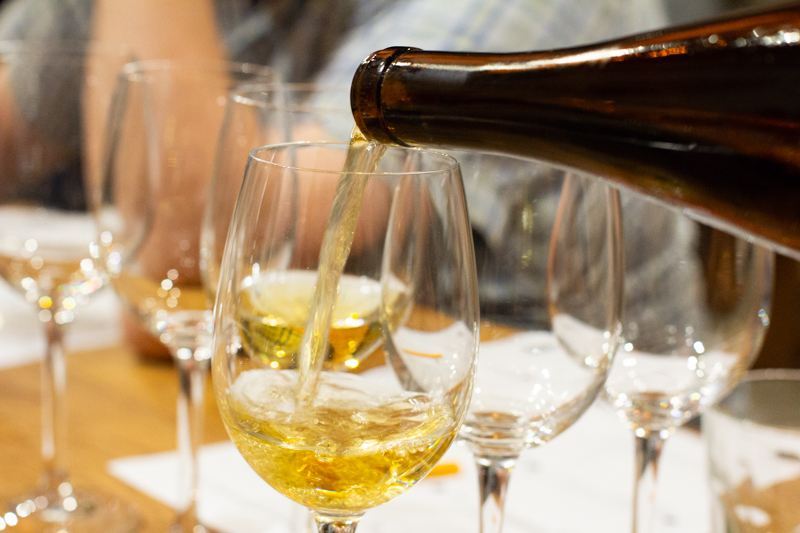
3 Stellar Cheese & Cider Pairings with Oakland's Redfield Cider

My good friends Olivia Maki and Mike Reis just opened a cider bar and bottle shop this weekend in Rockridge Oakland! In honor of their cider love (and ordinary love, too, these guys are married!), I'm sharing this interview with the duo. In it you'll not only discover what cool cider nerds they are, you'll also learn about their top 3 cheese and cider pairing.
Redfield Cider, I can't wait to visit!
Yours is a love story as much as it is a cider story. I was actually at one of the first nights you guys started hanging out- Olivia, you were managing a farmhouse beer and farmstead cheese class Nicole Erny and I were teaching, and Mike came to the class. I think he was late. Which, now that I think about it, was pretty smooth so he could offer to stay later to hang out and "help you clean up." Niiiice, Mike. When did your love story become a cider story?


Olivia:It's true! You were there at the very beginning of our love story – a story that started around a love of food and drink and continues in a similar thread to this day. Mike really introduced me to cider – I can’t remember ever drinking it in college or when I first moved the Bay Area. I liked cider immediately and we then began making our own cider at home and doing some urban gleaning around Oakland and Berkeley. It pretty quickly became an obsession.
Mike:I first began thinking about cider seriously when I was working at Monk’s Kettle in San Francisco and did a tasting with Scott and Ellen from Tilted Shed up in Sebastopol. Their ciders were truly an “aha” moment for me. I began to understand the depth and range that cider can offer when it’s made with care, time, and quality ingredients. It seemed like a natural extension of Liv and my (already food and drink filled) lives together to learn about, drink, and make cider together.
Why is now the perfect time to open a cider bottle shop and tasting bar?
Olivia:For starters, there is crazy growth in the cider industry right now between sales, new cideries opening, and general interest in the beverage.
Mike:And it is crazy to us that the Bay Area doesn’t have an established “cider scene.” Seattle, Chicago, New York and Portland all seem to be a bit more developed, cider-wise, and we live in a place that prides itself on its food and beverage scene. We’re opening the bar and shop that we’ve been wanting to go to for years.
Why do you think beer and wine are the first things that most people think of when they hear "cheese pairing?" History? Culture? Habit? Why should this be different?
Olivia:That’s a really good question. Cider and cheese can be such an incredible pairing but even for me that’s not necessarily what pops into my head first either. I think it could boil down to culture and habit – beer and wine are what usually get all the attention. Especially wine and cheese. I remember doing beer and cheese classes with you at 18 Reasons a few years ago and there was even some explanation around how unusual that might be--cider is even more obscure than that.

What have you learned about cheese and cider pairings over the years that you think we should know too? Any surprises?
Mike: Cider is so incredibly versatile and can hang with a wide range of cheeses. I think Perries [pear cider] in general pair well with cheese – they have a naturally occurring sugar in them called sorbitol that doesn’t fully ferment out and a little sweetness can be nice to play with.
Olivia: Beyond that – English cider is really fun to pair with cheese. Traditional English cider is typically made using a native-yeast fermentation, so you can get some earthy, barnyardy flavors that sing next to cheese.
Olivia, and Mike, answer the below question separately. No cheating! What are each of your top 3 cheese and cider pairings (and will any of your cider picks be on your shelves when you open?). Your faves can overlap, but only if on accident!
Olivia:Dragon’s Head Perry with Mt Tam blending together bright and fruity with creamy; Dunkerton’s Black Fox with Tarentaise or an English Cheddar; Eden Heirloom Blend Ice Cider with anything… but if I really had to choose something like Willoughby would be jamming.
Mike:Eden’s Ice Ciders are crazy good with a powerful blue cheese like Stilton. The sweetness plays off some of the caramelly aged character of the cheese and helps temper some of the blue cheese funk. You can also find some great pairings by looking at what cheeses they eat in the world’s great cider cultures. Camembert and Normandy Poiré (pear-based cider) is a layup, and Basque Idiazabal sheep’s milk cheese tastes great alongside a pour of funky sagardoa.
Olivia- you are a farmer at heart. You even volunteered on a Vermont farm next to Jasper Hill Creamery a few years ago (which Mike joined you on briefly). How does this affect your take on cider? And... what was it like working next to Jasper Hill?
Olivia:Total farmer at heart. One of these days I hope to get back to it! To me, cider is an agricultural product and I get so excited about cidermakers that focus on fruit characteristics and terroir. I also get inspired by cidermakers who are also farmers and are thinking about soil health, responsible water usage, minimizing inputs and spraying, and planning ahead for climate change. Working next to Jasper Hill when I was in Vermont was really just a treat. I got to know a few folks who worked there and immediately felt a friendship with their crew. I have so much respect for what they are doing and their cheeses are some of my absolute favorites.
What are 3 things you wish everyone knew about cider but didn't? And could we have learned this on your cider podcast?
Olivia:For me, it is some basic things like the fact that cider is not a subset of beer and that you don’t “brew” it. Cider is pressed and fermented similar to wine.
Mike:For me, I think it would also be teaching cider drinkers how to find the best cider they can. That’s a question that we get asked A LOT and that we did answer in an episode of our podcast. It would take a while to explain so you might just have to go and give it a listen.
Where are you located?!
Olivia: We just opened last weekend! Come visit us at 5815 College Avenue in Rockridge!