
The Cheese Blog
Easy peasy Comté panzanella salad summer recipe

The perfect summer salad
As you probably know if you’re a frequent reader of my blog, I have a little thing for Comté. Some might call it a slight infatuation. I’ve visited its makers in Jura twice, count Comté & Jura’s Vin Jaune my favorite wine pairing (I know, I know, please don’t tell the others), and have written about the Alpine cheese multiple times.
So when the Comté marketing team asked if I’d create a seasonal recipe for them, I said yes. Quickly. Then added a pound or two of the cheese to my next grocery delivery and got inspired.
Below is my first of 2 Comté recipes. Honoring what we all need in our lives right now—simplicity—it’s super easy to make, and revolves completely around what’s in the market, now. I hope you enjoy it, and expect another one starring figs come fall!
Comté panzanella salad recipe
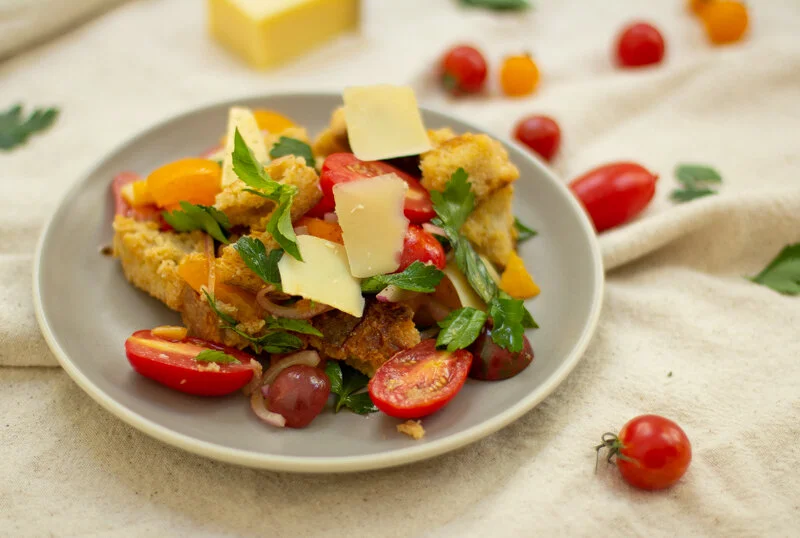
Transforming stale bread and ripe tomatoes into a salad that’s as easy to make as it is delicious, panzanella is top on my list of summer dishes. This one is a little different though. Instead of using a fresh Italian cheese like mozzarella, the recipe calls for Comté. When you toss thin slices of the cheese in at the very end, the Comté’s sweet, buttery, nutty notes contrast with the salad’s lively vinaigrette, spicy red onions, and fresh herbs. Make half of this recipe for a refreshing lunch for two, or divide onto four plates for a side dish.
6 ounces stale, rustic bread like a rustic baguette, porridge loaf, or walnut-wheat
1 clove garlic, peeled
4 1/2 tablespoon extra virgin olive oil, divided
1/2 teaspoon kosher salt, plus more to taste
14 ounces tomatoes, mixed in color and shape
2 1/2 tablespoons red wine vinegar, balsamic or sherry also works
1/8 teaspoon freshly ground pepper
2 ounces red onion, very thinly sliced
5 ounces Comté
1/8 cup basil leaves, torn
1/8 cup parsley leaves, packed
Trim any dangerously sharp pieces of crust from your bread. Smash the garlic with the back of a chef’s knife and rub the garlic gently over your bread. Set aside the garlic for your later use. Tear the bread into roughly one-inch chunks. Add the bread, 1 tablespoon olive oil, and 1/8 teaspoon of salt to a medium-sized sauté pan (do not yet heat). Massage the oil and salt into the bread with your hands, then toast the bread over medium heat until it turns golden, around 5 to 10 minutes. Let cool.
Cut tomatoes into bite-sized pieces. In a medium-sized mixing bowl add the tomatoes, vinegar, remaining olive oil, pepper, red onion, and bread. Toss until all the bread is shiny and evenly coated in the oil mixture. Leave to sit for twenty minutes so the bread absorbs the tomato juices and olive oil. While the bread is soaking, use a vegetable peeler to shave thin slices of Comté, or thinly slice the cheese with a knife. Discard the rind.
Add the basil, parsley, and three-quarters of the cheese to the bowl. Use a spatula to gently mix everything together. Divide between plates and top with the remaining cheese.
3 tiny but Mighty California Wineries to Stock up on Now

Stereophonic and Sandar & Hem Wineries
I’m a wine nerd. So when I taste great, new, local wines by small-production winemakers, I get nerdily happy. When they’re made by people I like, that happiness level gets turned up to 11.
It’s with great pleasure today that I’d like to introduce you 3 tiny but mighty California wineries.
It’s not surprising that after managing a wine bar for 10 years that I’ve gotten to know almost as many wine folks as there are Game of Throne fans who needed alone time after the series finale. It was my job. But I never expected to know as many friends or family members who switched to winemaking as a second career and actually be good at it. Or great at it. Because, well, as many of us have learned through shelter-in-place sourdough bread-making adventures, fermentation is hard. Winemaking is even harder.
Made in Paso Robles, Santa Cruz Mountains, and El Dorado County, these small-production gems are made by two different friends and an uncle of mine. They’re wines that I would have been happy to sell in shops I managed, or pour at my cheese tastings (some, I have). Though several have already graced restaurant lists, the wineries are still so under the radar that I wanted to share them with you. You know, just in case you felt like pouring yourself something different after you’ve homeschooled your children for the day (whew), or take advantage of currently great prices.
All are made in amounts under 700 cases. One wine, only 100 cases.
2 of the wineries are so new that they didn’t even have time to have a formal opening before coronavirus hit.
And all are great expressions of what grapes should taste like in the regions in which they were grown.
Here’s a little more of an intro to each winery. I hope you enjoy the wine!
3 California Wineries
Stereophonic- Stereophonic owner Jason and I managed Solano Cellars together for 10 years. Through this time I came to appreciate Jason’s discerning palate for wine, his penchant for unusual grapes, and his love for Wu-Tang. Jason knew he wanted make wine some day but it wasn’t until after he left the shop that he and winemaker Aaron Jackson found unusual enough grapes for California that they decided to make wine together. Think Gruner Vetliner, Aglianico and Albariño- grapes that you rarely seen done well in the Golden State. Jason does them not only well, but he also makes sure to honor the Paso Robles style of letting the fruit shine. Stereophonic wines are lively, fun, have been hits at my cheese pairing classes, and have been dependable, delicious friends in my wine glass during shelter-in-place times (because we all need friends that we know will be there for us).
Sandar & Hem- Robert and I met when he was a customer at the wine shop, but it wasn’t until he started pouring me tastes of old vintages from his wine collection when I was working the cheese table at the Ridge Montebello release parties that we really got to know each other (drinking old wine together = great way to became friends). Each year at the tastings I was amazed at his life updates. Not only was he traveling to learn about wine, he interned, then worked for Rhys and Mount Eden wineries. I was impressed, and even more so when I tried his wines. They’re wines that restaurant sommeliers would love. Mainly Burgundian varietals grown in the Santa Cruz mountains, Sandar & Hem wines are made for food pairing, and amazingly well-priced.

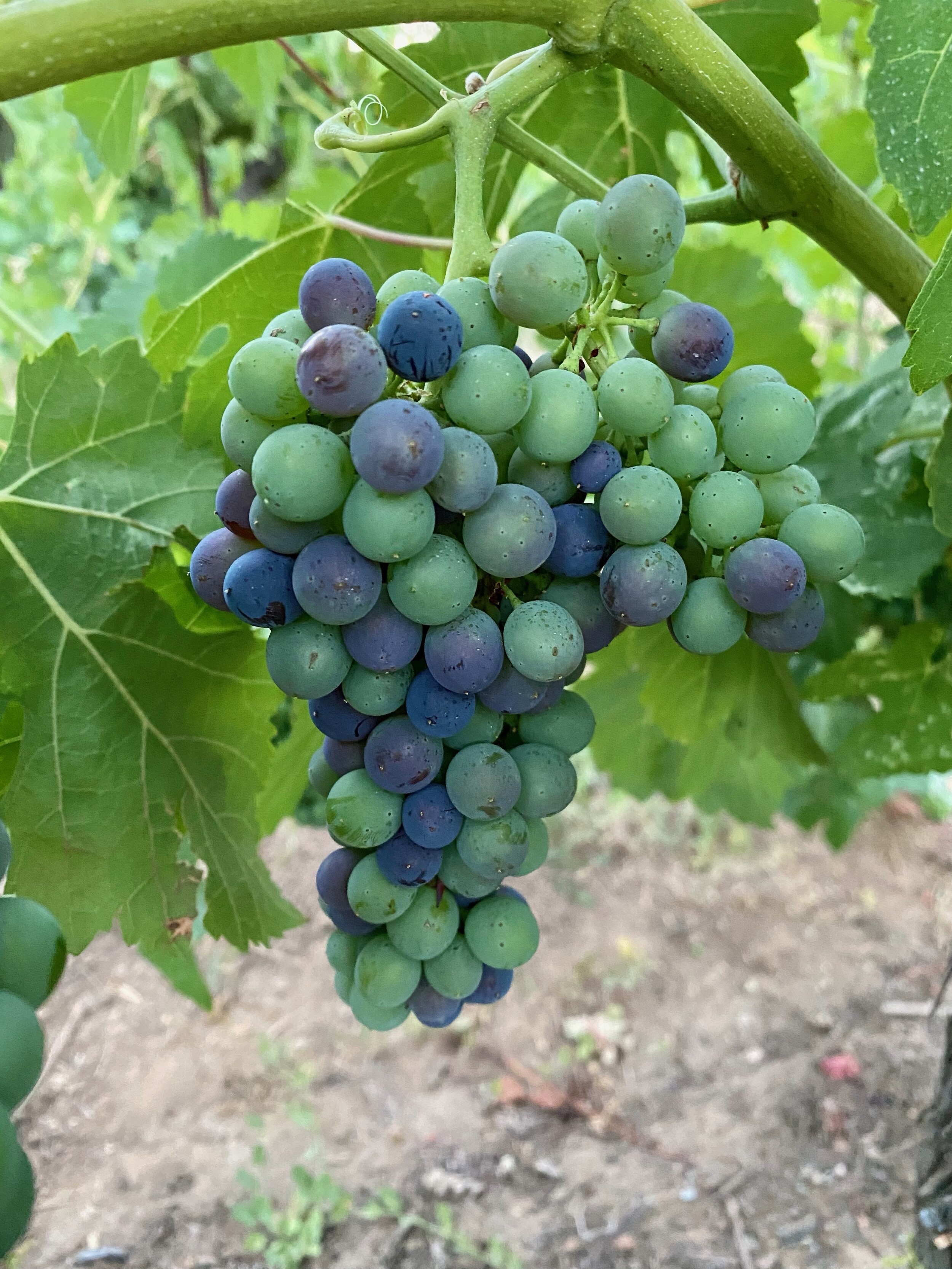
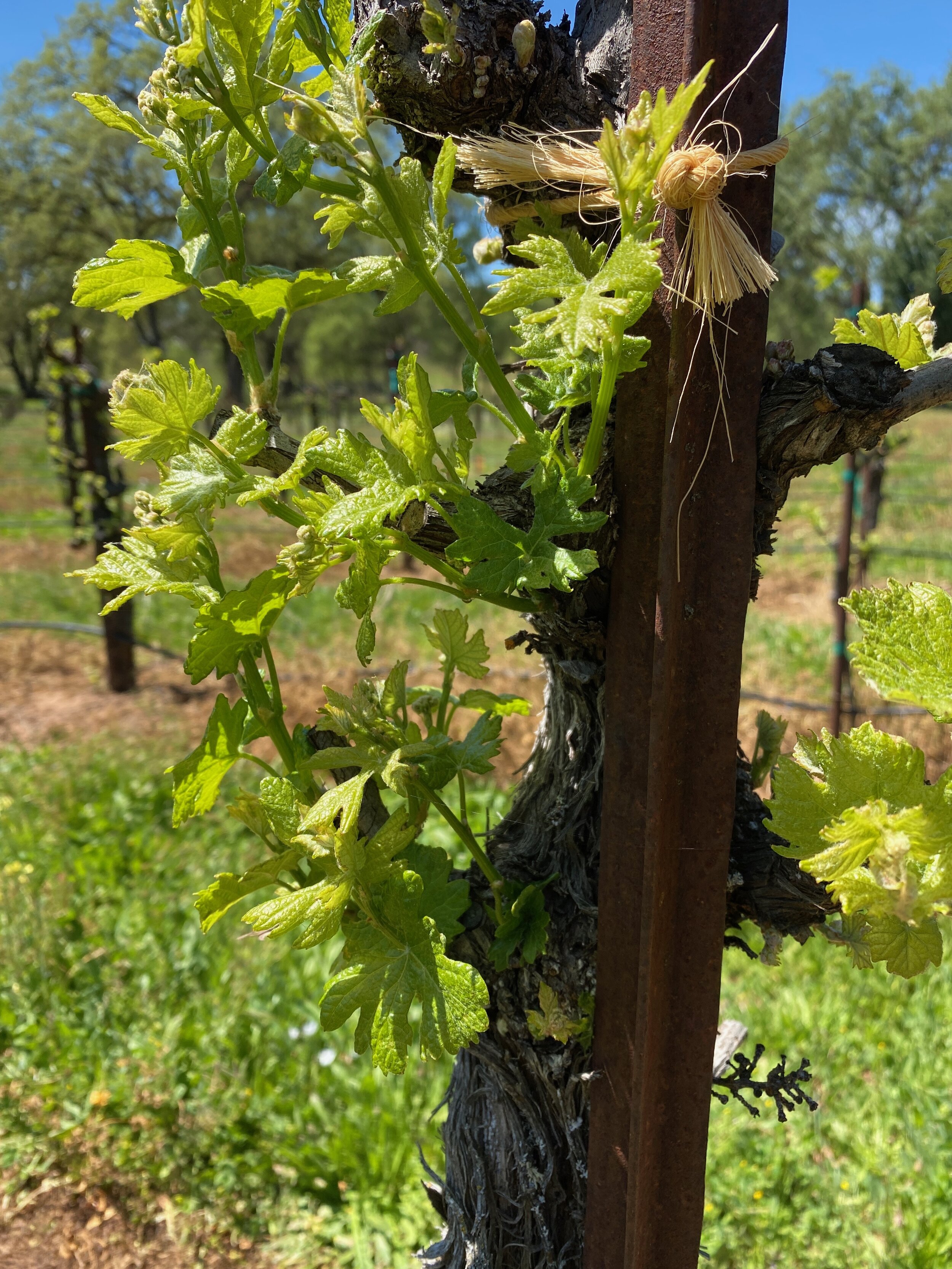
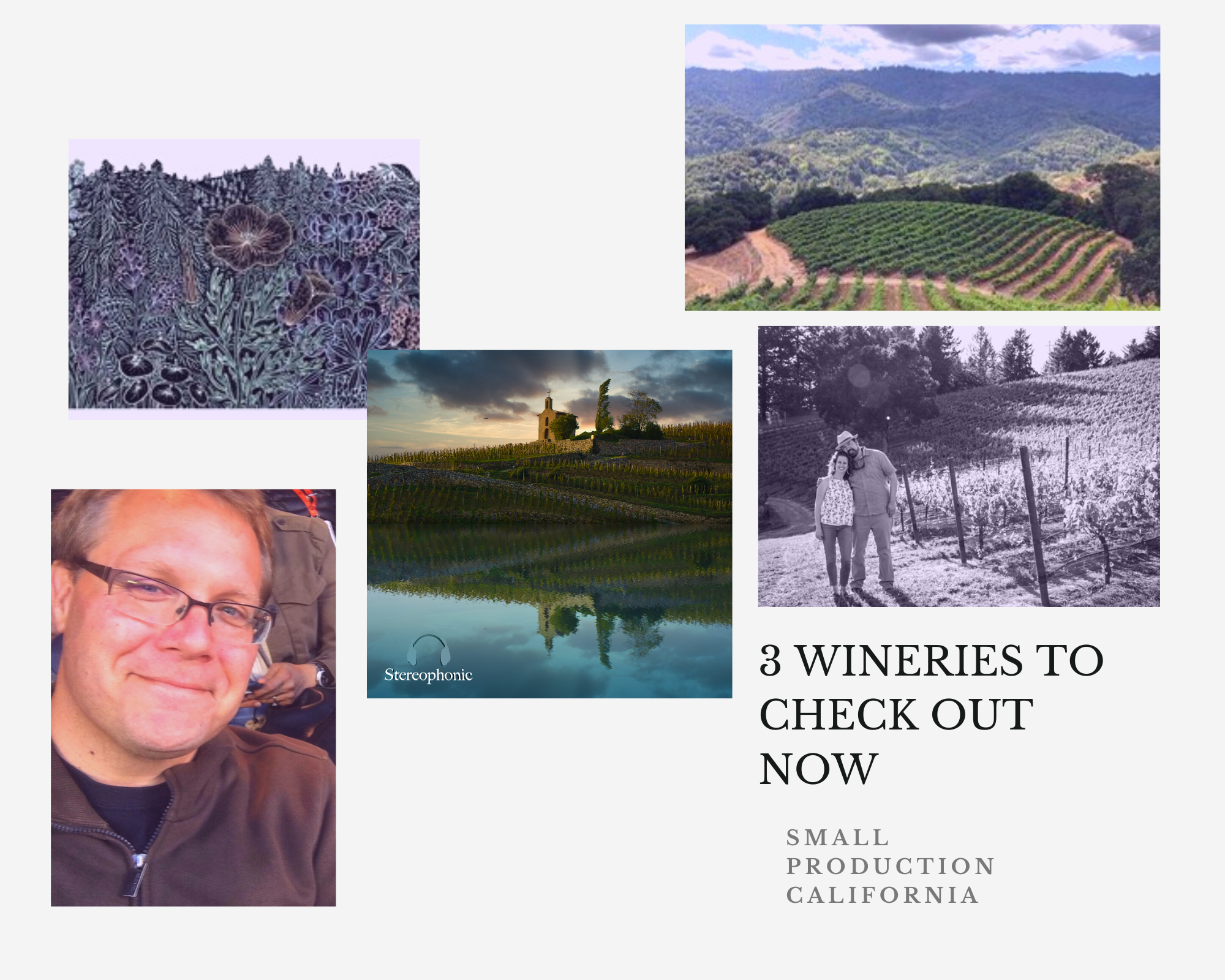
Lost Arrow Ranch- Though it probably wasn’t wise to be surprised when I tasted one of uncle Joe’s Syrahs and found it charmingly expressive of the region (grown on rocky and alluvial soils, El Dorado County is perfect for Rhone grapes), I was. He had been making wine for less than 2 years at this point! But since everything he’s done from his artwork to remodeling his own house by-hand when I was growing up has shown the touch of a thoughtful perfectionist, I later figured it made perfect sense. I was so happy for him when a couple years ago he and my aunt bought a vineyard and moved to be closer his grapes (awww), which are now in his front-yard- pictured above. His wines are soft, giving, and lovely. (Heads up- the winery is about to change names from Joseph Sogge wines to Lost Arrow Ranch, the farm’s former name, and to honor the Miwoks who were the original owners of the land). Though they could go with much fancier foods, I love them with bbq.
Cheers
Tag me on Instagram if you post about any of these wines!
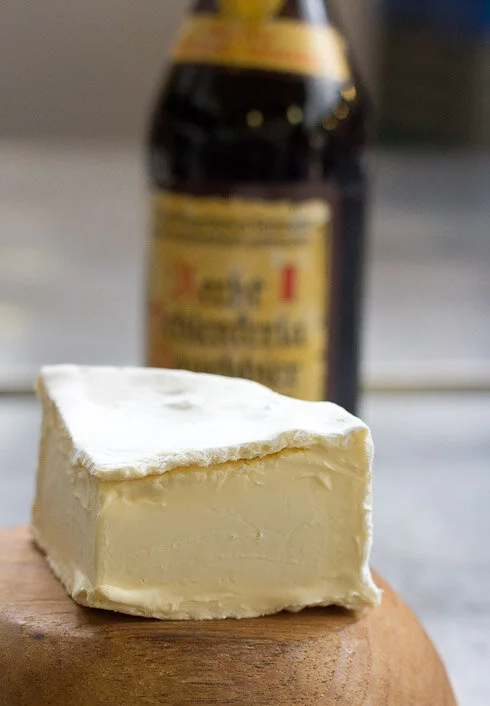
3 Rockstar Beer Styles to Pair with your Favorite Triple Creme Butterbomb

What’s the best triple creme beer pairing, you ask?
I’ve got 3.
We all know triple cremes and uber-buttery cheeses love champagne. But beer? Yes!
Beer loves a buttery cheese like Parisians love high-heels.
(btw, if anyone knows how they don’t trip on cobblestones while wearing stilettos, let me know)
One reason why buttery cheeses and beer get along so well links to why triples and sparklings do. The bubbles. Carbonation cuts through the butterfat, lightens the pairing, lifting both the cheese and beer to a balanced, happy pairing place. In fact, beer can be so good with triples that sometimes I like the duo better than cheese & wine.
Below are 3 of my favorite triple creme beer pairings. Some might sound unusual. They are. But they’re also delicious. Triples (cheeses with 3x the butterfat than just milk, cream added), doubles (cheeses with 2x the butterfat, cream added), and just plain creamy cheeses with enough butterfat may apply to this pairing. Though I normally don’t suggest ditching cheese rinds, play around. It will taste different. If it’s too jolting with the rind, try it without, and vis versa.
3 Butter Bomb and Triple Creme Beer Pairings
Smoked beer/Rauchbier. I wrote a whole post about this one 6 years ago I love it so much. If you’re not a huge fan of smoked beer, talk to your beer friends and find yourself a less smoky beer to start tasting. One of my local favorites is the seasonal Fort Point Manzanita. Together with Mt Tam or Sweet Grass Green Hill it just tastes like smoked, sweet ham.
Sours. This is a classic case of contrasts. Think it of as having the same magical, uplfiting power of adding a squeeze of lemon to a cream sauce. It makes the cheese taste so light you can eat twice as much! You’re welcome! With this one I find that I like the richer American triples like Mt Tam and Big Sur better than French triples (it’s a difference of adding cream vs slightly tart creme fraiche to the milk when making cheese), but play around!
Imperial Porters & Stouts. Key word- imperial. Imperial porters and stouts were first made for royalty, who liked their beers extra strong and extra sweet. It made them feel F.A.N.C.Y. Together with a creamy cheese. imperial porters and stouts taste like buttered toast topped with dark honey. Try them with any of these American beauties via Saxelby cheese.
Why is Blue Cheese Blue?

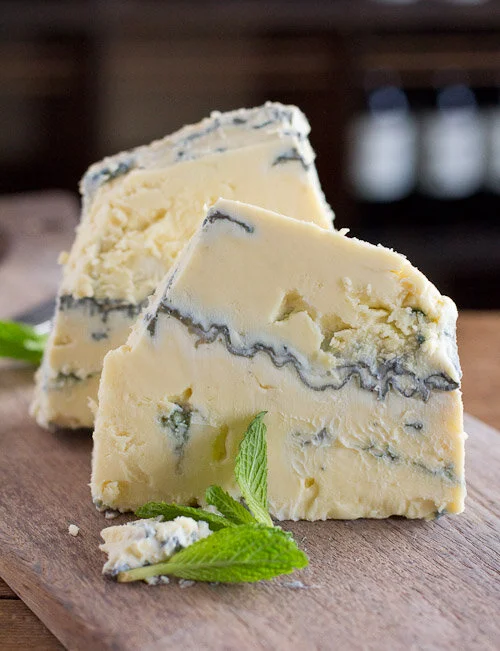
Jersey Blue, made by Will Schmidt in Switzerland
Why is blue cheese blue?
Is it because it’s one of the most under-appreciated cheeses because folks with tender tastebuds find it too pungent? Is it because it’s sad it had to fight so hard for its founding father, roquefort, not to be banned from the United States years ago? Is it because it’s been mushed into a dressing and served along flavorless iceberg lettuce and called salad? Probably.
But it is also because its milk has been spiked with a mold called Penicillium roqueforti.
How blue cheese is made:
After milk for blue cheese has been pumped into a cheese vat, cultures are added to the milk to start the fermentation process. Then the famed mold Penicillium roqueforti is sprinkled over the milk, allowed to rehydrate, and stirred in. Next, cheesemakers pour in rennet, and the curd is left alone to firm.
After the curd has solidified enough so it feels like a bouncy flan, it’s sliced and diced into curds.
Then the blue cheese curds are tossed with salt and stuffed into a cylinder mold to take on that famous shape.
This is when the blue cheese magic starts to happen.
A couple days to weeks after the curds are packed into the cylinder and a solid shape forms, a cheesemaker takes a wheel and pierces it with a pronged instrument that looks like a tiny stainless steel medieval torture device. Each individual prong forms a vein in the cheese. (If you’re a small cheesemaker you use knitting needles instead of the machine—how cute!) Oxygen rushes into the hollow veins.
And everywhere the oxygen flows turns blue! It’s a chemical reaction. Meaning if your cheese is more blue, it’s been pierced more times.
Or, it’s curds haven’t been packed as tightly so oxygen snuck it (so stealth)
So the next time you have blue cheese, guess how many needles or prongs made it the hue it is!
Cheese in Place IV: When they go Low, we Go Tokaj!


Wine and cheese pairing- SF & East Bay Delivery & Pickup
For the fourth installment of our wildly popular (thank you!) Shelter-in-Cheese series, we're introducing Hungary to California. This time is two delicious local cheeses + a perfectly paired Hungarian wine duo (one dry & one dessert) + an invite to hang out online with me and one of Hungary's most dynamic female wineamkers, Sarolta, Bárdos.
Look down for a little more about 1 of the 2 pairings, and click to buy below.
2017 Tokaj Nobilis Hárslevelú Barakonji, Tokaj, Hungary
Deeply entrenched in the wine of the region, winemaker Sarolta has devoted her life to grapes that most of us can't pronounce, like Hárslevelű, Kövérszőlő, and Furmit. After studying viticulture at the University of Budapest and working at vineyards in western Europe when the Iron Curtain dropped, Sarolta headed home to properly worship her own grapes. We're lucky she did. Take this indigenous Hárslevelű wine as an example. With flavors ranging from poached pear to orange zest, the rich, yet mineral wine charms higher butterfat and sheep's milk cheeses (look down!) and is one of my favorite international pairings to date.
Bellwether Farms San Andreas, Sonoma, California
One of the first certified sheep’s milk cheesemakers in the country, Bellwether Farms has been at it for so long you’d almost think they planned to make cheese. Nope! Owner Cindy Callahan actually started the company in the 90's just to sell lamb. As their flock grew, though, they realized they had more milk than they knew what to do with. Armed with inspiration —but no idea what to do with the milk —Liam asked their clientele what he should make. The mainly Italian chefs said, 'Pecorino!' Bam: Liam headed to Tuscany to study with the masters. San Andreas is the delicious result.
For $75, you get:
- 2 local cheeses! Bellwether San Andreas and Valley Ford Grazin Girl (around 10 oz)
- 2 perfectly paired wines from Tokaj Nobilis. White with San Andreas. Sweet with blue Grazin Girl
- A quick & fun pre-pairing video from me
- An optional live pairing over Zoom on Saturday, July 25th at noon with Sarolta & I
- Vintage Berkeley will deliver wine and cheese to your San Francisco or East Bay doorstep on Thursday July 23rd or Friday July 24th, or you may schedule a contactless pickup
Vintage Berkeley delivery minimums of $150 still apply. Delivery within 15 miles.

When Baby Goats Hijack my Instagram + New at-Home Beer & Cheese Pairing Class!

A new babe at Tomales Farmstead
This week, two big things are happening here at It’s Not You, It’s Brie. On Friday, baby goats are hijacking my Instagram feed, and, tickets are now up for my first live Cheese & Beer Pairing during shelter-in-place!
How will all this play out, you ask? I’m so excited to tell you!


Tomales Farmstead Takeover
This upcoming Friday Tomales Farmstead is taking control of my Instagram Feed. A complete hijacking! This means all Friday, employees of Tomales Farmstead will show you what it’s like to make cheese now in Marin at one of California’s finest creameries. I’ll be following along, too!
You’ll see cheese being made and aged, views of the summer farm, baby goats frolicking in the Marin hills, maybe a lady or two being milked, and meet employees who make the cheese happen. They’ll also talk about what it’s like being a cheesemaker during quarantine. This is a true behind-the-scenes look at something people rarely see! Plus, baby goats and sheep (yes! sheep too!).
My first Quarantine Beer & Cheese Class
Figuring out how to teach a pairing class at home has been a touch tricky. For example, if teaching a wine pairing would I expect you to open and finish 4 wines in a reasonable time? Booze waste is so sad! Would you be able to find the right wines? (Shipping wines can be $$$$.) And, would I expect you to get 8 cheeses?
But I figured out a way to make it easy! 🍺. And cheese.
4 beers and 5 cheeses. To make it easier on you shoppers, I’m not dictating any specific cheeses, only cheese styles are suggested. And same for beers! (Btw do you know how easy it is to keep an open beer in a mason beer for a couple days- it stays bubbly!).
So please join me for my first online beer and cheese pairing class with 18 Reasons. I’d love to see you. The list of cheeses for you get are listed and beer suggested are emailed to you when you sign up.
5 Easy Steps to a Perfect Cheesy Summer Salad
5 easy tips for an easy, perfect, summer salad. With chees.

How to make the easiest, most delicious summer salads. With cheese.
Latest heat spells have you craving hands-off meals like me? Yup. Summer’s calling, it’s easy salad time. Here are 5 things to do to always make a perfect, delicious, salad every time. And no need to restrict yourself- these salads ❤️ cheese.
5 Easy Steps to an A++ Salad
Layer your greens (or reds!): Mix 2 different greens for ultimate flavor and texture, or use 1 green that’s bold with tons of flavor, like arugula. Tell iceberg lettuce to stay home. We want to hang out with lively, party greens.
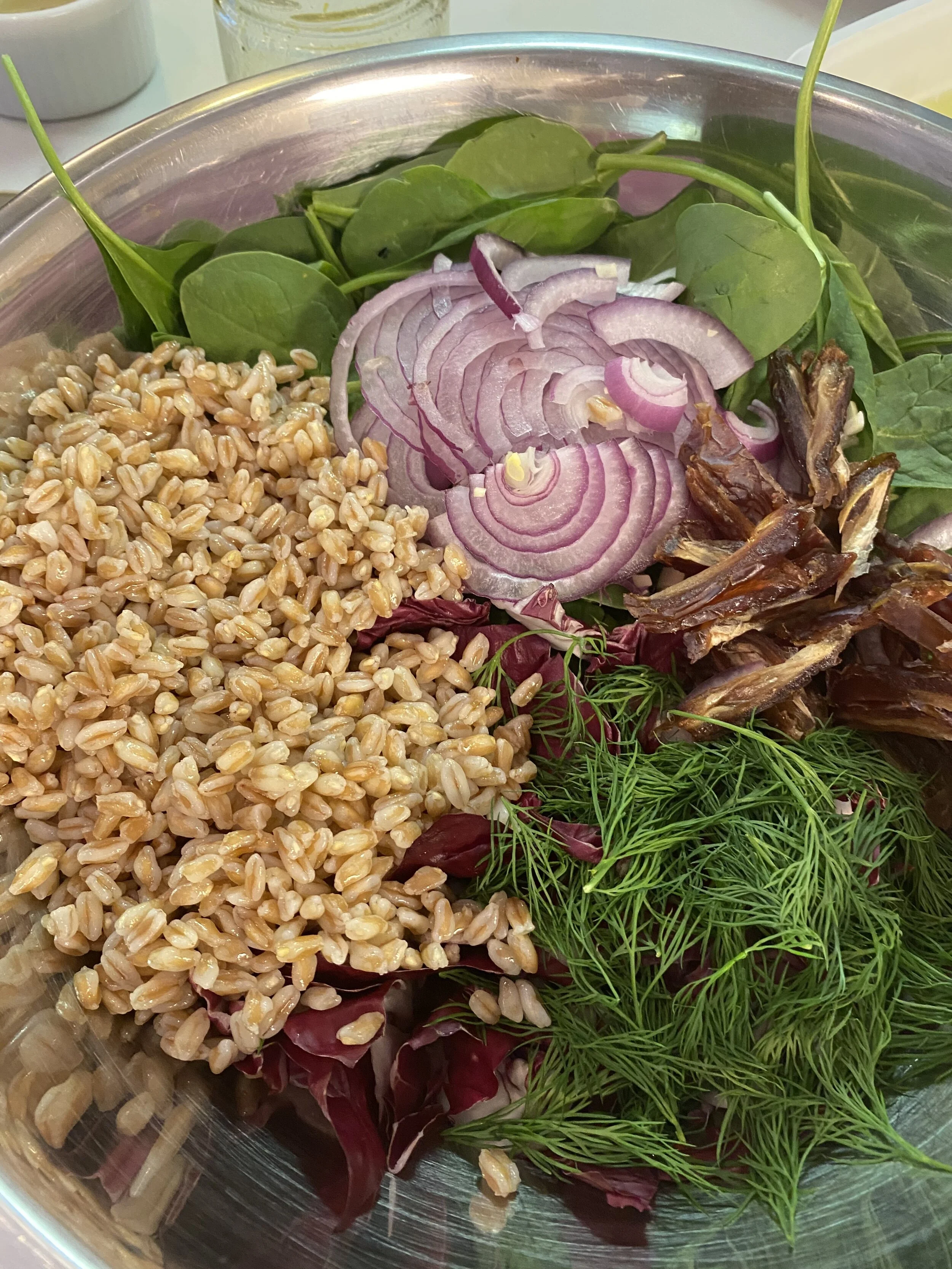
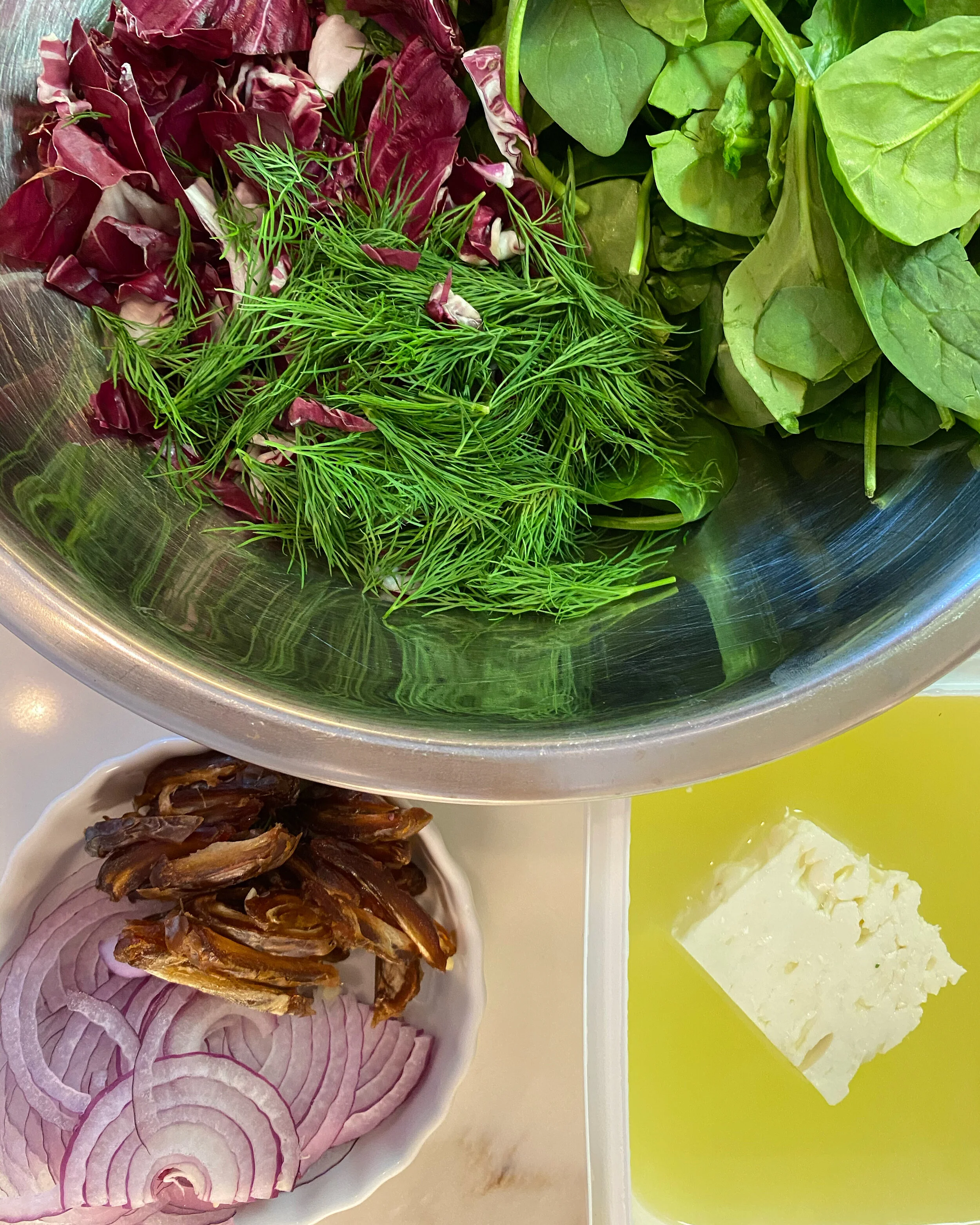
Use fresh herbs: Roughly chop a fresh herb (dill pictured above) and add it to your greens just before tossing. Think soft herbs like dill, parsley, tarragon, basil, or oregano, and leave the woody ones like rosemary that taste better cooked for your roast chicken.
Add something sweet & something spicy: For a perfectly balanced salad that is never boring, always add to it something sweet (dates in pic) like dried fruit, sliced apples, or peaches, and something spicy or peppery. Red onion pictured below. My favorite way to spice up a salad is to mince a shallot and toss it in my vinaigrette (or if you can take a little heat, thinly sliced jalapeños). Out of ripe fruit? Add a teaspoon of 🍯 honey, sour cherry jam or marmalade to your vinaigrette.
Use cheese 🧀. This is why we’re all here, right? Don’t miss out on an opportunity to add cheese to your life. And seriously, any cheese works! Feta and crumbly cheeses like chèvre are awesome for salads, but all dairy likes to play. Have a hard cheese like Parmesan or cheddar? Shave or peel it on top! Bust out that peeler for some pretty cheese curls.
Ratio for Vinaigrette matters: A perfectly balanced vinaigrette includes 2 parts olive olive (and sometimes a touch of hazelnut, sesame, or walnut oil) to 1 part acid. Acids are lemons, vinegars, or a mix of the two. DON’T FORGET TO ADD SALT! Add some shallots for glory.
For a bonus or a salad that acts as a meal: Add a grain or something crunchy. Not necessary, but if you want a meal in a bowl, add a grain. That’s my barley below. I normally cook up a big batch of a grain in the beginning of the week and use in for easy meal prep until Friday.