
The Cheese Blog

Pumpkin Cheesecake Cheeseball: Your Easiest Thanksgiving Dessert Ever
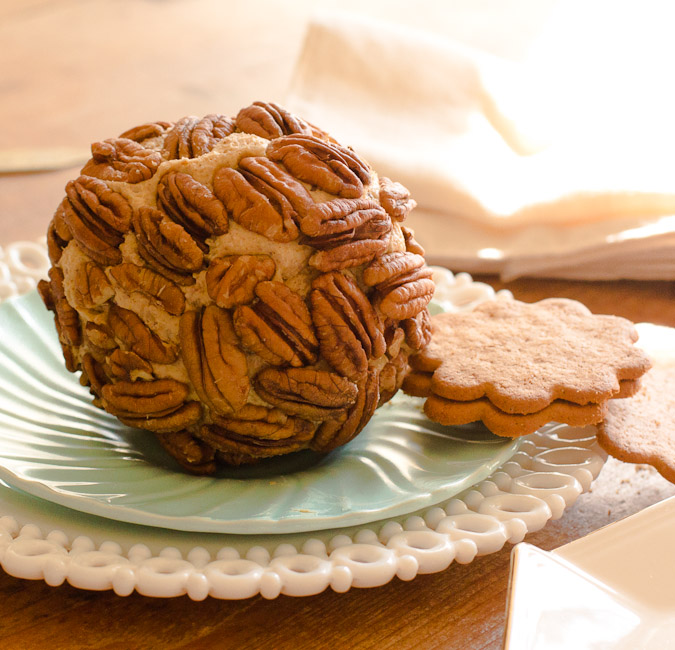
Cheeseball recipe (1 of 1)
Pumpkin Cheesecake… Cheseball. Your simplest Holiday Dessert Recipe, Ever.
Some find cheeseballs too kitsch, like beehive hairdos or cone shaped bras. Others, picturing the tinted bright orange and preservative-packed cheeseball their aunt served during the holidays, think of a cheeseball as a unsavory concoction best only served next to smoke-flavored salami from Cracker Barrel. I, however, think kitsch has a holy place in heaven's decor, sixties relics are pretty awesome, and cheeseballs are one of the true delights of the holidays.
So are pumpkin cheesecakes.
Introducing the pumpkin cheesecake cheeseball.

Through rigorous testing and sampling I discovered a couple of things about dessert cheeseballs, and pumpkin cheeseballs in particular. One, though unconventional, they are delicious. Two, too much pumpkin makes an unappetizing cheesecake blob, and it’s the spices that makes the ball tastes like a pumpkin cheeseball not always the pumpkin (think of a PSL). Three, ground pecans make just as much a fabulous cheeseball thickener as they do a traditional cheesecake base. Four, cheesecake balls love to be served with gingersnaps.
Serve this cheeseball for dessert, with gingersnaps or almond crisps, and a strong old fashioned in an etched high ball glass. Note * - you will need to grind pecans and chill the ball overnight. *
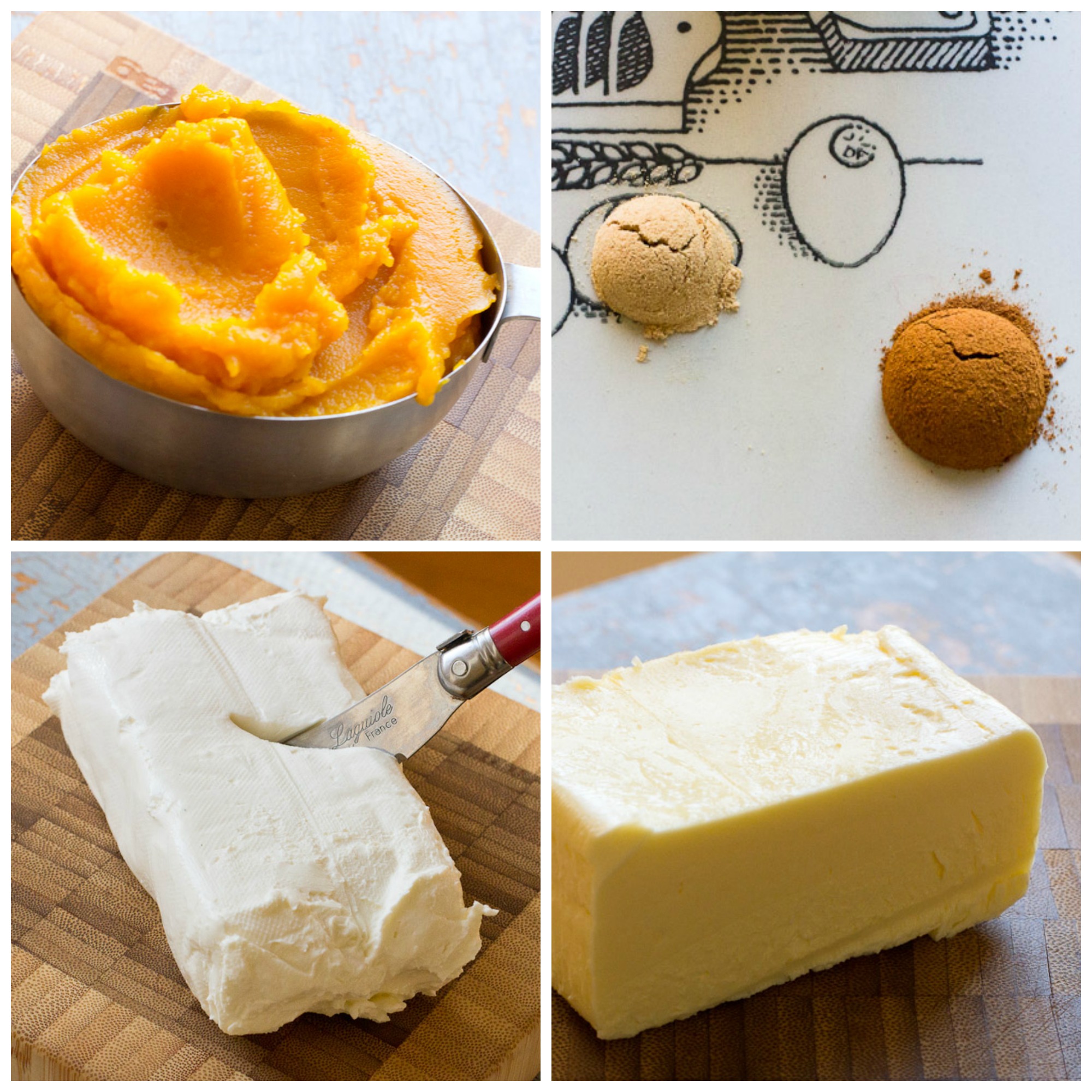
Cheeseball recipe ingredients
Pumpkin Cheesecake Cheeseball
makes 2 cheeseballs.
4 ounces salted cultured butter, room temperature
16 ounces cream cheese, room temperature
3/4 cups white sugar
1/4 cup plus 2 tablespoons pumpkin puree
1/4 teaspoon freshly ground nutmeg
1/4 teaspoon ground ginger
1/8 teaspoon cloves
1 1/4 teaspoon cinnamon
1 cup and 2/3 cup toasted pecans (divided)
In a large mixing bowl or in a mixer with a paddle, cream the butter. Stop to scrape down the sides of the bowl with a spatula. Add half the cream cheese, mix until blended, and scrape down the sides of the bowl again. Then add the remaining cream cheese and sugar and blend again. Add the pumpkin and spices to the bowl, mix for five seconds, scrape down the sides of the bowl, then continue mixing until smooth.
Grind one cup of pecans in a food processor until they become the consistency of polenta. If you don't have a food processor, divide the pecans into batches and finely chop. Don't use a blender or over-process them, or you'll create pecan butter.
Add the ground pecans to the pumpkin cream cheese mixture and mix with a wooden spoon. Divide into two roughly spherical shapes, wrap in parchment, and refrigerate overnight.
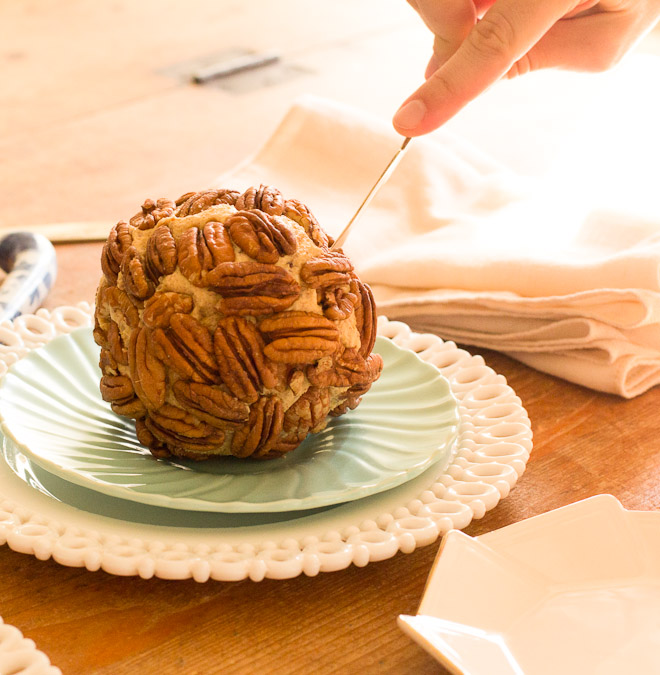
The next morning the balls will be firm enough so that you can shape them into spheres. Create balls, and before serving, press the outside with the remaining pecans.
Note: If you wait to roll the ball in toasted nuts, this ball also freezes well. If you leave the pumpkin out, and add a splash of run or brandy, kabam!, you've got yourself an eggnog cheeseball for December!
Happy Thanksgiving!
This was first posted in 2015 but stands as one of my favorite holiday recipes, ever.

Calling America's Sexiest Wedges for American Cheese Month

WELL HELLO,
OCTOBER!
The best month of the year! 31 days to celebrate our favorite American cheesemakers.
Happy American Cheese Month Everybody!
In honor of the holiest month of the year, October- American Cheese Month, let’s take a moment to appreciate all that our domestic cheesemakers have done for us. Now, let's exchange the ancient rite of peace and happiness with our neighbors. "Cheese be with you."
And now let's celebrate!
Let’s eat some cheese.
I wrote an entire book about our domestic producers so it's probably obvious that I love our country's dairy craftspeople, but I wanted to take a moment to spotlight some of my favorite producers I've highlighted on "It's Not You, It's Brie."
From Stepladder in California to La Clare in Wisconsin, I've had the lucky opportunity to interview and visit some of the county's best cheesemakers. My favorite part of this? Sharing their beauties with you. Follow the links to learn more about the cheeses, their makers, or what they pair best with.
So in honor of all things good and delicious and cheesy, have a wonderful American Cheese Month!
How will you celebrate? I'm throwing a cheese party for my friends and ordering a cheese plate featuring America's producers at every restaurant I can. It's my duty, after all. ;)

Big Sur
of Stepladder Creamery

Red Rock Cheddar
of Roeilli Cheese

Lindale Gouda
of Goat Lady Dairy

Pepato
of Bellwether Creamery

Iris
of Briar Rose

Cheesmaker
Andy Hatch
of Uplands

Delicious
American Gems
list from Mission Cheese

Cheesmaker Hadley
of Tomales Farmstead

Redheaded Creamery

Rush Creek
by Uplands Farm

Washing Limburger
at Chalet Cheese

Fenugreek Gouda
by Marieke Gouda

Tallgrass
by Landmark Creamery

The Annas
of Landmark Creamery

Chaseholm Creamery


Melt, Stretch & Sizzle is the most stylish, sexy, hot cheese book ever

If cheese was photographed for an art or fashion magazine, this is what it would look like. A fashion magazine's articles might be titled something like, "Fondue: On the Art of Seduction," or, "This Season, Cheese Conquers its Fears and Melts our Hearts," or "Cheese Heats up and SIZZLES." (worth reading over celebrity advice any day!)
In Melted, Stretch, & Sizzle, Tia Keenan and photographer Noah Feck team up again for a stylish, ode to hot cheese that is as gorgeous to look at as it is packed with delicious recipes. Classic fondue. Not-so-classic burrata mac & cheese. Poutine with Lazy Gravy. And Goat Cheese Queso Fundido. I wouldn't expect anything less contemporary or beautiful from the chef-fromager who opened both Caselulla and Murray's Cheese Bar, wrote The Art of the Cheese Plate, authors cheese columns for WSJ and Bon Appetit.
Tia is always on the forefront of things. In honor of the latest book by one of the most creative and funny people I know, below is an interview about what it took to make a book devoted to hot cheese, with one of my favorite cheese ladies ever, Tia Keenan.
I hope you enjoy it, and check out her book!


1. Your book is awesome. How did you pick what hot cheese dishes do put in?
I wanted to include some of the hot cheese "greatest hits", things like Mornay sauce, Mac & Cheese, a grilled cheese, so that I could talk to the reader about some fundamentals of cooking with cheese, but at the same time I wanted to introduce readers to an international mix of hot cheese dishes that are perhaps less familiar to do them. To me a good cookbook deepens our understanding of foods and recipes that may already be familiar, while also exploring new flavors, techniques, and contexts.
2. Was there one that you really wanted to fit in but couldn't?
I had plenty of dishes I was interested in and developed a few that didn't make it into the book. I would've loved to have gotten a fried cheese donut in there, but couldn't find the right place for it.
[blog author's note, here: mmmmmmm.....]
3. What does hot cheese mean to you?
It's the excitement and deliciousness that happens when cheese and heat energy meet.
4. So much food photography out there features what look like the same people- mainly young, and white- holding platters, or feasting at the same parties. Your book includes hands with age spots holding popovers, gorgeous black hands holding gougère or lips admiring melting fondue. They're beautiful, and it's wonderful to see not just one community reflected in a contemporary book. What inspired you to mix up your photo scene, and how do you think your photos do (or don't) reflect the greater food and cheese movement?
The problem always with shooting cheese is that most of it looks the same, is the same color. Aesthetically, I knew that using a darker-skinned black model would be a nice contrast to the white/yellow tones of melted cheese. I also am just tired of seeing white people all over food photography, so when I could push back against that in photos, I did. Black is beautiful! And for the older hands, well, I asked my 80-something neighbor Renee to model, because I knew she'd be fun on set and as her friend I've admired her hands. Having fun on set, bringing people you adore into the sacred space of making images - this is one of the ingredients to making photos that people want to look at. I love, respect, rely on, and admire older women, and in their hands lies the history of cooking and delicious food. My question is: why aren't black and brown women, and older women, the central figures of food imagery? All the best food comes from them.


5. You've long been in the forefront of the cheese scene and pretty much were the first one in the restaurant world matching crazy flavors, textures, and unconventional foods with cheese. One might say you have a forward-thinking cheese-vision. Can you please look in your crystal ball and tell us what you see in our cheese future, and how it relates to your recent books, The Art of the Cheese Plate, and Melt, Stretch, & Sizzle?
To be honest, this was a hard book to make, for a myriad of reasons. And I essentially wrote three cheese books in three years (ACP, Short Stack Chevre, and MSS). I need a bit of a break. I think I'd like to write a memoir actually, or at least a book about some parts of my life. I need some time to get back to another cheese book. Percolation is really important to my creative process - I need time to think and dream and ask questions.
6. What is Sterio's favorite hot cheese dish? [her son]
Mac & Cheese, by a mile.
7. What is the one thing that you wish people kept in mind or knew about cooking with cheese when left in the wild?
Never cook with cold cheese.


French Wine & Cheese Guide Poster Giveaway: Or, What Happens When an Architecture Professor Submits to his Wine & Cheese ❤️

How did an architecture professor get so into cheese and wine maps, you ask? I did too, and the answer is below! David Gissen and I first met while I managed the wine bar at Solano Cellars and pretty quickly became friends. Not long after, he published the French wine metro map, which is as awesome as it sounds. Just recently, he released a new guide- the Cheeses of France: traditional styles with regional wine pairings with his own beautiful cheese drawings, which I think you'll like it as much as I do. It rounds up the major wheels of France and matches them to the wine that regionally adore them in a clear and beautiful way (this will shortly be going on my office wall). To celebrate the launch of the guide, I not only interviewed David below, we're hosting a giveaway!
The Giveaway:
Leave me a comment telling me your favorite French cheese and wine pairing on my Instagram page and tag a friend. That's it. Early next week I blindly pick a winner. Good luck.
Enjoy my interview with Professor David Gissen, below, and my answer to his question at the end, what are my favorite French wine and cheese pairings.
1. How the hell did an architecture professor get so into cheese and wine maps?!
I grew up in the center of a city with beautiful old buildings and which nurtured an interest in architecture, cities and history. My mother was an artist and was passionate about exploring food globally, and my aunt and uncle were very passionate about exploring European wines. My mother’s family comes from a wine-growing region in Europe and once owned a business that sold and imported wine and spirits. Though my career is primarily within architecture and education, these other things were always part of my life.
About eight years ago the publisher Steve de Long contacted me about transforming a diagram that I made, that looks a bit like a subway map, and that easily explains French wine geography, into a more formal and commercially available map. Steve is not only an acclaimed publisher of wine maps, but he also studied architecture and with many of my mentors and friends. That initial project that we completed became the Metro Wine Map of France and it had a type of ripple effect in the wine world, French landscape history, and other areas.
I can’t really explain why, but when I wanted to learn about cheese, I not only tasted many different cheeses, and took notes about them, but I began drawing them as well. I choose a more technical style of drawing as it emphasized similarities and differences, and I learned this type of drawing when an architecture student. The Cheeses of France includes most of these cheese drawings and that will enable someone to understand the complexity of French cheese.
To bring this all full-circle, last summer the curator of architecture at the Museum of Modern Art in New York acquired the Metro Wine Map of France for the Museum’s collection. He wrote to me that it would join a group of other works that entailed urbanistic interpretations of culture. That was thrilling, of course, but also made me realize that there must be some intrinsic architecture and design aspect to all of this!
2. What does terrior in cheese and wine mean to you?
I was taught to think of terroir as the taste in a wine or cheese and that is specific to its place of origin. Terroir is the taste of earth, grasses, the microbes in the air, or the dankness of a cave where cheese and wine are aged.
But every time someone explains the terroir evident in some glass of wine or piece of cheese to me we're almost always often thousands of miles from that place! So, could we more accurately think of terroir as something from somewhere that exists in a highly mobile form? It's an aspect of a site or landscape that can be dispersed globally in slices of cheese or a glass of wine. I love to think that someone in Hong Kong or Oakland, where I live, can be tasting something similar from some place that is thousands of miles away. Terroir is a sense of something from somewhere that can move.
3. You choose regional pairings for this map. What are 3 of your hands-down, cheese and wine pairings ever, regional or not?
It’s important to note that while I created the drawings and the overall design of The Cheeses of France, the numerous pairings listed under each cheese on the chart were developed in collaboration with Steve de Long. Most of the wine pairings come from the regional cheese producers themselves, but about half of them are derived from our research. Steve, in particular, was interested in the ideas regarding pairing of cheese and wine by Francis Percival and Pierre Androuet. Of those two, I prefer the latter’s more open approach, but both inspired the wines listed under each cheese on on the Chart.
But to answer your questions, my favorite cheese is an aged Valençay and I think it tastes great with either red or white Valençay. Then, I think an Ossau-Iraty with either Jurançon or Irouleguy, and finally, Salers and a Northern Rhone red wine. I think that last one is really cool.
Now, I’m curious, and I hope this makes it into your blog: what are your favorite French cheese and wine pairings?
Kirstin here! David, my favorite wine and cheese pairings are Comté with Vin Jaune or an oozy Selles-sur-Cher or Lingot de Quercy with a Sancerre. Made for each other (maybe even literally?).

Behind-the-Scenes Mozzarella: Cheesemaking Classes & Teambuilding
Thinking of taking a cheese class or hiring me for your teambuilding? Learn more about what it’s like here!

As you know, I teach cheese classes. Cheese history and culture. Eating cheese and drinking things. Melting cheese and then eating it between toasted, buttery bread (grilled cheese class❤️while drinking things), and finally, I teach cheese-MAKING classes. It's full circle!
Over the years I've got a lot of questions about what it's like to teach or take cheesemaking classes. It's a little hard to show because, well, I'm normally too busy teaching the classes to take actual pictures, but with hopes of better addressing the question .... I hired a friend of mine to take pictures of one of my top-selling classes, mozzarella making, so you can see what's it like.
The public class took place at 18 Reasons, one of my favorite spots to teach in, and features tons of behind-the-scene photos. You'll also get a feeling for what it's like to take the classes. Private and teambuilding classes are a little different but this gives a great idea!
I hope you enjoy my cheeseamaking class photo diary!
Mozzarella Cheesemaking Classes - Behind-the-Scenes
Prepping for class. Before the Action!


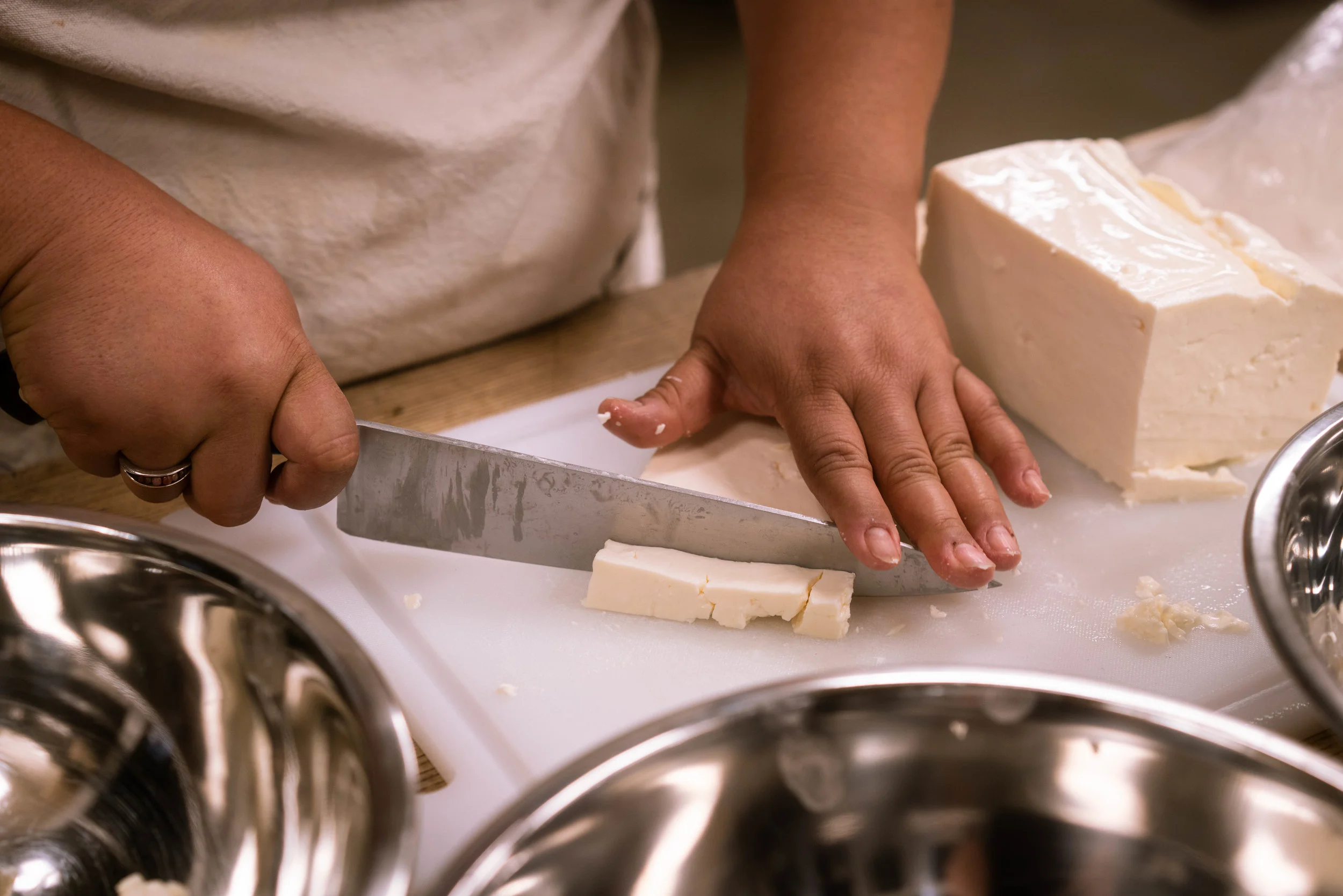
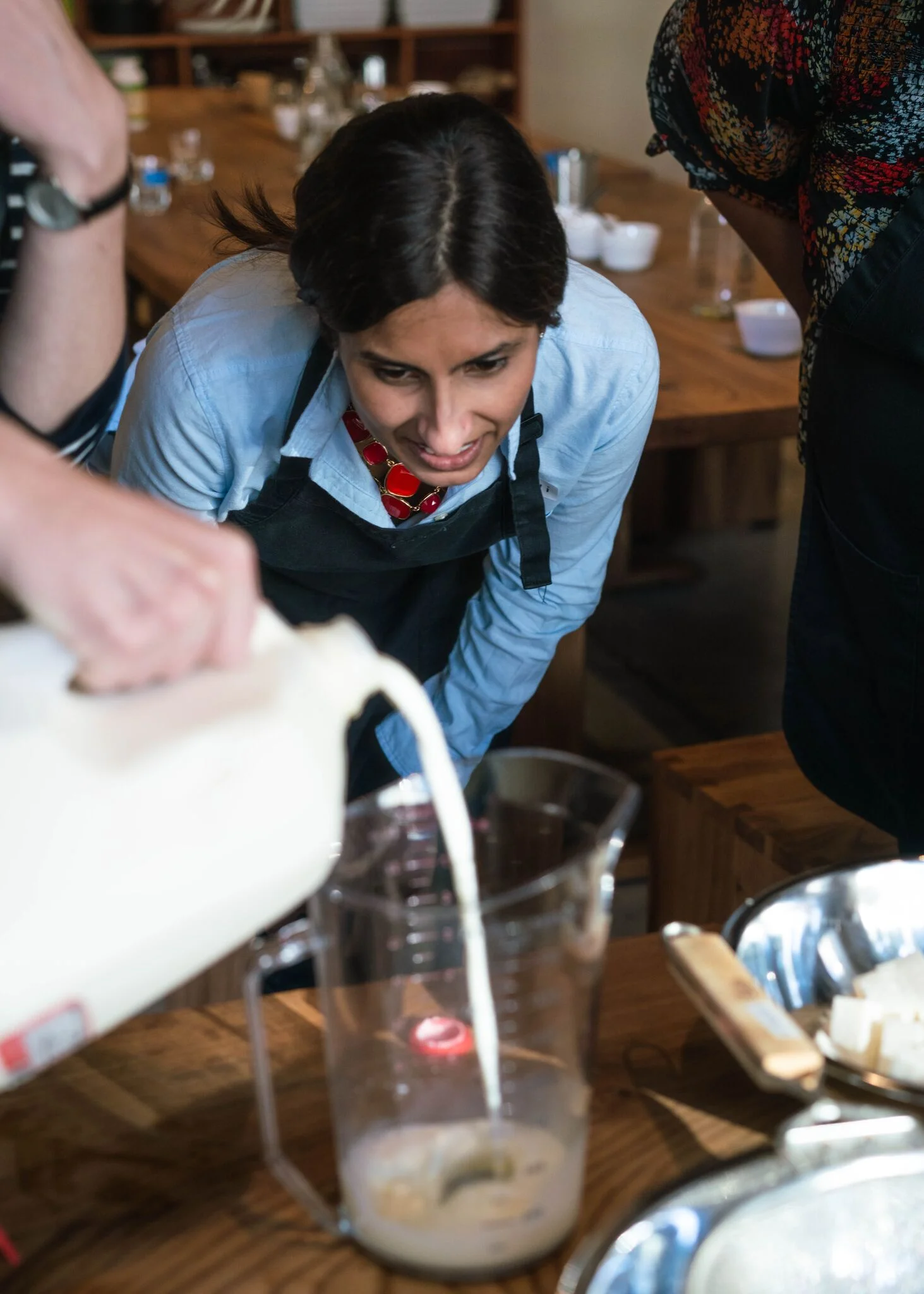

Saying hello, then saying fascinating things about cheesemaking sciences to the Attentive future mozzarella makers of America


Warming the milk and adding the rennet


Draining the already-sexy curds
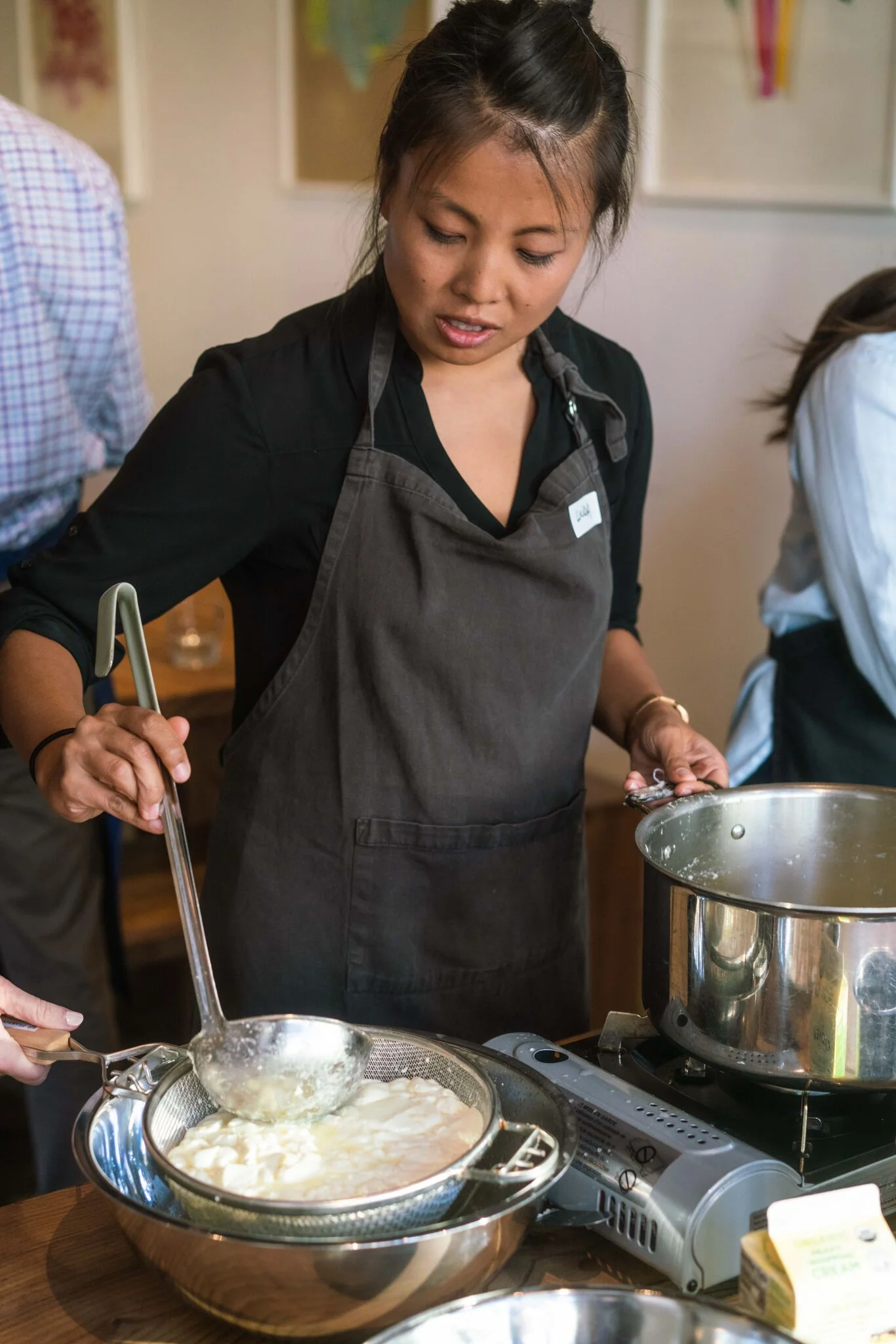

Mozzarella is ALLLL about the temperature of the stretching water-SUPER HOT. We dig the curds from the hot bowls with so many spoons- so we don’t burn our fingers.


Cheesemaking class hits! Balls accomplished!
Mozzarella necklace, anyone?


Anna's Khachapuri: The One & Only Georgian Melty Cheese Boat


I had long heard of a melty cheese and bread boat named khachapuri made in Georgia (the country, not the state) but it seemed kind of like hearsay. Like that there were people out there who actually make turduckens, or that adorable cats with short legs named munchkins really exist.
Khachapuri- 2 to 3 types of melted cheese tucked into fluffy, yeasted bread and topped with a big pat of butter and an egg yolk that are stirred together to make a melty cheese pool that you dip the bread into?
YES. A traditional food of Georgia, khachapuri has been around for centuries longer than any of us have had to ponder its delicious existence and is just as cheese-packed as it sounds.

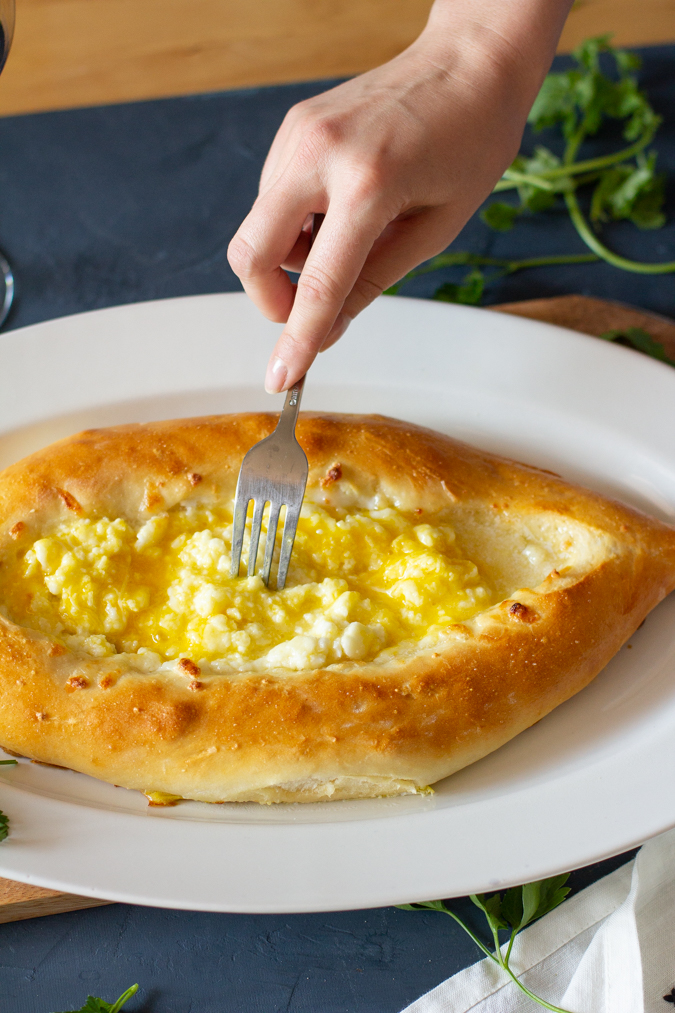
A couple months ago I learned that friend of mine, Anna Voloshyna, was hosting pop-up dinners serving her handmade khachapuri through Feastly in San Francisco. Purely because as a cheese expert it was my official duty to try it, I tried to sign up. Well... turned out I was not the only one craving a cheese boat-the dinner was sold out for a month. After making reservations to her feast two months in advance though, I finally tasted khachapuri.
Not to make pizza, mac n' cheese or grilled cheese feel bad, but khachapuri is like a prized rose in an English garden, an Icelandic hot dog compared to a ball-park wiener, a New York chewy bagel versus what's served in grocery store bins. It is a melted cheese epiphany.
And Anna khachapuri is something special.

I have since tasted another version at a local Georgian restaurant and I can tell you that Anna's was tops. Incorporating the perfect blend of cheeses and the softest, most golden bread I've tried, Anna's worked her magic on a classic Adjarian Khachapuri recipe that a Georgian friend shared with her to create this perfect version below. She even stuffed the crust with cheese, like according to my partner, they do with their cheese pide-nearly the same dish, different name- in Turkey. And she agreed to share her secrets.
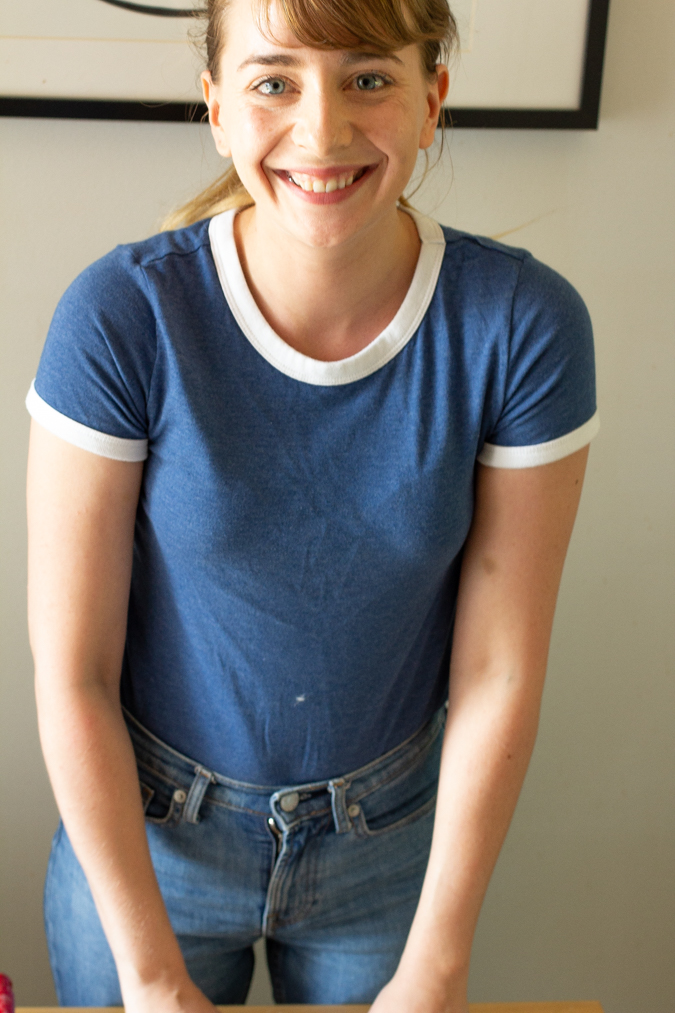
I am thrilled to share with you today Anna's recipe. Thank you, Anna! You even look adorable making it!
Btw, before you look at the recipe below and say, "What?! Why is she giving me a recipe for just 2 khachapuri?", know that 1 cheese boat can feed from 2 to 4 people. It is f.i.l.l.i.n.g. And, I know that the recipe is in grams, but it really benefits from exact measurements. Grab yourself a scale- they are awesome.
Anna's Adjarian Khachapuri Recipe
For 2 khachapuri
For the dough:
325 g all-purpose flour, plus more for rolling the dough
250 ml whole milk, lukewarm
3/4 teaspoon kosher salt
3/4 teaspoon white sugar
1 teaspoon active dry yeast
1 tablespoon extra virgin olive oil, plus more for brushing
For the filling:
100 g Syrian cheese *, grated
100g Suluguni cheese *, grated
100g queso fresco, grated
100 ml heavy cream 1 whole egg, lightly beaten with a fork
2 egg yolks
100 g butter, unsalted and room temperature
Instructions:
1) In a big bowl, whisk together the milk, salt, sugar, and yeast. Let the mixture stand for 1-2 minutes.
2) Sift 120 g of the flour into the milk mixture and use a whisk to mix well until you'll have a batter with a yogurt-like thickness. Cover the batter with a kitchen towel and let it stand for 20-25 minutes.
3) Sift the remaining flour into the mixture, then add the olive oil. Stir well to combine. After mixed, remove the dough from the bowl and start kneading. The dough will come together and form a ball. Continue kneading for 5 minutes. By the end of the 5 minutes the dough should be slightly sticky and very soft.
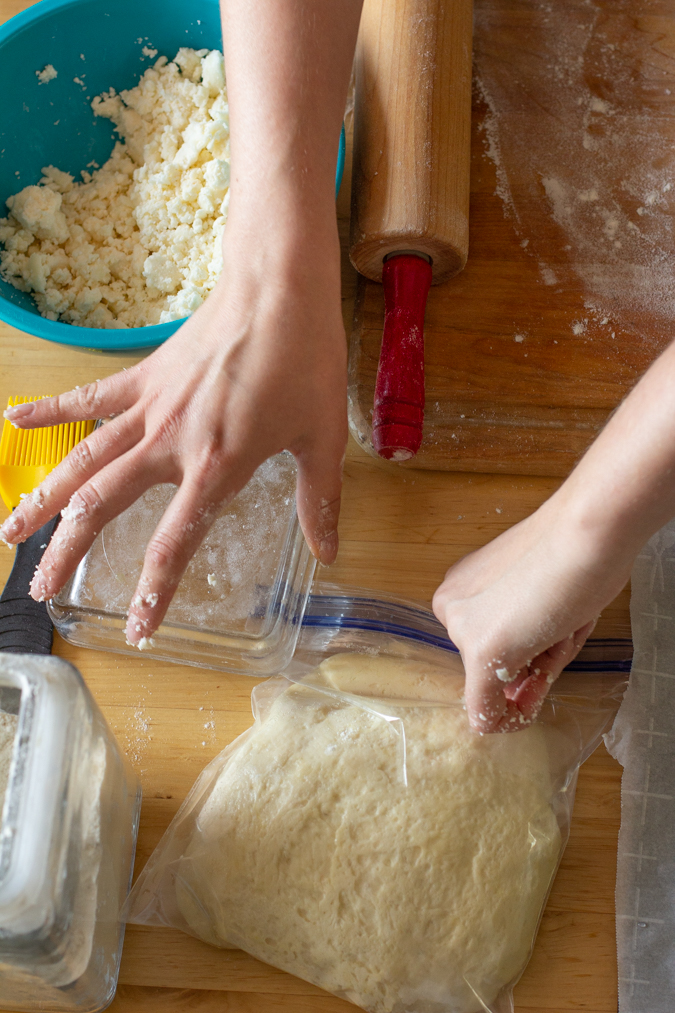
4) Divide the dough into 2 equal balls. Lightly brush the balls with some olive oil and place into individual zip lock bags, or bowls covered with plastic wrap, and let rest in a warm place (60-80 degrees Fahrenheit) for about 2 hrs.
5) Preheat the oven to 400 F.
6) In a small bowl mix together the three cheeses and heavy cream.
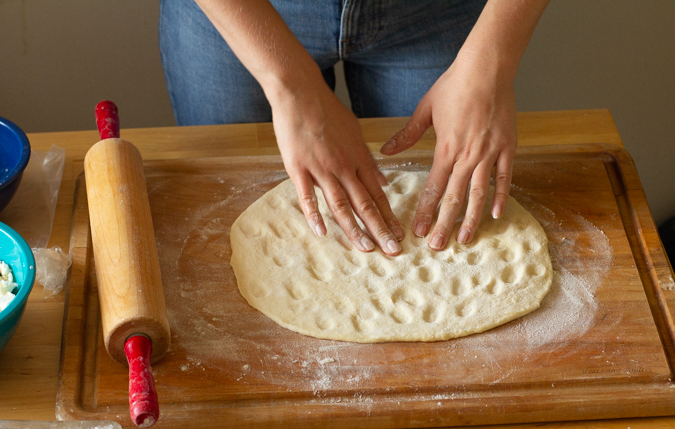
7) When the dough balls have risen and doubled in size, place them on a lightly floured surface, then roll into a 10 inch equal ovals, about 1/4 inch thick.
8) Place the dough on a baking sheet lined with parchment paper.
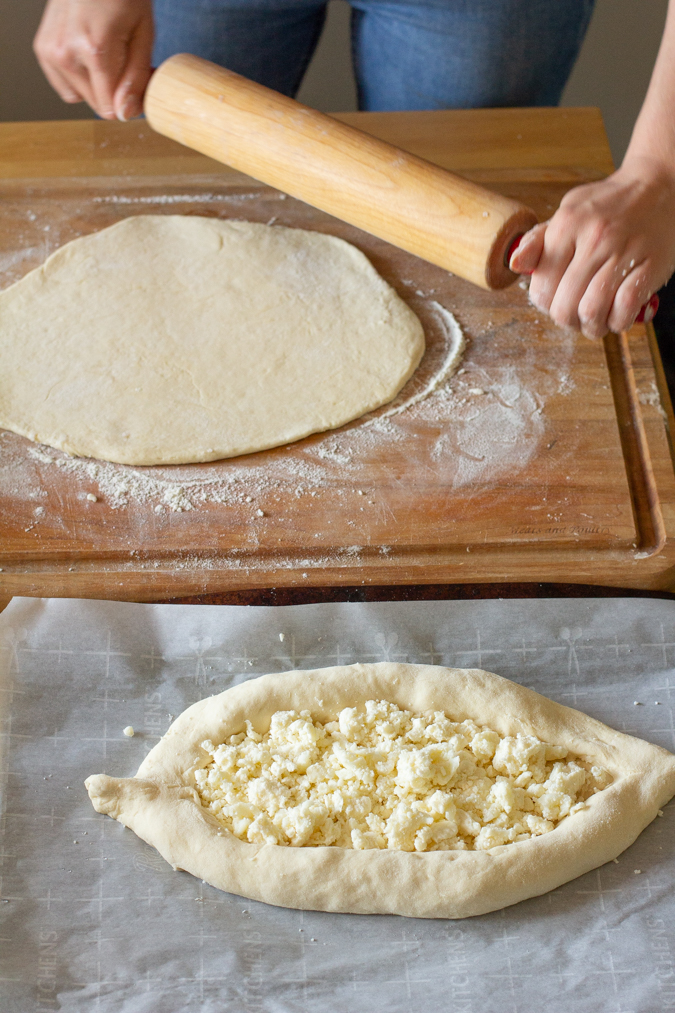
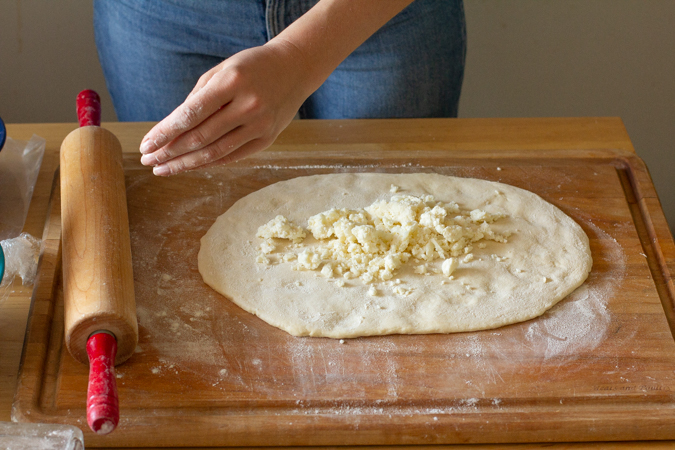
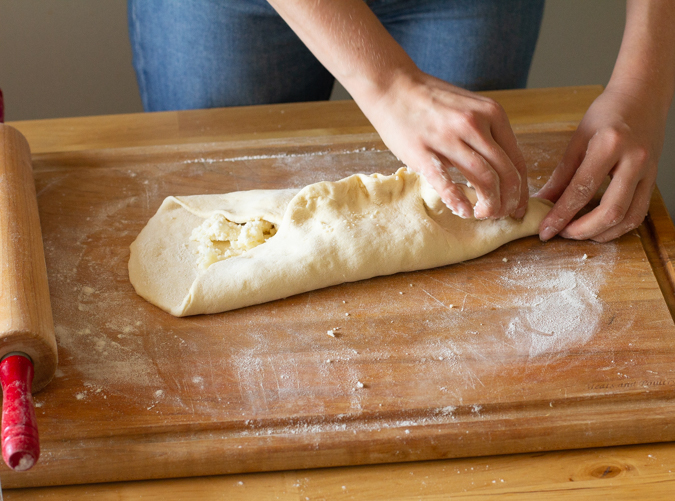
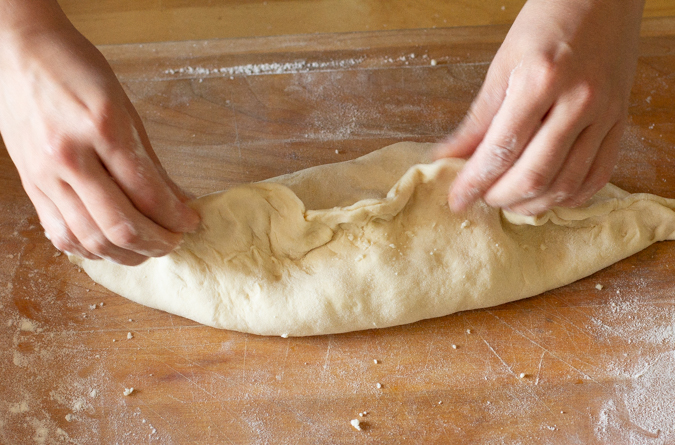
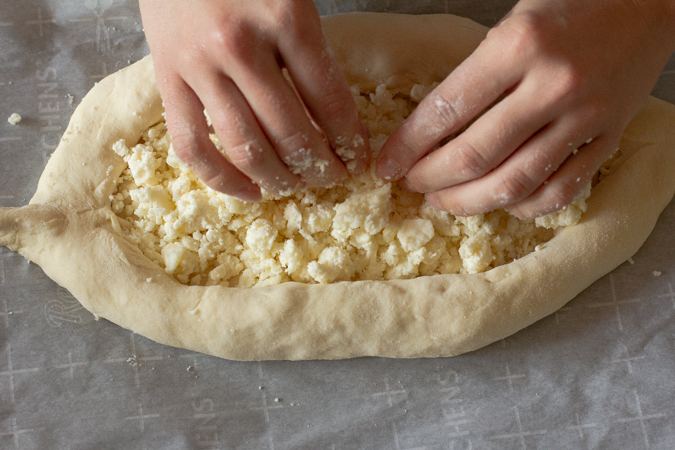
9) Spread a quarter of the cheese mixture (about 5 ounces) over each piece of dough, leaving a 1 and 1⁄2-inch border all the way around. Fold both halves of the lengthy sides together and pinch the edges tightly to seal.
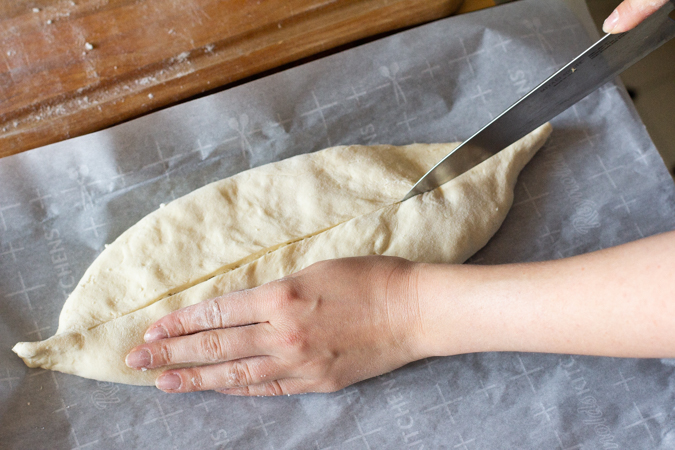
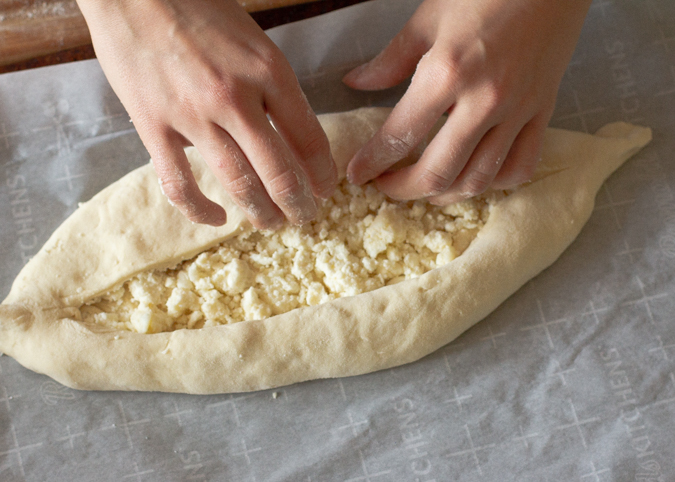
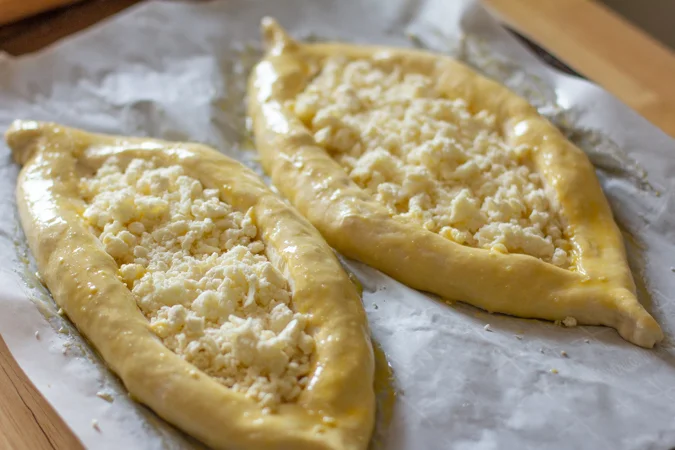
10) Flip the khachapuri over completely so the side you just pinched is now facing down. Cut lengthwise down the center of the dough with a sharp knife, making sure to leave about 1 1/2 inches uncut near each narrow end. Tucking the sides of the khachapuri under and away from the center, roll the edges of khachapuri to form a boat shape. There will be cheese under the rolled sides when you finish. Divide the remaining cheese mixture evenly between the middle of the khachapuri and lightly press down.
11) Cover the khachapuri with a kitchen towel, and set aside to res for 15 minutes until slightly puffed.
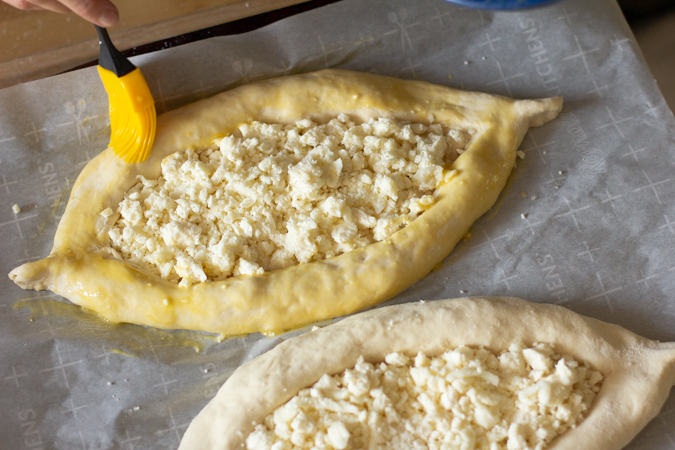
12) Just before baking, brush the edges of the khachapuri with the lightly beaten egg, then bake for 15-18 minutes until the crust becomes golden brown.
12) Make a well in the center of each khachapuri with the back of a spoon and drop 1 egg yolk into each well. Then place a slice of butter on top of the cheese and serve right away.
*You can find something like this Syrian cheese at a Middle Eastern grocer.
* Suluguni cheese is great, but if you can't find it, use something like quesillo- a stringy, fresh Latin American cheese.


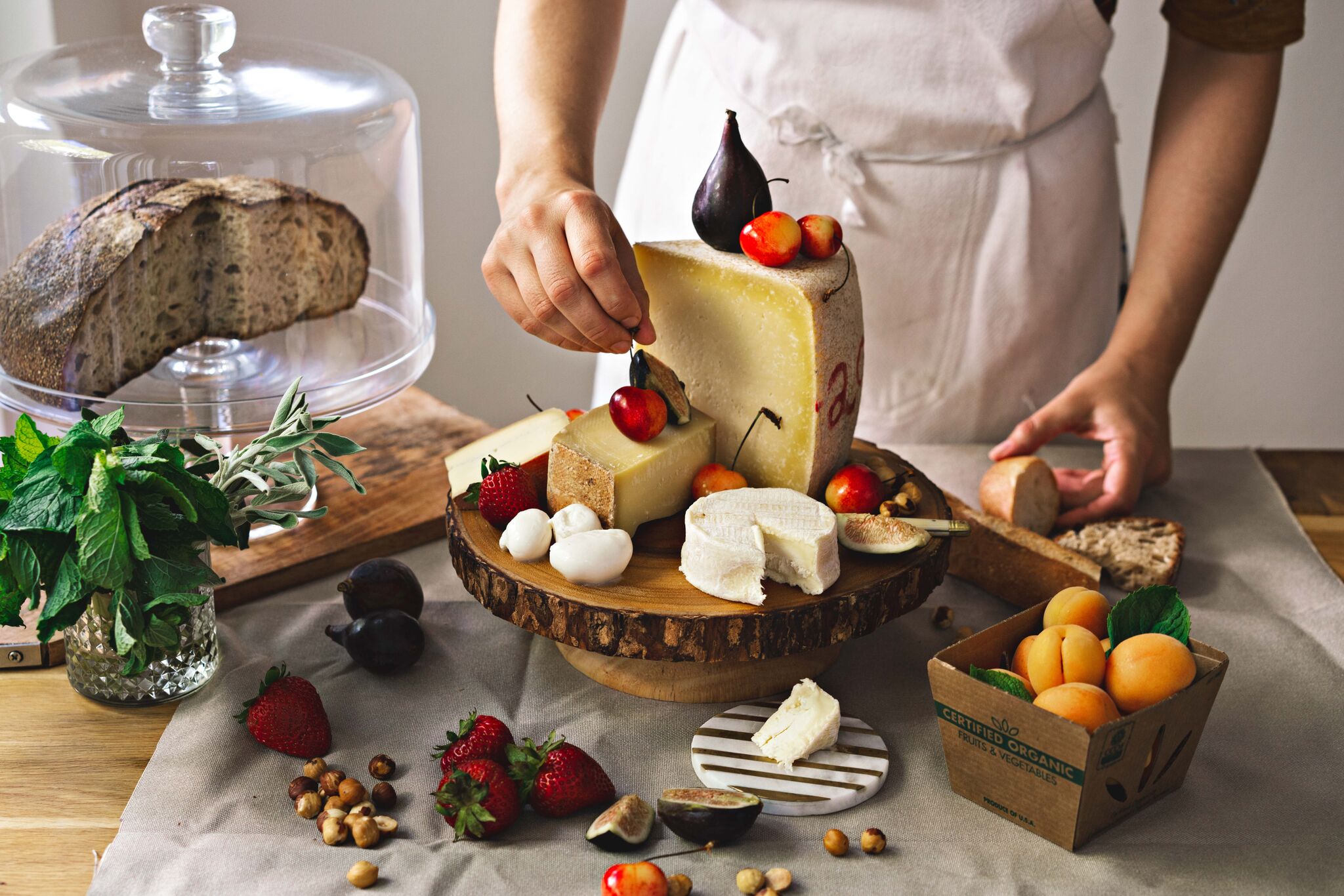
Considering a Career in Cheese? 5 Jobs from Monger to Maker

If you are one of the obsessed cheese lovers (like, you read cheese books instead of novels in bed) who are considering leaving your stable job behind to devote yourself to a life of spreading the cheese gospel, but are unsure of your options...
Here are 5 Career in Cheese Options for your consideration.
The first time I officially worked with cheese was when I arranged a slice of Morbier next to Dolce Gorgonzola on a cheese plate when working the dessert station in a San Francisco kitchen about 18 years ago (omg my 20 year high school reunion is this October). Things have changed a little since then. Not only has the number of artisan cheesemakers skyrocketed, the number of people aching to pack their fridges with cheese has soared, and so has the number of jobs to sell that cheese to them. Or to make it. Or to teach them about it. The industry is ripe right now, my friends.
But which job or career in cheese is for you?
If you've been dreaming of starting your own creamery, opening a cheese shop, mongering, or teaching, but are confused about which direction to go in, read below. To help you dig a little deeper, I sum up the pros and cons of 5 of themost commonly coveted careers in cheese. Some I've worked myself, others I've seen people working close-hand, and others I've learned about because I've considered them too. Read before you leave your desk job, and happy cheesing.
5 Careers in Cheese: Pros & Cons


1. Cheesemaker:
As Anthony Bourdain said “You have to be a romantic to invest yourself, your money, and your time in cheese.” Nowhere is this more true than being a cheesemaker. If you own your herd, expect to have to milk them at 4am and 7pm. If you don't, expect to obsess over the milk anyway. Expect long hours, heavy lifting, following set sanitation rules to a T, frequent and surprise food and safety checks by the FDA, cleaning making up more than 60% of your day, learning a lot of chemistry, no vacations for years, and talking more about acidity than a than a vinegar maker. The pay is low and opening your own creamery will be more expensive than raising a child. But expect to feel extreme feelings of love when you get it right and see your cheese baby age from infancy to maturity, and by knowing you're connected to a noble tradition that goes back thousands of years. You will also develop impressive arm muscles.

2. Cheese Shop Owner:
Cheese is expensive but margins are low. It's not only hard to break even, it's hard to convince people to pay for farmer's and cheesemaker's love, sweat, and tears in the form of fermented milk. But once you do,..... ah!!!!! It's heaven. And while you may not be able to pay yourself a salary for years, you get to write off cheese travel as a business expense. Expect to spend most your time on your feet behind a counter or on excel spreadsheets or cleaning cheese wires and grating machines more than thirty times a day, and prepare to work holidays for the rest of your life and to cry when doors shut on the day before Thanksgiving because it's finally over. The trick is diversification (sell condiments, books, classes), and giving people what they want until they trust you. Oh, and finding good employees that love cheese as much as you do and doing everything you can to get them to stick around. Speaking of which....

3. Cheesemonger:
Cheesemongers help the world go round. But they don't get paid much (be nice to them). You get to eat insane amounts of cheese, meet makers, and help customers ease their way from being Fromage D'Affinois lovers to funky Époisses dreamers. Like when owning a cheese store, expect to spend most your time on your feet behind a counter or cleaning cheese wires and grating machines, and prepare to work holidays and to cry at when doors shut on the day before Thanksgiving because it's finally over. You also have to talk to a lot of people. Cheesemongers are awesome people though, and I think every career in cheese should include a stint as one. You learn so much, and there is an opportunity to compete in this.

4. Cheese Importer/Distributor:
Whew. Lots of competition, and have you seen how confused the FDA is about European cheese shipments these days? Prepare to wait a very long time for some of your stock to arrive. Plus, shipping and distributing cheese in college should be its own major. Think barges soaring across the ocean, trucks driving from NY to CA (all Euro cheese arrives to NY then gets sent west), arranging in-city-transport, and making sure as little cheese goes bad before this is all completed. And you really have to network. But... you get to meet and visit cheesemakers all over the world, and you will always have enough cheese at your fingertips to make fondue. And a cheese sculpture. And a cheese plate. And mac n'cheese. Or,.... you could just work for a cheese importer or distributor.

5. Cheese Educator:
Love it. It's gratifying. I learn every time I teach. I love my students. I eat amazing amounts of cheese and get to take pretty pictures of it. It also requires a lot of background knowledge and there is a lot of competition. That's to say... it takes tons of work to make it pay the bills, so plan on piecing this together with something else to make a career in cheese if that's what you want. But it's so fun! In addition, know your role as facilitator can alternate between being a cheese expert, a chemistry teacher, a cat herder (yup, alcohol is often involved), a caterer (you have to lug a lot around), and an entertainer.
Want to hear more? If you're interested in learning about more careers in cheese, I'm happy to oblige- email me at kirstin@itsnotyouitsbrie.com, and check back for interviews with these folks below here soon.