
The Cheese Blog

Nettle Meadow's Sappy Ewe: A cheesemaker, curds and maple syrup walk into a bar...
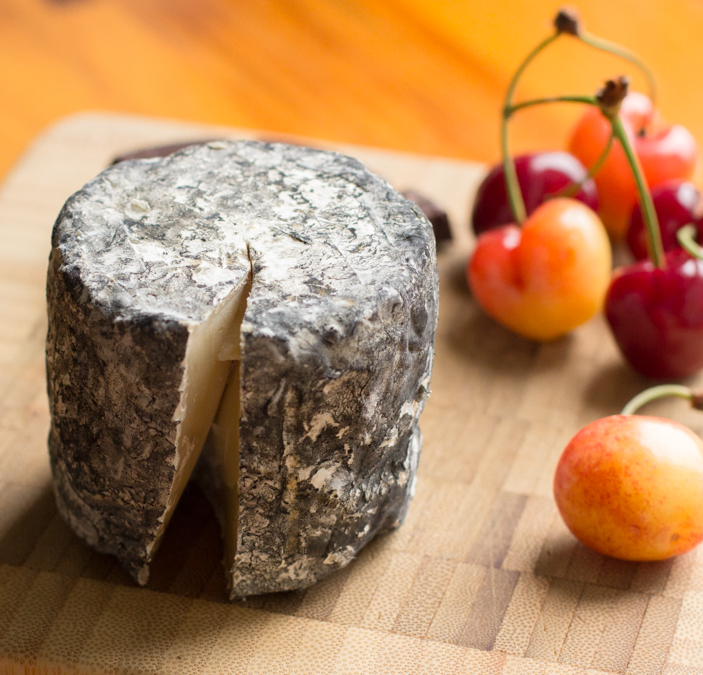
Though Sappy Ewe might sound like the punchline of a foodie joke, its real, new, and surprisingly delicious.
Sappy Ewe is Nettle Meadow's newest cheese.
The first time I heard about the savory-sweet Sappy Ewe was when rustling through a box of samples at Cheese & Sundry, a new cheese and tasty-things distributing company in Berkeley. My friend Emiliano and I were hanging out in their walk-in fridge (about the size of Mariah Carey's closet) when he introduced me to the cheese. I had just eyed the 80-pound wheel of Rodolphe le Meunier's Comté and decided it was too big to stash in my coat and run when Emi picked up the tiny Nettle Meadow wheel. Distracted by the 80-pound cheese, I only heard maple syrup, sheep and cow, and Nettle Meadow.
"Do you want to try it?"
I raised my eyebrows at him and nodded.
Going back to the post title. What happens when a cheesemaker, curds, and maple syrup walk into a bar? If you guessed a spiked cheese-curd pancake party, you might not be wrong depending on the day. But in this case, a gorgeous regional cheese.

Nettle Meadow takes sheep and cow's milk cheese curds (the curds of milk that's been firmed to a thick-custard texture) and drizzles them with maple syrup from Adirondack mountains. Then they fill the curds into crottin-style molds to age. The cheese has a brie-like, bloomy rind that before shipping out, they dust with ash from local black pine trees. It's a New York cheese all the way.
The result is a rich, small sliceable cheese that tastes like brown butter, fresh hazelnuts, and maple ham that knocks the idea out of the water that cheese is always better left alone. Though the list of ingredients might give the impression of sweetness, Sappy Ewe is mellow, subtle, and fit for a cheese plate before or after dinner.
Wine: Before dinner, pair with a yeasty Champagne or rich Viognier. After, pair with something tawny, spicy and sweet like a sweet sherry or vin santo

After dinner? Amazing with chocolate. Tazo's stone ground vanilla-bean chocolate offered a crunchy bite to the silky cheese.
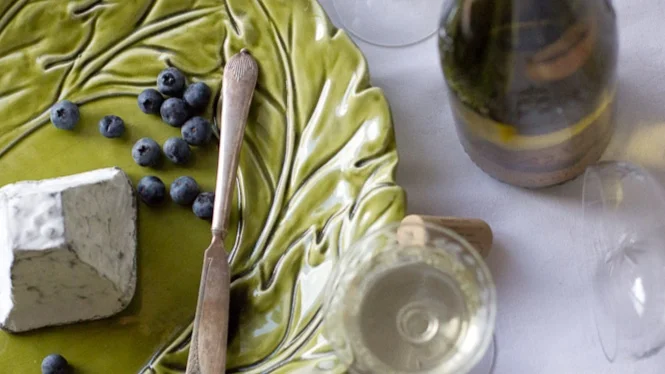
Cheese and Wine Pairing with Baetje Bloomsdale, Goat's Milk Style
I'll be your goat cheese and wine pairing guide. And since Baetje's Bloomsdale is a classic example of a Loire Valley goat cheese, my goat cheese and wine pairing today can be applied to most Loire Valley friends.

Today,I'll be your cheese and wine pairing guide! A couple weeks ago Miss Cheesemonger and I got together to make paneer (you might remember her gorgeous pictures of the fluffy pressed cheese or the recipe link to her blog). Well, we had so much fun we decided to team up again.
Baetje's Bloomsdale: Goat Cheese and Wine Pairing
We decided that Vero would match Bloomsdale to whatever snack the cheese's heart desires and since I'm a wine girl, I would be your booze lady. Cool thing is, this pairing also pays it forward.

Baetje Bloomsdale
Since Baetje's Bloomsdale is a classic example of a Loire Valley goat cheese, today's cheese and wine pairing can also be applied to most Loire Valley friends and many soft, rinded goat cheeses, and the same goes for Miss Cheesemonger's picks.
Now for Bloomsdale.
Bloomsdale's maker, Veronica Baetje, makes cheese in a Mennonite community in Sainte Genevieve County, Missouri. As the NY Times reported when they covered the creamery after a recent World Cheese Award win, Baetje is an inspired creamery. Bible quotes grace her labels and the Baetje considers themselves devoted followers. Yet she's very modern and not afraid to stray from the course. From driving her used Porsche through Mennonite sedan-country to making time-consuming goat cheese that could topple over a Valency in a cheese competition, Veronica is not afraid of doing things her own way.

Bloomsdale getting ready for its cheese and wine pairing party
Her cheese shows this. That little number above is made in the traditional Loire Valley goat cheese style. Meaning it's a lactic-acid set cheese covered in a thin layer of vegetable ash over which a thin white layer of Penicillium Candidum mold grows.
Which brings us to goat cheese and wine pairing. There are two things to mind with this little Bloomsdale when pouring a glass of juice.
1.When pairing soft- in this case lemony and sometimes lightly grassy- flavors with wine, keep it simple. Cheesemakers work hard to preserve those lovely subtle notes in their cheese and you don't want to pick a wine that overwhelms them. Don't go too big.
2. Bloomy rinds are fussy, and their lists of annoyances are as long as Kanye West's. They dislike a lot of oak- doesn't let them stay the star of the show. They don't like tons of red fruit- gets in the way of the PC mold. And when left in a room together bloomy rinds and tannins dry the mouth and have been known to get into a slapping fight (it's embarrassing, really).
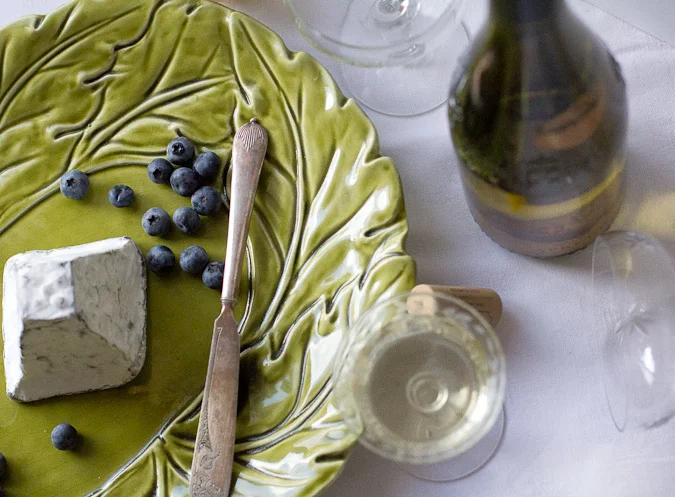
Cheese and wine pairing, on.
Goat Cheese and Wine Pairing Picks: Bloomsdale
The type of wine to focus on for a cheese like Bloomdsale is a wine like Chasselas from the Savoie region of France, pictured in the third photo above. Though un-oaked, it's lightly creamy mouthfeel mimics soft Bloomsdale. Sur lie-style Muscadets (made with the Melon de Bourgogne grape) and light sparkling cremants would have a similar effect.
Another way you can go is go citrusy and zippy. Not surprising because it's from the same region as any Loire Valley cheese, Sauvignon Blancs make a perfect goat cheese and wine pairing. You can extend this to a lean Chablis too. But stay away from uber-fruity wines. They will overwhelm.
If you need to go red for your cheese and wine pairing, try a Beaujolais or Cabernet Franc. Most are zippy and have low oak and tannins (see consideration #2).

I've left a glass on the table for you.
Head on over to Miss Cheesemonger's blog to see the second part!

Long Dream Farm: Long Horns, Rich Milk, Alpacas & Emus
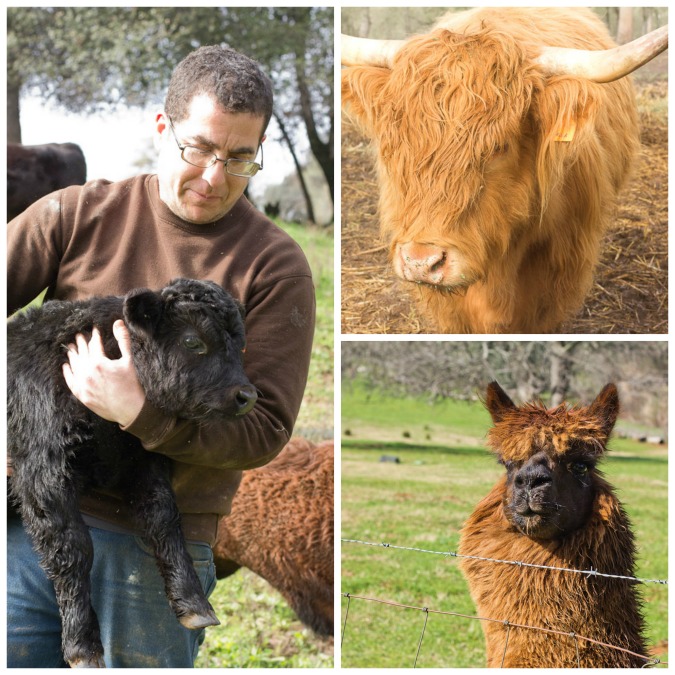
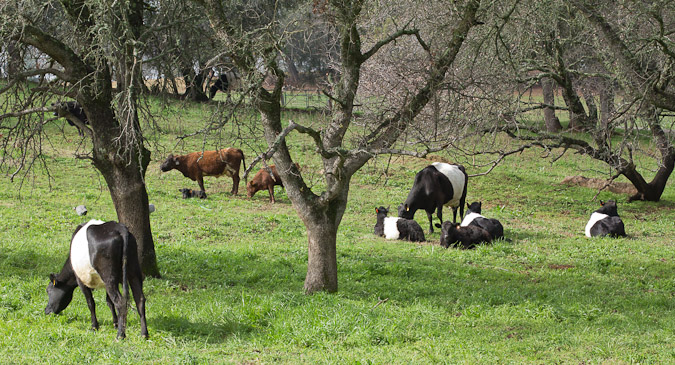
Just a few hours after I sent my newsletter last November announcing my cheesemaking class business, a quiet little farm in Placer County, Long Dream Farm, sent me an email. Would you like to come and make cheese with us from the milk of our heritage breed cattle with long horns and funny white belts and rich milk, they asked? Yes! I answered.
This is a photo diary of my visit. I got to pet Scottish Highlands, meet the Hungarian pig that chefs are going crazy over, take home an emu egg, make mozzarella with three different types of raw milk, and talk to the Long Dream farmer owners Andrew and Krista about what led them from New York City to Placer County. Could have been the opportunity to raise beautiful calves like Kofi, below.

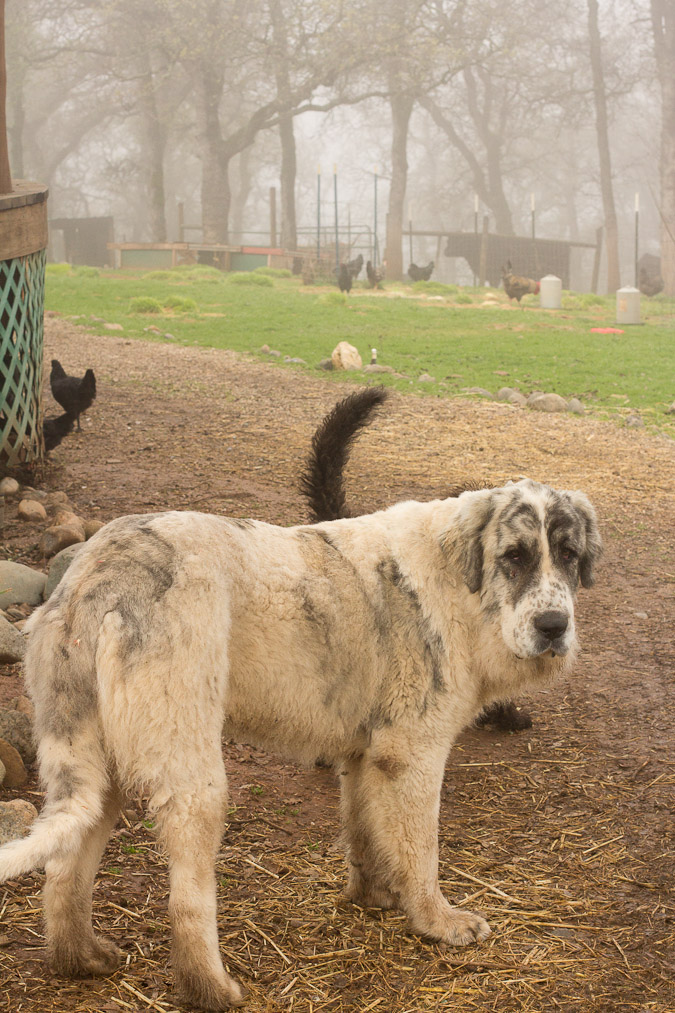
It was a wonderful day. I made cheese with wildly different milks - Dutch Belted and Jersey, and Dexter- with different butterfats, which effects how milk coagulates, curds form, and the flavor or the mozzarella. This of course was awesome enough. But walking the farm was even cooler, which I had plenty of time to do (thank you, Andrew, for giving me an extra long tour because I accidentally showed up an hour early).
If you're in northern California you might be able to find Long Dream's free-range pastured eggs around the Sacramento area. Plus, Long Dream farm is actually a farmstay.
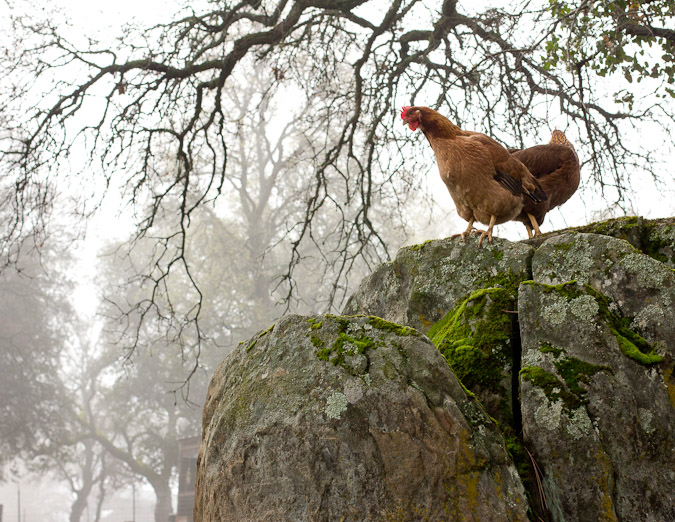
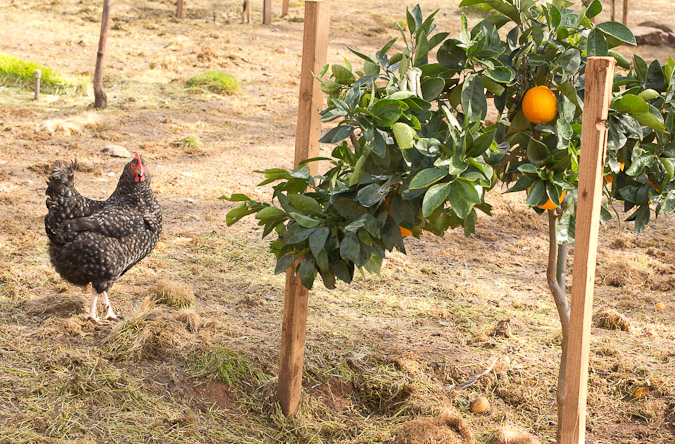
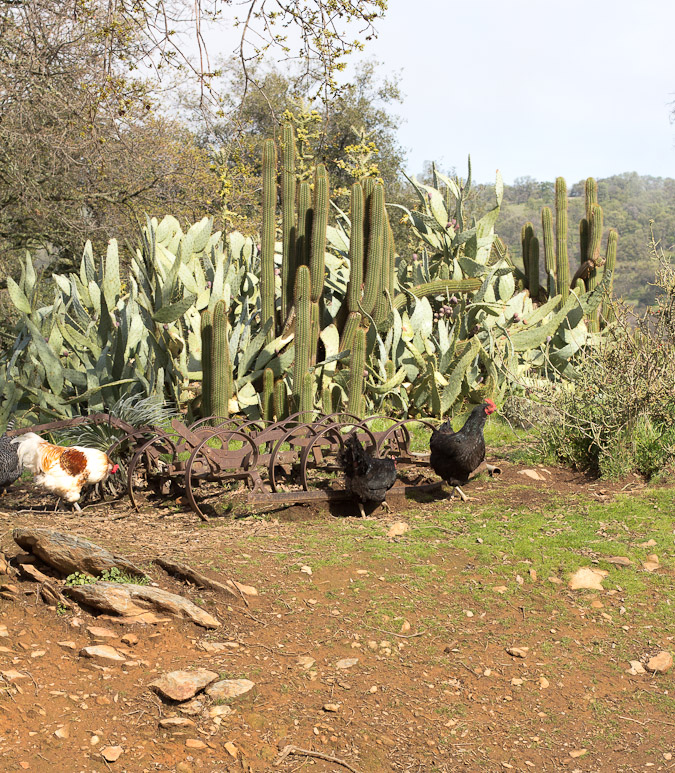
A few of the Long Dream chickens. They get to run around the acres and acres of farm before they're collected by the children at night and put back in their coop. The family sells out of their eggs every day and most are bought by local restaurants and whole foods markets.

A cream separator. I have big dreams for this. Long Dream is currently building on a creamery and I'm crossing my fingers this means cultured butter and fresh cheese very soon. They're working with Barbara Jenness (Nevada City Cheesemaker) to develop cheeses that fit best with their herd and land. Keep an eye out.
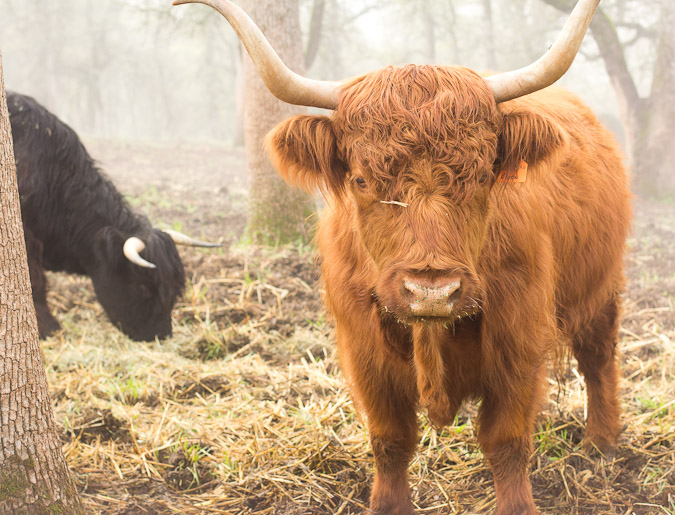

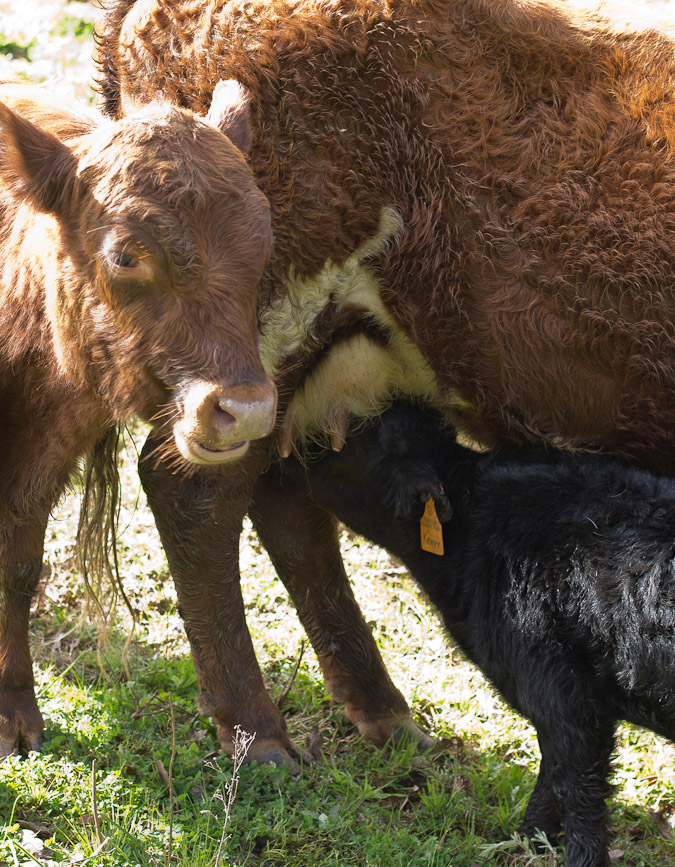
All of the cows have names at Long Dream Farm. Sometimes their ear fur is so long it covers up their name tags though. This one above just gave birth to Kofi.
Curious about Scottish Highland cows or want to read more about heritage breeds? Here's a little more on my blog by veterinarian Dr. Noreen Dmitri Called "Heritage Breed Milk Milk: Use it or Loose it."
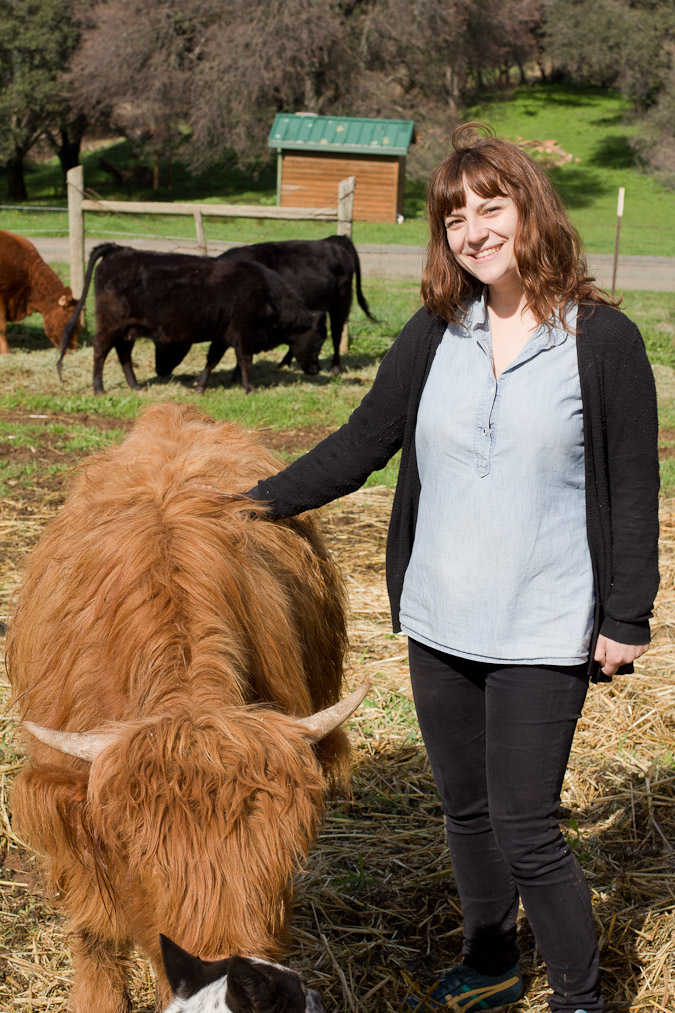

Andrew and his wife moved from the east coast to become farmers. Physicist and former professor Andrew is now the herdsman. Former lawyer Krista is now the milker and soon-to-be buttermaker. Their children, Clara and Frodo below, are the chicken collectors. They make sure to put the birds away at night so they're safe in the morning.


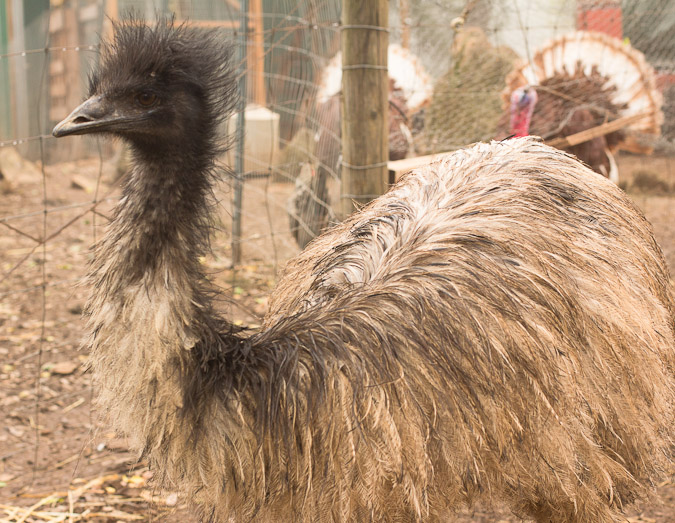
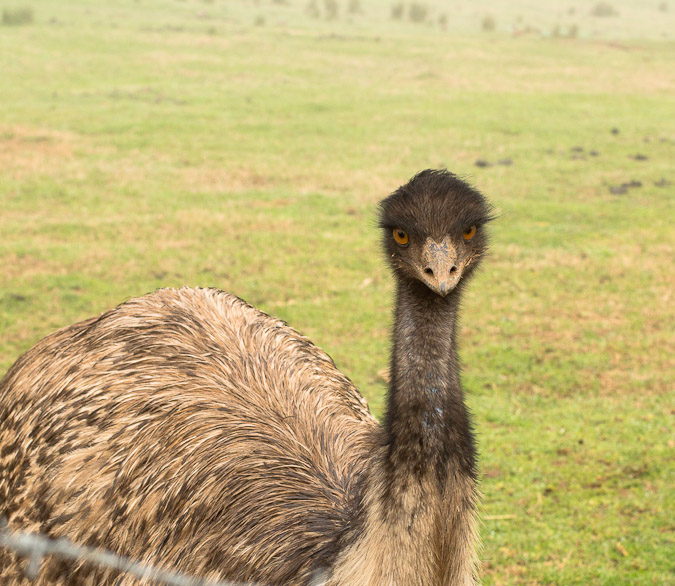
The family also has emus. I got an egg! Any cooking suggestions?

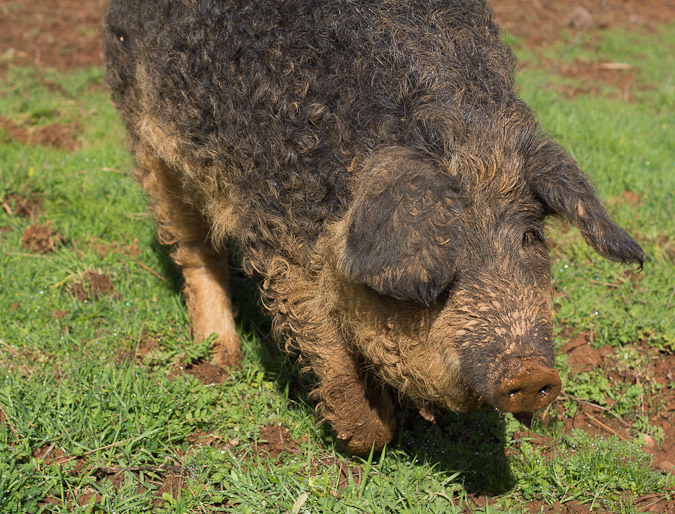
These are their Mangalista pigs. These curly-haired Hungarian pigs (it's agreed that the family has a thing for animals with free-flowing locks) are a chef's best friend. In a cooking sort of way.


After the cows, the friendliest animal on the farm (the alpaca, not me).
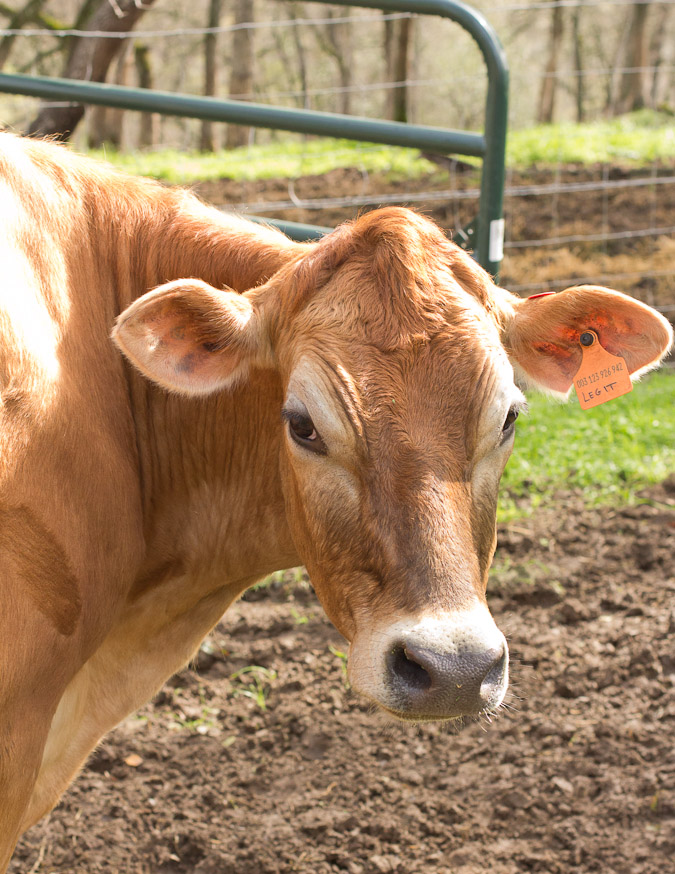
Their uber-friendly Jersey. Legit is a nuzzler and likes mud.
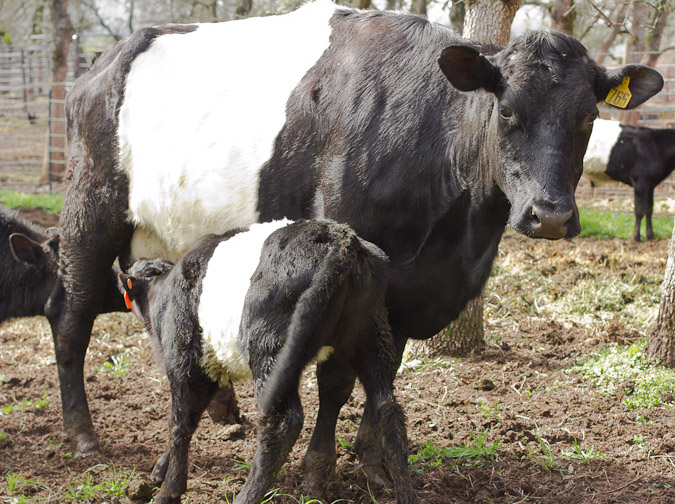
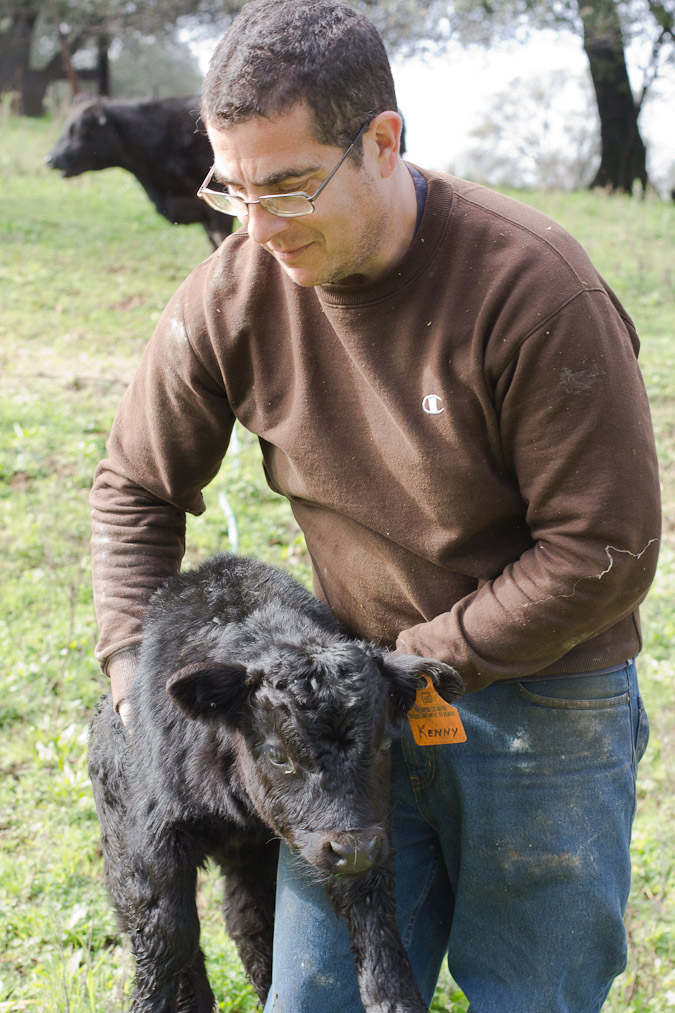
Dutch Belteds, and a babe that was born a month early but is now super healthy.

Thank you for letting me play with your wonderful milk and pose with your cows, Andrew, Krista, Clara and Frodo!

Eric Miller: Cheesemonger Invitational Finalist, Pickle Guru, and Maker's Common Co-Founder
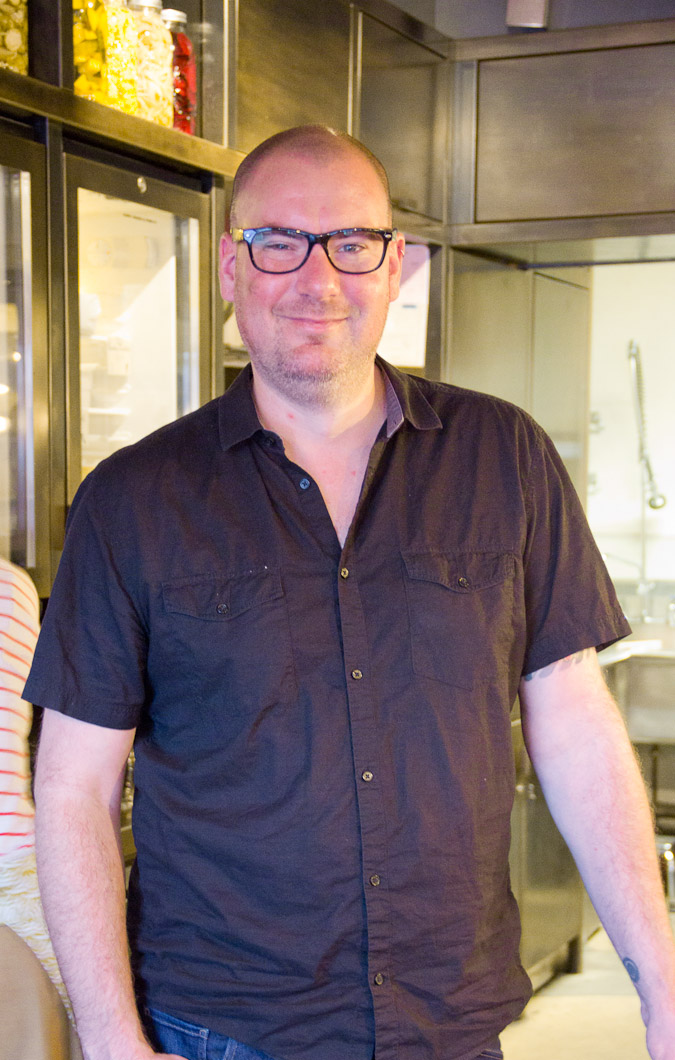
After reading the title description of Eric Miller above- Cheesemonger Invitational finalist, pickling guru, Maker's Common about-to-be-founder...
one might just naturally assume that it would be impossible for Eric to be anything more. Oh my friends, it is possible!

Abby of WMMB, me, Jack of Heritage Radio, Chris of Mission Cheese/Makers Common, and Heather of WMMB.
Eric and I met years ago when I was visiting friends at Mission Cheese. Then we hung out later on the Cheesemonger Invitational competition dance floor (not part of the competition, part of the party!). Then I watched him charm judges with his Perfect Bite the next year. Next, I traveled with him to Wisconsin on a recent cheese tour- see above. From these experiences, I can tell you that not only is he a cheese pairing master and able to pickle and cure everything from vegetables to charcuterie with skill, Eric is also very smart, funny, and he might even be able to break dance. And, he's about to launch Maker's Common with his Mission Cheese partners Sarah and Oliver in a very innovative way. So I thought it would be a good time to help you get to know Eric a little better.
Below is an interview with Mr. Miller. He's very involved in the cheese community, an awesome guy, and.... I think you should know the man who individually fried 100 quail eggs for His Perfect Bite a little better.


The Man, the Pair-er, the Pickler: The Maker's Common Co-Founder
Kirstin: If you could be one cheese for the rest of your life, what would you be? Why? If you wish, you can pick another cheese to morph into once you turn 65, too.
EM: I think I have to go with Rush Creek Reserve to start with. Everyone knows it’s special. It shows up once a year for a couple of months and everyone celebrates. It’s treated like royalty – the star of every cheese plate. And I’d get to be made by Andy Hatch and his crew. That sounds weird now that I think about it. In my second life as a cheese, I might go with a dearly departed cheese from Goat’s Leap Dairy – Eclipse or Sumi. I really miss those cheeses. And if I could bring them back I sure would. They were like our local little piece of the Loire.
As a cheesemonger who has been behind the counter of Mission Cheese slicing dairy for the discriminating eaters of San Francisco for years now, what are three things that you've noticed people assume about cheese that is not true?
EM: There are so many! One of the most absurd is that they think goats and sheep are the same animal. Seriously? I figured that would have been clarified by the time you’re an adult. Another is that there’s no gluten in blue cheese. There are studies that correct this one. Look them up. Get the facts. Lastly, I’d have to say that triple creams are bad because of all the fat. People don’t realize that 45% of the weight of a triple cream is moisture. It’s not like they’re eating a stick of butter here but they seem to think that’s what it is.

What are three things that you wish people knewabout cheese that many might not know?
EM: First and foremost, that not all goat cheese is created equal. So many think that they don’t like goat cheese because they has some nasty version of it that sat on a Safeway shelf for far too long and tasted of ammonia and filthy goat bedding. Sorry, but that’s not it. I also wish they knew the diversity in cheese styles. People ask for Brie, Manchego, and smoked Gouda (why?) all of the time. There’s so much more to cheese than those. Lastly, and this isn’t specific to cheese, they knew how to describe flavor. We need to move beyond just “sharp” or “sweet”. There’s so much more nuance that people don’t really think about. As a bonus answer, I wish people knew that America was making amazing cheese. So many people just assume we only have pre-wrapped singles and the ubiquitous orange block of cheddar. There are hundreds of amazing cheese makers in the US at this time. This is something I want everyone to know, and I take that challenge very personally.
You've worked on both the east and west coasts in the cheese world. What do you see as the main difference(s) between the east and west coast cheese scene and tastes?
EM: I knew next to nothing on the east coast – I was volunteering in the Murray’s Cheese classroom as an assistant as often as I could. That being said, a big part was simply the selection. I barely experienced any cheese from the west coast. I think there was also more access, in general, to cheese that’s well beyond your typical grocery store schlock. That makes a big difference in how people see cheese and its diversity. That’s all changing now though. I have to say that the west coast cheese community is amazing – from mongers to makers. I think that the network out here is really impressive. We’re able to visit cheese makers all of the time. I couldn’t really do that in the same way back east.

Right now you're looking for a spot to house your cheese baby, Maker's Common. I'm super excited about it. With its all-American cheese menu and support for local wine, Mission Cheese has been a wonderful addition to the Bay Area community and I'm sure Maker's Common will shine just as brightly. Can you talk a little bit about what will set Maker's Common apart from its big sister, Mission Cheese?
EM: We love what we do at Mission Cheese. But, to put it simply, we’ve run out of space for new items for the menu. I added a lot to the menu a few years ago but there are so many ideas that we have that are nearly impossible to execute. So with Maker’s Common, we’re looking for something that’s around three times bigger. We’ll have a full kitchen so that we can expand our menu, we’ll serve brunch, make more in-house charcuterie. There will also be a retail market with cut-to-order cheese and charcuterie, and wine and beer to take away, and prepared food items. To goal for the market is to make it your perfect spot for all of your picnic needs or for a nice and simple dinner with friends. As important as everything else we plan on doing, it will be just as accessible and family friendly.
You're going a very different route to raise funds to open MC2 (Maker's Common). Instead of using something like kickstarter, as is common with the food biz right now, or calling in big investors, you're going the way of a DPO (Direct Pubic Offering). This makes it so that the investors are everyday people, and instead of just getting one thank-you gift when your needs are financially met as is the case with orgs like Kickstarter, investors are "founders" who will get returns on their investment over time. Can talk a little bit about the type of people who are investing in you and what they expect from the MC2 future?
EM: We’re really excited about how this has gone. We’ve raised over $250k through our DPO – most of that coming from the Bay Area. Most of our Founders to date are in the greater Bay Area. Everyone from foodies to tech industry movers and shakers are investing in Maker’s Common. It’s also a way to balance out your portfolio and actually know who – and I mean the actual people – you’re investing in. If you like good food then it’s a worthy investment. If you believe in what we do at Mission Cheese then it’s a worthy investment. We always hear people talking about buying local and shopping local. Well, let’s close that loop and put our money where our mouth is and actually invest local.
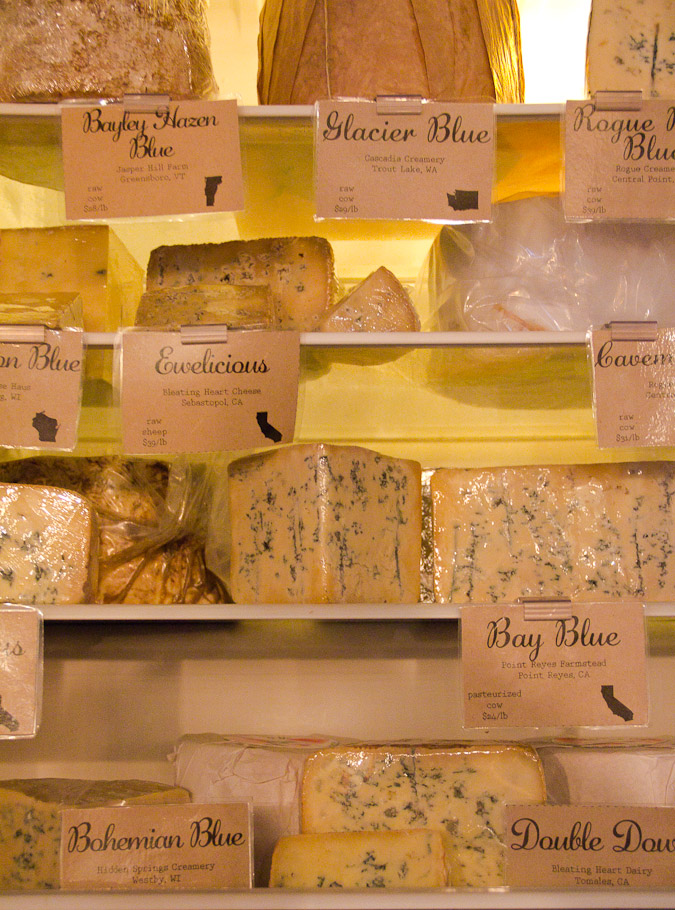

Why is it important for you to support local when there is deliciousness everywhere?
EM: Deliciousness is everywhere and we support those producers. All of our products are domestic. We love that we are part of their businesses and we can showcase what they’re doing. But when you actually invest in local businesses and you shop at those businesses, you actually keep more of that money in your local economy. I love European cheese but I’m pretty sure that a cheese maker in Petaluma or Dodgeville needs my dollars more than a subsidized cheese maker in Europe does.
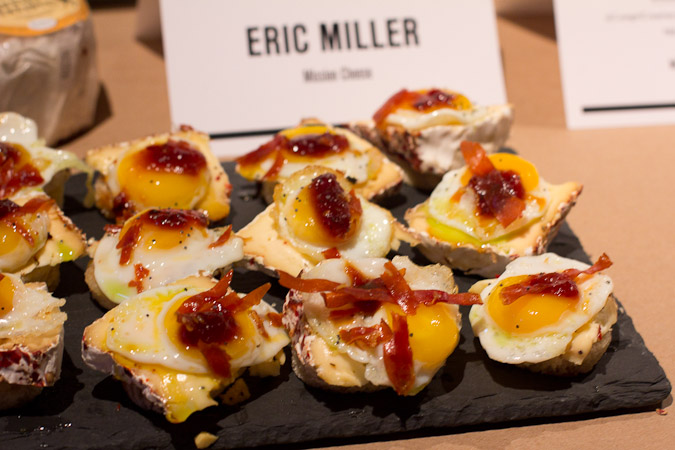
Back to cheese gossip. You were a finalist in the 2015 Cheesemonger Invitational. I was there. I saw your perfect bite. Topped with quail eggs which you individually fried, your Perfect Bites were beautiful. And a little crazy. You cooked 100 eggs perfectly. How many did you not cook perfectly while practicing?
EM: That was a serious challenge. My wife thought I was insane for frying up over 100 quail eggs for CMI. Once I was in the thick of it, I started to agree. Once I realized that the easiest way to crack open the shell was to use a sharp knife and cut an end off I was in good shape. Before I figured that out I was probably at a 60% success rate. I don’t know if I could top that one if I were to compete again.
What were the most surprising CMI moments for you?
EM: For me personally, it was just making it to the finals. I specialize in domestic cheese. My imported cheese chops are not what they should be. So that was a real honor – especially considering some of the seriously talented people that I got to share the stage with. I was also blown away crowd. I’ve never seen so many cheese lovers in one place that weren’t actually from the cheese industry. It was amazing.

The eat-soon cheesemonger list at Mission Cheese
I've gathered from experience elegantly imbibing with you that you enjoy whiskey. And beer. And you also like wine. But really, what are your top three cheese pairings, ever?
EM: A favorite has to be Queso de Mano from Haystack Mountain in Colorado with some Le Merle Saison from North Coast Brewing in California. The earthy nuttiness of the cheese along with the yeasty tropical fruit of the beer comes together as lemon zest and toast. I’ve served this pairing dozens of times and everyone loves it.
Fat Bottom Girl from Bleating Heart in Tomales and Charbono from Calder Wine in Calistoga is a great duo. Almonds, cherries, butter, and herbs. It’s one of my favorite California combos.
A classic has to be Cabrales and Alvear Pedro Ximenex Solera 1927 – both from Spain. Cabrales on it own can be quite sharp, acidic, and strong. The PX can come across as cloyingly sweet and syrupy. Together though, it’s like fireworks…Pop Rocks come to mind. They balance each other out beautifully.
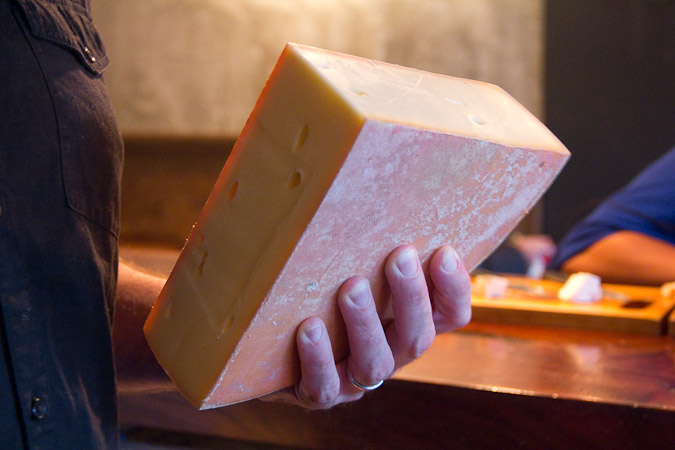
Eric is the co-founder of the forthcoming Maker’s Common, an eatery and market that will showcase America’s best cheese, charcuterie, beer, and wine, opening in 2016. In this role he is focused on developing menus, raising capital, and scouting locations for the business. He is also the director of the Mission Cheese in-house charcuterie program, creating products that have become an integral part of the menu.
Since moving to California, he has fostered strong relationships within the American charcuterie movement by serving as the Charcuterie Chairperson for the Good Food Awards. Eric was also a top-ten finalist at the Cheesemonger Invitational and can be sometimes be found teaching classes at the Cheese School of San Francisco.
To find out more about Maker’s Common or to invest, check out the website.

Minnesota Cheese Taking 2016 by storm: Lone Grazer & RedHead Creamery
Because I often drop words like drought, meyer lemons, ocean views, and wine country instead of phrases like hot dish, snow, and ice fishing, it might not be clear that my family roots run deep to Minnesota. But my mother's side of the family comes from the Land of 10,000 Lakes. Our ties to the state are as thick as my Norwegian aunt's lefsa is thin, and my love of the state's charms is as overflowing as as my uncle's freezer is with venison. I love when I see it succeed.
Minnesota Cheese Takes 2016 by Storm
So when I say that can't wait to see what 2016 brings for the artisan Minnesota cheese movement, I say it with an excited, and inspired heart. Go Minnesota! (And when I say Minnesota cheese is taking 2016 by storm,... I mean it in a gentle snowing storm kind of way because it's still a small industry, but for such a small industry, it's a blizzard!)

I'm excited about two new creameries in Minnesota especially- Lone Grazer and RedHead Creamery. Both of whose cheeses I was lucky enough to try at ACS, and both hope I get to see in shops all over the country soon. If you spot these guys featured below, grab them as soon as you can, and if you don't, ask away at shop counters, dear readers!
Lone Grazer
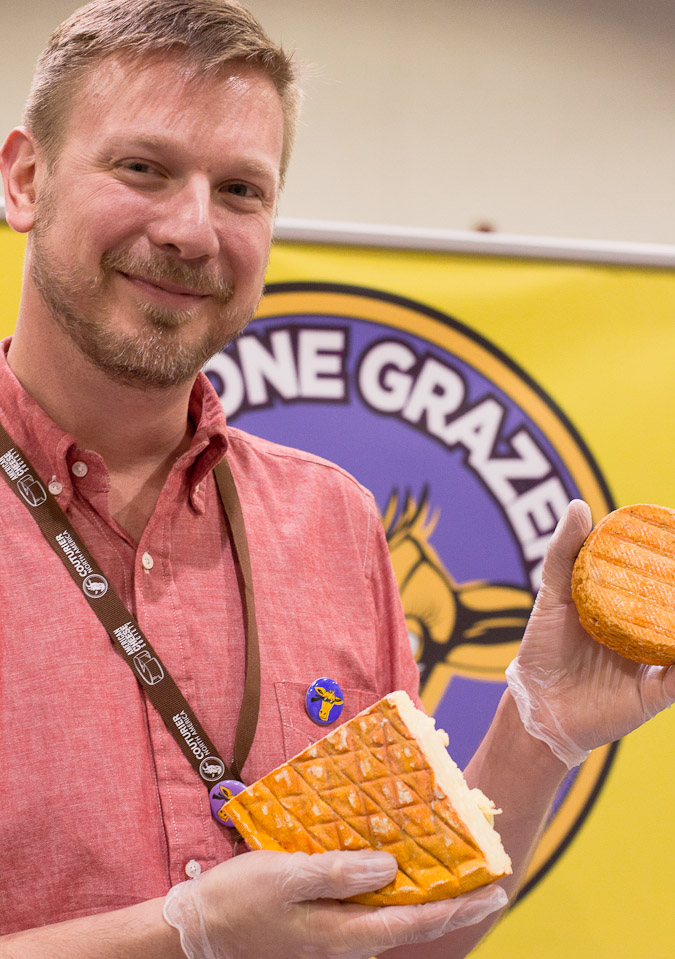
Lone Grazer cheese (above) is as orange as you can get. Oranger than an orange. Oranger than Red Hawk and Tallegio. And just as vibrant. With plush rinds and soft, bouncy pastes, Lone Gazer cheeses are washed rind wheels that are rubbed with tea or Minnesota hand-crafted whisky and water as they age. "Washing," or rubbing the rind encourages the growth of B. linen bacteria, and turns the rind orange and funky, and the inside sweet.
This beauty above is called Grazier's Edge and is washed with rye. The baby wheel that cheesemaker Rueben is holding in the top photo is called Hansom Cab and washed with rye and Lapsang Souchong tea. All are made with milk from grass-fed milk in Northeast Minneapolis by Mr. Rueben and his crew. Awesome. Funky. Sweet.
RedHead Creamery

What happens with a farming family has a family of four redheaded girls? One of them visits a farmstead creamery at the age of 16 and decides she wants to make cheese, falls in love with a dairy farmer, visits creameries all over the world, and returns to California to start her own cheesemaking company. Still with red hair. I first learned about Alise when she emailed me asking who to visit in Ireland upon reading about my visit last fall, and then was overjoyed to stumble upon her cheese at ACS the following year. Alise makes gorgeous cheese- the type of cheese that normally takes years to perfect, and I'm so excited to see where things go for her. Her eight month-old cheddar, buttery, sweet, and lightly meaty, is made from the cows from her family's dairy just outside the creamery, as is her creamy Little Lucy featured above. Alise and her family are below.

But there's more.
More Minnesota? Oh yes, Cali style.
California is getting one half of one of Minnesota's brightest cheese stars in Santa Rosa. Keith of Alemar Cheese (who makes the oozing, buttery and earthy Bent River and Good Thunder) from Minnesota is starting an English inspired cheese company counterpart in Sonoma focusing on raw milk cheddar and blue called WM. Cofield Cheesemakers.
Are we lucky much?
Very much looking forward to 2016. With my friends and family I know that 2015 has been... long. Looking forward to things moving a little smoother, having time to write more here, and to sharing more of my latest discoveries and favorite people with you here. Happy Cheese and Cheesemaking! May your upcoming year be full of cheer, love, financial success and health. Thank you for reading.
Hidden Spring's Brenda on Following the Curd & Washing Vats on Toes
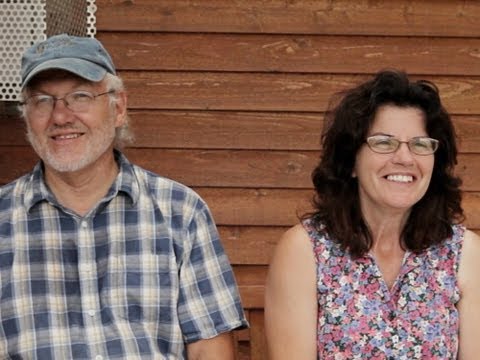
Brenda Jensen's path from earning an MBA and working as an operational manager in the packaging industry to waking up at light break every morning to check on 550 sheep and cut curds in a steamy make room may seem surprising to some.
 Brenda Jensen's path from earning an MBA and working as an operational manager in the packaging industry to waking up at light break every morning to check on 550 sheep and cut curds in a steamy make room may seem surprising to some. It certainly was to the Jensens who now make the award-winning cheeses of Hidden Springs.
When Brenda and her husband first bought fifty dairy sheep in the middle of Wisconsin Amish country, their plan was to launch a creamery. Dean and Brenda would milk the sheep and then hire someone to make cheese, they thought. Brenda would keep her full-time, well-paying job that likely had a retirement plan. But then the couple decided to take a class and visit local sheep’s milk cheesemaker Mary Falk at Love Tree to learn more about the ins and outs of their future business. This shook things up.
Brenda fell in love. With everything. With the feel of the curds on her fingers, the scent of the make room, the texture of sheep's milk, the mix of artistry and science. She might have even liked the hair net she was required to wear.
“My feet didn’t touch the ground for days,” she says laughing, “I was in love. I told Dean, ‘I think I found the cheesemaker. I think it’s me!’
“I still get goosebumps when I smell warm milk,” she says.

Though Brenda couldn't be stopped after she walked her boots through the sanitizer into a make room for the first time, she ran into a few glitches along the way. At forty-four years old, she was a newbie. And she was a petite (yet strong) woman often training at cheese plants with men who grew up next to cheese vats.
She admits being a female cheesemaker sometimes made her have to work harder. One cheesemaker at a location where she trained didn’t let her cut the curd until her third shift on the job. But even though she had to stand back and watch and clean a lot in the beginning, she says, she noticed she was treated differently after the first year.
“They started looking at me like, ‘Huh, maybe she is really going to make cheese.”
That she did. Brenda quit her job, trained for her cheesemaking license, and translated her inspiration into eight different cheeses at Hidden Springs. My favorite of her vibrant cheeses are Timber Coulee, Bohemian Blue, Ocooch Mountain, and her mixed cow and sheep’s milk wheel, Meadow Melody, which I profile in my book (awesome with cherry conserve or confit).
Brenda now knows she can pick up the phone any time and receive support. She sites her biggest influences after Falk among Wisconsin’s and even the country’s food and cheese best- the team at Uplands (especially Mike Gingrich who helped her in her early years), goat cheesemaker Ann Tapham, Willi Lehner of Bleu Mont, Ari Weinsweig of Zingerman’s, Ranee May, Jeanne Carpenter, and Kate Arding of Talbott and Arding.
Beyond professional guidance, she can also call any of her five children to bring over one of her twelve grandchildren if she needs using the power hose in the make room.
“They like to say they made cheese with grandma,” Brenda Says, “they also like to ride the carts around the farm.”
When asked if she had any advice for aspiring cheesemakers who are starting out who may or may not have their children or grandchildren to help them, Brenda said she did especially for people of her stature (raising my hand right here).
Think long and hard about your milk buckets and vats and do so creatively. For example, the standard milk pails are so heavy, she had to roll hers the first time she used them. She suggests going with gravity flow tanks and smaller buckets.
“My toes don’t reach the ground when I’m washing the vat- something to think about when buying one!” she says, laughing.
Either way, this is one whip-smart and ambitious grandmother with an MBA that won't let an inch or two stop her.
Chaseholm Family Farm: Farmstead Cheese from Upstate New York
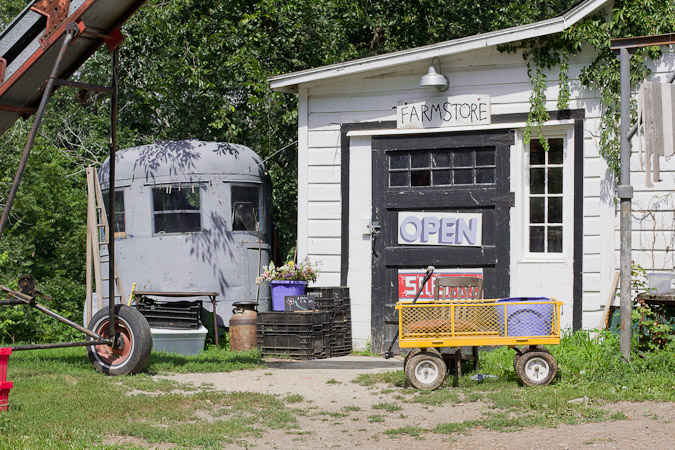
Chaseholm Farm is a family creamery run by a sister and brother duo in Northern Dutchess and Southern Columbia Counties. upstate New York. The sister, Sarah, and her partner, raise the lovely Jerseys, Holsteins, Brown Swiss cows organically on grass surrounding their farm (in addition to making sauerkraut and apothecary products), and the brother, Rory, makes the cheese. Which coincidentally is delicious and nearly unavailable in Oakland -better luck to you, my east coast friends!
 If you saw a ninety year-old woman walking across the street in front of your car over the past three weeks and was surprised to discover that, A- as she (slowly) grew closer, her hair was brown, not gray, and that, B- she might have actually been, say fifty or so years younger than you thought, it was me. I'm sorry for taking so long walking in front of your car. I threw out my back. I wish I could say it was from doing something fun like lifting bottles of wine from a table to my mouth. Rather it was from lifting a case of wine from the floor to a table. That I wasn't going to drink.
Which provokes me to say- bless you, cheesemakers for spending your days bending over vats lifting heavy curds, flipping huge wheels, and scrubbing floors and tables. Your backs and arms are of super human strength. Thank you for risking your body to make delicious cheese. I would never bet against you in an arm wrestling competition.
Now, my friends, I'm back to the blogging world. My back is happy sitting in front of a computer once more, and I'm excited to share some pics from my trip to New York.
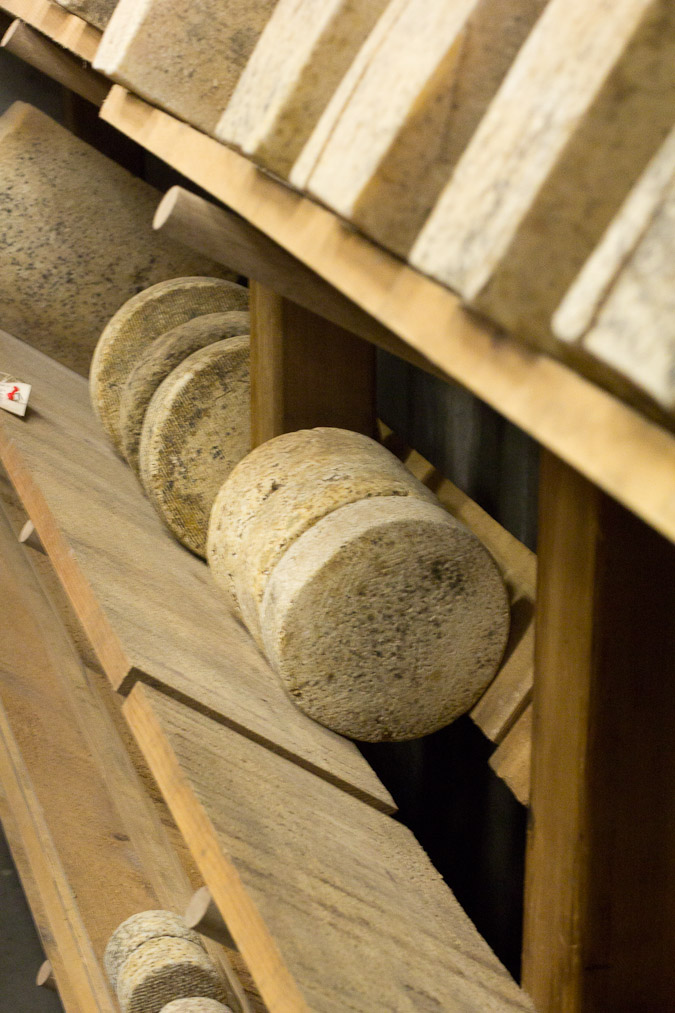
When my friend Kathleen Cotter and I of The Bloomy Rind drove through New York en route to Providence for ACS this July, we reached out to east coast cheese friends to ask who to visit. Since Kathleen's from Nashville and I'm from Oakland, we thought it could be a cool chance to meet smaller cheese folks whose goods we hadn't had a chance to try. When Matt of Cheesenotes learned we were already visiting Sproutcreek (more on this later), he told us to to check out Chaseholm nearby. Points for Matt.
Chaseholm Farm is a farmstead family creamery run by sister and brother duo Sarah and Rory in Northern Dutchess and Southern Columbia counties in upstate New York. The sister and her partner raise and milk the lovely Jerseys, Holsteins, Brown Swiss cows organically on grass surrounding their farm (in addition to making sauerkraut and apothecary products), and the Rory makes the cheese. Which coincidentally is delicious and nearly unavailable in Oakland -better luck to you, my east coast friends!
We arrived at the farm a little flustered, hot from the humidity, fresh out of phone batteries, and hoping the maps left on our phone screen actually directed us to creamery on our second attempt (we already stopped at the dairy instead of the make room down the road on the way in). To soothe our nerves and lessen the heat, Rory, the handsome brother-cheesemaker drank a beer with us. Because, you know, it was hot and all the cheese was already made, and he's nice.
Though the farm has been in the family since the early 1900's, it wasn't always a dairy. After hearing his family farm was in danger of selling, in 2007, Rory packed up his bags from his-then home base of California and returned to New York. Because he knew that if they were able to make money from the farm, they could keep it alive, Rory retrofitted his grandfather's old barn into a make room, bought some cows, and started making cheese. His sister returned home shortly after and became a cow maven. The rest is fermented history. Check out Sarah's instagram account, by the way, some of the best pics of farm life out there.

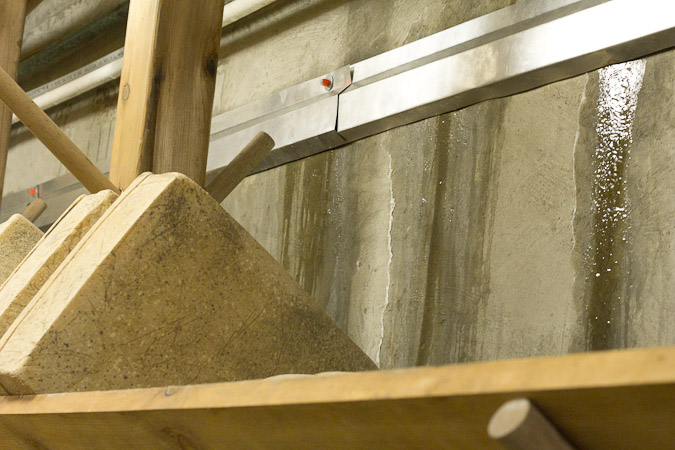
We loved touring Chaseholm. Not only was the beer refreshing, the cheese super tasty, and the farm beautiful, it was fun to see how Rory and the family re-vamped everything. They not only make cheese, they build stuff. When we were wandering around the aging room, we looked up to see tiny water trickles running down the walls, "That's for humidity," Rory said, squinting, "I think I want to put some more in." You know, easy as pie, because they already constructed the cave and started the entire system anyhow.

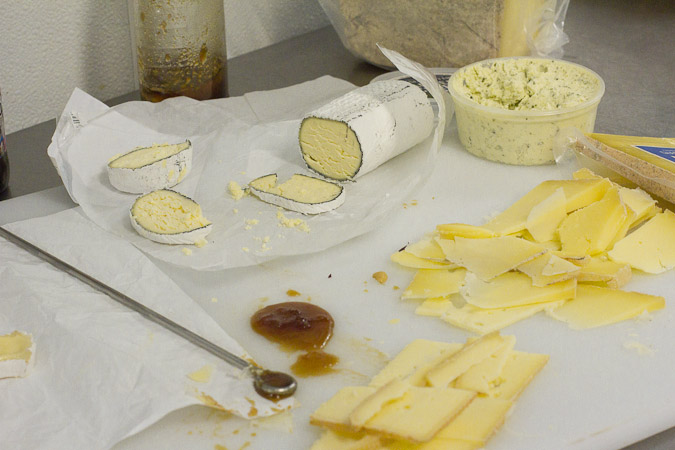
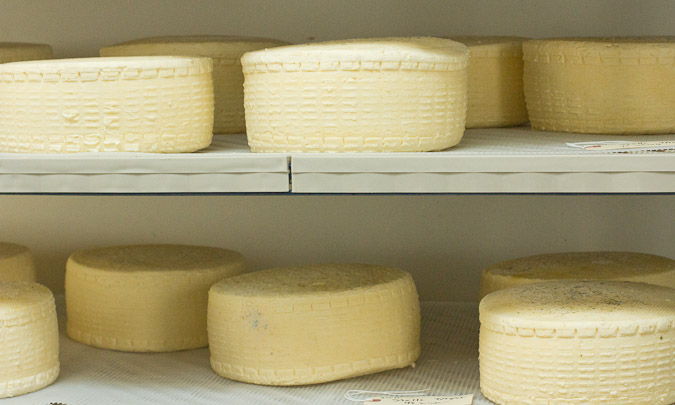
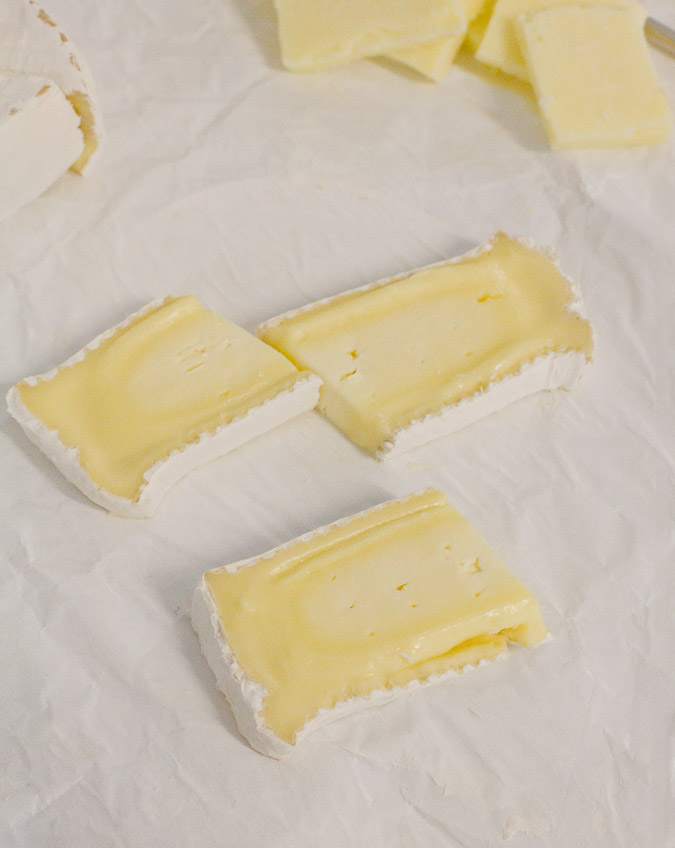
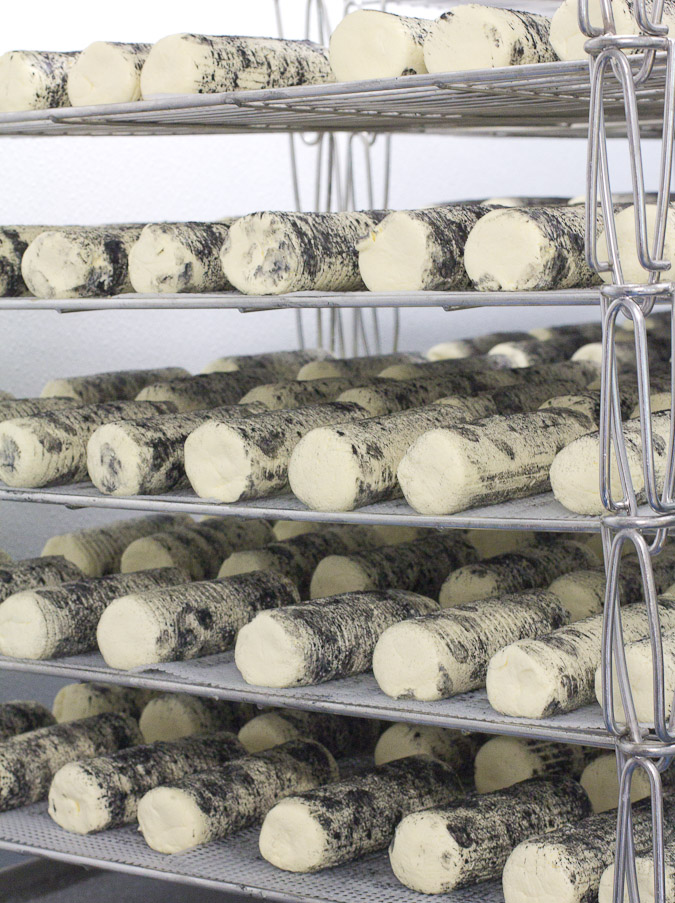
One of our favorites of his cheeses was Moonlight - a sexy little log number with an ash coating covered in white bloomy rind. Pictured by the local honey in the above photo. It tastes sprightly, lemony, and sweet and buttery. See those yellow tones in the cheese? That's the color of milk from cows who have been munching on grass all summer long.
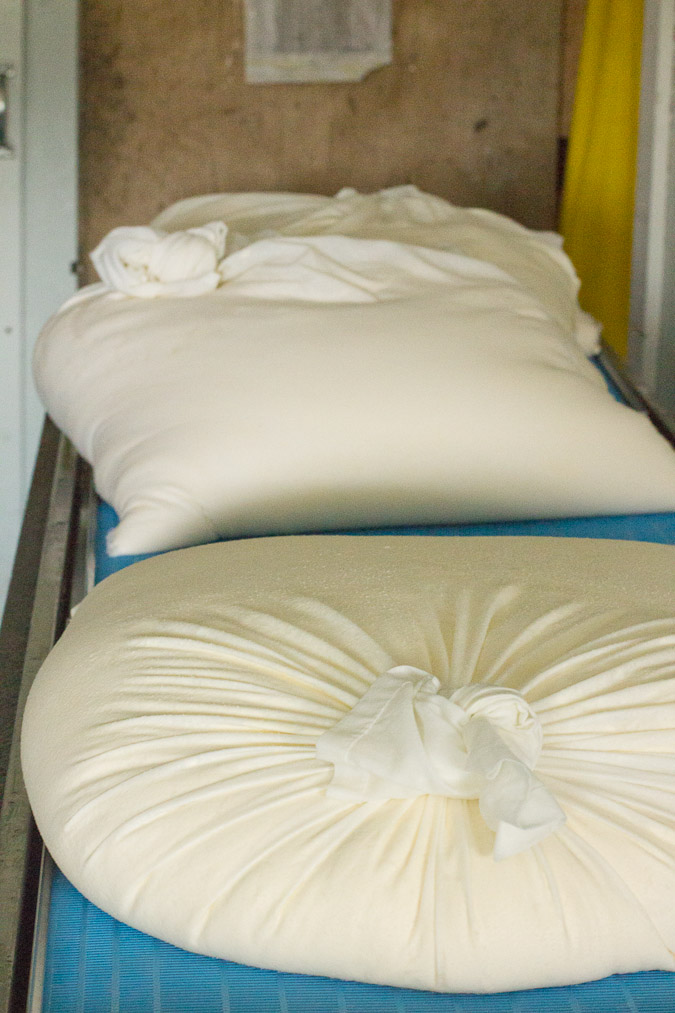
Moonlight is a lactic-acid set cheese, meaning that its curds hang out for hours slowly developing acidity before being molded into cylinders. The curds spend their time relaxing in the bags below before being molded the next day.
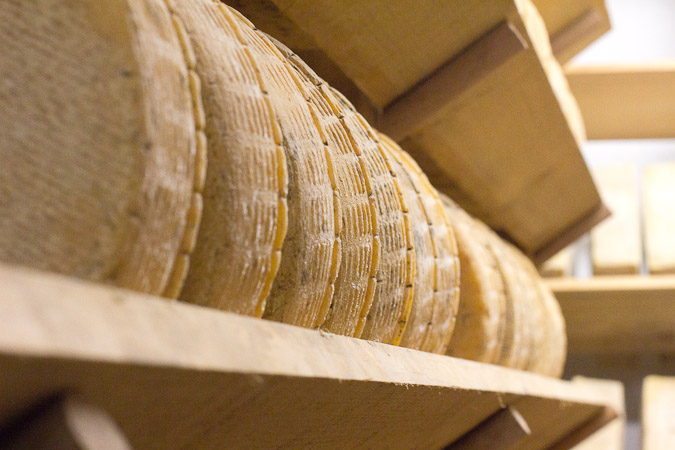
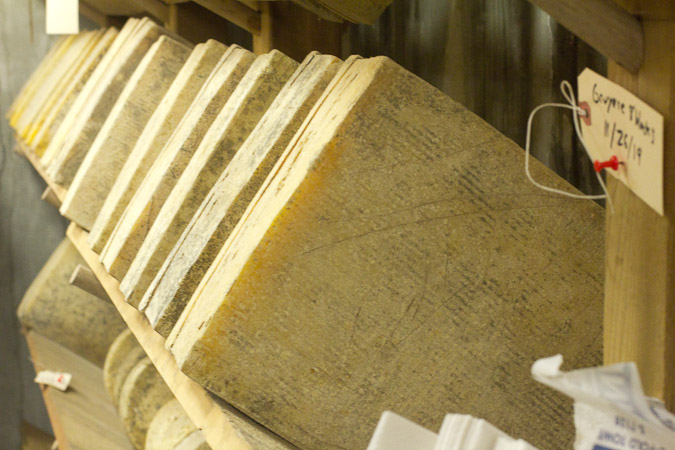
Some other favorites were their Camembert, and Stella Vallais, a sweet, nutty aged cheese. That funky number below was Red Beard, a cheese washed with apple cider and brandy. Normally aged from a couple weeks to a month or so, this was a stinky square pushed to the back of the aging room and then forgotten about for a month or four, with which Rory tested our funk endurance. Kathleen was strong, I was weak. It was tongue bristling.

One of our favorite visits on our way to ACS, Chaseholm was a beautiful reminder of the kindness of strangers willing to share beers on a hot day, the drive that propels cheesemakers forward, and the deliciousness that can ensue with enough passion and rich, rich milk. Thanks for the visit, Chaseholm!