
The Cheese Blog

French Wine & Cheese Guide Poster Giveaway: Or, What Happens When an Architecture Professor Submits to his Wine & Cheese ❤️

How did an architecture professor get so into cheese and wine maps, you ask? I did too, and the answer is below! David Gissen and I first met while I managed the wine bar at Solano Cellars and pretty quickly became friends. Not long after, he published the French wine metro map, which is as awesome as it sounds. Just recently, he released a new guide- the Cheeses of France: traditional styles with regional wine pairings with his own beautiful cheese drawings, which I think you'll like it as much as I do. It rounds up the major wheels of France and matches them to the wine that regionally adore them in a clear and beautiful way (this will shortly be going on my office wall). To celebrate the launch of the guide, I not only interviewed David below, we're hosting a giveaway!
The Giveaway:
Leave me a comment telling me your favorite French cheese and wine pairing on my Instagram page and tag a friend. That's it. Early next week I blindly pick a winner. Good luck.
Enjoy my interview with Professor David Gissen, below, and my answer to his question at the end, what are my favorite French wine and cheese pairings.
1. How the hell did an architecture professor get so into cheese and wine maps?!
I grew up in the center of a city with beautiful old buildings and which nurtured an interest in architecture, cities and history. My mother was an artist and was passionate about exploring food globally, and my aunt and uncle were very passionate about exploring European wines. My mother’s family comes from a wine-growing region in Europe and once owned a business that sold and imported wine and spirits. Though my career is primarily within architecture and education, these other things were always part of my life.
About eight years ago the publisher Steve de Long contacted me about transforming a diagram that I made, that looks a bit like a subway map, and that easily explains French wine geography, into a more formal and commercially available map. Steve is not only an acclaimed publisher of wine maps, but he also studied architecture and with many of my mentors and friends. That initial project that we completed became the Metro Wine Map of France and it had a type of ripple effect in the wine world, French landscape history, and other areas.
I can’t really explain why, but when I wanted to learn about cheese, I not only tasted many different cheeses, and took notes about them, but I began drawing them as well. I choose a more technical style of drawing as it emphasized similarities and differences, and I learned this type of drawing when an architecture student. The Cheeses of France includes most of these cheese drawings and that will enable someone to understand the complexity of French cheese.
To bring this all full-circle, last summer the curator of architecture at the Museum of Modern Art in New York acquired the Metro Wine Map of France for the Museum’s collection. He wrote to me that it would join a group of other works that entailed urbanistic interpretations of culture. That was thrilling, of course, but also made me realize that there must be some intrinsic architecture and design aspect to all of this!
2. What does terrior in cheese and wine mean to you?
I was taught to think of terroir as the taste in a wine or cheese and that is specific to its place of origin. Terroir is the taste of earth, grasses, the microbes in the air, or the dankness of a cave where cheese and wine are aged.
But every time someone explains the terroir evident in some glass of wine or piece of cheese to me we're almost always often thousands of miles from that place! So, could we more accurately think of terroir as something from somewhere that exists in a highly mobile form? It's an aspect of a site or landscape that can be dispersed globally in slices of cheese or a glass of wine. I love to think that someone in Hong Kong or Oakland, where I live, can be tasting something similar from some place that is thousands of miles away. Terroir is a sense of something from somewhere that can move.
3. You choose regional pairings for this map. What are 3 of your hands-down, cheese and wine pairings ever, regional or not?
It’s important to note that while I created the drawings and the overall design of The Cheeses of France, the numerous pairings listed under each cheese on the chart were developed in collaboration with Steve de Long. Most of the wine pairings come from the regional cheese producers themselves, but about half of them are derived from our research. Steve, in particular, was interested in the ideas regarding pairing of cheese and wine by Francis Percival and Pierre Androuet. Of those two, I prefer the latter’s more open approach, but both inspired the wines listed under each cheese on on the Chart.
But to answer your questions, my favorite cheese is an aged Valençay and I think it tastes great with either red or white Valençay. Then, I think an Ossau-Iraty with either Jurançon or Irouleguy, and finally, Salers and a Northern Rhone red wine. I think that last one is really cool.
Now, I’m curious, and I hope this makes it into your blog: what are your favorite French cheese and wine pairings?
Kirstin here! David, my favorite wine and cheese pairings are Comté with Vin Jaune or an oozy Selles-sur-Cher or Lingot de Quercy with a Sancerre. Made for each other (maybe even literally?).
Cheesemaking with the SF Milk Maid: Gosling goat cheese
We’d make the Gosling in one day, she’d leave me with the newly formed pyramid, and then I’d baby and flip it in my fridge for two to three weeks until it passed through cheese adolescence into adulthood.
 If you've ever taken a class with the SF Milk Maid or flipped through Louella Hill's new cheesemaking book, Kitchen Creamery, you've probably had a moment much like the ten or eleven of those I've had recently where you find yourself shaking your head in amazement, asking, how does one person know so much?

Louella's book is packed with more cheese types than you though any one human would be able to make, her hand-drawn illustrations accompany the wheels so one can see what rogue bacteria may be to blame if there are too many divets in your brie, and when Louella's not writing a book, she can be found teaching classes around the Bay Area. She kinda does a lot.
One of the original employees of Narragansett Creamery and the owner of SF Milk Maid, a cheesemaking business that teaches people how to properly stretch curds, Louella's got a breadth of cheese knowledge under her belt that far surpasses even the amount of cheese that the average French person keeps in their fridge during a year. And she's nice, and, a big believer in the glory of butter. In short, she's lovely.

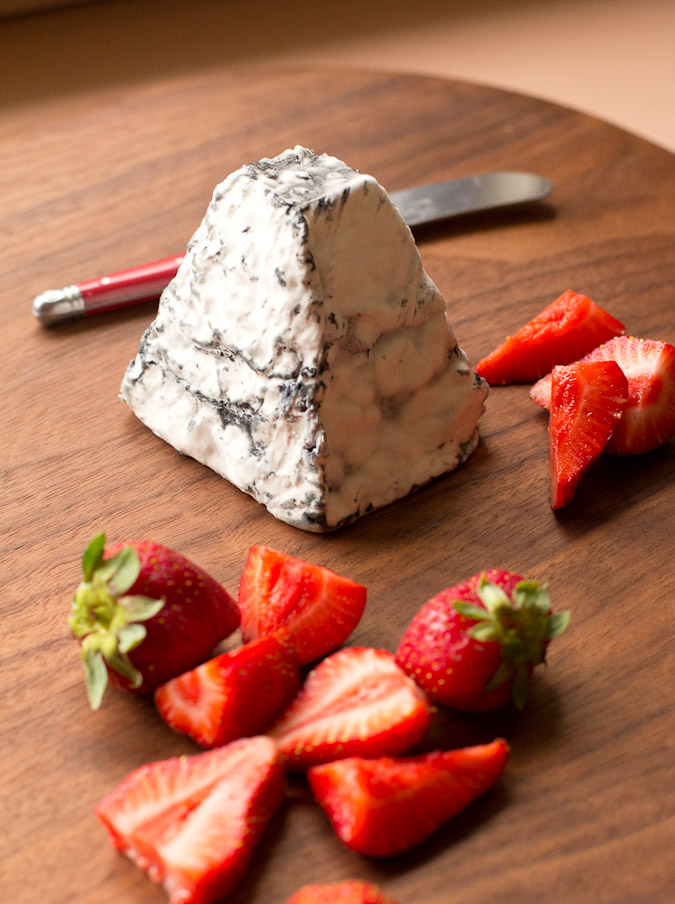
So when the Louella asked me if I wanted to make Gosling with her at home, I said hell yes. My quick yes could have also been me wanting to make a cheese called Gosling, but mostly I said yes because I wanted to play with this lovely woman in the kitchen. Our cheese of choice? A Loire Valley-style, ashed goat cheese pyramid that looks like Valencay. It was the first time I worked with goat's milk since returning from Sleight Farms in Somerset, England, and I was beaming.
We'd make the Gosling in one day, she'd leave me with the newly formed pyramid, and then I'd baby and flip it in my fridge for two to three weeks until it passed through cheese adolescence into adulthood.
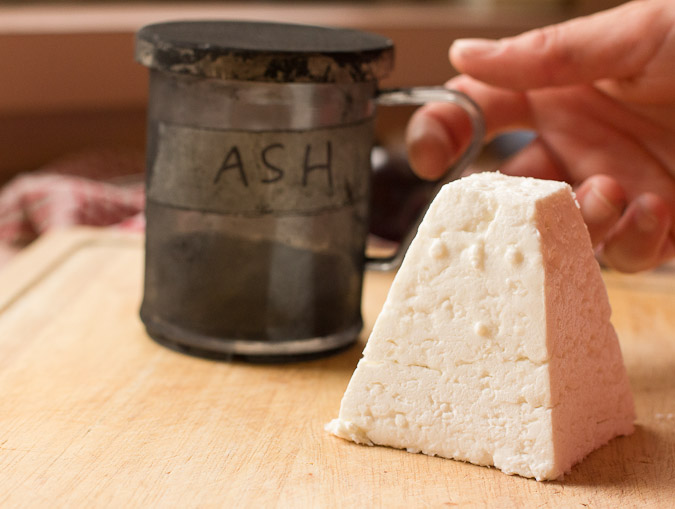
Louella's publishers were nice enough to share the recipe for the beauty below, but I'd also highly recommend Louella's book. It's beautiful, down-to-earth, and clear.
Thank you Louella, for cutting curds with me!

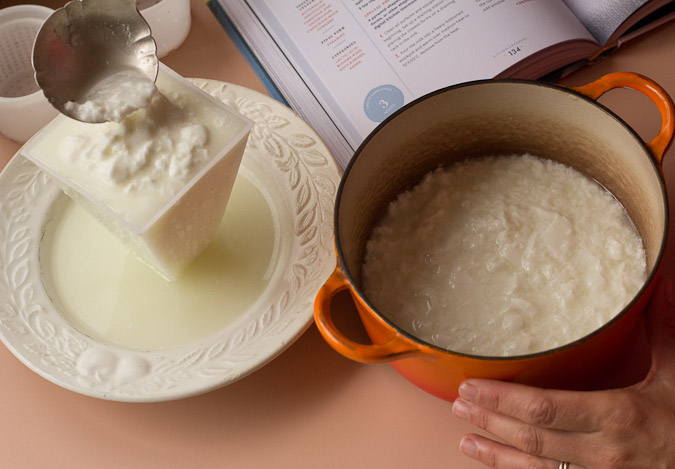


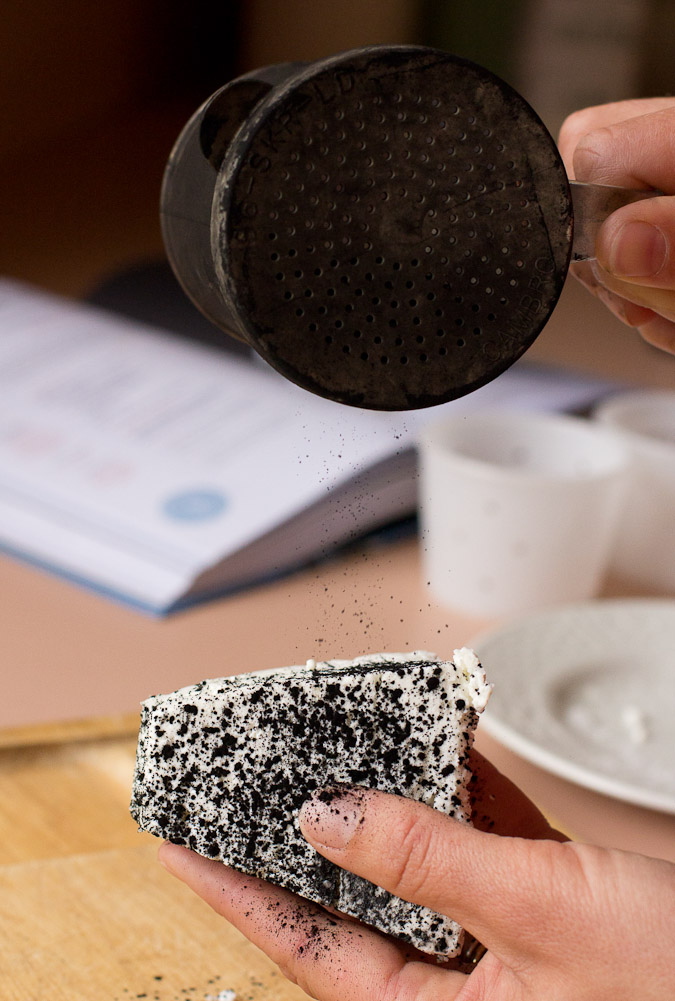
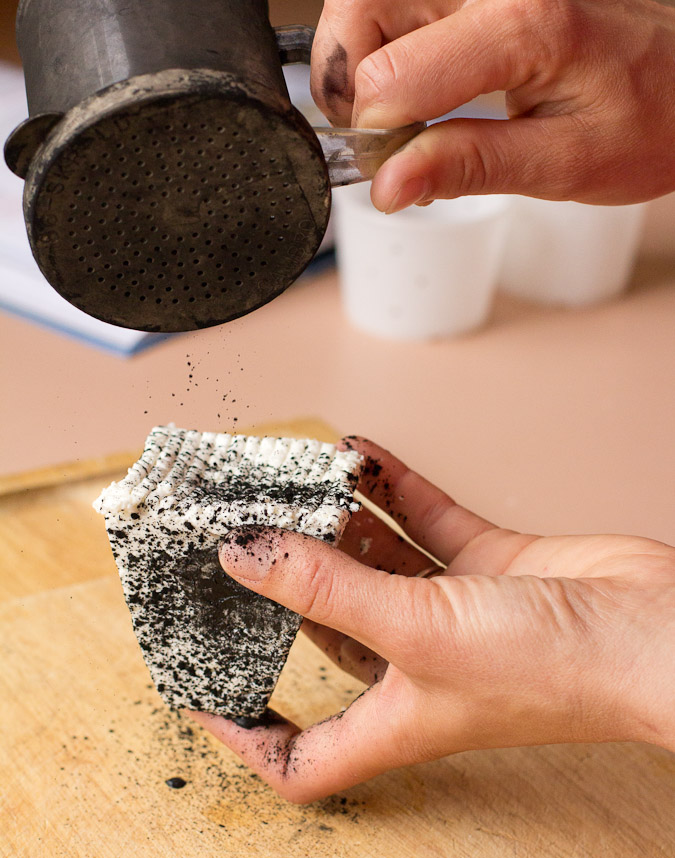

Gosling, Valency Style Cheese- adapted from Kitchen Creamery, Chronicle Books, 2015
These pyramid-shaped cheeses are pure entertainment. At first, they’re firm, geometric and black with ash: brand new. A week later, they’re fuzzy and gray: adolescent. With time, they become white with softened edges: middle-aged. Finally, they slump as the insides become soft: mature. This recipe can be made with cow milk if goat milk is not available and, traditionally, Valencay is an unpasteurized cheese. This recipe is very similar to the Chevre on page XX.
2 gal goat milk 2 tbsp buttermilk 4 drops rennet, undiluted pinch of Penicillium candidum mold powder tinier pinch of Geotrichum mold powder 2-3 tsp salt
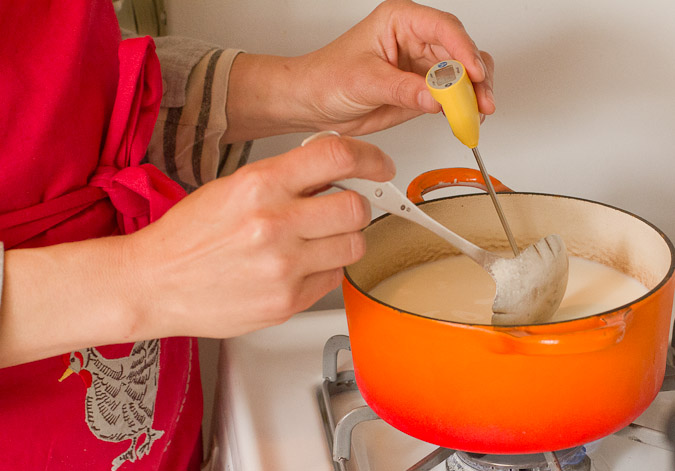
Materials: 4 pyramid-shaped cheese forms, 2 tsp food-grade vegetable ash Yield: three to four pyramids, ~8 oz/237 ml each 1. Pour milk in a pot and warm to 72˚F/22˚C. Turn off the heat.
3. Add buttermilk plus mold powders then stir in gently.
4. Now add the 4 drops of rennet. Stir the rennet in then cover the pot and leave in a warm, undisturbed location (free of cold drafts or vibrations) for 15 to 17 hours. If needed, incubate the pot to keep the temperature from fluctuating too much. When curd has firmed up, you will notice a small amount of yellow whey collected on the top and sides of the curd block.
5. Using a ladle or large spoon, scoop curds into clean pyramid forms. It may seem there is too much curd for too few forms. Wait 10 to 15 minutes for the level of the curds to drop, and then fill them to the top again. Continue doing this until all the curd has been used. If clear that the curd amount is disproportionate, add another pyramid form. Set filled pyramids inside a tall, clean plastic aging bin, with an aging mat inside on the bottom. Place lid on tub and allow pyramids to drain for 4 hours. You will need to periodically remove whey from the tub so that the cheese is not sitting in liquid.
7. After 4 hours, invert the pyramids on the aging mat (when cheese has firmed enough to allow you to do so). Pour off any whey as it accumulates in the bottom of the bin.
8. After another half day at room temperature, remove cheese from their forms. Drain and dry the plastic tub, then return cheeses to tub (without forms). Set them them on top of the aging mats.
9. Sprinkle each pyramid with ½ -3/4 tsp of salt over all surfaces as evenly as possible. Allow salt to soak in the salt while continuing to draining in covered bin at room temperature (removing built up whey from the bottom of the container as needed). Drain for 12 more hours.
11. Once cheeses have stopped releasing whey, cover them with vegetable ash; In a draft-free area, use a saltshaker filled with ash to sprinkle all surfaces of each pyramid.
12. Finally, move the salted, ashed cheeses to a dry bin. Set on top of dry, clean mats. Cover with lid and place in the refrigerator for 3 – 4 weeks. Twice a week, rotate the cheeses and remove accumulated moisture. When the cheeses are covered in a downy grey / white mold, they are done. Wrap in breathable cheese paper and store in the refrigerator for up to 3 more weeks.

Rauchbiere Triple Whammy: Pairing Smoke & Cream
 Like Mike Reis, educator and beer writer at Serious Eats, discusses in Smoked Beers: Your Secret Weapon for Beer Pairing, I detested my first sip of rauchbiere (smoked beer). And my second. And my fifth.
Smoked beer, made with smoked rather than toasted barley malt, is a force. Some of it tastes as light as the breeze wafting by on spring day after a neighbor lights a bbq. Some taste like they have been vigorously stirred with a just-charred stick. And others unabashedly flaunt their resemblance to a late-night camp fire pit that's just been doused with a bucket of water before folks retire to their tents.
That is to say that it has quite a presence. Beer used to all be made this way. Prior to the days of electricity, propane, or coal, all barley was cooked (and inadvertently, smoked) over open flames, so it all had a smoky note to it. Now people make smoked beer as a nod to those days, or because they genuinely like the flavor. Admittedly, that "genuinely like the flavor" part is hard for some to grasp. Because my first and second sip of it made me think more "ashtray" than "artisan" or "lost art," I can understand why. But now, my friends, I'm a believer. And a drinker.
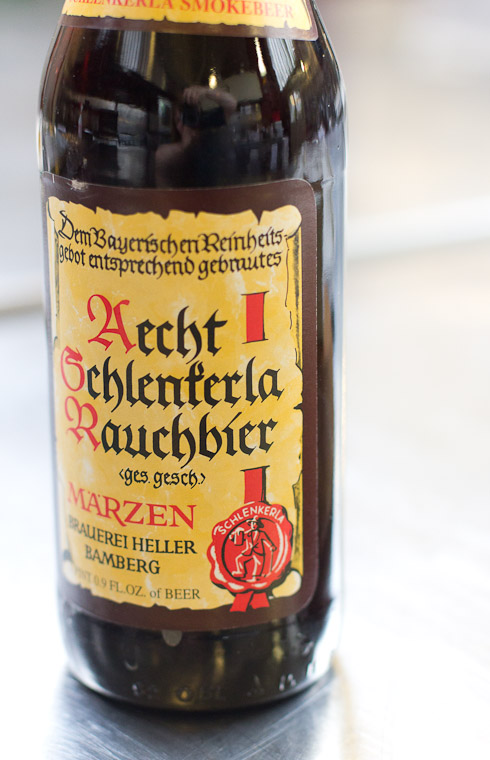
I like smoked beer. Especially with triple-creme cheese.
A few months after my fifth unappreciated taste of the smoked one, I picked up a rauchbiere that pleased me. Though I wasn't sure I would finish a second bottle, I sensed skill in the subtle smoky application, and definitely finished the first bottle. Then I saw Reis's article Smoked Beers: Your Secret Weapon for Beer Pairing in which he talked about how anyone could grow to love a smoked beer with the right food pairing. And what my friends, is the right food pairing? Cheese! Always, cheese!
Because he suggested pairing rauchbiere with heavy, smoky foods, grill-ables, or rich, sweet foods like pie, I thought, hey, maybe a triple creme would work. It's in-your-face rich, sweet, and, I thought, might be able to stand up to the ferocity that is a smoked beer.
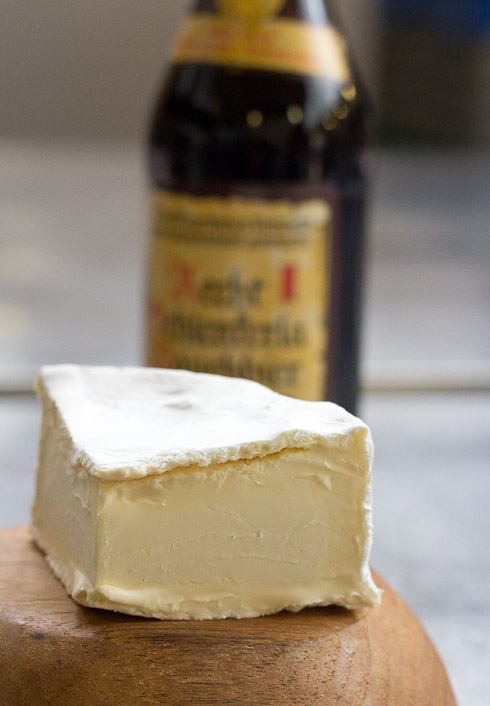
So when teaching a "Perfect Pairings" class at The Cheese School of San Francisco, I decided to test this theory. Reis helped me select the lightly smoked beauty above, because, well, I had no idea what I was doing. The Schlenkerla It's a lightly smoked, wheat, marzen beer.
The class loved the pairing. Not all of them liked the rauchbiere immediately on its own, but even those that didn't liked it with the triple creme. I guess 75% butterfat helps make even the smokiest of ( delicious) medicine go down. And those whose favorite style of cheese wasn't a triple liked the buttery wheel better with the beer. Together they tasted like… smoky ice cream, which I can tell you, is pretty darn impressive.
The triple we chose that day was Brillat Savarin. Creme fraiche is added the whole milk when the cheese is made, hence amping up the butterfat factor to a velvety 75%. Other triples I'd turn to are: Nancy's Camembert, Delice de Bourgogne, Mt Tam, Kunik, or… do you have any ideas for this pairing?
Next time you're heading to a bbq, think of picking up a couple rauchebieres for your party. One to try with the grill-ables, and another, to serve with a creamy cheese for a triple-whammy pairing.
And They Called Them Stinky
Stinky is relative. My fainting friend — who admits the only cheese she’ll eat is fresh burrata or mozzarella and who made me keep all cheese I purchased while visiting her on the balcony where she couldn’t smell it — has a very low tolerance level for stinky cheese. Let’s classify it as zero on a scale of 1 to 10 (I still love her though; she sends me home with jars of her granmother’s quince jelly). My stinky tolerance level is 8. Another friend’s level is 13.
 "And They Called Them Stinky," {by me} originally published on the Menuism Cheese Blog.
The first time I heard someone call Comté “stinky,” my jaw dropped. Comté, a semi-hard lightly washed rind from France’s jura region, is a sultry, sweet wheel with flavors of butter, toasted walnuts, caramel, and from time to time, notes of caramel or beef. I would have sooner called a rose stinky than Comté. It wasn’t until that French friend told me that on one of the many gastronomic field trips that French children take during elementary school, she fainted in a Comté cave because the scent was so fierce, that I really thought about the term stinky.
Stinky is relative. My fainting friend — who admits the only cheese she’ll eat is fresh burrata or mozzarella and who made me keep all cheese I purchased while visiting her on the balcony where she couldn’t smell it — has a very low tolerance level for stinky cheese. Let’s classify it as zero on a scale of 1 to 10 (I still love her though; she sends me home with jars of her granmother’s quince jelly). My stinky tolerance level is 8. Another friend’s level is 13.
In honor of cheeses everywhere, I thought I’d take some time to mention some of my favorite stinkies, as in, they stink so good. Their scent comes from cheesemakers washing them in a brine of salt and water or a blend of water and alcohol that encourages growth of the sultry Brevibacterium linens bacteria. It’s a good bacteria that keeps the bad ones away.
Below are some of my favorite choices, in varying degrees of stinkiness. I rate the funkiness possibilities from 1-10. Taste at your local cheese shop if you want to rate your specific slice before taking home.
Tomme Brulée: Blowtorches in the Cheese Cave
If you walk into a cheese shop and ask for Basque cheese, chances are you'll be led to Petit Agour or Petit Basque. Some wheels, made in small production batches, will be amazing. Others, made by larger companies in factories, are little more than pale interpretations of the real thing- like fat free cake with sugar free frosting, or roller blades instead of the four wheelers. But there's another sheep's milk that's escaped the Pryenées that shouldn't be missed.
 If you walk into a cheese shop and ask for Basque cheese, chances are you'll be led to Petit Agour or Petit Basque. Some wheels, made in small production batches, will be amazing. Others, made by larger companies in factories, are little more than pale interpretations of the real thing- like fat free cake with sugar free frosting, or roller blades instead of the four wheelers. But there's another sheep's milk that's escaped the Pyrenees that shouldn't be missed.
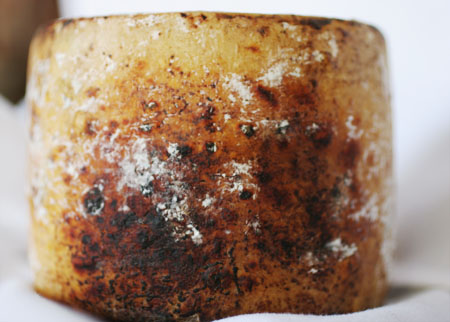
Tomme Brulée is Petit Basque burnt to another level.
Aged by Affineur Pascal Beillevaire, Tomme Brulée is a pint-sized sheep's milk cheese with a bruléed rind. But before it goes crispy, it starts out like many small Basque style cheeses.
First, the milk for Tomme Brulée (translates to burnt wheel) is cooked slowly so that the sugars caramelize a touch. Sheep's milk has its own characteristic sweetness, and cooking the milk at low temperatures brings out even more of the sugar inherit in it. Then, the curds are separated from the whey, the wheels are shaped, and drained. Next, the cheese is heavily pressed to create a rich, hole-free paste and left to age.
Then at some point in its aging process, it's burnt. I'm not exactly sure when it's bruléed, so if anyone knows, help a girl out. But at one point or another (I'm assuming a couple months after its left to mature) someone takes a blow torch to the rind and flambées it.
Now I don't know if you've ever have the opportunity to burn a brulée crust or handle a blow torch in a kitchen, but its pretty much one of the coolest thing one can do with a food product besides this. I mean, you have a blow torch. And you are turning sugars into a hard crust that someone will joyously break with a spoon or, a blistering a rind that transforms a shepherds cheese into a cheese oddity. Sometimes the blow torch is huge too and you feel amazing holding it. You probably look great too (wink wink).
And the flavor? Well, honestly, it's really similar to a Petit Agour or Petit Basque. But it has an extra little smokey, caramel kick. Like the cookies of my my ex-in-laws made with a cigarette between her lips at Christmas time (but, you know, a lot better).
I like this cheese with a Viognier or a creamier white with a touch of oak. It fares well on a cheeseboard, but its smooth paste is also great for melting.
Have you tried this burnt beauty before? What did you think?
Cheese & It's Circle of Friends: Yuzu Marmalade
In order to be as tasty as possible, cheese opens its arms wide to everyone. Don't matter where you're from, who's your daddy, what your name is, or if you're sweet and sugary or pickled and rambunctious. One of my latest favorite pairings? Yuzu marmalade and Alpine style cheese

As mentioned previously on “It’s Not You, it’s Brie,” cheese has a wide circle of friends. It’s a social animal. It likes to party. Circulating only amongst its own kind has no appeal to cheese; it knows that it is only as well-rounded and nuanced as those it keeps in its company and that discriminating against non milk-based products would ultimately make life less tasty.
And we all know that dairy likes to be tasty.
In order to show itself best in as many ways as possible, cheese opens its arms wide to everyone. Don't matter where you're from, who's your daddy, what your name is, or if you're sweet and sugary or pickled and rambunctious. Cheese will take a chance on you.
One of my latest favorite pairings?

Yuzu marmalade and Alpine style cheese. Now, I love the extra feisty, bright, slightly spicy and bitter taste of yuzu, a Japanese citrus that is nearly impossible to find in the U.S. when not in preserved or juiced form, but other marmalades will work too- especially bitter orange. This is good because yuzu marmalade aint super cheap. Great news- a little goes a long way. Or, if you can find yuzu fruit, here's a recipe for the homemade stuff. Send me a sample.
The type of Alpine style cheeses we're talking about are mainly large format, cow's milk, washed rind, firm wheels. The originals are ones like Beaufort, Comté and Gruyere, and a few North American interpretations of them are Pleasant Ridge Reserve, Meadow Creek's Mountainer, Mountina, and the smaller wheel, Blondie's best.
Ever notice how some Alpine wheels have an almost tropical flavor to them- a bit of that pineapple bite that makes their finish on the tongue tangy, especially if it's really aged? Both citrus and sugar love that. Citrus loves it because the Alpine tang highlights its own inner fiesty qualities. Sugar loves it because it gives it an opportunity to use its sweetness to caress something with a seductively sharp edge (and we all now how much sugar loves a good caress).
Next time you have a slice of a prized Alpine in front of you, pair it with a little sweet citrus action. Marmalade, candied peel, whatever. See what you think.
If you haven't yet used yuzu or citrus with your cheese, what are some other things you like to pair with your Alpines?
Larkmead's Dan Petroski: Loire Cheese & Wine

Larkmead Vineyard's Assistant Winemaker Dan Petroski and I first got to know each other through Snooth connections and formed a further blogging bond when we realized that we both have a fondness for making cheese at home and Jay McInerney's wine writing. That gave me the right, when I heard that he was taking a trip to France, to let him politely know that he had a a homework assignment- to write about a cheese memory on the trip. As I'm very fond of his writitng (and Larkmead's "Firebelle"), I was very happy when he accepted and didn't later claim that a French dog ate his laptop.
What follows is Petroski's guest post for "It's Not You, it's Brie" detailing an experience that he had with Loire Valley goat cheeses and Pinot Noir. This is the first of many posts to come featuring some of my favorite guest writers with cheese stories & memories or recipes, with the next one being Jeanne Carpenter of Cheese Underground.
Thank you Dan!
Cheese & Wine in the Loire
When Kirstin asked me to offer up a cheese story as a result of a recent trip to France, I was a bit hesitant to comply, for various reasons. One was that I love cheese in all its forms – from pre-packaged, pasteurized and preservative-rich blocks of neon orange to cheese made from the raw milk of animals grazing in the small pastures of a village following a strict cheese producing season and expression of ripeness. I am not a cheese snob, nor expert.
But as evidenced by a French friend sharing a meal with me in Sancerre who joked by circling a finger over his head that it appeared that I go to bed at night dreaming of Crottin and Comte, I am fascinated with the aromas, the flavors, the textures and the finishes on the palate – the similar components that excite me about wine. So I complied.
My first two meals of significance (a lunch followed by dinner) in France consisted of five-course affairs that brought my heart to a crescendo and then dropped it into my stomach while I held the table edge tight and tried to catch my breath in amazement. The locals, of course, were picking their teeth and yawning a tune to a commonplace tone. The fourth course of both monumental meals, of course, was cheese.
When sufficient time had passed after the main meal, when you thought you could lift a fork no more, the sound and smell of the wooden cheese cart wafting its way atop creaky old floor planks to your table reminded you of unfinished business.
The cheese cart consumed every sense. Under foot, the wood settled after the trembling movement of its rolling wheels. The sight of cow, goat, and sheep milk categorized in front of you, with soft cheese seeping, demanded full attention. The pungent aromas and delicate dairy smells overwhelm the nose. You wanted to taste them all. But not being the glutton, I knew it was proper to accept three, maybe four, pieces of your choice. Since my first leg of the trip was in Sancerre where they are famous for Crottin de Chevre, I had to taste through a selection of goat cheeses. (Rule number 1 of eating anything; eat local).
Last July, I e-mailed Kirstin about pairing foodstuffs for a Pinot Noir tasting; she listed a couple of cheeses including a Chevre. I thought that was a little rule breaking because goat’s cheese can have an acidic/tart bend that I suspected wouldn’t play well with Pinot; so when I looked around at the empty bottles of wine on the table in France and the only grape juice remaining was a Vacheron Pinot Noir (the 2005 Belle Dame) from the Loire, I had my chance to take the recommendation to task.
Goat’s milk, pungent, “goaty” aromas, said to be an aphrodisiac amongst the herd, produces a very chalky character. The goat cheese of record in the Loire is the Crottin de Chavignol, a cheese that is as equally important a component to the cheese board as it is heated and crumbled on your salad.
Having consumed highly concentrated dishes swimming in butter based sauces reduced to caramelized consistency throughout the meals, the drying character of this cheese reminded me of that welcomed feeling when tannins take over your mouth after you guzzle down a glass of fruit-forward wine. Sometimes, when you are lucky and the wine is right, the tannic finish will carry a bit residual sweetness derived of alcohol to round them out; or it will contain a refreshing, salivating acid that leaves you wanting another sip. The Crottin left me wanting a sip of wine.
In the Vacheron wine, I found an explosive, creamy, bright, spicy cherry character that filled the middle of my palate and painted away the chalky cheese that framed it. The Pinot left behind a singe of acid that kept me wanting more, like dropping to the bottom of an arc on a roller coaster, when it was finished, it wasn’t so bad, it was actually exciting and you wanted to try it all over again.
And, I did.