
The Cheese Blog
Hidden Spring's Brenda on Following the Curd & Washing Vats on Toes
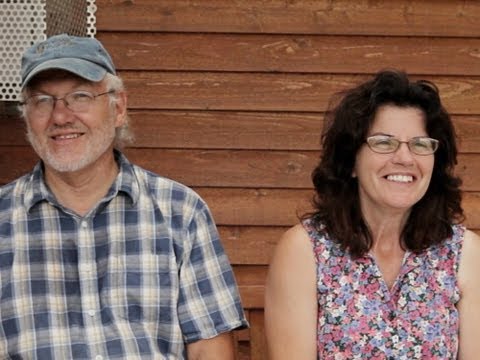
Brenda Jensen's path from earning an MBA and working as an operational manager in the packaging industry to waking up at light break every morning to check on 550 sheep and cut curds in a steamy make room may seem surprising to some.
 Brenda Jensen's path from earning an MBA and working as an operational manager in the packaging industry to waking up at light break every morning to check on 550 sheep and cut curds in a steamy make room may seem surprising to some. It certainly was to the Jensens who now make the award-winning cheeses of Hidden Springs.
When Brenda and her husband first bought fifty dairy sheep in the middle of Wisconsin Amish country, their plan was to launch a creamery. Dean and Brenda would milk the sheep and then hire someone to make cheese, they thought. Brenda would keep her full-time, well-paying job that likely had a retirement plan. But then the couple decided to take a class and visit local sheep’s milk cheesemaker Mary Falk at Love Tree to learn more about the ins and outs of their future business. This shook things up.
Brenda fell in love. With everything. With the feel of the curds on her fingers, the scent of the make room, the texture of sheep's milk, the mix of artistry and science. She might have even liked the hair net she was required to wear.
“My feet didn’t touch the ground for days,” she says laughing, “I was in love. I told Dean, ‘I think I found the cheesemaker. I think it’s me!’
“I still get goosebumps when I smell warm milk,” she says.

Though Brenda couldn't be stopped after she walked her boots through the sanitizer into a make room for the first time, she ran into a few glitches along the way. At forty-four years old, she was a newbie. And she was a petite (yet strong) woman often training at cheese plants with men who grew up next to cheese vats.
She admits being a female cheesemaker sometimes made her have to work harder. One cheesemaker at a location where she trained didn’t let her cut the curd until her third shift on the job. But even though she had to stand back and watch and clean a lot in the beginning, she says, she noticed she was treated differently after the first year.
“They started looking at me like, ‘Huh, maybe she is really going to make cheese.”
That she did. Brenda quit her job, trained for her cheesemaking license, and translated her inspiration into eight different cheeses at Hidden Springs. My favorite of her vibrant cheeses are Timber Coulee, Bohemian Blue, Ocooch Mountain, and her mixed cow and sheep’s milk wheel, Meadow Melody, which I profile in my book (awesome with cherry conserve or confit).
Brenda now knows she can pick up the phone any time and receive support. She sites her biggest influences after Falk among Wisconsin’s and even the country’s food and cheese best- the team at Uplands (especially Mike Gingrich who helped her in her early years), goat cheesemaker Ann Tapham, Willi Lehner of Bleu Mont, Ari Weinsweig of Zingerman’s, Ranee May, Jeanne Carpenter, and Kate Arding of Talbott and Arding.
Beyond professional guidance, she can also call any of her five children to bring over one of her twelve grandchildren if she needs using the power hose in the make room.
“They like to say they made cheese with grandma,” Brenda Says, “they also like to ride the carts around the farm.”
When asked if she had any advice for aspiring cheesemakers who are starting out who may or may not have their children or grandchildren to help them, Brenda said she did especially for people of her stature (raising my hand right here).
Think long and hard about your milk buckets and vats and do so creatively. For example, the standard milk pails are so heavy, she had to roll hers the first time she used them. She suggests going with gravity flow tanks and smaller buckets.
“My toes don’t reach the ground when I’m washing the vat- something to think about when buying one!” she says, laughing.
Either way, this is one whip-smart and ambitious grandmother with an MBA that won't let an inch or two stop her.
LaClare's Katie On Cheese Love & Flipping Curds at Nine Months
She said, “It hit me like a ton of bricks.” Katie, who wanted to involved in the farm life but didn’t want to have to milk the family’s goats twice a day or clean out their pins, thought cheese was the perfect answer.
 After sharing a drink or two with my friends at the Wisconsin Milk Marketing Board at the last American Cheese Society Conference, we decided to collaborate on a project (this is how most things get done at ACS). I’d get to pitch a topic. My pick? The female cheesemakers of Wisconsin. I’d tell the stories of my choice of four of my favorite women cheesemakers in a series of blog posts. I loved interviewing these ladies, what they’re doing, and thank them for their time. This is the third of the series, focusing on Katie Fuhrmann of LaClare.
Katie Fuhrmann of LaClare Cheese and I first met at the Sonoma Cheese Conference about three years ago. We were sitting across from each other at an outdoor patio after the sessions had wrapped up, beer in hands, and we both looked up and met each other’s eyes. I was super impressed after just trying Katie's Evalon for the first time at a sample panel, knew she was just opening her new and first creamery at the age of twenty-eight, and really wanted to meet her. Having the intention of befriending the brunette Wisconsin curd magician and being so very smooth as I am, I turned to her and said...
“I, ah, I like your cheese.”
I think she was very impressed (could have been her Midwestern politeness). We became quick cheese friends.
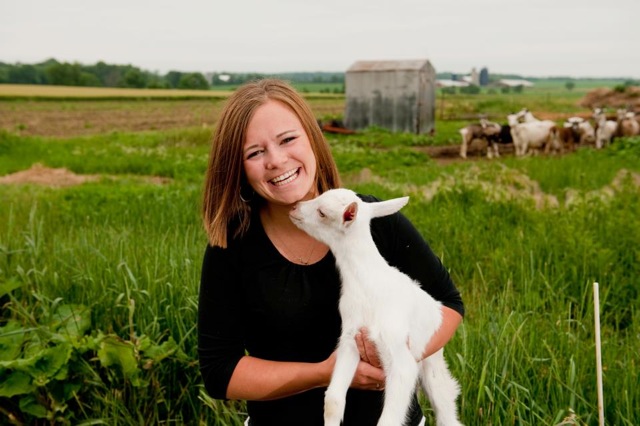
When LaClare's clothbound Standard Market Chandoka won runner-up Best in Show at the American Cheese Society Awards I, like many in the cheese world who continuously root for the talented and sweet cheesemaker, were very happy. The cheesemaker, however, was very surprised (and the very modest company has not yet even updated their website to reflect the victory).
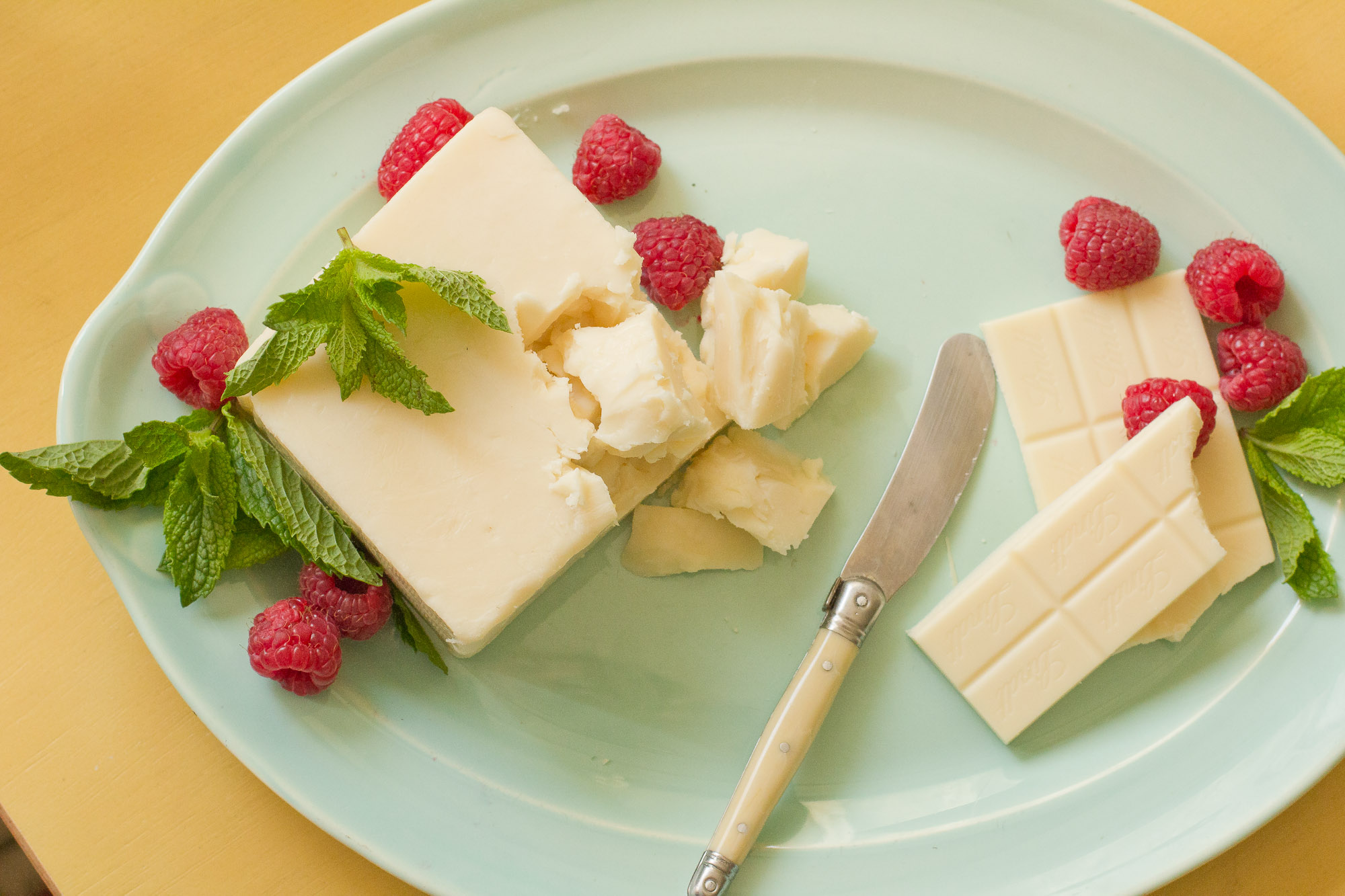
Today’s LaClare's most widely available cheeses are Chandoka, Evalon, and Martone. Chandoka, featured above, is a goat and cow’s milk hybrid made in the style of a New Zealand cheddar with sweet lemony notes and fluffy consistency (note to cheese geeks New Zealand Cheddar makers simply stack the cheddar slabs on one another rather than flipping them over as is done with English Cheddar). Her Evalon is a subtle, lightly caramel-like goat’s milk gouda. Her Maratone, below, is a fresh and light goat and cow’s milk hybrid shaped into a tiny, cheese-plate friendly mound covered with ash.
How does one that is twenty-eight go on to start winning Best in Show awards two years after launching her own creamery?
Skills and gumption it seems. Katie was always ambitious when it came to the LaClare family farm. Knowing that she wanted to contribute to the family, she started making her own soap on it at sixteen. Then, in 2008 when the family started shipping off their goat’s milk to a creamery to be made into cheese, Katie took note.

She said, “It hit me like a ton of bricks.”
Katie, who wanted to involved in the farm life but didn’t want to have to milk the family’s goats twice a day or clean out their pins, thought cheese was the perfect answer.
She started learning how to make cheese under Nathan Deahny at Saxon Creamery, who at that time was making cheese with LaClare’s milk. The mentorship relationship was ideal and within years Katie was applying for her license, moved her cheesemaking to Cedar Grove (another Bob Wills inspired maker) and then to Willow Creek. Other cheesemakers she’s cut curds next to during her learning process have been Bruce Workman of Edelweiss, Chris Roelli of Roelli Cheeese, Bob Wills, and Jon & Dave Metzig. Cheesemaking in Wisconsin is apparently supportive.
“There’s a sense of community and respect, no competition. Just, 'Hey nice job at that cheese you made',” says Katie. “We all want to represent Wisconsin and that it was built being a dairy state.”
Besides the makers she worked next to, Katie also sites the last “Women in Wisconsin Cheese” focus, Marieke, among her biggest influences. Sure, for her talent and prowess (both make some of the country’s most respected gouda styles), but thoughts of Marieke in particular crossed her mind when she was recently making cheese and over nine months pregnant. Marieke made cheese almost all the way through when she was pregnant with her own five children, and so did Katie. As it became harder to shuffle curds around the vat, Katie told herself, “If Marieke can do it, I can do it.”
“I used a stool to reach into the big vat because my pregnant belly didn’t fit over it anymore,” says Katie, laughing, “you just twist and turn and make it work.”
Katie worked up until the day she gave birth, saying she had plans to start the day's cheese, then go into the hospital. As it was, Katie went straight in.
But her brother still teased her about missing the day.
"He told me since Charlie was born at 8:30 am, I could be back in time for the audit!," which was scheduled at 9am.
Word is, she took the entire day off.
The posts were sponsored, and edited only by me.
Women Cheesemakers of Wisconsin: Marieke's Gouda Love.
There are three things that immediately stand out about gouda cheesemaker Marieke Penterman of Hollands Family Cheese. First, her passion for milk and cheese. Second, her devotion to her family. Third, that she’s suuuper nice- she smiled and waved hello to approximately fifty-three people during our interview at the American Cheese Society conference. And fourth, she might consider mixing up her dance moves when accepting cheese awards in the future.
 After sharing a drink or two with my friends at the Wisconsin Milk Marketing Board at the last American Cheese Society Conference, we decided to collaborate on a project (this is how most things get done at ACS). I’d get to pitch a topic. My pick? The female cheesemakers of Wisconsin. I’d tell the stories of my choice of four of my favorite women cheesemakers in a series of blog posts. I loved interviewing these ladies, what they're doing, and thank them for their time. This is the second of the series, focusing on Marieke Penterman of Holland's Family Cheese.
There are three things that immediately stand out about gouda cheesemaker Marieke Penterman of Hollands Family Cheese. First, her passion for milk and cheese. Second, her devotion to her family. Third, that she’s suuuper nice- she smiled and waved hello to approximately fifty-three people during our interview at the American Cheese Society conference. And fourth, she might consider mixing up her dance moves when accepting cheese awards in the future.
After sharing a drink or two with my friends at the Wisconsin Milk Marketing Board at the last American Cheese Society Conference, we decided to collaborate on a project (this is how most things get done at ACS). I’d get to pitch a topic. My pick? The female cheesemakers of Wisconsin. I’d tell the stories of my choice of four of my favorite women cheesemakers in a series of blog posts. I loved interviewing these ladies, what they're doing, and thank them for their time. This is the second of the series, focusing on Marieke Penterman of Holland's Family Cheese.
There are three things that immediately stand out about gouda cheesemaker Marieke Penterman of Hollands Family Cheese. First, her passion for milk and cheese. Second, her devotion to her family. Third, that she’s suuuper nice- she smiled and waved hello to approximately fifty-three people during our interview at the American Cheese Society conference. And fourth, she might consider mixing up her dance moves when accepting cheese awards in the future.
Said Marieke, “I don’t want people to get bored.”
I laughed. Nine years after launching her cheesemaking career and over a hundred awards later, she’s in no danger of disenchanting. Still, I suggested salsa.
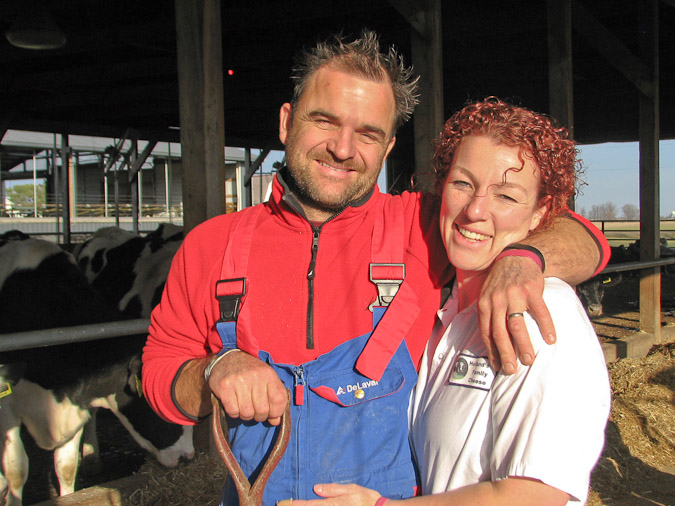
Marieke grew up on a farm in Holland with a herd of fifty cows and loved working with the animals. Though she’s always seemed destined for cheese, when she first launched her dairy in 2005, she just wanted to milk cows. But within months of experiencing the ebb and flow of fluid milk prices and urging from her mother, she decided to sign up for cheesemaking classes. They worked out. And with influences like Uplands Cheese and Joe Widmer of Widmer’s Cheese down the road, Marieke says, there was plenty of inspiration nearby.
Nine years later, Marieke still lights up when talking about milk’s “fascinating” transformation in the make room.
“I like to feel the curd, how vulnerable it is, how soft,” she says, “milk is amazing- delicious, nutritious….” She says, gazing into the distance as she goes on to list all the things milk can become. Ice cream, fromage blanc, butter, yogurt, cream, … (and about five other products I didn’t write fast enough to catch).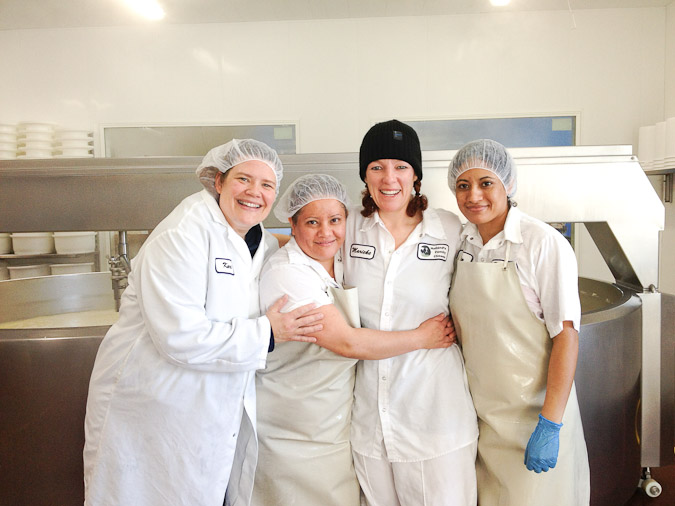

Holland’s Family Cheese might start making some of her beloved milk incarnations, since they opened a new dairy, shop, and visitor center a year ago that has more space. First though, Marieke’s priority is teaching more people about cheesemaking, since she says, “we can’t blame people for don’t understanding if we don’t give them the opportunity.”
Tours in the new dairy lead visitors throughout all steps of the process from making and aging, to packing and selling. The creamery also has windows so guests can watch the cheesemakers add rennet, cut curds, and press wheels.
But education at Holland’s Cheese doesn’t stop with the visitors. Among Marieke’s top priorities are involving her five children in the life of the creamery. If guests look carefully, they might catch a glimpse of one of Marieke’s children gently practicing folding cheese paper over a young gouda wedge between doodling with Crayons (like I did when visiting for my book). Or, spot the desks Marieke put next to the creamery so her children could do their homework. More than one of her children sat in their strollers as babies while watching her and her husband make cheese.
Wisconsin female cheesemakers I interviewed for this series with young children cited Marieke’s incorporating her children into her dairy life in addition to her good business sense as inspirational. Seems like it goes both ways.
“The young and new cheesemakers inspire me,” Marieke says, “They make me want to do better.”
According to Marieke, Master Cheesemaker Pam Hodgson of Satori cheese has been nudging her to start the classes to become a Wisconsin Master Cheesemaker, which would make her the third woman to earn the honor after Pam. If her shining eyes were telling, I don't think she'd take much more nudging to make the move in a year or three down the road.
Full disclosure, the WMMB sponsored my project. Written only about cheesemakers whose wheels I love, these posts are edited only by me.
Women of Wisconsin Cheese: The Annas of Landmark Creamery
Landmark runs the cheese vat and Tomas Bates directs orders and marketing. The two met at a Green County Women in Sustainable Agriculture potluck and became close friends while their children were in the same class at school. When they both discovered that they wanted to start a food business and equally adored cheese, their fate was sealed. Landmark winning a Cheese Originals Beginning Cheesemaker Scholarship to help to fund her getting her license was just another boost.
 After sharing a drink or two with my friends at the Wisconsin Milk Marketing Board at the last American Cheese Society Conference, we decided to collaborate on a project (this is how most things get done at ACS). I’d get to pitch a topic. My pick? The female cheesemakers of Wisconsin. I’d tell the stories of four of my favorite cheesemakers in a series of four posts over a couple weeks. I loved interviewing these ladies and thank them for their time. This is the first of the series, focusing on Landmark Creamery.
In a state like Wisconsin where third-generation dairy farmers are as common as twenty-degree days and aspiring cheesemakers train for more than two hundred hours to earn their license, it can take a lot for newbies to establish themselves. So when Bob Willis of Cedar Grove told the Annas of Landmark Creamery they could use his Milwaukee Clock Shadow space when his other cheesemakers were off or home sleeping, they jumped on it.
Anna Landmark would drive the two hours from her home in Albany in the afternoon, make the cheese, hoop the curds, then wash up and head home. Then Thomas Bates would arrive, (also from Albany) make sure the curds were draining right, flip the wheels, and wash up again, sometimes not getting home until two or three in the morning.
“We’d pass each other on the highway,” said Landmark, who was also pregnant during much of her Shadow Clock tenure. Both women have children at home.
“We decided we were too old to take naps at truck stops,” said Thomas Bates, nodding.

Now the two are making cheese at Cedar Grove closer to their Albany homes and though happily are a little less sleep deprived, are just as impassioned.
Landmark Creamery makes three cheeses. Tall Grass (pictured at top) is their citrusy, mushroomy, grassy semi-firm wheel made from local sheep and cow’s milk. Petite Nuage is their tiny ten-ounce fluffy, white sheep’s milk cheese button. Anabasque (pictured below) is their brown buttery, lively, aged semi-firm French Pyrenees sheep’s milk inspiration. Not even two years old, Landmark’s cheeses have grazed restaurant plates as close as Estrellon in Madison to Manresa in Santa Cruz.
Landmark runs the cheese vat and Tomas Bates directs orders and marketing. The two met at a Green County Women in Sustainable Agriculture potluck and became close friends while their children were in the same class at school. When they both discovered that they wanted to start a food business and equally adored cheese, their fate was sealed. Landmark winning a Cheese Originals Beginning Cheesemaker Scholarship to help fund getting her license was another boost.

The two first decided on sheep’s milk because they knew the animals would happily and sustainably graze on the grass around the region’s cows, and they thought their children would like to play with them. When they found out they could buy grass fed milk from the state’s only pastured and grass-fed cow’s milk co-op, they added that to the vat, creating their first mixed milk cheese.
With great milk, cheesemaker Bob Wills’s mentoring, and cheesemakers like Holland Farm’s Marieke Peterson, Brenda Jenson of Hidden Springs, Diana Murphy of Dream Farm, and Anne Topham of Fantome Farm that Landmark cited as influences, the two have no lack of inspiration.
Aapparently the Annas themsleves inspire too. Tomas Bates’s son is considering his next career move.
“My seven year old son said he’d take over the business when we’re done, that's if he doesn't want to be a tree trimmer," she says, laughing.
The posts were sponsored, and edited only by me.