
The Cheese Blog
The Prairies are a Bloomin: Prairie Cheeses
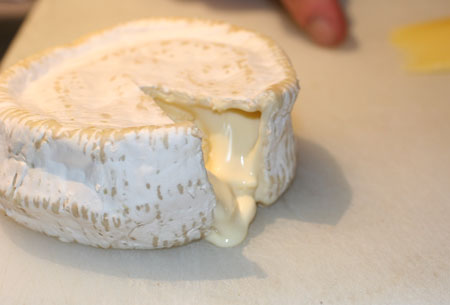
This one is made by Branched Oak Farm in Nebraska. They're an organic creamery run by the Dittman family, and you haven't heard the last about them from me here- I'm featuring another one of their cheeses in my book.
 Prairies here, prairies there, Prairies Blooming everywhere. It seems that every which way I turn these days, I get word of a prairie doing something. Active little buggers. Being the perfect home for succulent, tiny Pinnated Grouses -i.e prairie chickens- in Mark Twain's Feast. Offering mineral rich land for cattle to graze on in places like Nebraska. Offering its name up for a soft cheese called Prairie Bloom. Offering its name up for another soft cheese called Prairie Bloom.
Wait, two creamy cheeses with the same name?
At first I thought my week had gotten to me. On my four days off from my day job managing a wine bar, I wrote an article on soufflés for Cheese Connoisseur and created an original soufflé recipe for their spring issue. I might have gotten a cheese headache from how much I ate for recipe testing (and beyond). I'm writing up my first article for Kinfolk magazine. I had a call with my book agent about promotion and marketing and marketing and promotion (eek) and am expecting my manuscript back any day now (take your time, lovely editor). So, I thought, it was likely that I just thought there were two cheeses named Prairie Bloom because I was overwhelmed. I mean, hey, why, not? It's a great name.
Nope. There are two of them! Plus, another similarly named one mentioned below.
I've only tasted one of them (photo above). This one is made by Branched Oak Farm in Nebraska. They're an organic creamery run by the Dittman family, and you haven't heard the last about them from me- I'm featuring another one of their cheeses in my book. About six years ago they started out as a meat and poultry farm. Then, their CSA members asked them to start selling milk. They did. Next up? You guessed it. Cheese. They fell in love with being dairy farmers and cheesemakers so that that they almost entirely swtiched over from meat production (they only sell chickens now).
Their Prairie Bloom cheese is a camembert style that never fails to charm. It's cow's milk, spreadable, milky, clean tasting, and a little buttery. It's refined comfort cheese. It's going in the cheese club I run at Solano Cellars soon.
But I never tried the other Prairie Bloom from Goatsbeard Farm in Harrisburg Missouri. This one is goat's milk. There's even another goat's milk cheese called Little Bloom on the Prairie from Prairie Fruits Farm in Illinois. Haven't tried that one either.
Have you had a chance to try any of these beauties around you? Or, have you spotted another prairie themed cheese near you?
American Cheese for Independence Day

Brie: Creamy, Unpasteurized, Illegal

Although easily the most talked-about cheese in the United States, real Brie, unpasteurized, creamy, and oozing, does not exist in the land of the Puritans. This raw cow's milk beauty only gets as far as a contraband suitcase passing through American customs can carry it.
In 2004, the United States government passed a law stating that any cheese aged under 60 days imported to or sold in this country must be made with pasteurized milk. More about this law another day. Suffice it to say that Brie, who in its natural state is unpasteurized and aged under five weeks, rarely makes it into our borders and is never sold in our cheese markets unless it has been passed under the counter in a loving, black-market gesture.
So what is that soft stuff bearing the Brie label? For the most part, an impostor, often delicious, but an impostor nonetheless.
According to the AOC regional appellation laws of France, Brie also has to come from the region formally named Brie, now called Seine-et-Marne. Anything not from this region is not technically Brie. It is rather a cheese, made in a bloomy-rind, soft-ripened style, like the big "B." But it will never be Brie, no matter how often the package claims the title.
Furthermore, claim cheese purists while shrugging their shoulders in a nonchalant French fashion, even the cheeses that the French government allow to exit France with a "B" stamp are not real Brie. Their milk has been pasteurized and the complexity, the texture, the specialness, well, it's all gone. It's just something that the citizens of France make, ship, sell than have nothing else to do with themselves. They prefer the raw, oozing variety.
So what can we do to taste real Brie?
1. Illegal, naughty cheese importing things
2. Eat in France
3. Wait until it is no longer illegal. Like thirty years to never.
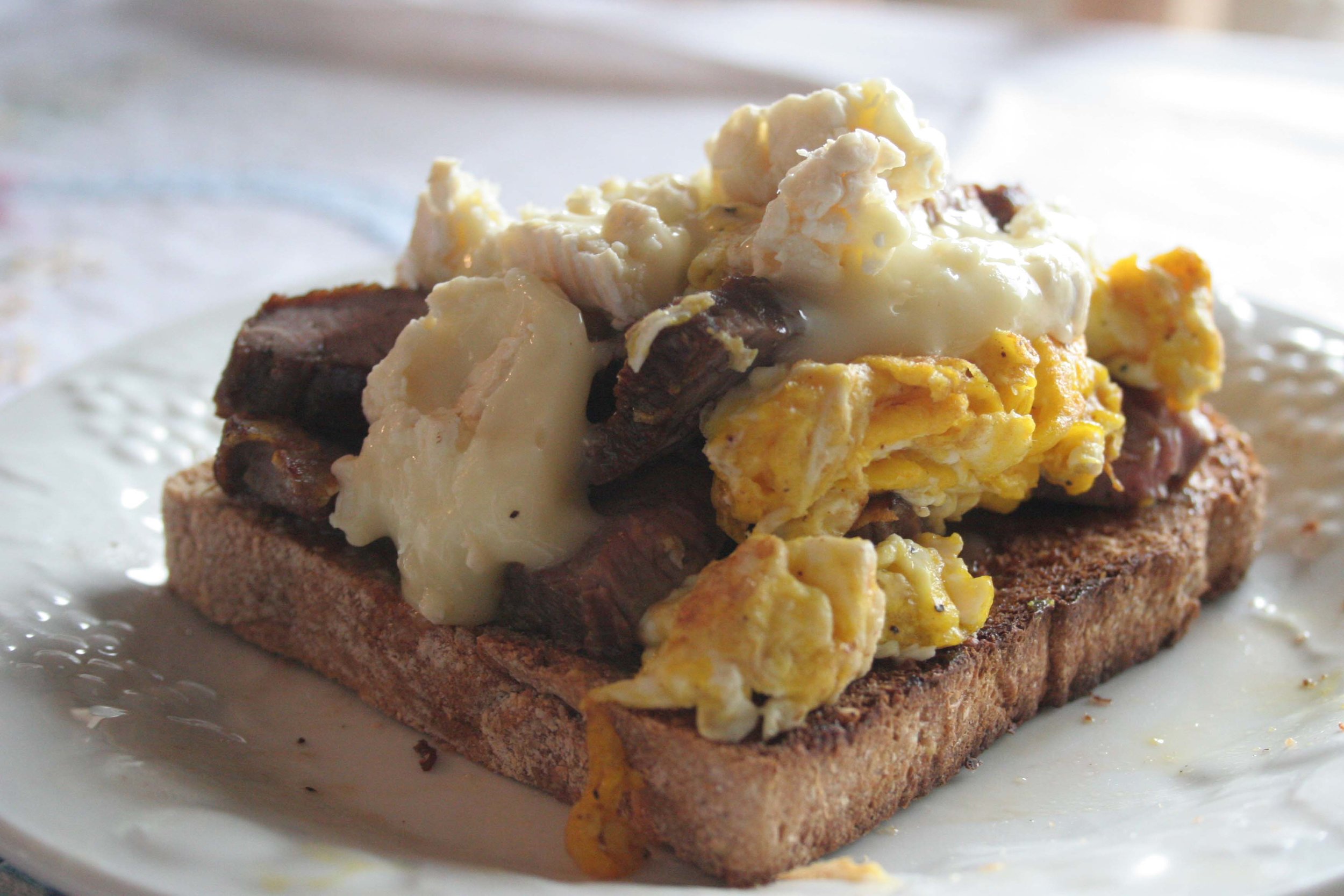
In the meantime, I've found myself charmed by the mushroomy Brie de Meaux imported from France- the one that spreads on one's plate even though it's not the real deal. It, and more local versions of the bloomy-rind made by American cheese makers taste almost as good melted over toast topped with scrambled eggs and flank steak as the big "B" itself.
Next post: La Tur, the wonder 3-milk cheese
What do you do with your brie?