
The Cheese Blog
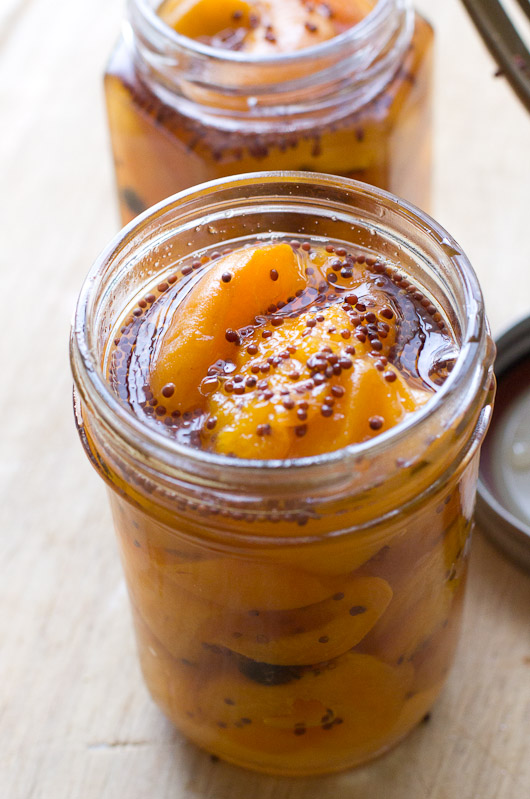
Apricot Quickles - Quick-pickling in the name of cheese
 There's always something important I seem to forget to do when jamming- sanitize the ladle, buy a funnel so that the jam doesn't drip over the lip of the jar, mix the calcium with the water, or stir the pectin in with the fruit in the beginning so that there aren't huge chunks floating around with the peaches at the end. And since I only do it once or twice a year, every year I forget the same things. A buddy system would be a key, but most times my friends with jam experience aren't always available the weekend I happen to find a flat of FrogHollow peaches at a discount.
Because I'm a little nervous about the jam dripping over the lip of jar because I forgot to buy a funnel last year (and the year before), and don't quite understand how to wipe it off the lip (if everything needs to be sanitized, can you use a cloth, a paper towel to wipe it, or would you be endangering your jam gift-tees with paper towel lint bacteria??? Really, I want to know), I keep jamming casual- at least the first time I attempt it every year. Luckily, I have friends who are willing to take jars of sweet fruity goodness from me with specific directions- "refrigerate and eat within two months." It's kind of a bossy a gift, but hey, it's still delicious jam!

Considering my issues with jamming, one might understand why I have a fear of real pickling. That sh#*$'s serious. I had family members who were willing to show me the ropes (Aunt Becky and Teresa, here's looking at you), but the large amount of canning equipment necessary frightened me. Knowing that you had to have that much special equipment, be even more sanitization-minded than with jamming, and then also consider how to balance differences in acidity and water content in vegetables gave me chills and visions of impending bacterial contamination takeover.

So the way I roll with pickles? Quickly! With quick pickles! Or, with quickles, as my friend Abby named them. With quickles, you only have to pickle them, let them sit overnight, and then they're good to go in your fridge for a couple months. I can handle that.

Now the cheesy part-
Ever since I’ve noticed the balance that a tangy, lightly tart pickle offere to a piece of rich cheese, I’ve been in love with the coupling. The acid in the pickle offers a bright contrast to the concentrated umami and fat content of an aged cheese. And as has been proven for centuries with the ploughman’s lunch, pickles and Cheddar fancy each other’s company. I've paired these sweet pickles with Fiscalini and Montgomery Cheddar, rich semi-soft cheeses like Abbaye-de-Belloc, and even fresh goat cheese. These pickles, fresh chèvre, on a pulled pork on a sandwich? Yeah, I'd eat one of those.
Apricot quickles
2 cups apple cider vinegar 1 ¼ cup white sugar 3 star anise 1 tablespoon mustard seed 2 whole allspice 1 ¼ lb apricots
Have 3 small mason jars cleaned and ready to fill.
In a medium sized saucepan, stir together the vinegar, sugar, anise, mustard and allspice. Bring to a boil. Once boiling, stir vigorously, lower the heat, and simmer for ten minutes. Add the apricots to the simmering water, and let cook for five to seven more minutes until the fruit is lightly softened.
Turn of the heat. Using a slotted spoon, remove the fruit from the pan and nestle into the jars. Tap the bottom of the jar against a countertop lightly to settle the fruit. Return the pickling liquid to the pan and bring once more to a boil, then simmer for five more minutes. Pour the liquid and the spices over the fruit in the jars, and let sit for at least twelve hours before eating.
Thanksgiving Recipes: Butternut Alpine Soufflé & Blue Cheese Spoonbread
 Just because it's time for our annual harvest parties and Thanksgiving celebrations doesn't mean that cheese needs to be left on the appetizer tray. Our favorite fermented milk product knows how to strut its stuff during the main course too.
I wanted to share with you two of my most-Thanksgiving-ey recipes. Not that I don't cook these as soon as the heat drops below 70 in the Bay Area (you know, around October to November) too. They're crowd friendly recipes and filled with things that people adore during harvest- sweet potatoes, butternut squash, corn, nutmeg, and, of course, butter. Yay, butter.
I hope you have a wonderful time celebrating this years harvest, and that you can make a little time between planning turkey cooking times and pouring Aunt Nelly her third White Russian to down to sit down and think of things and people for which you can be thankful. Best in Cheese.
Butternut squash and sweet potato Alpine cheese soufflé-casserole (top photo)
Sweet potatoes, butternut squash and brown butter have always been food pairing buddies. Add leeks and sweet and buttery semi-soft Alpine-style cheese to them, and you’ve got a rich Thanksgiving dish that could knock Aunt Lola’s sweet-potato marshmallow casserole out of the water (better set them on different ends of the table so Lola doesn’t hear them compared much). This dish is a casserole-soufflé hybrid. It’s a classic hot dish in that it’s heavy in (sweet potatoes) and cheese, but the addition of two eggs makes it rise a bit higher than the normal casserole. It wouldn’t say it’s light, per se, but it’s certainly rich and fluffy. Especially good with brussel sprout salad a couple days after Thanksgiving.
Serves 4-6
Ingredients
1 ½ pound butternut squash, cut in half lengthwise
¾ pound sweet potato
3 ½ tablespoons salted butter
1 ½ pounds leek, untrimmed
½ teaspoon salt
pinch cardamom
pinch nutmeg
4 ounces, or ½ cups shredded Alpine-style cheese
2 eggs, beaten
¼ teaspoon ground pepper
Directions
Preheat oven to 350 degrees.
Place a sheet pan with curved sides topped with half a tablespoon of butter in the oven. Season the inside of the squash with salt and pepper. Once the butter is melted, lay the squash facedown on the buttered tray and return to the oven. Pierce the sweet potatoes with a fork six times and add them to the oven, resting directly on the racks. Cook both until pierced easily with a fork- about forty-five minutes to an hour for the squash, and thirty to forty-five minutes for the potato.
While the squash and potatoes cook, slice off the bottom of the leeks. Cut off and discard the top dark green part, about four or five inches from the bottom, and the roots. Slice the remaining leek lengthwise, then width-wise, half an inch thick. Wash well under running water to rid the leek of any debris.
Melt two and a half tablespoons of butter in a medium-sized sauté pan and melt over medium heat. Scraping the bottom of the pan for about three to five minutes, cook until the butter turns light brown. If butter foams while browning, take off heat and stir until foam subsides so you can see the brown bits aren’t getting too dark, then return to heat until the butter is walnut-hued. Add the leeks, ¼ teaspoon salt, cardamom, nutmeg, and cook for ten minutes. Set aside.
Once squash and potatoes are cooked and cool enough to touch, scrape out their interiors (discard the skins) and run through a food mill or processor into a large bowl. Add the leeks and browned-butter mixture, grated cheese, eggs, and the remaining salt, ground pepper. Mix well. Spoon into a heavy-bottomed 8 x 8 baking dish greased with the remaining ½ tablespoon butter and bake for twenty to thirty minutes, until the top turns golden. Cool for five minutes and serve.

Bacon blue cheese spoonbread
Noted by the stalks of dried, multi-colored corn gracing tables for Thanksgiving decorations, just one of the many things the Native Americans taught the Pilgrims was how to grow corn. Although November is too late to serve fresh the fresh vegetable, I like to utilize dried and frozen corn at Thanksgiving to honor the importance of this vegetable. When cornbread sounds a little too dry or I want something a little richer, I go straight for spoonbread. A custardy, pudding-like corn bread inspired dish, spoonbread is a Southern delicacy commonly served topped with melted butter. I like to use bacon and blue cheese in my version, and offer guests additional butter if they want something richer. Served topped with a fried egg, this spoonbread is great the morning after too.
Ingredients
4 pieces bacon
2 cups buttermilk
½ cup water
1 cup masa harina or corn flour
½ teaspoon salt
2 ½ tablespoons salted butter
2 eggs, beaten
10 ounces frozen corn kernels, at room temperature
6 ounces blue cheese
freshly ground pepper
Directions
Preheat oven to 350 degrees.
Place the bacon on an ungreased sheet pan and bake for fifteen minutes, or until cooked and lightly crispy. Remove from pan, slice into small pieces, and bring the oven to 400 degrees.
Bring one cup of the buttermilk, the water, masa harina, and salt to a boil, whisking to avoid clumps. Simmer for two minutes while whisking. Add two tablespoons butter and remove from heat.
Whisk together the remaining cup of buttermilk and the eggs in a large bowl. Add this mixture slowly to the cooked masa harina and stir well. Add the corn kernels. Pour into a 8 x 8 baking dish greased with the last of the butter and dot the top with crumbled blue cheese. Cook for thirty-five to forty-five minutes until the top starts to brown and the spoonbread no longer jiggles. Let rest before serving.