
The Cheese Blog

Behind-the-Scenes Mozzarella: Cheesemaking Classes & Teambuilding
Thinking of taking a cheese class or hiring me for your teambuilding? Learn more about what it’s like here!

As you know, I teach cheese classes. Cheese history and culture. Eating cheese and drinking things. Melting cheese and then eating it between toasted, buttery bread (grilled cheese class❤️while drinking things), and finally, I teach cheese-MAKING classes. It's full circle!
Over the years I've got a lot of questions about what it's like to teach or take cheesemaking classes. It's a little hard to show because, well, I'm normally too busy teaching the classes to take actual pictures, but with hopes of better addressing the question .... I hired a friend of mine to take pictures of one of my top-selling classes, mozzarella making, so you can see what's it like.
The public class took place at 18 Reasons, one of my favorite spots to teach in, and features tons of behind-the-scene photos. You'll also get a feeling for what it's like to take the classes. Private and teambuilding classes are a little different but this gives a great idea!
I hope you enjoy my cheeseamaking class photo diary!
Mozzarella Cheesemaking Classes - Behind-the-Scenes
Prepping for class. Before the Action!


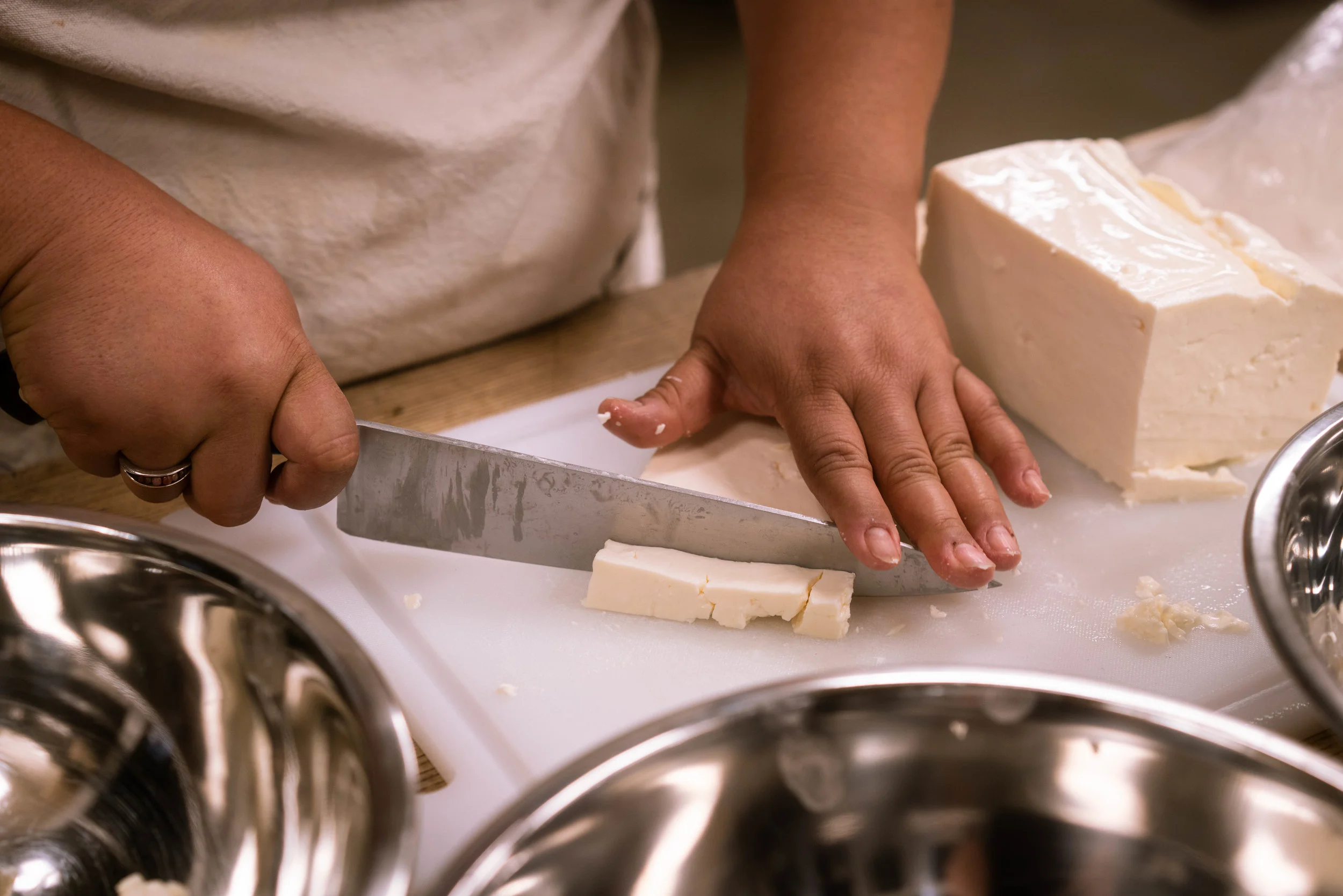
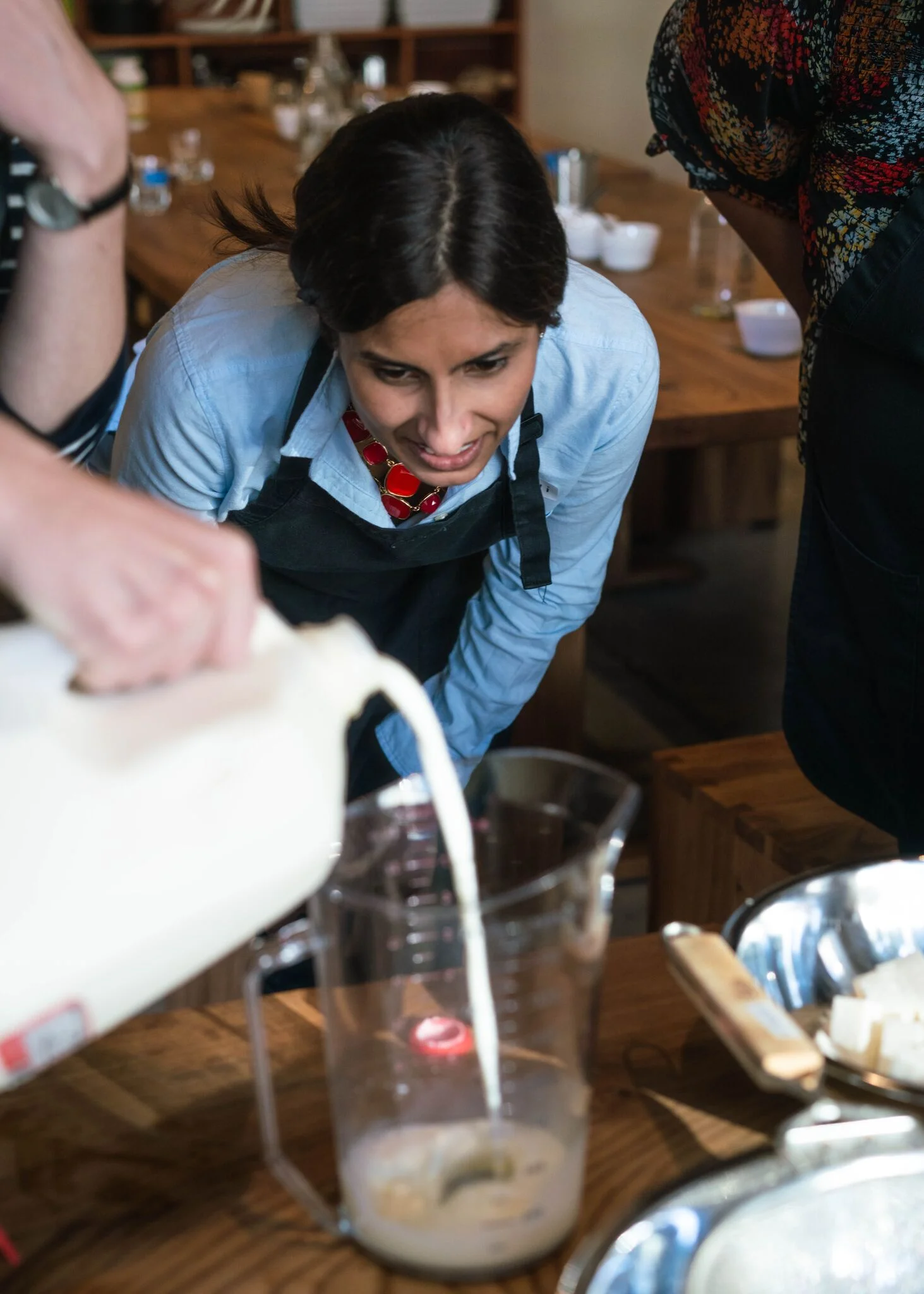

Saying hello, then saying fascinating things about cheesemaking sciences to the Attentive future mozzarella makers of America


Warming the milk and adding the rennet


Draining the already-sexy curds
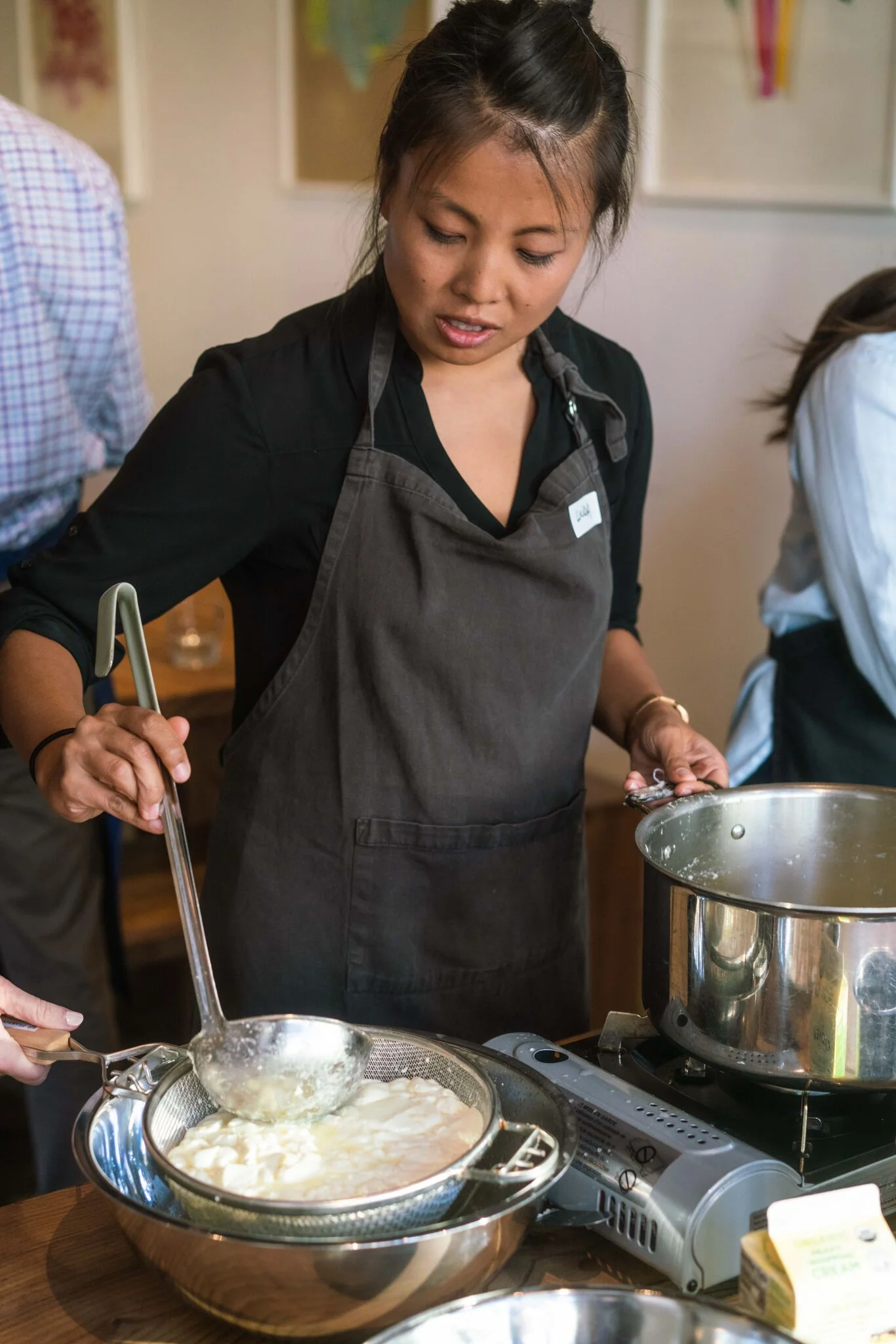

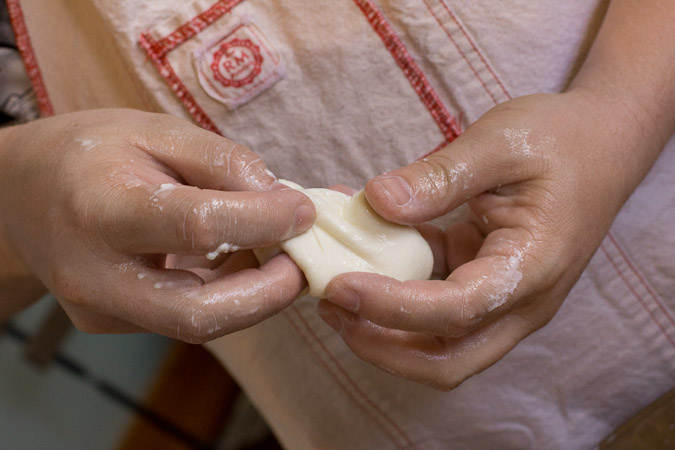
Mozzarella is ALLLL about the temperature of the stretching water-SUPER HOT. We dig the curds from the hot bowls with so many spoons- so we don’t burn our fingers.


Cheesemaking class hits! Balls accomplished!
Mozzarella necklace, anyone?


Feta: Behind-the-Scenes of a Cheesemaking Class
Feta, like a pug puppy or a Reeses peanut butter cup, has always been something dear to my heart. It's reasonably priced. It's tasty in watermelon and basil salads. Roasted and doused with extra virgin olive oil and fresh ground pepper, feta is amazing straight from the oven.
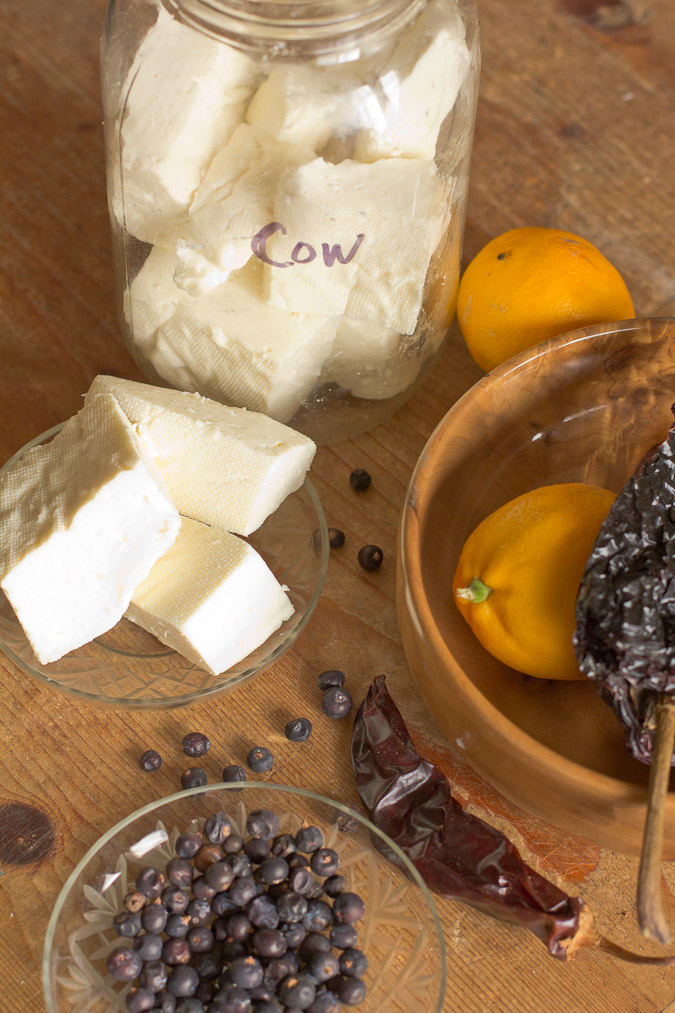

Feta, like a pug puppy or a Reeses peanut butter cup, has always been something dear to my heart. It's reasonably priced. It's tasty in watermelon and basil salads. Roasted and doused with extra virgin olive oil and fresh ground pepper, feta is amazing straight from the oven. Need a little creamy, crumbly or salty boost to a brighten up a grain dish or salad? Feta's ready to rescue. So when 18 Reasons director Michelle and I were vetting cheesemaking classes I'd teach in the winter, and my beloved feta came up, I jumped on the chance to school.
Next Wednesday night, March 2nd, you'll find me at 18 Reasons with brine, olive oil, and feta galore. A couple spots still open for this feta cheesemaking hands-on class.

What's it like when you're preparing to teach a feta class? Well it's super busy. And you're always full, like your fridge.
Teaching is always the best way to learn more about something you love. When something you love also happens to be cheese, it also means there's a lot of tasting involved. It also means if you're a geek like me who likes to read and study - anyone else have a note card fetish?- and experiment obsessively, your desk, bed, and kitchen are full of cheesemaking books and notes, and your fridge is packed with feta bobbing in brine.

I wanted to make sure I had plenty of time to test recipes I liked, and understood the reasoning behind why certain fetas tasted earthy, and others fresh and sweet so I could make mine exactly the way I wanted it. I wanted mine freshly tangy, creamy yet crumbly, and, salty. Because feta, well, it's salty.
Some books I found helpful for geeking out and recipe creation were:
Kitchen Creamery, Louella Hill
American Farmstead Cheese: The Complete Guide To Making and Selling Artisan Cheeses, Paul Kindstedt
Other things I did was attend classes taught by two of my favorite cheese class teachers, Louella Hill, and Sacha Laurin at the Cheese School of San Francisco to see their methods. And oh, I tasted feta's galore. If you're a reader of my book you may recall that I love Ardith Mae Feta. More than pug puppies. In fact, I'm going to New York next week and one of my planned excursions is acquiring their feta.
The recipe I ended up creating for next week's class was inspired by Ardith Mae's and the delicious fetas of the world, and was a hybrid of recipes I played around with in the first two books. I made kefir for Asher's feta, ended up using extra buttermilk in my recipe instead and pouring the kefir over granola (hungry), and falling in love with a salty, salty feta brine (helpful hint, if a feta's too salty for you, simply soak in cold, fresh water before eating).
I made all cow's milk batches, all goat's milk batches, gave away tons of feta, and ended up with a recipe that I loved, which my Turkish boyfriend said tasted like the "white cheese" of northwestern Turkey (their "feta") and made me smile all night. It almost felt like a Turkish grandmother complimented my briny, briny cheese.
If any of you feel like learning how to make your own feta and are in the bay, hop on over to the class. Spots are filling up quickly.
I'd love to see you there!


Mozzarella, Burrata & Ricotta Cheesemaking Class, this Sunday, July 12th: Pulling Curds & Making Little Pillows of Cream
That said, I'm overjoyed to announce that I'm now teaching a mozzarella-burrata-ricotta making workshop at The Cheese School of San Francisco this July 12th. Yup, you read right, all three.
 Ever since I got back from two months in England and Ireland, cutting, draining, pressing and flipping curds with cheesemakers, I've had a hankering to make cheese something terrible. I've been visiting cheesemakers in hopes of surprising them while they're mid-wheel flip or curd stirring. I've been opening the wine glass dishwasher right after a wash at work, hoping to replicate the affect in a make room when warm curds are being scooped into molds and your face and arms get steamy and you're super hot. Also a sensory experience, I've learned, but not the same thing.
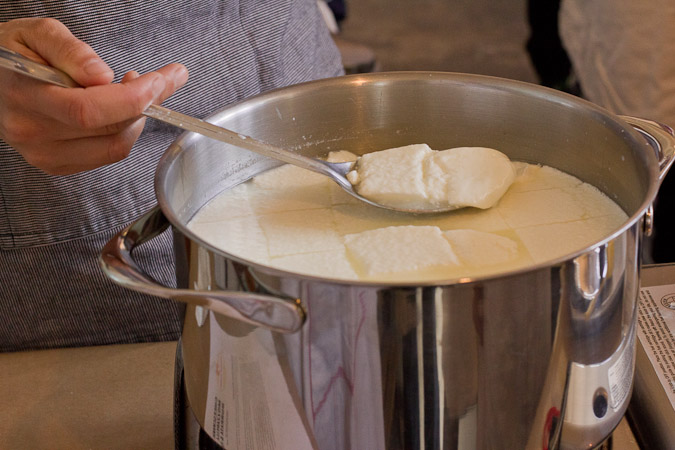 What, I asked myself, is one to do when they want to make cheese but don't want to have to worry about selling it, milking animals, or making vat-size sized batches of wheels?
Teach a cheesemaking class, it turns out! Missing the plush, custard-like texture of freshly set milk, I called Kiri at the Cheese School and told her the deal. If I were writing a personal, my plea would have looked a little something like this:
Cheesemaking and cheese writing geek recently returned from the British Isles with curds on her mind and fermented dairy dreams. Have mozzarella sheets? Will bring the organic cream and curds and we can make burrata together.
That said, I'm overjoyed to announce that I'm now teaching a mozzarella-burrata-ricotta making workshop at The Cheese School of San Francisco this July 12th. Yup, you read right, all three. Official write up below, and photos from the second mozzarella and burratta class I sat in on at the school, this one taught by Louella Hill.
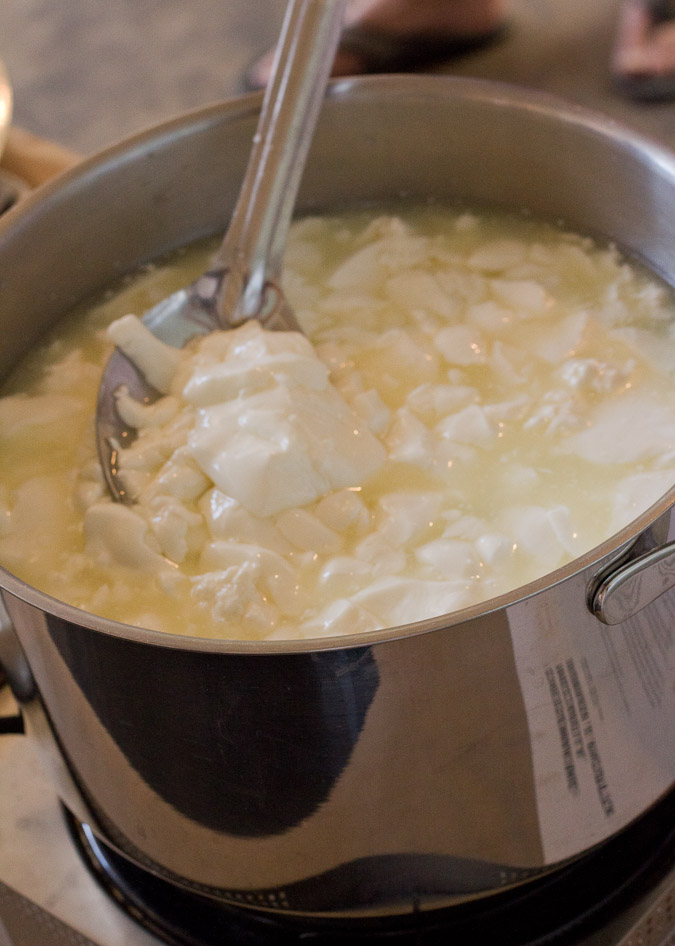

Mozzarella is on nearly every aspiring home-cheesemaker’s to-do list. Yet, it’s not easy to get it right. Why won’t your curds form a ball? When you do get the ball to form, why is it hard enough for a game of hacky-sack? These are the mysteries of mozzarella. In this class, your instructor, who is also a cheesemaker, will not only demystify the mozz, but also get you on the road to making perfect ovalini and bocconcini just in time for all that wonderful summer produce. But wait! There’s more! We’ll use our curds to make everyone’s favorite cheese, burrata, and with our leftover whey we’ll make ricotta.

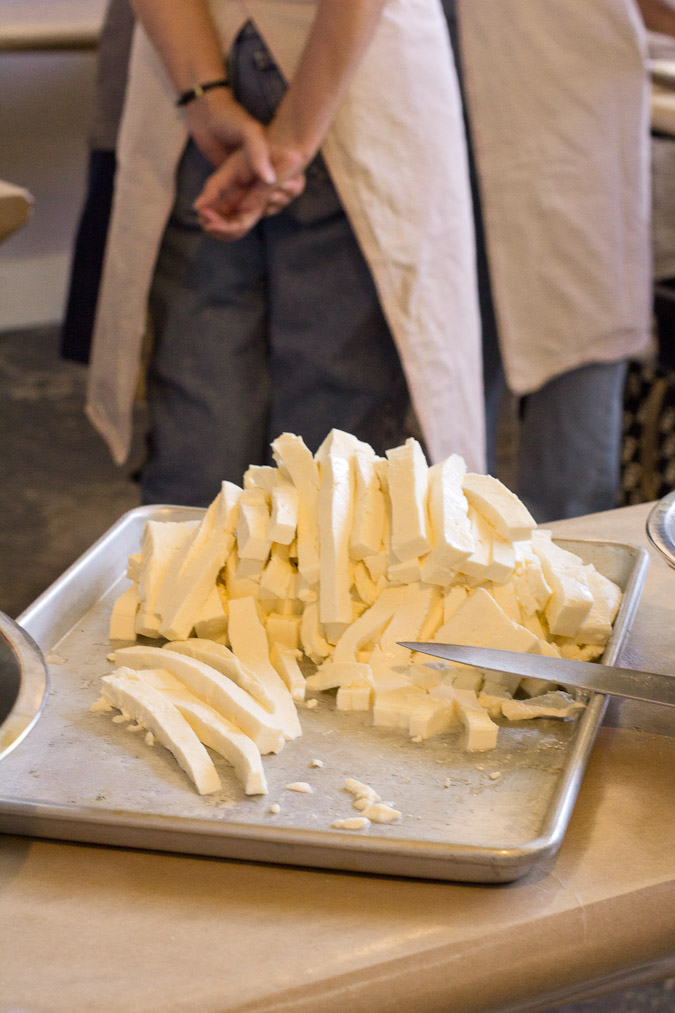


 If you have mozzarella and burrata making dreams yourself, I'd love to see you there! Spots still open.