
The Cheese Blog
Twig Farm Mixed Drum Cheese: Goat & Cow's Milk Beauty
Though often harder to find in California then the size/color/style of the thing you're seeking in an Ikea store, Twig Farm's Mixed Drum cheese is one my favorite wheels around. Any of their cheeses charm, really, but the Mixed Drum is instantly seductive.
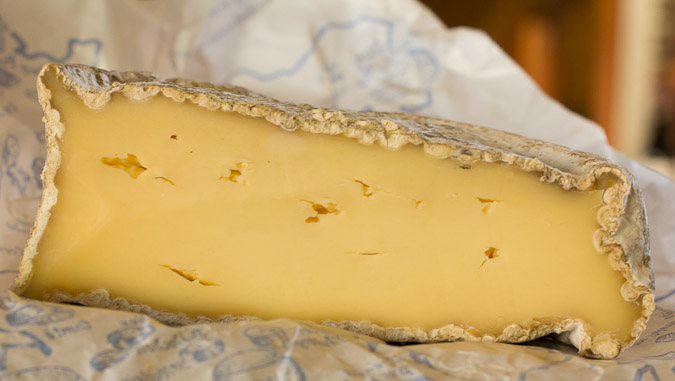 Though often harder to find in California then the size/color/style of the thing you're seeking in an Ikea store- anywhere, Twig Farm's Mixed Drum cheese is one my favorite wheels around. Any of their cheeses charm, really, but the Mixed Drum is instantly seductive. I watch for its presence on my distributer lists like a wine geek watches for the latest unfiltered, amphora-aged wine release from Slovenia.
While writing my "It's Not You, It's Brie" book, I had a chance to visit the Twig Farm family in Vermont about ten miles from Middleton, in West Cornwall. Much like cheesemaker Michael Lee himself whose focus is intently on his goats and wheels since the responsibility for his ladies, farm, and making and aging the cheese falls solely on his and an assistant's shoulders, the farm is busy yet quiet. It's surrounded by a forest of tall, slim birch-like trees and oaks that shed acorns for goat snacks.
Though often harder to find in California then the size/color/style of the thing you're seeking in an Ikea store- anywhere, Twig Farm's Mixed Drum cheese is one my favorite wheels around. Any of their cheeses charm, really, but the Mixed Drum is instantly seductive. I watch for its presence on my distributer lists like a wine geek watches for the latest unfiltered, amphora-aged wine release from Slovenia.
While writing my "It's Not You, It's Brie" book, I had a chance to visit the Twig Farm family in Vermont about ten miles from Middleton, in West Cornwall. Much like cheesemaker Michael Lee himself whose focus is intently on his goats and wheels since the responsibility for his ladies, farm, and making and aging the cheese falls solely on his and an assistant's shoulders, the farm is busy yet quiet. It's surrounded by a forest of tall, slim birch-like trees and oaks that shed acorns for goat snacks.
About nine miles away from Twig Farm is the Crawford Family, the makers of Vermont Ayr. When the Crawford's Ayrshires are out grazing the field, Twig buys some of their rich milk and mixes it with about twenty percent of their own goat's milk. Four to six month's later (hence winter cheese releases after being aged), viola, Mixed Drum!

Mixed Drum is a wonderful collaboration between the two farms. Many of the flavors shout Crawford, and the shape, natural rind, and the splash of goat's milk are all Twig.
The rich, earthy, melted butter, and lightly peanut notes of the cheese are reminiscent of those found in the Crawford's Vermont Ayr. As is the silky texture provided by the high-butterfat content of their cows. The little lively punch? That's the goat's milk- keeping it real, keeping it fresh. The natural rind and squishy shape? That's cheesemaker's Micheal Lee's touch- he keeps it real and fresh too. If the cheese wants to look like a Flintsone car wheel, so be it. It's cute and delicious.
I loved this beauty with a light, un-oaked malolactic white like a white wine from the Savoie region, a Muscadet from the Loire, or a lightly oaked Marsanne or Roussanne. Wasn't a big fan of the citrusy Sauv Blancs with this one.
If I were in an area that wasn't experiencing record highs in January and wanted to try this cheese in another way besides au naturel, I'd take this, some semi-soft Alpine-type cheese, and melt them raclette style, on ham and potatoes. Or anything I could think of.
Happy Winter.
Jersey Blue: A tale of cheese (and sports)
No one would have ever said I was an athletic child. As an asthma sufferer who grew up during the eighties, I belonged to the group of kids that was encouraged to sit on the sidelines, put on a leotard instead of knee guards and sneakers, and by all means, walk instead of run. At that time, a large sector of the medical profession was convinced that as soon as asthmatic child's heartbeat even considered rising above a very, very quiet sitting rate, the child would be in grave danger of having asthma attack immediately. So with an inhaler in my pocket, I grew up hanging out on the outskirts of the playground at lunch time (after I used my nebulizer every day in the nurse's room of course), watching others play dodgeball.
When accounting for my complete inability to dodge a round object, my lack of hand-eye coordination, my tendency to run into things, and my slow lap time, I point to this period in my life. It's possible that it's not related, but I'm hopeful.
With all this in mind, it's probably clear why I fell in love with blue cheese. Finding my classmates unimpressed by the way I could power-read for three hours straight in library corners, and without a way to prove my prowess through brute physical strength or athletic ability, I needed a way to prove my bad-ass-ery. I proved my strength through food. In the cheese world, blues were a measure of my fierceness.
Everyone could run faster than me. But no one, no one, could eat more blue cheese than me. Or stronger blue cheese. I think I even put it on a peanut butter sandwich once. Blue cheese dressing was always my salad topper of choice. Gorgonzola and Roquefort went on everything I could put it on. I couldn't run around two blocks, but I could crumble the hell out of a wedge of Stilton in an era when "sharp" Cheddar was considered an acquired taste.

It is through this attempt to prove that I had a vein of fierceness in my body that I fell in love with blue cheese. I love all sorts of blue cheese. The strong ones (I often will pair them with dried figs or honey- I admit, I'm a bit pansified now), the soft ones (solo), please, and the weird ones.
Today I still always have a wedge of blue at home. My most recent blue discovery? Jersey Blue.
Imported by the awesome Swiss cheese importer Caroline Hostettler, Jersey Blue is made in the Valais region of Switzerland by Willi Schmid. Willi Schmid, in case you don't know (don't worry, I haven't met him either), is a Swiss wondercheesemaker that's been turning heads in the country that used to be only celebrated for cheese with big holes. After Switzerland stopped rewarding mass market cheese producers with heavier subsidies, artisan cheese makers like Schmid have been freer to create, and compete in the market.
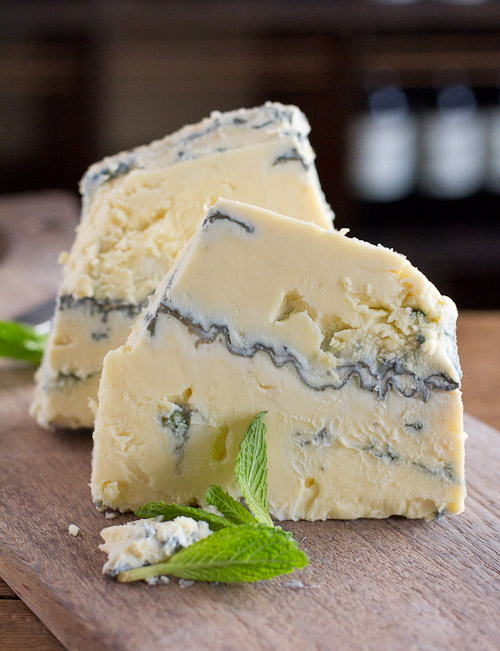
The buttery, creamy flavors and color of Jersey Blue is thanks to it being made with raw, Jersey, cow's milk. It has light veining, and the rind often acquires a wrinkled texture not unlike La Tur or Rochetta that, after sitting in a cheese fridge covered with foil for a bit, acquires quite a punch. Too feisty for you? Cut off the rind. Overall this is a rich, sweet blue that is fantastic for beginners and vein-lovers alike. I'm fond of it in thick slices, or, crumbled in a salad like the Fava, Sweet Pea & Blue Cheese Spring Salad.

And don't think less of me, but I wouldn't eat it on a peanut butter sandwich anymore.
The Prairies are a Bloomin: Prairie Cheeses
This one is made by Branched Oak Farm in Nebraska. They're an organic creamery run by the Dittman family, and you haven't heard the last about them from me here- I'm featuring another one of their cheeses in my book.
 Prairies here, prairies there, Prairies Blooming everywhere. It seems that every which way I turn these days, I get word of a prairie doing something. Active little buggers. Being the perfect home for succulent, tiny Pinnated Grouses -i.e prairie chickens- in Mark Twain's Feast. Offering mineral rich land for cattle to graze on in places like Nebraska. Offering its name up for a soft cheese called Prairie Bloom. Offering its name up for another soft cheese called Prairie Bloom.
Wait, two creamy cheeses with the same name?
At first I thought my week had gotten to me. On my four days off from my day job managing a wine bar, I wrote an article on soufflés for Cheese Connoisseur and created an original soufflé recipe for their spring issue. I might have gotten a cheese headache from how much I ate for recipe testing (and beyond). I'm writing up my first article for Kinfolk magazine. I had a call with my book agent about promotion and marketing and marketing and promotion (eek) and am expecting my manuscript back any day now (take your time, lovely editor). So, I thought, it was likely that I just thought there were two cheeses named Prairie Bloom because I was overwhelmed. I mean, hey, why, not? It's a great name.
Nope. There are two of them! Plus, another similarly named one mentioned below.
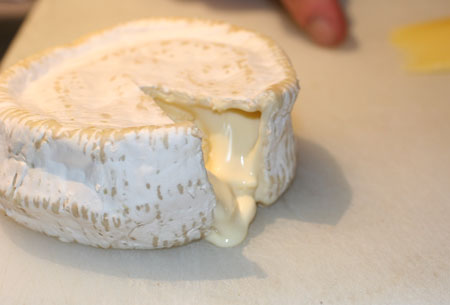
I've only tasted one of them (photo above). This one is made by Branched Oak Farm in Nebraska. They're an organic creamery run by the Dittman family, and you haven't heard the last about them from me- I'm featuring another one of their cheeses in my book. About six years ago they started out as a meat and poultry farm. Then, their CSA members asked them to start selling milk. They did. Next up? You guessed it. Cheese. They fell in love with being dairy farmers and cheesemakers so that that they almost entirely swtiched over from meat production (they only sell chickens now).
Their Prairie Bloom cheese is a camembert style that never fails to charm. It's cow's milk, spreadable, milky, clean tasting, and a little buttery. It's refined comfort cheese. It's going in the cheese club I run at Solano Cellars soon.
But I never tried the other Prairie Bloom from Goatsbeard Farm in Harrisburg Missouri. This one is goat's milk. There's even another goat's milk cheese called Little Bloom on the Prairie from Prairie Fruits Farm in Illinois. Haven't tried that one either.
Have you had a chance to try any of these beauties around you? Or, have you spotted another prairie themed cheese near you?
Cheese & It's Circle of Friends: Yuzu Marmalade
In order to be as tasty as possible, cheese opens its arms wide to everyone. Don't matter where you're from, who's your daddy, what your name is, or if you're sweet and sugary or pickled and rambunctious. One of my latest favorite pairings? Yuzu marmalade and Alpine style cheese

As mentioned previously on “It’s Not You, it’s Brie,” cheese has a wide circle of friends. It’s a social animal. It likes to party. Circulating only amongst its own kind has no appeal to cheese; it knows that it is only as well-rounded and nuanced as those it keeps in its company and that discriminating against non milk-based products would ultimately make life less tasty.
And we all know that dairy likes to be tasty.
In order to show itself best in as many ways as possible, cheese opens its arms wide to everyone. Don't matter where you're from, who's your daddy, what your name is, or if you're sweet and sugary or pickled and rambunctious. Cheese will take a chance on you.
One of my latest favorite pairings?

Yuzu marmalade and Alpine style cheese. Now, I love the extra feisty, bright, slightly spicy and bitter taste of yuzu, a Japanese citrus that is nearly impossible to find in the U.S. when not in preserved or juiced form, but other marmalades will work too- especially bitter orange. This is good because yuzu marmalade aint super cheap. Great news- a little goes a long way. Or, if you can find yuzu fruit, here's a recipe for the homemade stuff. Send me a sample.
The type of Alpine style cheeses we're talking about are mainly large format, cow's milk, washed rind, firm wheels. The originals are ones like Beaufort, Comté and Gruyere, and a few North American interpretations of them are Pleasant Ridge Reserve, Meadow Creek's Mountainer, Mountina, and the smaller wheel, Blondie's best.
Ever notice how some Alpine wheels have an almost tropical flavor to them- a bit of that pineapple bite that makes their finish on the tongue tangy, especially if it's really aged? Both citrus and sugar love that. Citrus loves it because the Alpine tang highlights its own inner fiesty qualities. Sugar loves it because it gives it an opportunity to use its sweetness to caress something with a seductively sharp edge (and we all now how much sugar loves a good caress).
Next time you have a slice of a prized Alpine in front of you, pair it with a little sweet citrus action. Marmalade, candied peel, whatever. See what you think.
If you haven't yet used yuzu or citrus with your cheese, what are some other things you like to pair with your Alpines?
Limburger Cheese: Just as Stinky as You Like it.
Below I share with you photos from my tour at the Chalet Cheese Co-op- the only remaining Limburger producer in the country. If you see Limburger in the U.S. that is made in the country, it's Chalet. It may have a proprietary label, but it is always Chalet pumping the sweetly funky flavor out. Pick it up and note the dates on the label- they will guide you to finding a cheese age you love. And you will love one of them. More about Limburger in my forthcoming book.
 Remember Monterey Jack on the Chip and Dale Rescue Rangers (Rescue Rangers= the cartoon, not the burlesque show)? Well, Monty, as he was known to his friends, was the Australian mouse who helped chipmunks Chip and Dale fight crime. Yet even though he was darn good at helping to put the right fox, cat, or dog in prison, he was better known for his love for cheese.
There was one cheese in particular that if he got a wiff of it, he was gone. Taken. Impassioned. Spent. Could do nothing else until he found that cheese and made it his own. That cheese was Limburger. Even though Monty was a secure mouse and never cared about what others thought, it was apparent in some episodes that Chip n' Dale thought Monty was crazy for loving a cheese that could smell so strong. Well, Chip n' Dale were not always the brightest, most cultured rodents.
The fussy chipmunks just didn't have the opportunity to taste Limburger at the age that would have pleased them. Oh, but I have. I have.

When I headed to Wisconsin last week to do delicious research for my cheese book, head cheesemaker Myron Olson at Chalet Cheese Co-op tasted us on Limburger at three stages- young & mild, slightly older & soft & sweet, and older & gooey & funky and strong. Amazing. Even though they were all versions of the same washed-rind cheese, the flavors, textures, and strength of the different ages varied like crazy. Honey mustard, rye bread and strawberry jam were also on board too. Young, the Limburger tasted like a fresh, less creamy Red Hawk. Older, the cheese tasted of and had the texture of Tallegio. Oldest, it tasted strong and pungent and begged for its classic pairing of rye bread, honey mustard and onion slices.
Below I share with you photos from my tour at the Chalet Cheese Co-op- the only remaining Limburger producer in the country. If you see Limburger in the U.S. that is made in the country, it's Chalet. It may have a proprietary label, but it is always Chalet pumping the sweetly funky flavor out. Pick it up and note the dates on the label- they will guide you to finding a cheese age you love. And you will love one of them. More about Limburger in my forthcoming book.


Places to find Chalet Cheese (please add to the list in the comments section!):
Bi-Rite, San Francisco
Maple Leaf Cheese Sales, WI (will ship, but not recommended in summer) 608-934-1237
Hefty Creek Specialities, WI (owned by one of Chalet Cheese's award-winning cheesemaker and yodeler), hefticreek@hughes.net, 608/325-6311
Have you had a chance to try Limburger at its different stages? What did you think? Which is your favorite?
Roccolo Cheese: The Holy Lombardic Trinity
Roccolo is a dream cheese. It is a holy trinity cheese. It is soft and firm and crumbly all in one. It tastes crazily varied from rind to center. It smells a little different in spots.
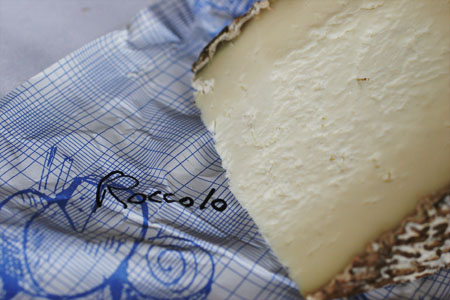 Roccolo is a holy trinity cheese. It is soft and firm and crumbly all in one. It tastes crazily varied from rind to center. It smells a little different in spots. In other words, its three distinct layers offer a cheese lover three cheeses for, well, .... more than a fraction of the price of a block of colby, but you get more than just orange and yellow cheese that tastes nearly the same no matter the hue.
Roccolo comes from Lombardy, Italy. Made by cheesemaking enterprise Arrigoni Valtaleggio, a large family company that helped to spearhead Tallegio imports, Roccolo is a a natural rind cow's milk cheese whose name translates to "bird snare." The cheese's rind echos the hue of the local bird hunter's stone hut they used to set camp in in earlier times.
After being brined in a salt water bath, Roccolo is set to age on pine boards and flipped and rubbed daily with a little extra salt water brine to bring out earthy, B.linen bacteria like those found in other washed rinds.
Yet pick up a slice of Roccolo and give it a good sniff, and you'll only find the scent somewhat similiar to other semi-soft washed rinds. Rather than having a strong, sweetly blaring scent, Roccolo has an earthier scent like a mushroom that's been foraged after a weeks of rain, and maybe dropped in a little dirt before being put in the straw mushroom basket.
Its taste is quite distinct too. It ranges from buttermilk to butter to mushrooms, to oysters to salty beef fat. The center is a little fresher tasting, and the further you get towards the brown, moldy rind, the funkier it gets.
The most interior part of the paste is crumbly and off-white. The layer beyond is smooth and the hue of that manilla folder a teacher holds in elementary school when presenting test scores to parents on Parent-Teacher night. The outside is brown with white and grey mold and an occasional yellow streak. I eat the rind, mold and all. I know that people are washing it and flipping it everyday and this might scare a folk or two who are concerned with others fondling their cheese, but the rind adds so much pizzaz to the tasting experience. If you like less funk, skip the rind.
I like this cheese with a dry Riesling or a balanced, oaked Chardonnay, Viognier or Roussane-Grenache Blanc blend. Or a Champagne. Mmmm......
If Roccolo isn't available near you, also try Salva Cremesco or Tomme Crayeuse, both cow's milk cheeses with an earthy taste and varied texture (although a little creamier than Roccolo).
Any super-layered cheese favorites?
Gouda Ice Cream: What Not to Do
Inspired months ago by titillating 140-character cheese and dessert discussions on twitter, Pastry Chef Plinio Sandalio of Houston's Textile restaurant and I decided to collaborate on a gouda ice cream post. That is, he volunteered to supply the recipe and I would try to represent it to the best of my dessert abilities.
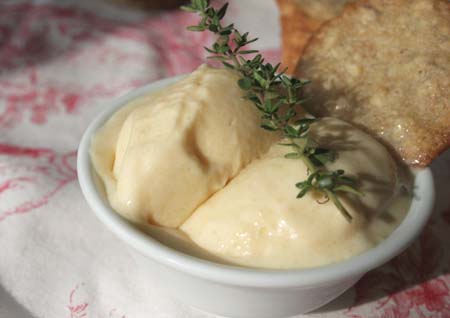
Inspired months ago by titillating 140-character cheese and dessert discussions on twitter, Pastry Chef Plinio Sandalio of Houston's Textile restaurant and I decided to collaborate on a gouda ice cream post. That is, he volunteered to supply a recipe and I would make it to the best of my dessert abilities.
Because cheese ice cream recipes on the net had been whispering sweet nothings to me for months, when I heard that I could have one of Plinio's creations in my own little, cheese-ripened hands, I said yes. Instantly.
Without further ado, here is a definitive list about what not to do when an outstanding pastry chef gifts you with the keys to a gouda ice cream palace, then, Plino's five-star recipe.
Gouda Ice Cream: What Not to Do
1. Don't worry about that the last time you used your ice cream maker, you weren't sure if it was working properly. It was your grandmother's. Of course it works.
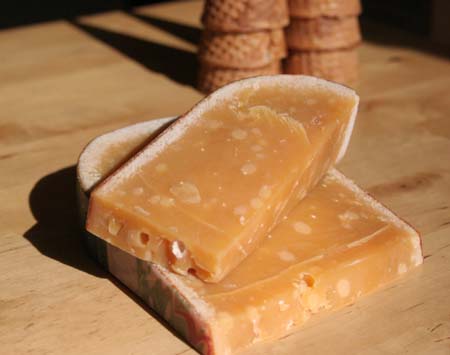
2. Forget that the pastry chef told you he used a 3 yr old gouda and buy a 4 yr old cow's milk gouda instead. Oops. A little intense. And don't think about using a goat's milk gouda, which would have lent a tangy, lively character to the sweet ice cream. Who needs a pesky flavor layer?
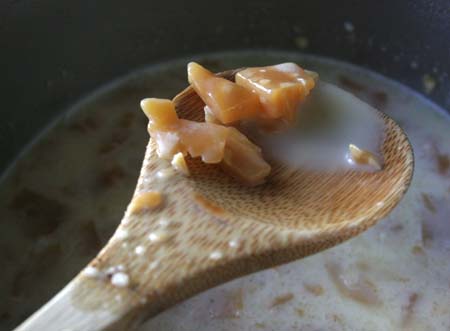
3. Depend upon your old strainer to extract the salty, caramelly gouda chunks from the custard base. Screw using a restaurant-quality chinois, cheese cloth, or butter muslin fabric. Everyone loves a chunky cheese ice cream. Yes?
4. Ignore the directions on the ice cream maker to freeze the results for at least an hour before consuming. It's much more fun when the dessert melts before it arrives to your mouth. You gotta catch it dripping off the spoon that way, works off all that cream!
Gouda Ice Cream
1 1/2 cups sugar
1 1/2 cups milk
2 cups heavy cream
1/4 cup light corn syrup
1/2 tsp salt
pinch xanthan gum
12 oz aged gouda
Whisk all together in a large sauce pan and heat slowly over low heat. Do not boil. Continue cooking on low until the custard base is thick enough to lightly coat a wooden spoon. Remove from heat.
Blend mixture in a food processor or blender until very smooth. Strain through a fine chinois, or with a sieve lined with butter muslin to remove all chunks.
Chill completley.
Freeze according to ice cream maker's instructions.
Eat
* I didn't have time to play around with the recipe much, but because the flavor of aged gouda is so strong, all 12 oz isn't really needed. You might be able to get by with only 6 or eight ounces. Let me know!
* Please leave updates on this post if you try this or variations of the recipe. I'd love to know how things went!