
The Cheese Blog

Nettle Meadow's Sappy Ewe: A cheesemaker, curds and maple syrup walk into a bar...
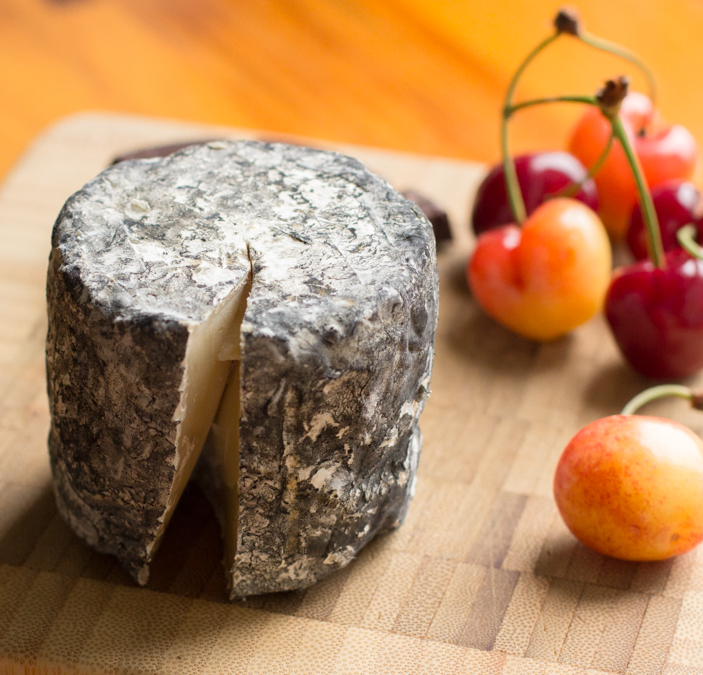
Though Sappy Ewe might sound like the punchline of a foodie joke, its real, new, and surprisingly delicious.
Sappy Ewe is Nettle Meadow's newest cheese.
The first time I heard about the savory-sweet Sappy Ewe was when rustling through a box of samples at Cheese & Sundry, a new cheese and tasty-things distributing company in Berkeley. My friend Emiliano and I were hanging out in their walk-in fridge (about the size of Mariah Carey's closet) when he introduced me to the cheese. I had just eyed the 80-pound wheel of Rodolphe le Meunier's Comté and decided it was too big to stash in my coat and run when Emi picked up the tiny Nettle Meadow wheel. Distracted by the 80-pound cheese, I only heard maple syrup, sheep and cow, and Nettle Meadow.
"Do you want to try it?"
I raised my eyebrows at him and nodded.
Going back to the post title. What happens when a cheesemaker, curds, and maple syrup walk into a bar? If you guessed a spiked cheese-curd pancake party, you might not be wrong depending on the day. But in this case, a gorgeous regional cheese.

Nettle Meadow takes sheep and cow's milk cheese curds (the curds of milk that's been firmed to a thick-custard texture) and drizzles them with maple syrup from Adirondack mountains. Then they fill the curds into crottin-style molds to age. The cheese has a brie-like, bloomy rind that before shipping out, they dust with ash from local black pine trees. It's a New York cheese all the way.
The result is a rich, small sliceable cheese that tastes like brown butter, fresh hazelnuts, and maple ham that knocks the idea out of the water that cheese is always better left alone. Though the list of ingredients might give the impression of sweetness, Sappy Ewe is mellow, subtle, and fit for a cheese plate before or after dinner.
Wine: Before dinner, pair with a yeasty Champagne or rich Viognier. After, pair with something tawny, spicy and sweet like a sweet sherry or vin santo

After dinner? Amazing with chocolate. Tazo's stone ground vanilla-bean chocolate offered a crunchy bite to the silky cheese.
The Dynamic Duo: An Interview with Weirauch Creamery
 The Weirauchs are a new creamery on the California block, relatively speaking, but they are one of the most treasured. Joel and Carleen Weirauch are some of the happiest people in the industry, and the smiles on their faces are catching. It's no wonder. If I made sheep's milk cheese like their Saint Rose, which tastes like a harmonic dairy convergence between Berkswell and a mountainous Basque tomme, I'd be beaming too. And their cow's milk cheeses that they craft when their milking ewes are resting for the season? Just as beam-worthy. I'm very happy to share an interview in my The Daily Rind series on "It's Not You, It's Brie." Thank you, Joel Weirauch for your time (and thanks, Jesse for your series name suggestion)!
You and your wife are very personable, happy people. I always hear cheesemongers talk about how much of a pleasure it is to work with you, and at a recent cheese festival, my father spent half an hour talking to you alone (granted, he does like to talk, and you had samples to feed him, but that’s still a long time). After such long days working on the farm, making cheese, and cleaning –as we’ve learned from Bohemian Creamery’s Lisa Gottriech (from previous post) is sometimes even the biggest part of a cheesemaker’s day, what keeps the smiles on your faces?

Yes, our days are long and there are many times when I am ready to eat and relax but I have to head back up the hill to finish the evening chores - feeding and watering the sheep. Almost everytime during feeding, once the sheep have been fed and the commotion around the feeders slows down, one of the ewes will demand a little extra attention. It is in these moments, where I am forced to slow down, that I find some contentment.
What does an average day look like for you two at Weirauch Creamery?
Our work schedules change with the seasons. Late winter brings the lambs and all the attention to caring for moms and newbies. We then move into the milking time, where twice a day the sheep are milked and the cheesemaking days ramp up. Right now we are breeding the sheep, it is a slower time of the year, however there still plenty of work in the cheese aging room, cheese sales and farm markets. There is never a day off, but this time of year we can have dinner with friends. There are constant interruptions that we never plan on but have to deal with. We have lost power to the creamery during cheesemaking, we had a cooling unit go down during milking, we had a large shade canopy (caught up in a wind storm) rip through the electric fencing and crumple in a heap the other night . There are so many examples that I'd almost say we don't really have average days.
Families traditionally work together at creameries, but things are changing and it’s not always the case that all members of a family or couple want to be involved in such a business. What lead to the decision for you and your wife to work together, and did the division of labor come about naturally?
Carleen and I chose to work together as a way of life. We want to have a shared lifestyle where our work and life are intertwined. The realities of farming don't always allow for this. Carleen holds a part time job off the farm, while working full time on the farm. I am full time farm worker and cheesemaker. We share the duties as much as possible, but often times the duties fall to the person not engaged in some task or another.
Why did you decide on sheep rather than cows or goats (or buffalos), and what was the most surprising things you learned from raising them, and making cheese with their milk?
Sheep milk is amazing, it wants to make cheese on its own. The curd sets up firm and the yields are high. I became interested in sheep milk cheeses after traveling through Europe and realizing that the US has very few sheep dairies. The sheep dairy industry in the US is relatively young. I feel connected to the other sheep milk producers and I enjoy the collaboration and sharing of knowledge between the producers.

If you had all the space, time, labor, and money available to you, what cheese(s) or cheese styles would you try making? Would you make them in California?
What I really want is a cave to age cheeses in, maybe two or three caves. Real caves with natural cooling and humidity. I would like to see what a cave would do to a gooey semi-soft wheel.
What’s your favorite pairings for your fresh cheeses?
Our fresh sheep cheese, Primo Fresco, pairs well with both sweet and savory. I love it in salads and it makes an amazing cheesecake (albeit expensive).
Tomme Brulée: Blowtorches in the Cheese Cave
If you walk into a cheese shop and ask for Basque cheese, chances are you'll be led to Petit Agour or Petit Basque. Some wheels, made in small production batches, will be amazing. Others, made by larger companies in factories, are little more than pale interpretations of the real thing- like fat free cake with sugar free frosting, or roller blades instead of the four wheelers. But there's another sheep's milk that's escaped the Pryenées that shouldn't be missed.
 If you walk into a cheese shop and ask for Basque cheese, chances are you'll be led to Petit Agour or Petit Basque. Some wheels, made in small production batches, will be amazing. Others, made by larger companies in factories, are little more than pale interpretations of the real thing- like fat free cake with sugar free frosting, or roller blades instead of the four wheelers. But there's another sheep's milk that's escaped the Pyrenees that shouldn't be missed.
Tomme Brulée is Petit Basque burnt to another level.
Aged by Affineur Pascal Beillevaire, Tomme Brulée is a pint-sized sheep's milk cheese with a bruléed rind. But before it goes crispy, it starts out like many small Basque style cheeses.
First, the milk for Tomme Brulée (translates to burnt wheel) is cooked slowly so that the sugars caramelize a touch. Sheep's milk has its own characteristic sweetness, and cooking the milk at low temperatures brings out even more of the sugar inherit in it. Then, the curds are separated from the whey, the wheels are shaped, and drained. Next, the cheese is heavily pressed to create a rich, hole-free paste and left to age.
Then at some point in its aging process, it's burnt. I'm not exactly sure when it's bruléed, so if anyone knows, help a girl out. But at one point or another (I'm assuming a couple months after its left to mature) someone takes a blow torch to the rind and flambées it.
Now I don't know if you've ever have the opportunity to burn a brulée crust or handle a blow torch in a kitchen, but its pretty much one of the coolest thing one can do with a food product besides this. I mean, you have a blow torch. And you are turning sugars into a hard crust that someone will joyously break with a spoon or, a blistering a rind that transforms a shepherds cheese into a cheese oddity. Sometimes the blow torch is huge too and you feel amazing holding it. You probably look great too (wink wink).
And the flavor? Well, honestly, it's really similar to a Petit Agour or Petit Basque. But it has an extra little smokey, caramel kick. Like the cookies of my my ex-in-laws made with a cigarette between her lips at Christmas time (but, you know, a lot better).
I like this cheese with a Viognier or a creamier white with a touch of oak. It fares well on a cheeseboard, but its smooth paste is also great for melting.
Have you tried this burnt beauty before? What did you think?
Ombra- Catalonian Sheep's Milk Cheese
Ombra is a firm, Spanish cheese that helps to explain why people fall in love with sheep's milk. Grassy, nutty, slightly spicy, and peppery, it never fails to blow me away with its lingering complexity.
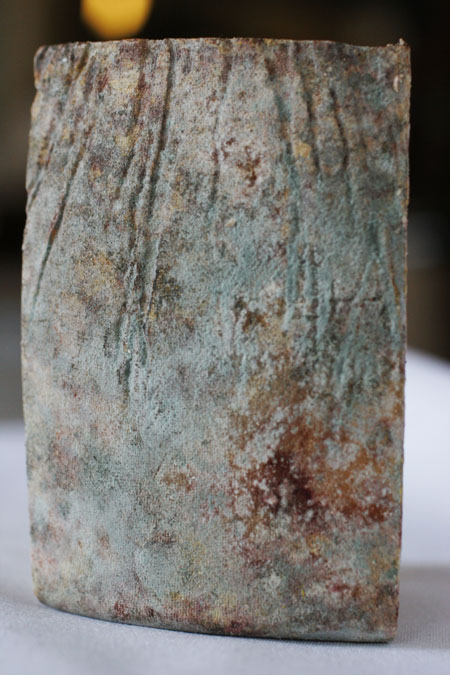 Because I've been so focused on the cheese girls next door- the dairy domestics in the U.S.- while I'm writing my American cheese book, I've been a little worried lately that my international cheese friends weren't feeling the love. Not the case, my Euro friends and beyond, not the case. I've been sending the love through air kisses from afar.
In case a few of the kisses were lost in transmission (or in the Italian post office system) or my readers were doubting my allegiance to the entire milky world and not just local dairy, I'm devoting the next two posts to two of my Euro favorites. Seek em out.
The first is Ombra.
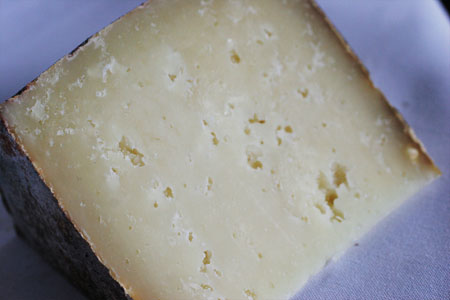
Ombra is a firm, Catalonian Spanish cheese that helps to explain why people fall in love with sheep's milk. Grassy, nutty, slightly spicy, and peppery, it never fails to blow me away with its lingering complexity.
A bite of Ombra lasts far longer than after it's swallowed. It lasts longer than your pair of favorite pair of jeans from the 90's that you just couldn't bear to throw out (because you knew that in 2011, Chloe Sevigny would put on high-waisted denim and you could bust them out again, right?). Like a great Barolo, Ombra changes from the first to last taste. The first bite delivers an herbal, grassy hit. Later, the herbs morph into a buttery, nutty, and well, slightly musky sheepy finish.
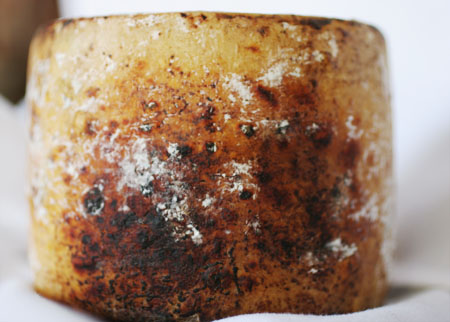
It looks cool too. A gray-blue mold dusts the lightly pleated brown and rusty pattered rind. The interior cracks in just the right places. It has tiny holes that make it look lacy when sliced. Even though a shorter wheel than many cow's milk cheeses, Ombra stands proud and straight at a powerful four inches high.
When having this Catalonian beauty with wine, drink with a rustic Tempranillo- one with plenty of spice and not too much oak, a Rhone blend heavy on Cinsault, a Bordeaux, or a Catalonian red. When enjoying with a side, slice into a low-sugar, classic Spanish fig and almond cake or medjool dates.
Next up- Roccolo. After Roccolo, I'm excited to share a guest post about a certain caramel cheese friend (cheese is a social animal) by Garret McCord of Vanilla Garlic. Big plans, big plans!
What's your favorite sheep's milk cheese from Spain outside of Machego?
La Tur: A Cheese, a Girl, and a Spoon

* Kitchen Curd participants, see end of post*
Although numerous sophisticates allege that the firmer, aged cheeses are the most nuanced examples of fermented milk, I’ve always secretly preferred cheese that I can eat with my favorite baby spoon. One of the softies closest to my heart is La Tur.
In La Tur exists all the best characteristics of a soft goat, sheep, and cow’s milk cheese combined. Crafted with expert amounts of each animal’s milk, the flavors in La Tur miraculously highlight one another’s flavors without competing for attention. Grassy and lemony and tangy like a goat cheese, mildly nutty like a sheep’s cheese, and rich and buttery like a cow’s cheese, La Tur has more texture and flavor variations than Mariah Carey has pink stilettos.
About one-and-a-half inches tall and two inches across, La Tur has a rippled surface, reminiscent of a French natural-rind goat cheese crottin, that calms one’s heart like lapping ocean waves. Underneath this is a layer of pure cheese silk. When the cheese is young, the silky layer is thin, and the center is soft and slighty grainy like a chevre. Then, during the height of ripeness, the silk completely takes over the cheese’s interior so that the center becomes creamy, shiny, and soft, like the center of Old Chatham’s Nancy’s Camembert or Spanish Nevat. This is where the spoon comes in.
Produced in the Langhe region of Piedmont, Italy, La Tur is made by the Caseificio Dell’Alta Langa company, craftspeople of softer style Italian cheeses. The mixed-milk curds are ladled into molds, where they age for ten days before they makes their way home to our fridges. Where they then, of course, patiently await us. And wine.
Knowing La Tur is a fresh cheese from the Piedmont region of Italy helps with wine pairing. Try La Tur with a low-oak red wine like a Barbera, Dolcetto or Nebbiolo, from the same Piedmont region as the cheese. If you want to branch out, one could pair the cheese with a equally bright, low oak wine like a Cru Beaujolais (Gamay) or light Loire Valley Red (Cabernet Franc) from the Saumur Champigny or Bourgueil region. As for whites, try a punchy style, such as a a Sauvignon Blanc, or an unoaked still or sparkling white from Italy.
Whatever you do, give the cheese a chance to shine. Let it come to room temperature, when it will charmingly stick to the cheese paper with which it’s packed.
And remember, La Tur is one of the classiest cheeses you can put on a baby spoon.
Cheese Category: natural/surface ripened
milk: cow, sheep, goat
* Kitchen Curders * Some friends and I tried making the mozz as directed in the Home Creamery book and had a problem towards the end, when the author said to heat the 8 cups of water to 108 degrees. I think she meant 180. Hello recipe testers? Anyhow, I would either suggest trying heating the milk to 180, using another recipe, or doing what we did after the mishap, which was instead of pouring the room temp 108 degree water over the curds, was to heat the curds in the microwave method following her recipe. Then, we'll discuss the outcomes and tribulations in the Kitchen Curd posts coming our way early July.