
The Cheese Blog

Nettle Meadow's Sappy Ewe: A cheesemaker, curds and maple syrup walk into a bar...
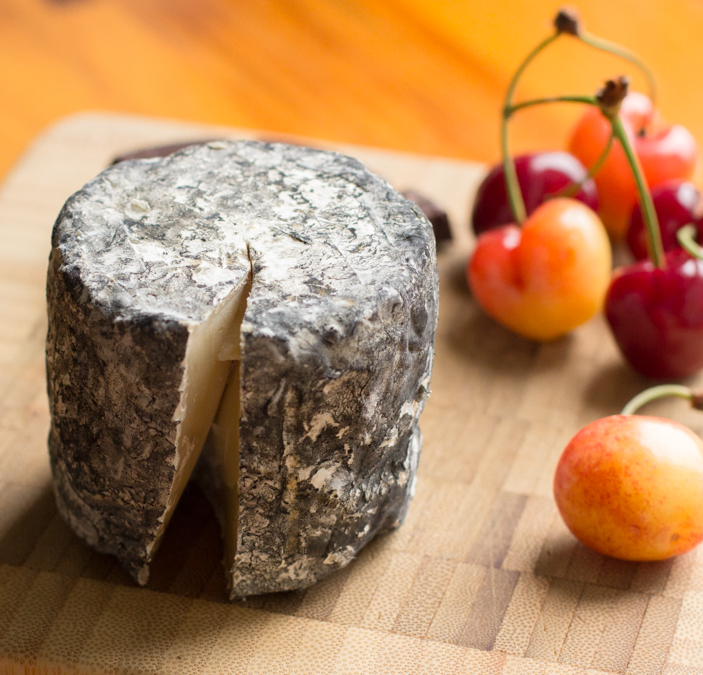
Though Sappy Ewe might sound like the punchline of a foodie joke, its real, new, and surprisingly delicious.
Sappy Ewe is Nettle Meadow's newest cheese.
The first time I heard about the savory-sweet Sappy Ewe was when rustling through a box of samples at Cheese & Sundry, a new cheese and tasty-things distributing company in Berkeley. My friend Emiliano and I were hanging out in their walk-in fridge (about the size of Mariah Carey's closet) when he introduced me to the cheese. I had just eyed the 80-pound wheel of Rodolphe le Meunier's Comté and decided it was too big to stash in my coat and run when Emi picked up the tiny Nettle Meadow wheel. Distracted by the 80-pound cheese, I only heard maple syrup, sheep and cow, and Nettle Meadow.
"Do you want to try it?"
I raised my eyebrows at him and nodded.
Going back to the post title. What happens when a cheesemaker, curds, and maple syrup walk into a bar? If you guessed a spiked cheese-curd pancake party, you might not be wrong depending on the day. But in this case, a gorgeous regional cheese.

Nettle Meadow takes sheep and cow's milk cheese curds (the curds of milk that's been firmed to a thick-custard texture) and drizzles them with maple syrup from Adirondack mountains. Then they fill the curds into crottin-style molds to age. The cheese has a brie-like, bloomy rind that before shipping out, they dust with ash from local black pine trees. It's a New York cheese all the way.
The result is a rich, small sliceable cheese that tastes like brown butter, fresh hazelnuts, and maple ham that knocks the idea out of the water that cheese is always better left alone. Though the list of ingredients might give the impression of sweetness, Sappy Ewe is mellow, subtle, and fit for a cheese plate before or after dinner.
Wine: Before dinner, pair with a yeasty Champagne or rich Viognier. After, pair with something tawny, spicy and sweet like a sweet sherry or vin santo

After dinner? Amazing with chocolate. Tazo's stone ground vanilla-bean chocolate offered a crunchy bite to the silky cheese.
Hidden Spring's Brenda on Following the Curd & Washing Vats on Toes
Brenda Jensen's path from earning an MBA and working as an operational manager in the packaging industry to waking up at light break every morning to check on 550 sheep and cut curds in a steamy make room may seem surprising to some.
 Brenda Jensen's path from earning an MBA and working as an operational manager in the packaging industry to waking up at light break every morning to check on 550 sheep and cut curds in a steamy make room may seem surprising to some. It certainly was to the Jensens who now make the award-winning cheeses of Hidden Springs.
When Brenda and her husband first bought fifty dairy sheep in the middle of Wisconsin Amish country, their plan was to launch a creamery. Dean and Brenda would milk the sheep and then hire someone to make cheese, they thought. Brenda would keep her full-time, well-paying job that likely had a retirement plan. But then the couple decided to take a class and visit local sheep’s milk cheesemaker Mary Falk at Love Tree to learn more about the ins and outs of their future business. This shook things up.
Brenda fell in love. With everything. With the feel of the curds on her fingers, the scent of the make room, the texture of sheep's milk, the mix of artistry and science. She might have even liked the hair net she was required to wear.
“My feet didn’t touch the ground for days,” she says laughing, “I was in love. I told Dean, ‘I think I found the cheesemaker. I think it’s me!’
“I still get goosebumps when I smell warm milk,” she says.

Though Brenda couldn't be stopped after she walked her boots through the sanitizer into a make room for the first time, she ran into a few glitches along the way. At forty-four years old, she was a newbie. And she was a petite (yet strong) woman often training at cheese plants with men who grew up next to cheese vats.
She admits being a female cheesemaker sometimes made her have to work harder. One cheesemaker at a location where she trained didn’t let her cut the curd until her third shift on the job. But even though she had to stand back and watch and clean a lot in the beginning, she says, she noticed she was treated differently after the first year.
“They started looking at me like, ‘Huh, maybe she is really going to make cheese.”
That she did. Brenda quit her job, trained for her cheesemaking license, and translated her inspiration into eight different cheeses at Hidden Springs. My favorite of her vibrant cheeses are Timber Coulee, Bohemian Blue, Ocooch Mountain, and her mixed cow and sheep’s milk wheel, Meadow Melody, which I profile in my book (awesome with cherry conserve or confit).
Brenda now knows she can pick up the phone any time and receive support. She sites her biggest influences after Falk among Wisconsin’s and even the country’s food and cheese best- the team at Uplands (especially Mike Gingrich who helped her in her early years), goat cheesemaker Ann Tapham, Willi Lehner of Bleu Mont, Ari Weinsweig of Zingerman’s, Ranee May, Jeanne Carpenter, and Kate Arding of Talbott and Arding.
Beyond professional guidance, she can also call any of her five children to bring over one of her twelve grandchildren if she needs using the power hose in the make room.
“They like to say they made cheese with grandma,” Brenda Says, “they also like to ride the carts around the farm.”
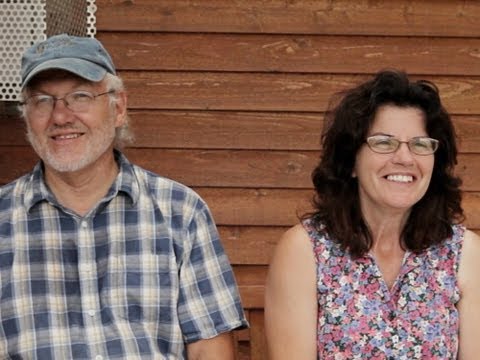
When asked if she had any advice for aspiring cheesemakers who are starting out who may or may not have their children or grandchildren to help them, Brenda said she did especially for people of her stature (raising my hand right here).
Think long and hard about your milk buckets and vats and do so creatively. For example, the standard milk pails are so heavy, she had to roll hers the first time she used them. She suggests going with gravity flow tanks and smaller buckets.
“My toes don’t reach the ground when I’m washing the vat- something to think about when buying one!” she says, laughing.
Either way, this is one whip-smart and ambitious grandmother with an MBA that won't let an inch or two stop her.
Berkswell Sheep's Milk Cheese: England's Flying Saucer
Like many sheep's milk cheeses, Berkswell has a buttery taste- think browned butter or melted ghee. When you bite into a wedge, you're greeted with lemon zest and fresh hazelnut notes. Because it's a seasonal cheese in the sense that the ewes milk changes seasonally with what they're eating, the flavors range throughout the year. I've tasted notes as different as pineapple and fresh mushrooms or a whiff of pine.
 Put into effect in 1954 when spaceship sightings were rampant, the French have a law stating that flying saucers cannot land in Chateauneuf du Pape vineyards. If one is ever spotted landing or hovering, the CdP's mayor has the right to put the "cigare volant" into their immediate custody. In the midlands of England, however, flying saucer shapes are encouraged. Berkswell is possibly England's most famous sheep's milk cheese.
Formed into the flying saucer shape (or a flying saucer back when alien ships were oblong and round, because really, who knows what our advanced space friends are driving these days) by the basket mold the curds sit in while draining, Berkswell is a three-pound natural rind sheep's milk tomme with light yellow-brown rind and a creamy golden paste that starts to crumble and flake as it ages.
 Berkswell is made by the Fletcher family on their 16th century estate. The family's owned the farm for six generations, but didn't start making cheese until the nineties when a local cheese shop convinced the family that rather than just sell them their sheep's milk, they should make cheese with it. Thank you, English cheesmonger.
Like many sheep's milk cheeses, Berkswell has a buttery taste- think browned butter or melted ghee. Also greeting you are lemon zest and fresh hazelnut notes. Because it's a seasonal cheese in the sense that the ewes milk changes seasonally with what they're eating while grazing, the flavors change throughout the year. I've detected notes as different as pineapple, fresh mushrooms, or even pine from one month to the next
The Fletchers turned to a Caerphilly recipe when they first started making Berkswell, but if you've tasted a wedge of this saucer lately, you know the make has changed. Berkswell is now slightly grainy, firm, and more akin to a pecorino, but a tad less chalky. Though England has more sheep topping its gentle hills than California has organic vegetables, most are used for meat, so finding sheep's milk from here is still a lovely exception.
Wine Pairing: I love Berkswell with a dry Riesling or Chenin Blanc or a high acidity, red-fruited wine like Gamay or Cab Franc.
Food Pairing: Like pecorino shaved over spring's favas or asparagus? Try Berkswell instead. Or, slice thin pieces of the tomme over fresh pasta and top with olive oil and freshly ground pepper. I also like it with a simple dose of marmalade. I served it with Frog Hollow's blood orange strawberry marmalade for the photo.
Where to find: Ask your local cheesemonger who carries Neal's Yard Dairy cheeses (sometimes it just needs to be pre-ordered), or try some from Murray's online.
Fun recipe: Delicous UK's zucchini & Berskwell soufflle. White wine pairings apply!
K-I-S-S-I-N-G - Aged Sheep's Milk Cheese & Sours, Sitting in a Tree
After instigating meticulous research in the name of beer and cheese pairing - sipping, eating, nibbling, drinking, then doing it over again- it's decided guys, aged sheep's milk cheese loves sour beer.
 Sipping, eating, nibbling, drinking- after instigating meticulous research in the name of beer and cheese pairing, my friends, I have arrived at a discovery. As my co-presenter Travis and I sipped our sours and wrapped up our beer and cheese pairing event at Drake's Barrel House this Saturday for SF Beer Week, we looked at each other, broke down our findings, measured a few things, used an exel spreadsheet for something or another if I remember correctly, then came to an agreement.
Or, rather, I simply turned to the very happy, lightly buzzed crowd and said, "Aged sheep's milk cheese goes awesomely with sour beers, guys."
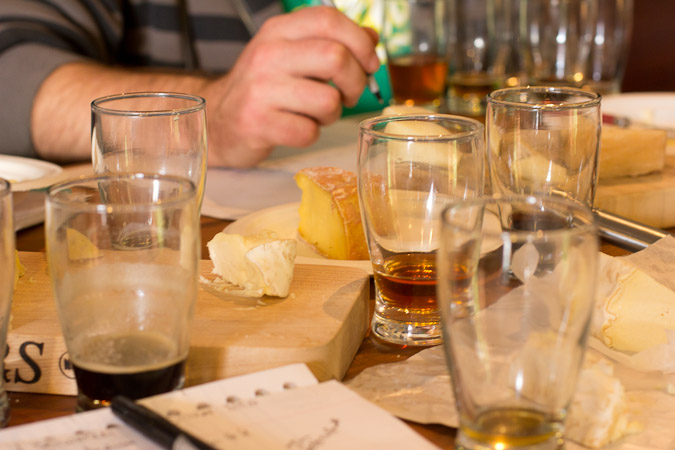
Sharing that bit of knowledge made me feel almost as good as having my friend later feel my arm and ask if I had been working out until I figured out that she was touching the arm that had been flexed holding up a heavy glass of beer. Why?
Because artisan cheese can change from from season to season, from wheel to wheel, and from batch to batch, it can be tricky to pair to craft beers, which can morph just as quickly. So having a cheat sheet, a standby pairing to lean on, is uber helpful.
Sheep's milk fairs well with sours for two main reasons.

Why does it work?
1. You're contrasting.
Sheep's milk is higher in butterfat than cow's and goat's milk. As the milk ferments and ages into cheese, it intensifies in richness. And since cheese looses moisture, but not butterfat with age, the richness only amplifies. When paired to a sour beer, the beer's acidity is extremely helpful in cutting through some of the fat in the sheep's milk cheese like lemon does to a cream sauce. It keeps the pairing situation bright and light.
2. You're also matching.
Next, sheep's milk still retains some of it's lightly citrus character when it ages. Think of Pecorino Toscano, Everona's Piedmont, or even Abbaye de Belloc. For SF Beer Week, we paired Bellwether's San Andreas and Barinaga's Basseri with Drake's One Hit Warrant- a honey wheat aged in Chardonnay barrels with sour cherries. The lightly tart beer, and even the cherries matched the lemony citrus notes in both Basseri and San Andreas. The cheeses also went super well with Drake's Scarlett O'Bretta and Wild Hundo. And after doing much research (ahem,… tasting) I can confirm that other sours and ages sheep's milk cheeses go well together too. It's a good thing I'm here for you.
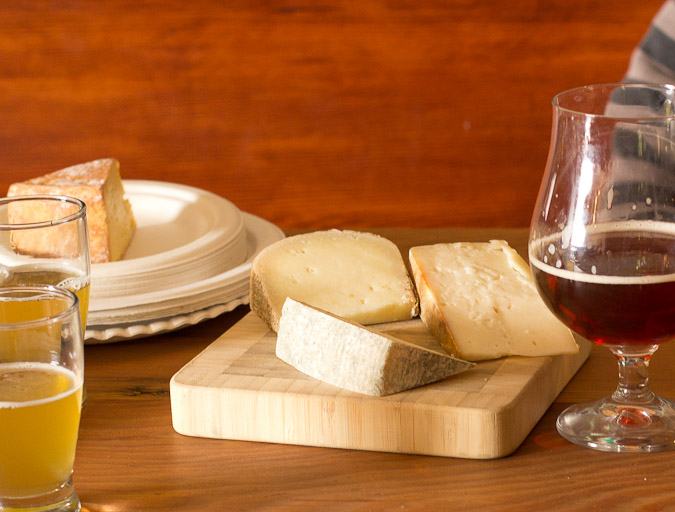
Next time you're faced with a tree trunk carved with initials, consider looking for ASC ♥s SB (Aged Sheep's Milk Cheese ♥s Sour Beer). It's likely right below Jessie declaring his love for Jenny.
Baked Ricotta: For the Vegetarian Lunch Date
 Coming back from traveling and straight into the holiday craze at the wine shop where I work at has been good- distracting, lively- and then just plain busy. Falling asleep within minutes of eating a 10pm dinner after working the wine bar and writing kind of busy. Since the holidays have hit, I've been focusing on cooking meals that require low output- aiming for several meals that last for days, or cooking tasty dishes that inspire, quickly.
So when my good friend Jesse came over for lunch/ business meeting this Sunday (yay, projects!), I wanted to keep it simple. And vegetarian, per her meatless preferences. So what did I do? Mmm hmmm… I bet you can guess. I went cheesy.
Coming back from traveling and straight into the holiday craze at the wine shop where I work at has been good- distracting, lively- and then just plain busy. Falling asleep within minutes of eating a 10pm dinner after working the wine bar and writing kind of busy. Since the holidays have hit, I've been focusing on cooking meals that require low output- aiming for several meals that last for days, or cooking tasty dishes that inspire, quickly.
So when my good friend Jesse came over for lunch/ business meeting this Sunday (yay, projects!), I wanted to keep it simple. And vegetarian, per her meatless preferences. So what did I do? Mmm hmmm… I bet you can guess. I went cheesy.

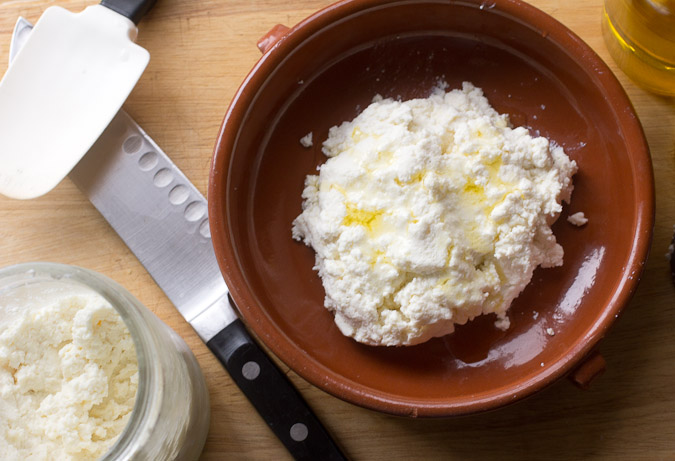
Baked ricotta is one of my go-to, low fuss, dishes. And cooking it just makes me happy, especially when I'm working with such lovely product as Bellwether's sheep's milk ricotta. Bellwether was the first certified sheep's milk dairy in California (I focused on their San Andreas in my book) and they make some of the most gorgeous ricotta I've had. But if you can't find them near you, just go with whatever other delicious local sheep's milk one you have. Fruition Farms makes a lovely one, too.
Sheep's milk ricotta provides more of a savory, earthy flavor than cow's milk that emerges once the cheese is baked, but if all you can is a find good cow's milk version near you, that's fine. The ricotta doesn't need to be true ricotta made from whey for this recipe, either. In fact, it's probably best if you can't find a rich sheep's milk version, to go with whole cow's milk cream-added ricotta instead. It would provide a richness that shines once baked. Salvatore Brklyn, here's looking at you.
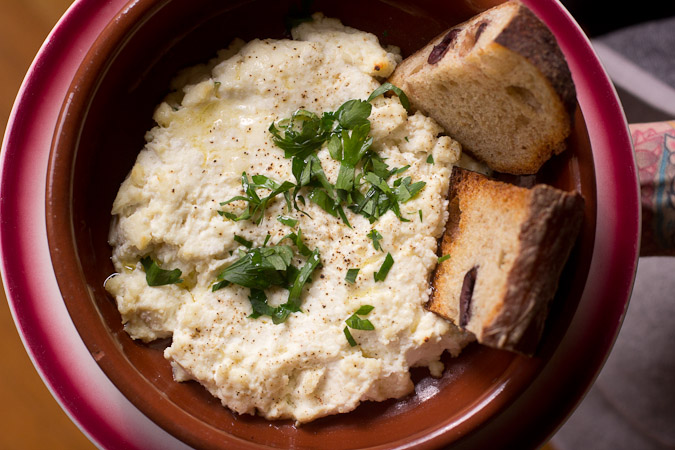
Serve with whatever tasty sides you have around. I served with a pomegranate citrus salad, olive bread and sliced watermelon radishes. If I weren't going veg, I'd slice a local salami or two and serve with warmed olives.
Baked Ricotta
For two
Preheat oven to 425 degrees
3 cups ricotta (really, it shrinks once cooked!)
1 1/2 tablespoons extra virgin olive oil
freshly ground pepper
1/4 teaspoon sea salt
1 tablespoons chopped parsley
Place ricotta in a shallow baking dish that's table-friendly. Flatten slightly. Drizzle with 1/2 tablespoon of olive oil. Top with freshly ground pepper. Bake for 15-20 minutes or until the top is lightly golden. Drizzle with remaining olive oil and sprinkle with sea salt and parsley and serve.