
The Cheese Blog
Irish Cheese: Is Cork the Washed-Rind Mecca? A Visit to Durrus.

Irish cheese Durrus
Traveling for weeks in Ireland visiting cheesemakers taught me three things. One, sometimes when driving along the Emerald Isle, even the weeds are so beautiful you have to pull over (magenta and purple fuschia, tufted vetch grow here like blackberry vines do in Seattle). Second, you can get better seafood at nearly any roadside pub or diner than you can at most high-end restaurants in New York City. Third, I could live a happy cheese life in the washed-rind cheese land of Cork, otherwise known as the Mecca of Funk.
Irish cheese: Cork washed rinds

Irish cheese maker Jeffa of Durrus on right, stirring the curds.

Cutting the curd is a two-person job.
Across the pond, Ireland is widely known for its larger scale cheeses like cheddar.
But among stinky cheese lovers, those who deeply inhale the scent of Époisses, Limburger or Grayson when others crinkle their nose- Irish cheese is known for its funk, or, its washed-rind skills. Especially in the land of Cork.

Jeffa’s daughter, Sarah, who arranges tours and makes cheese two or three days a week.Jeffa's daughter, Sarah, who arranges tours and makes cheese at least two days a week.

Reaching for Durrus
What is a washed-rind cheese?
A washed rind cheese is a wheel whose rind is rubbed down with a brine as it ages. The brine is a combo of water and salt and often a splash of booze like whiskey, wine or beer.
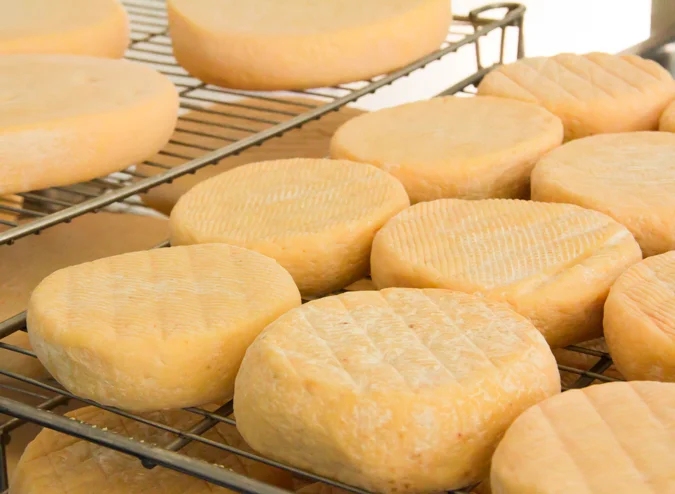
“Washing,” or rubbing the rind as the cheese matures encourages the growth of bacteria like B. linens bacteria. As they break down the cheese's proteins, they turn rind orange, the smell funky, and the inside very, very sweet.
Legend has it that a Benediction monk created washed rinds back in the day when he rubbed a monastery cheese he was making with some nearby monastery liquor because he thought it would help heal cracks that formed on the rind. It worked. And more.


The view from Durrus’s dairy window.
Why artisan washed-rind cheesemakers in Cork?
Three reasons. See one above.
1. It's a gorgeous, rocky, seaside land covered in ferns and red flowers that is as welcoming as a bubble bath and a glass of wine at the end of a long workday. People want to stay. See that woman holding the pail below? She's taking the whey from Durrus creamery to feed her pigs at her piggery. She was American. Now she's American-Irish. She came and never wanted to leave, so set up a piggery and stayed. Many cheesemakers have made Ireland their home from places as near as England, and as far as Holland and Germany. Many brought with them their cheesemaking knowledge or congregated together to learn.
2. The sea air loves the bacteria that makes a washed rind a washed rind, and much of Cork is oceanside. Most cheesemakers add B. Linens to their brine, or to their milk. But often if Cork, you don't need to if you're close to to ocean. The salty sea air and humidity acts as a siren to the funky bacteria that lives ambient in the air.
3. Artisan cheesemaking hit it off in Cork in the late seventies and eighties when a group of hippies gathered around the kitchen stove at Milleen's in Eyries, Cork. They had dreams of living sustainably and independently off their own land and knew cheese would help them do this. When the group realized that washed-rinds excelled in Cork, they stuck with it and mastered the style. Veronica Steele of Milleens taught Jeffa Gill of Durrus and Mary Burns of Ardrahan, then Jeffa taught Gubbeen, and the rest is funky history. Since then, the creameries have each taken on their own flavors, textures, and fans, making Cork the center, or, Mecca of Washed Rinds, of I'd like to argue, anywhere.


Using a pump to get the curds from the vat above to the molds below.

The last time I was in Ireland, August, I spent a couple days with Jeffa. She makes Durrus, the cheese pictured in this post. Starting out sweet, rich, and fluffy when young, as Durrus ages it softens around the edges and takes on a beefy and funky complexity. It's a beautiful cheese that's available in the states, often by special order. It was an honor to see her make it, and because they were short a person, I was able to sneak in and flip curds. Yes.....
Thank you, Jeffa, for letting me visit.
Long live Irish washed-rinds.
And They Called Them Stinky
Stinky is relative. My fainting friend — who admits the only cheese she’ll eat is fresh burrata or mozzarella and who made me keep all cheese I purchased while visiting her on the balcony where she couldn’t smell it — has a very low tolerance level for stinky cheese. Let’s classify it as zero on a scale of 1 to 10 (I still love her though; she sends me home with jars of her granmother’s quince jelly). My stinky tolerance level is 8. Another friend’s level is 13.
 "And They Called Them Stinky," {by me} originally published on the Menuism Cheese Blog.
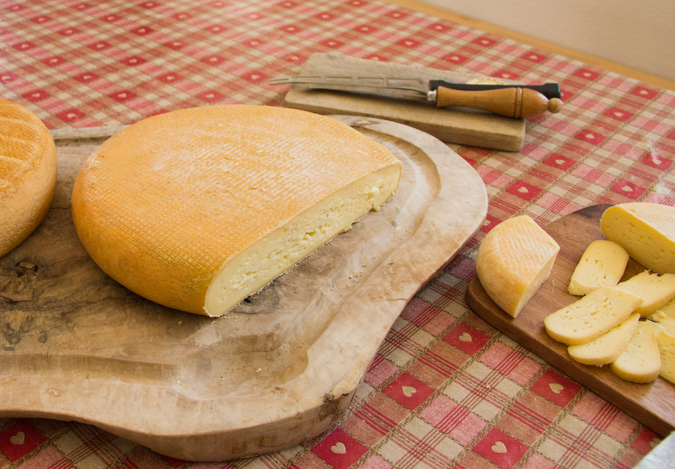
The first time I heard someone call Comté “stinky,” my jaw dropped. Comté, a semi-hard lightly washed rind from France’s jura region, is a sultry, sweet wheel with flavors of butter, toasted walnuts, caramel, and from time to time, notes of caramel or beef. I would have sooner called a rose stinky than Comté. It wasn’t until that French friend told me that on one of the many gastronomic field trips that French children take during elementary school, she fainted in a Comté cave because the scent was so fierce, that I really thought about the term stinky.
Stinky is relative. My fainting friend — who admits the only cheese she’ll eat is fresh burrata or mozzarella and who made me keep all cheese I purchased while visiting her on the balcony where she couldn’t smell it — has a very low tolerance level for stinky cheese. Let’s classify it as zero on a scale of 1 to 10 (I still love her though; she sends me home with jars of her granmother’s quince jelly). My stinky tolerance level is 8. Another friend’s level is 13.
In honor of cheeses everywhere, I thought I’d take some time to mention some of my favorite stinkies, as in, they stink so good. Their scent comes from cheesemakers washing them in a brine of salt and water or a blend of water and alcohol that encourages growth of the sultry Brevibacterium linens bacteria. It’s a good bacteria that keeps the bad ones away.
Below are some of my favorite choices, in varying degrees of stinkiness. I rate the funkiness possibilities from 1-10. Taste at your local cheese shop if you want to rate your specific slice before taking home.