
The Cheese Blog
Wisconsin in Fall: Rush Creek's Raw-Milk Return, and, Limburger.
When I recently got invited to join a tour visiting some of my favorite Wisconsin cheesemakers this October with 2015's top ten Cheesemonger Invitational competitors, I did two things. First, I thought about how it would be an amazing way to celebrate American Cheese Month. Second, I packed my bags on the spot, all the way from the east coast.
 When I recently got invited to join a tour visiting some of my favorite Wisconsin cheesemakers this October with 2015's top ten Cheesemonger Invitational competitors, I did two things. First, I thought about how it would be an amazing way to celebrate American Cheese Month. Second, I packed my bags on the spot, all the way from the east coast. The Wisconsin Milk Marketing Board had an extra spot on the tour for a media person/writer, and since Heritage Radio was on board from the east coast, maybe I'd like to join them from California. They told this Bay Area girl that the leaves would be changing into beautiful midwest oranges and reds, the crew on the bus would be fun cheese geeks from all over the country, and the cheesemakers would be Uplands, Chalet Cheese Limburger, Roelli, Roth, and Hooks. So, you know, I said yes.

I started prepping my cheese curd game immediately, packed my bags another time for emphasis, and hoped the CMI competitors wouldn't test my cheese wrapping skills before allowing me on the tour bus, because then I would not be allowed on the tour bus.
This is a photo tour of our trip.
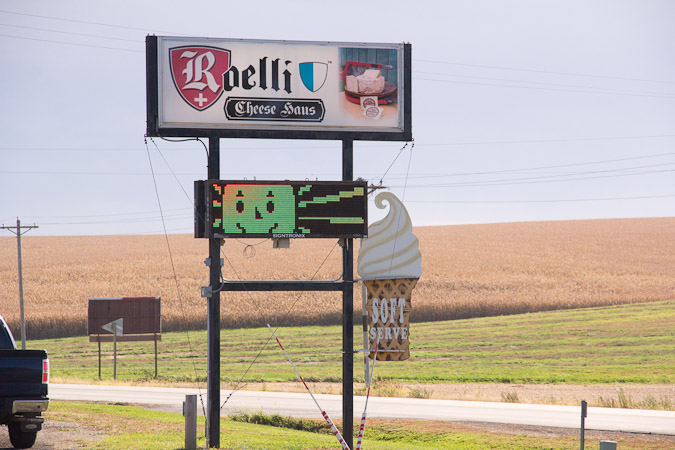
First place we hit up was Roelli's Cheese, where Chris Roelli (below) makes Dunbarton Blue and Red Rock. The sign above is where the Roelli family announces when they have "fresh and squeaky" cheese curds ready. Tuesdays and Wednesdays, folks.

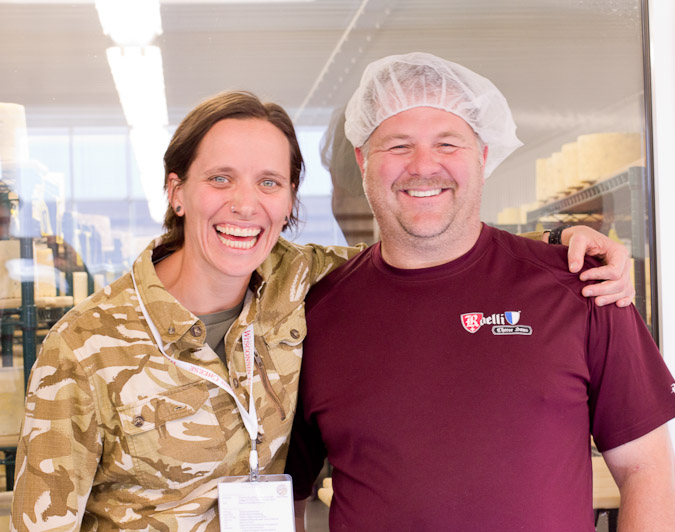
One of the cool things about cheese curds, besides how awesome they taste fried, is that selling them can provide a little financial cushion for cheesemakers like Chris so they focus on creating and maintaining artisan wheels that require a lot of time and labor without worry.

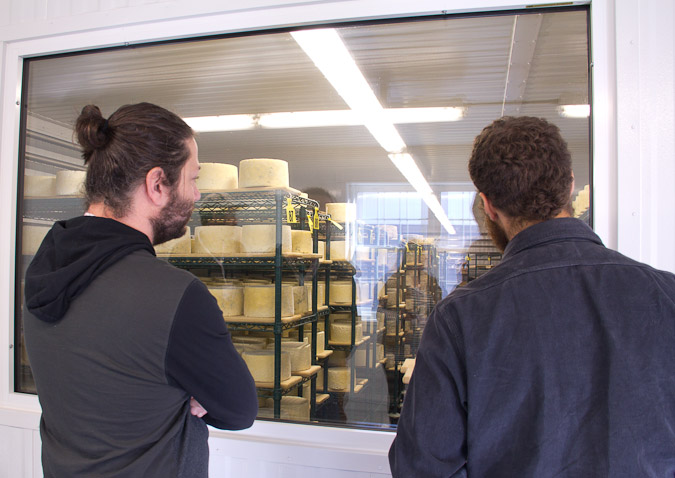
Dunbarton Blue is the only blue-cheddar in the country (world?). It is amazing and I sneakily slipped it into the Cheddar chapter of my book. I think...

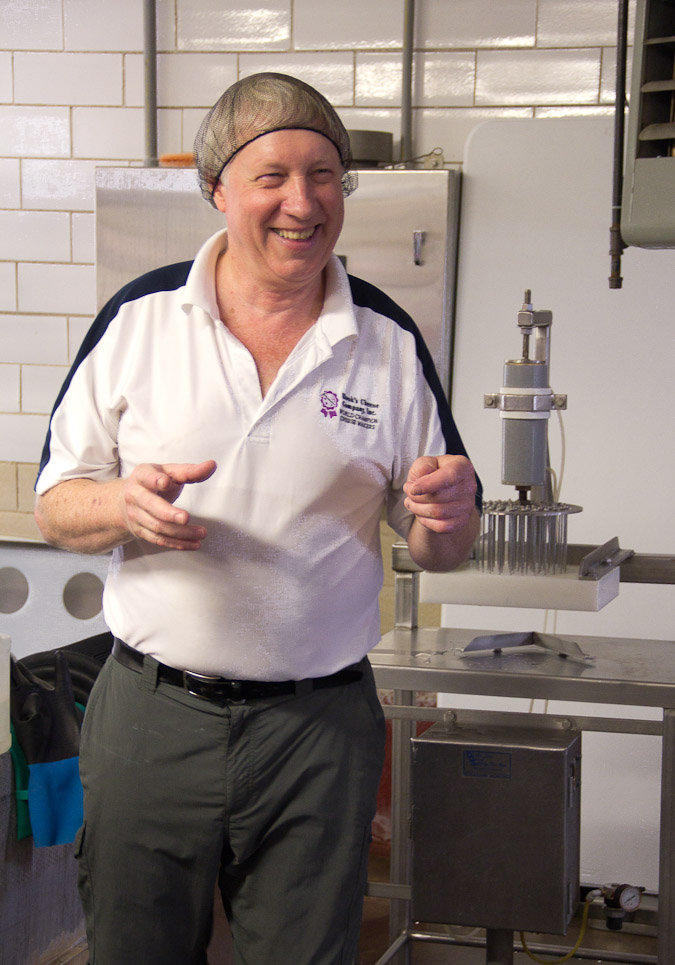
After Roelli's we hit up Hooks, who makes such blue cheese faves as Tilston Point, Hook's, and Ewe-Calve-to-be-Kidding-Me. Though this blue cheese maven didn't start using Penicillium roqueforti (the blue cheese mold) until 97, he was making cheddars, swiss and colby since the seventies. This is also the man who makes THE twenty year-old cheddar (and donates much of the earnings to a local non-profit).
 Ever wonder how blue cheese gets blue? The blue mold is added to the milk in the beginning of the process. After the wheels are formed, they're set on the platform of this delicate device, that looks a little like a cheese torture, and pierced, allowing oxygen to circulate within the wheel. Oxygen + Penicillium roqueforti = Blue color. More veining? More piercing.


So you don't feel like I'm being unfair to my traveling group, here is a photo of me in a hair net, too (in the Jura, drinking raw whey cream).


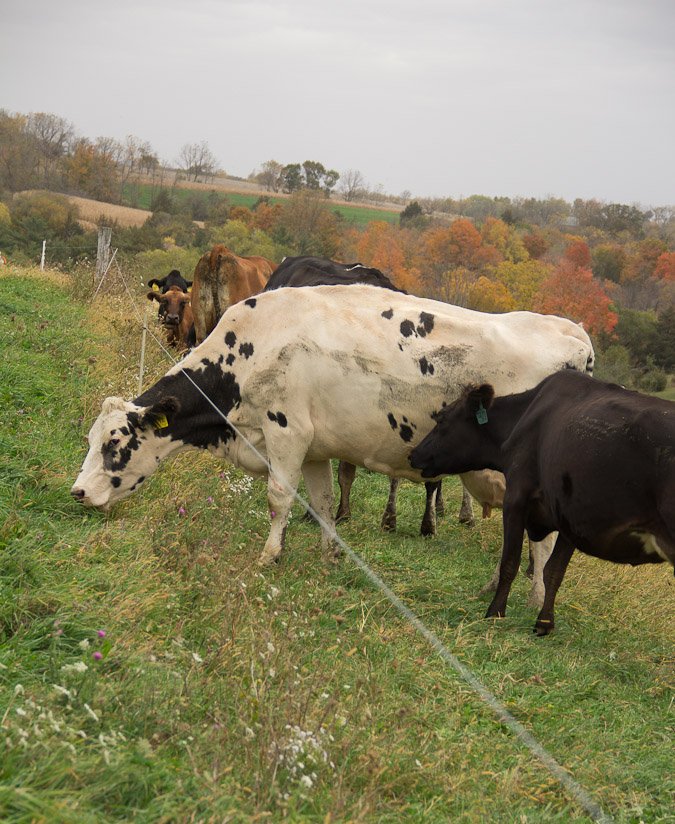
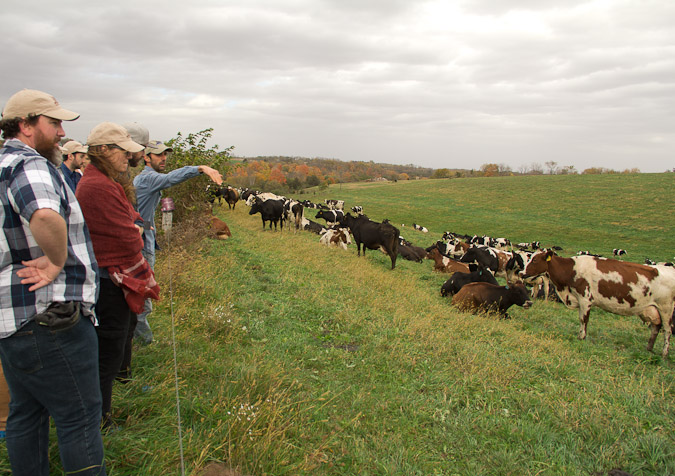
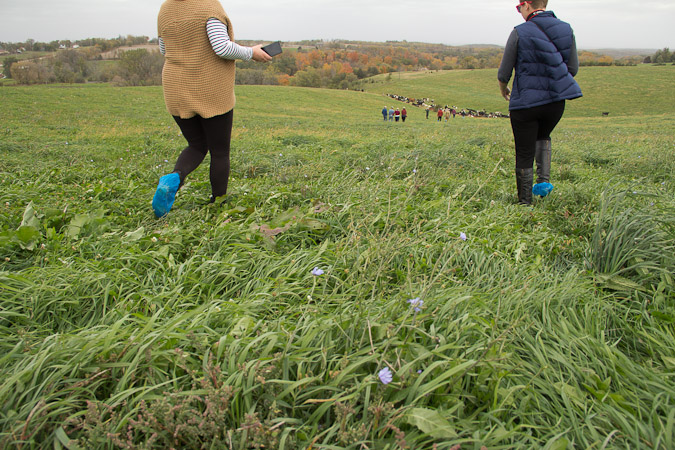
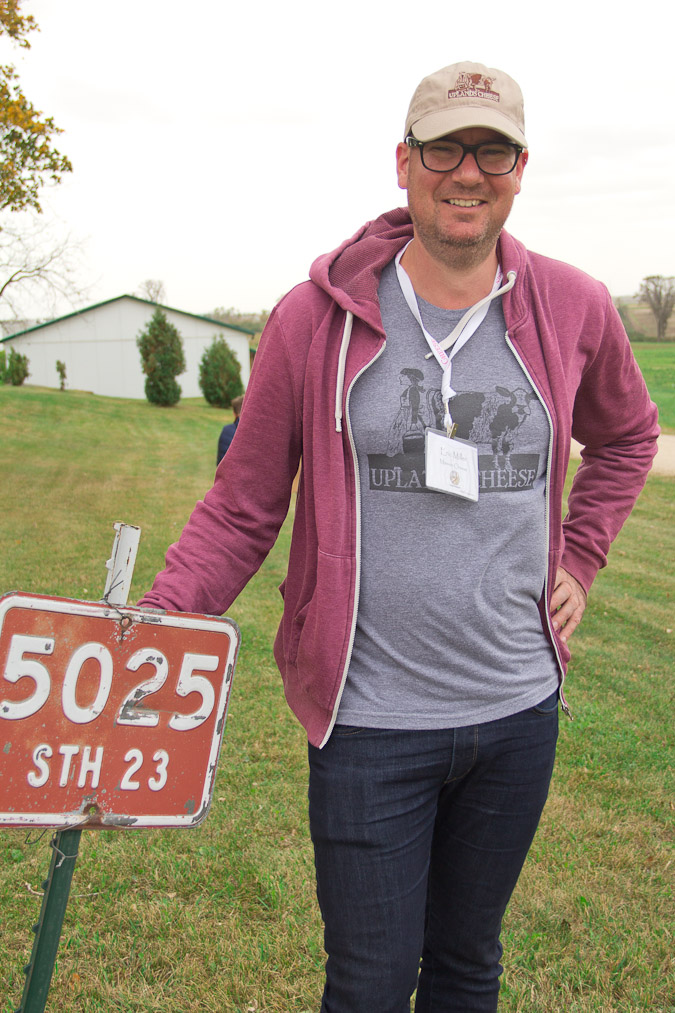
Next we headed to Uplands, where cheesemaker Andy Hatch charmed the hell out of us, took us into the fields, and sampled us with different ages of Pleasant Ridge and the new batch of Rush Creek. Yes, my friends, Rush Creek is back.
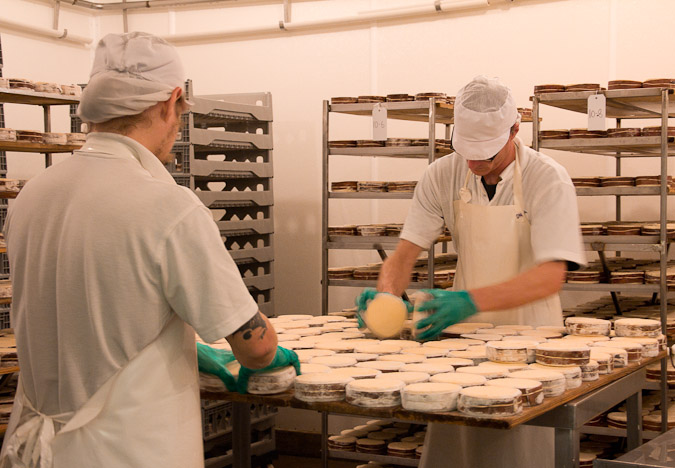

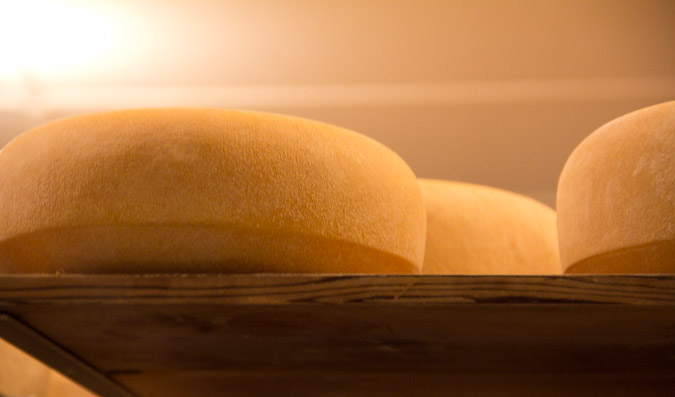

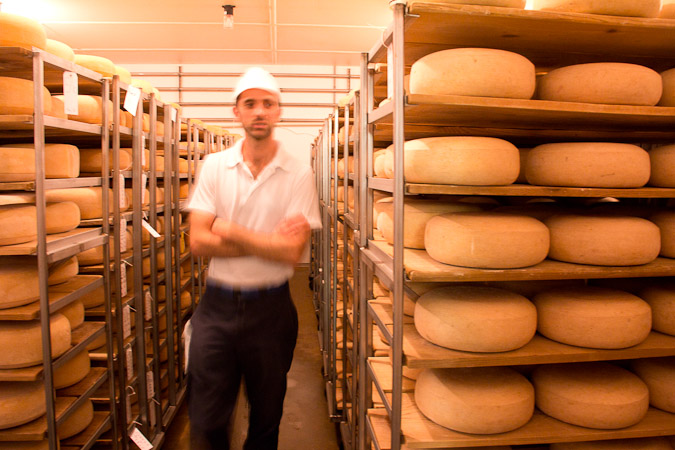



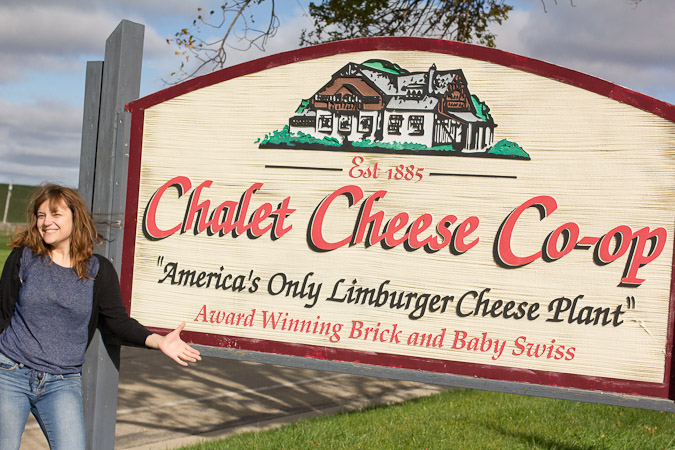
 Then we moved on to Chalet Cheese, the home of the country's only remaining Limburger producer (read more about Chalet in my book). And yes I did capitalize Limburger. It's that good.

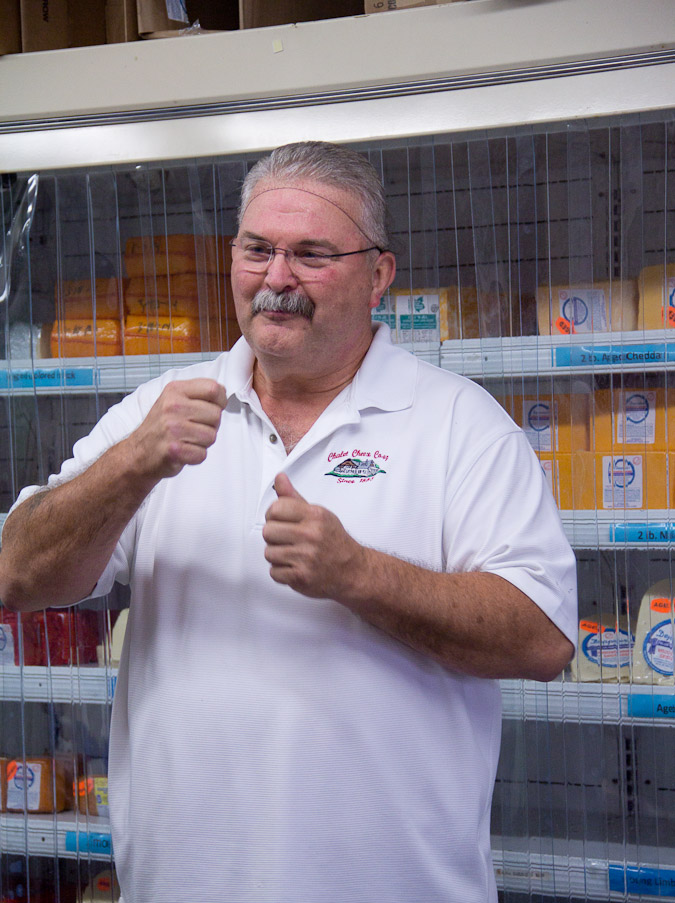
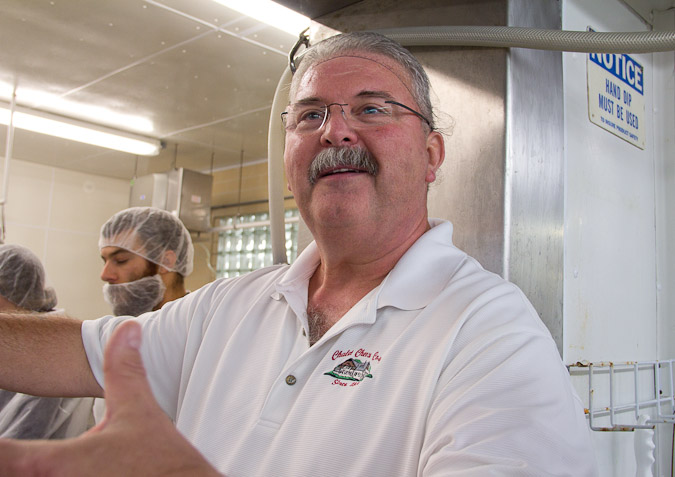 Myron Olson earned the last given Master Limburger Cheesemaker award in 1976. He manages the Chalet Cheese Co-op. Rosy cheeked, kind, and full of sweet jokes, he's exactly who you want making your Limburger. He serves it to guests of the plant with Ritz, mustard, and strawberry jam, and it's awesome.

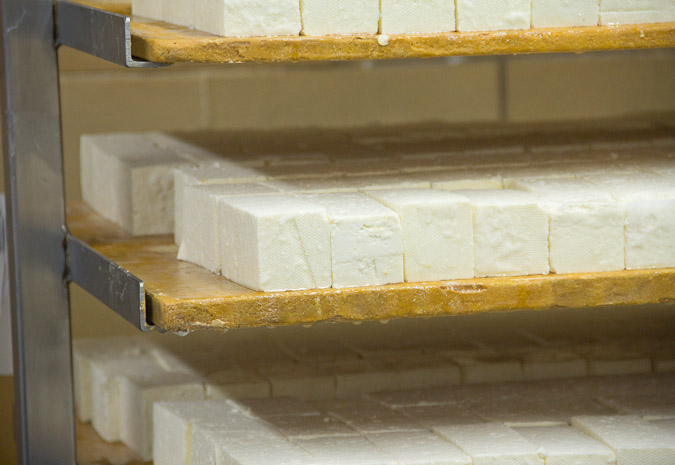
Limburger is what Limburger Master Cheesemaker Myron Olson calls a smear-ripened cheese (anywhere else but Wisconsin calls this style washed-rind). As the soft cheese ages, it's rubbed down with a salt-water brine that contains healthy microflora bacteria from the plant's inception in the 1900's. It's what gives Limburger strong, funky scent, but sweet flavor.

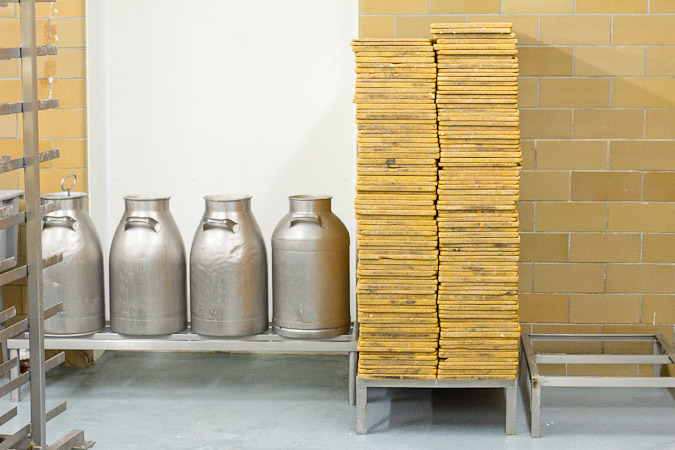
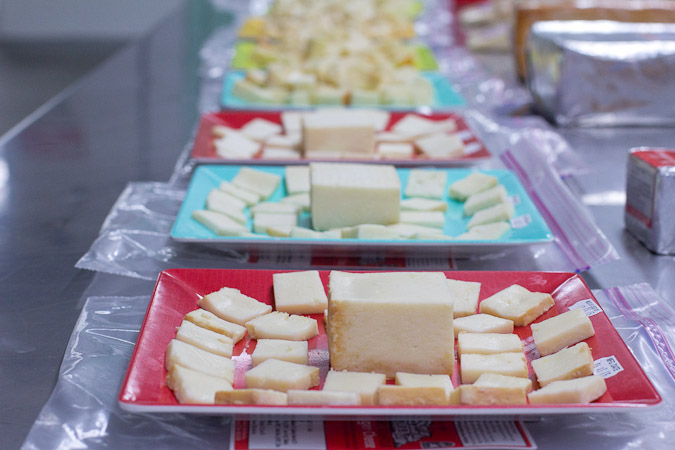 We were served Limburger of various ages. Each Chalet brick has an "eat by" guide on it to assist in choosing the proper consumption for your tastes. My favorite were the youngest and oldest.

 Our tour ended at Roth, where we sampled cheeses they were experimenting with, toured the make room and were fed delicious Swiss wine and fondue made with Roth's "Gruyere."
 I came home from the tour with a deliciously full stomach (otherwise known as a cheese baby) and heart that was pleased with making amazing new friends and reconnecting with old ones- It would be hard to imagine being with stuck on a bus all day with such an awesome group of near strangers. And cheesemakers, thank you for so warmly welcoming us to your make rooms and farms. WMMB, thank you for sharing so much.

Limburger Cheese: Just as Stinky as You Like it.
Below I share with you photos from my tour at the Chalet Cheese Co-op- the only remaining Limburger producer in the country. If you see Limburger in the U.S. that is made in the country, it's Chalet. It may have a proprietary label, but it is always Chalet pumping the sweetly funky flavor out. Pick it up and note the dates on the label- they will guide you to finding a cheese age you love. And you will love one of them. More about Limburger in my forthcoming book.
 Remember Monterey Jack on the Chip and Dale Rescue Rangers (Rescue Rangers= the cartoon, not the burlesque show)? Well, Monty, as he was known to his friends, was the Australian mouse who helped chipmunks Chip and Dale fight crime. Yet even though he was darn good at helping to put the right fox, cat, or dog in prison, he was better known for his love for cheese.
There was one cheese in particular that if he got a wiff of it, he was gone. Taken. Impassioned. Spent. Could do nothing else until he found that cheese and made it his own. That cheese was Limburger. Even though Monty was a secure mouse and never cared about what others thought, it was apparent in some episodes that Chip n' Dale thought Monty was crazy for loving a cheese that could smell so strong. Well, Chip n' Dale were not always the brightest, most cultured rodents.
The fussy chipmunks just didn't have the opportunity to taste Limburger at the age that would have pleased them. Oh, but I have. I have.

When I headed to Wisconsin last week to do delicious research for my cheese book, head cheesemaker Myron Olson at Chalet Cheese Co-op tasted us on Limburger at three stages- young & mild, slightly older & soft & sweet, and older & gooey & funky and strong. Amazing. Even though they were all versions of the same washed-rind cheese, the flavors, textures, and strength of the different ages varied like crazy. Honey mustard, rye bread and strawberry jam were also on board too. Young, the Limburger tasted like a fresh, less creamy Red Hawk. Older, the cheese tasted of and had the texture of Tallegio. Oldest, it tasted strong and pungent and begged for its classic pairing of rye bread, honey mustard and onion slices.
Below I share with you photos from my tour at the Chalet Cheese Co-op- the only remaining Limburger producer in the country. If you see Limburger in the U.S. that is made in the country, it's Chalet. It may have a proprietary label, but it is always Chalet pumping the sweetly funky flavor out. Pick it up and note the dates on the label- they will guide you to finding a cheese age you love. And you will love one of them. More about Limburger in my forthcoming book.


Places to find Chalet Cheese (please add to the list in the comments section!):
Bi-Rite, San Francisco
Maple Leaf Cheese Sales, WI (will ship, but not recommended in summer) 608-934-1237
Hefty Creek Specialities, WI (owned by one of Chalet Cheese's award-winning cheesemaker and yodeler), hefticreek@hughes.net, 608/325-6311
Have you had a chance to try Limburger at its different stages? What did you think? Which is your favorite?
Happy Grass-Fed Cows & Cheese Underground

I'm honored to have "It's Not You, it's Brie" second guest post writer to be none other than the Wisconsin Cheese Maven and one of my favorite cheese writers, Jeanne Carpenter of Cheese Underground. If you haven't checked out her blog, do so. And if you're on the Wisconsin Tourist Board, you should be paying this woman. Her writing makes even born and raised California-ites, such as this girl, want to take an exceptionally long road trip to your fine cheese state (even though I've heard it snows everyday, and I'm certain people wear sweaters year-round).
And here she is, sharing the glories of Wisconsin, grass-based cheese. Thank you Jeanne.
'Tis the Season for Grass-Based Cheese
Spring has sprung in Wisconsin and that means hundreds of thousands of lucky cows are bolting to lush, sweet pastures and preparing to churn out some of the best milk produced in the world. And what is 90 percent of that Wisconsin milk made into? Cheese, of course. In fact, more and more Wisconsin cheese is being crafted and marketed as "grass-based." So what does that mean exactly? How does grass turn into cheese and why is Wisconsin grass-based cheese special?
It all starts beneath the surface. The state's naturally sweet soils and limestone-filtered water produce some of the best grass and milk in the Midwest. Sweet grass = exceptional milk = award-winning cheese. It's true - you really can taste the difference in a grass-based cheese. The flavor is often more complex, with earthy, grassy notes. You'll also notice a difference in the color of the cheese -- usually grass-based cheeses give off a more golden hue, reflecting the diet of the cows that produced the milk.
Some of my favorite Wisconsin grass-based cheeses include:
Pleasant Ridge Reserve -- Arguably the most famous cheese to come from Wisconsin in the last eight years (it won Best of Show at the American Cheese Society in 2001 and 2005, and was named the U.S. Champion Cheese in 2003), this grass-based beauty is made at Uplands Cheese near Dodgeville, Wis. The herd is rotationally grazed on pasture grasses, herbs and wildflowers, and cheese is made only during the lush grass season, which in Wisconsin runs from early May thru mid July, and then again in Sept thru mid-October. Beautfort in style, the washed-rind, complexly flavored, raw-milk cheese is aged in a cave environment. More info: http://www.uplandscheese.com/
Edelweiss Graziers -- Edelweiss Creamery near Monticello, Wis., partners with a handful of local farm families to bring a pure and complex flavor profile to a line of small batch, seasonal cheeses made from the milk of pastured, grass-fed cows. Grass-based Cheddar, Gouda and Emmentaler are all available. More info: http://edelweissgraziers.com/
Otter Creek Organic Cheddar -- Milk from this farm's rotationally-grazed Holstein herd is used exclusively to craft Raw Milk Seasonal Cheddars at Cedar Grove Cheese in Plain. The flavor of each cheese changes with the seasons. In the spring, pastures are full of clover, rye and young grasses. In the summer, orchard grass, young corn and sorghum take over, while fall brings mature rye, alfalfa and clover. In winter, the herd eats silage and baleage, made of fermented alfalfa and grasses cut from the farm's pastures. More info: http://www.ottercreekorganicfarm.com/cheeses.php
Taste any of these cheeses and you'll find it hard to argue with the quality of Wisconsin grass-based cheeses.
Jeanne Carpenter
(photo taken by Carpenter at Sassy Cow Creamery, near Columbus Wisconsin)