
The Cheese Blog
Queso Seco Nicaraguense: Juan's Mom's Cheese
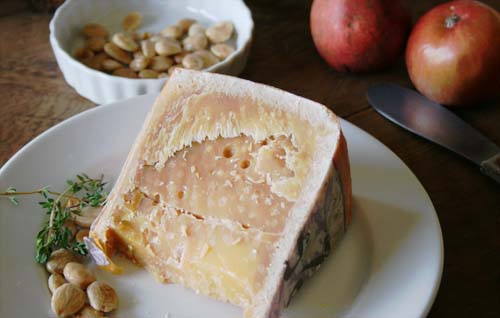
Pressed, and of a firmer consistency and tighter grain than feta, Queso Seco Nicaraguense is as hard to find in the United States as a non-hybrid SUV in Berkeley free from paintballs.
 It was only after he heard her footsteps fade and the bedroom door shut that he dared to open the refrigerator door. He would have to be quick. His mother, who felt uncomfortable eating food someone else cooked in her kitchen, would be out in a matter of minutes to determine how her domain warmed three degrees without her at the helm.
But it might take a while to find what he was looking for. After she saw him looking at the small cream-colored, crumbly, prized block only days before, his mother had moved the cheese. It was very special to her. He heard stories of padded suitcases, decoys, and Nicaraguan and American customs agencies and suspected they had at something to do with the cheese.
Eleven minutes, a carton of spilled milk, and several quickened heart palpitations later, he found what he was seeking. From it he cut a thick slice the size of a card deck, wrapped it in a baggie, and ran to his car.

It was my birthday and Juan was supplying the Queso Seco Nicaraguense.
Pressed, and of a firmer consistency and tighter grain than feta, Queso Seco Nicaraguense is as hard to find in the United States as a non-hybrid SUV in Berkeley.
Unlike brie or mozzerella, Nicaragua's version of queso seco is not meant to be eaten sliced and fresh. Lightly smoked and very salty, this cheese was created with the intention of flavoring beans, rice, and meats in a country where cheese used to cost less than salt.
If, after hearing Queso Seco Nicaraguense, you guessed its name to mean dry Nicaraguan cheese, very good. But there's more. The specific cheese that Juan's mother worked hard to acquire comes from one particular region within Nicaragua known for their queso seco. Like Parmesan Reggiano, the cheese is named after that region. But Juan and I don't know its name because his mother is keeping it a secret, perhaps in jest, perhaps in the name of revenge for Juan stealing a slim slice.
What do you do with it?
It's a tasty little cheese but is more appropriate for cooking and crumbling than slicing, although eating a sliver or two of it fresh did make my tummy feel warm inside.
In Juan's mom's kitchen:
After cooking beans, she'll crumble the cheese over the legumes and rice. Then she'll hide it with love.
Elsewhere in Nicaragua:
Unbeknowst to a former roomate and myself, sometimes this cheese is included as a filling in flaky cookies. Surprise! It makes a smoky, salty pastry similar to... nothing I've ever tried before. A little more like a cheese pastry or savory cheese biscuit than cookie.
In my kitchen:
I cooked up a stash of wheat berries that had been sitting in my baking cupboard for a month or five, steamed some green beans and tossed it all with argula, basil and queso seco.
In honor of the cheese's original intention as a savory flavoring, my especially thin wallet and a ridiculously expensive Parmesean Reggiano wedge that was taunting me with its price at my local cheese shop, I made an impromptu pesto with this salty savory beauty on another day. It made a rustic, nutty pesto that topped spinach noodles nicely.
Has anyone ever tried this cheese? What do you do with it, besides sneak it in cookies? And...do any cheese lovers know its proper name?
Kitchen Curds: From Curd to Microwave
If you ever wanted to know how to make mozzarella cheese at home, before pouring hot water over your curds, check out our mishaps and glories.
 The following, Kitchen Curds: Mozzarella Part II, is a careful synopsis of curd revival by Molly, the "It's Not You, it's Brie" group photographer and soon-to-be frequent guest blogger (yes, Molly, yes). If you missed the curd dissolution explored in Part I, read about our triumphs and dismay as soon as possible.
Kitchen Curds: From Curd to Microwave
"Our collective dismay was palpable as the lumpy, watery mess of supposed “cheese” glopped and plopped through Kirstin's fingers. Even Carter, resident cat, cocked his head to the side, well aware something was very wrong.
After consulting the Oracle, I discovered a website that described multiple methods of making mozzarella. One thing each recipe had in common was that the water poured over the curds prior to stretching stage was boiling. Penny, Kirstin and I had spent close to an hour stirring, blowing upon, and ice-cubing what had at one point been a strong pot of muscle-bound, rippling water, so that it would come to “proper” temperature of 108 degrees. I realized immediately that what was missing was heat.
Our ingredients were limited and time was running out, so a do-over was not possible. And, since part of our cheesemaking boot camp was paramilitary training in the jungles of Colombia, us three Cheese Angels were committed. Therefore, the only possible course of action was to forge ahead through that treacherous, lumpy mass.
We discovered another recipe which called for microwaving the mozzarella, so we decided to break down this “curdtural” barrier and perform a stylistic hybridization. We feared, though, that our actions might create a potentially petrifying Medusa-like cheese and turn out to be hard as a rock. Like the brave soldiers we are, however, we carried on.
We nuked the beast for about two minutes, kneaded it around so that the edges wouldn't dry out, poured off the excess whey, and then put it back in the microwave for another two minutes. This process continued until our kneading sessions created a cohesive slug of—could it be?-- potentially our first homemade mozzarella progeny.
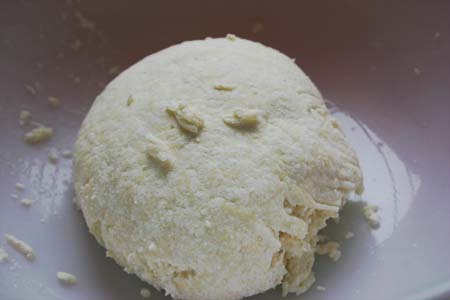
Kirstin gingerly held the ball and let it fall delicately back onto the countertop, perhaps traumatized by her earlier disaster. If Midas' overzealous appreciation for money could turn objects to gold, could Kirstin's passion for all foods with rennet generate a cheese baby from scratch? My ebullient desire to stretch the cheese three feet into the air and toss it around like a pizzaiolo was unfortunately vetoed, since nobody wanted a rubbery cheese. However, we took turns pulling and stretching and forming the pretty lump until it glistened happily.

Strangely, though our cheese was not two minutes old, it already appeared to have developed a serious cigarette and black coffee habit. Wasn't mozzarella supposed to be white? Oh well.
We divided our finished product into three small portions, which rested gently on the countertop as we debriefed on the process. Two gallons of organic Straus milk and two and a half hours made three A-cups worth of mozzarella. Was it worth it?
Most definitely!"
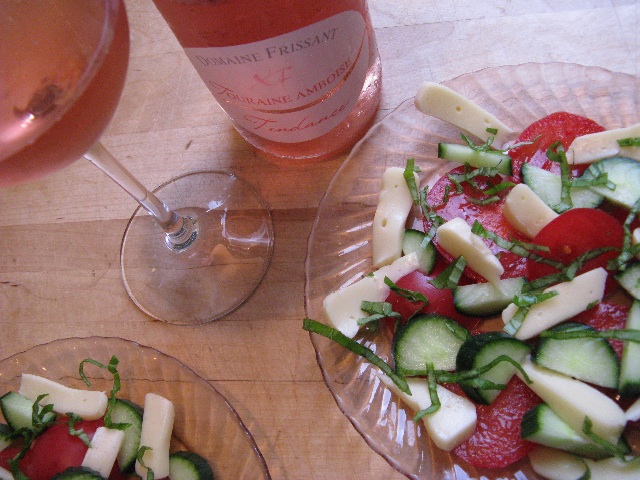
The first picture is of a mozzarella salad that Penny made with her A-cup of Our Cheese and sipped with Touraine Rosé. She took the photo in Berkeley.
Italian Cheese & Regional Wine Pairing Class
 Just in case you've been aching to brush up on your mixed or Buffalo milk cheeses or have been wishing you could learn about the simple art of Italian cheese and wine pairing by tasting eight cheeses and five-plus wines in two hours, here's a little something that might entice- a course about Italian cheese and the wines that adore them, this upcoming Thursday, in Berkeley.
The write-up and some hints of the cheeses to come are below, and I would love to see you there. I'll be your teacher. Reservations required.
"Like peanut butter and chocolate, garlic and anchovies and whiskey and hangovers, Italian cheese and wine were born to be together. From Piedmont to Puglia, Italian regions focus on these traditional styles of cheese and winemaking that make the most of their area's bounty, and in this class, you'll learn of their glories in an informative and delicious manner.
Join Kirstin Jackson, Solano Cellars cheese instructor and author of the cheese website ItsNotYouItsBrie.com to learn the essentials of wine and cheese harmony by tasting through Italian regional cheeses and the wines that love them.
Class attendance is limited to 23. "
Just some of the cheeses that will be featured:
Gioia Burrata
Caseificio Dell'Alta Langa La Tur
Toma Piemontese
Quadrilello di Buffala
Second post of Kitchen Curds coming next week, written by "It's Not You, it's Brie" group and goat photographer, Molly.
Kitchen Curds: I've Got your 180 Degrees Right Here
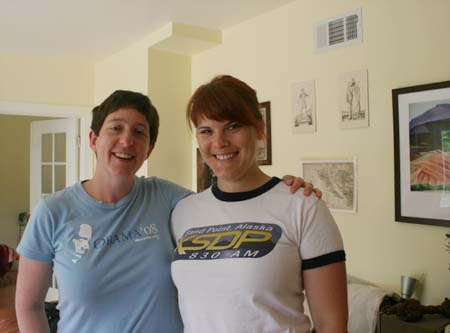 Three girls (Penny, Molly and Kirstin), two non-reactive pots, a book with misprinted temperature instructions, and a whole lotta curd love = a Kitchen Curd Party!
We met at noon, on a dark and stormy day. The eagle had landed, and she brought whole milk, citric acid, rennet, butter muslim, a thermometer, strainers, and snacks for sustenance until the cheese was ready. After nourishing ourselves with sparkling water spiked with peaches and lime and Blue Bottle coffee, we decided we were ready to start the Curding Process. It was time to heat up the milk.
Using the recipe from Kathy Farrell-Kingsley's Home Creamery book (pgs.84-86), we brought the milk to 88 degrees and added the citric acid. After the milk reached the prime temperature, we dissolved rennet in cool water and added the mix into the pot. 15 minutes later, we returned.
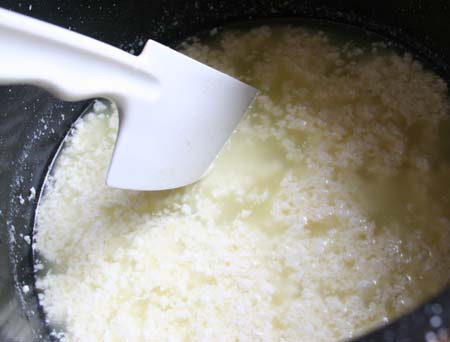
Back at the pot, curds were ready to greet us. Not the type that one could slice into one-inch sqaures like the Home Creamery book suggests, but curds just the same. No one was discriminating. They were little, they were real and we made them.
Next step - heating the curds to 108 degrees for 15 minutes, and stirring frequently. As the mixture rose in temperature, the whey slowly expelled, the curds became tighter and firmer, and Penny and I brought eight cups of salted water to 108 degrees in a separate pot while Molly cooked us fresh scallops (not in book, but highly recommended).
Penny and I took bringing those eight cups of water to 108 degrees very seriously . Between scallop bites, we took the water's temperature. A lot. Both of us. I think I even heard Penny assuring the water to come to the proper temperature only when it felt the moment was right, that we would wait just as long as it needed.
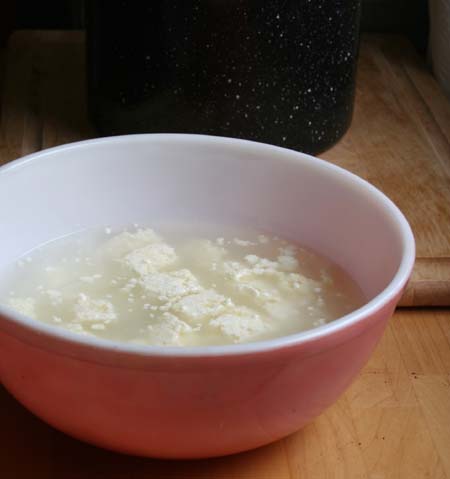
While the water was warming, we spooned the curds into a butter muslin-lined strainer. They were beautiful. After letting them sufficiently drain and cutting them, we placed them in a bowl, over which we prepared to pour the 108 degree water.
Then we added the water to the bowl to melt the curds.
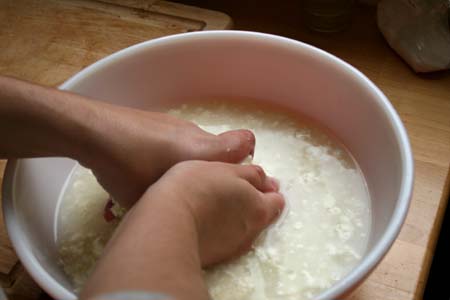
The girls told me I should be the first one to stretch the melted curds. Having heard before that only people with Italian blood running through their veins were allowed to stretch mozzarella, it was with wide eyes and a happy heart that I washed my hands, did a few lunges and neck rolls, and slipped my fingers in the bowl.
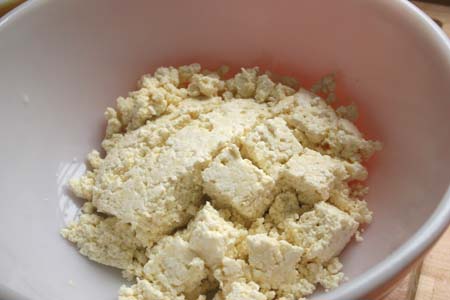
Instead of becoming a lovely lump, however, ready to be stretched into taffy-like submission, the curds separated. They fell apart in my fingers.
While Penny worked to convince me that it wasn't my Norwegian-American touch that caused the curds harm, Molly scanned the internet for what went wrong. We soon learned that, just like the twins in the Parent Trap, the "8" and the"0" had switched places. Unfortunately, this was in the part of the text that read "heat to 108 degrees." But there was still hope.
Next post: How to Fix Broken Curds: A Life Lesson.
Check out these other awesome Kitchen Curders who made mozzarella. Successfully. Anyone else who would like their link added to this post, please email it to me at itsnotyouitsbrie@gmail.com, or slip it in to the comment section below. Thank you for participating!
Girlichef made hers in the microwave in 30 minutes, and she stretched her curds magnificently.
Simona, at Bricole, made mozzarella two or three months before everyone else. That's skill.
* many pictures taken by Molly, the official "It's Not You, it's Brie" group and goat photographer.
Cheese Club! A Dynamic Partnership
I am pleased to announce a dynamic, synergistic, fermented-milk-loving partnership between "Its Not You, it's Brie" and Solano Cellars Wine Shop & Wine Bar. Starting this coming August, yours truly will be crafting a cheese club of my two to three favorite cheeses that month, every month. So if you love cheese, live near Albany, El Cerrito, Berkeley or Oakland, California, or feel like taking frequent road trips to pick up the goods in the land of lovely weather, consider joining.
Interested? Take a look at what I wrote up for Solano Cellar's newsletter below:
"Do you remember when you were aching to take some of that oozing, buttery triple-crème you had at the wine bar home? What about that seasonal sheep’s milk Pecorino Foglie di Noce wrapped in walnut leaves and rubbed with olive oil you sampled in the Regional Italian Wine and Cheese Class? They remember you too.
In the tradition of our world famous wine clubs, Solano Cellars is starting a club that brings the world of artisan cheese into your home. Every month, wine bar manager, cheese instructor and author of “It’s Not You, it’s Brie” Kirstin Jackson, will choose her favorite two to three cheeses- some wine bar favorites and some club exclusives- for you to sample.
Every club will come with wine recommendations for bottles available on the shop floor and (there’s more!) write-ups similar to the descriptions found on Kirstin’s cheese blog and at Solano Cellars. At least one of the club cheeses will be ripe and ready as Frog Hollow peaches in late July, and the other one or two will be happy to sit tightly wrapped in your fridge for a couple-three weeks. The club will total $25 and will be available mid-month, every month."
Some sample cheeses to come:
Alta Langhe La Tur: natural-rind, cow, sheep and goat’s milk, Italian
Redwood Hill Camellia: bloomy-rind, camembert style goat cheese, California
Crawford Family Farm’s Vermont Ayr: semi-hard raw cow’s milk, amazing, Vermont
Mimolette Extra Vielle: hard cow’s milk, aged two years, French
Manchego Pasamontes: raw sheep’s milk from a small-production creamery, Spain
Prima Dona Aged Gouda: nutty, caramel, earthy, Dutch (see picture above)
What do you do if you want to join the pick-up only cheese club?
Call Solano Cellars. Be sure to mention you heard about the club through "It's Not You, its Brie," and the nice and friendly wine geeks will be happy to hook you up:
Solano Cellars, 1580 Solano Ave, Albany, CA 94707, 510.525.9463
Wine clubs are also available through the store if you're want to taste their monthly finds, and are shipping-ready to most states even though the cheese club is not.
P.S. Kitchen Curders, coming early next week- the first post of the Home Creamery Mozzarella edition. Thanks for your patience, and please send me your links if you haven't already.
Redwood Hill Kids, Come Home with Me
 When my friend Molly and I took a tour of Redwood Hill Goat Farm, we decided to take some kids home with us. Did you know they wag their tails when they're happy?They do, and it makes your heart break from cuteness. Molly also wanted to take goat manure home because the owner Jennifer Bice informed us that it was it that made her beautiful garden bloom. But the goats wouldn't fit under our shirts and the manure certainly wasn't going in my car on the hour-long ride back, so all we have to show are photos.

If you get a chance to visit (appointments welcome) this wonderful farm, please do so. It's family place, with La Mancha, Nubian, and Alpine goats which make some of the best goat cheese in California. Of course you'll be hearing more about this soon, and here's a couple photos from our trip.
If you'd like to learn more about seasonal goat cheese, check out an article I wrote for Edible East Bay, called "Tasting the Seasons in Cheeses." And Molly, thanks for being the designated photographer.


Cheese & Kirstin Will Return
Hello It's Not You, It's Brie readers and Kitchen Curders. I'm taking a brief respite from writing this blog for a couple/few weeks to move and take care of some things that need a mighty amount of attention. Wanted to let you know so you didn't think I don't love you any more.
However, although my Kitchen Curd event posting will be delayed, if you have a blog and participated, you can send me a link to yours anytime. I will incorporate it into my post-to-be. Sorry to delay this again, I know there are some folks out there who are super excited to report their results (and I'm excited about hearing them), but sometimes life just kicks you in the butt and you have to sit down. Or unpack. Or....
Anyhow, I will write more soon, and go ahead and check back within the next couple weeks. I may sneak some tasty tid bits in if I have time.
You can also follow my cheese life here at Twitter.
Thank you for eating cheese, making cheese, and reading my writing about cheese, which must sound like a cross between a mother cooing at a baby and a horribly loud stomach growl.