
The Cheese Blog
Mastering Cheese: An Interview with Max McCalman & Book Giveaway
Max McCalman, the man who started the cheese department at New York city's Picholine and Artisinal Brasserie & Fromagerie, who has written books such as Cheese: A Connoisseur's Guide, and who heads the dynamic education program at Artisanal, has published a new book. Filled with knowledge ranging from the difference in sheep and cow milk production to overviews of American dairy pioneers and raw-milk cheeses, Mastering Cheese is a textbook fit to grace the bookshelf of any seriuos cheese lover.
It is hard to imagine that I would have found a mission that I would have embraced more passionately; I've loved cheese all my life. At a very early age my father told me that I
might become a good teacher.
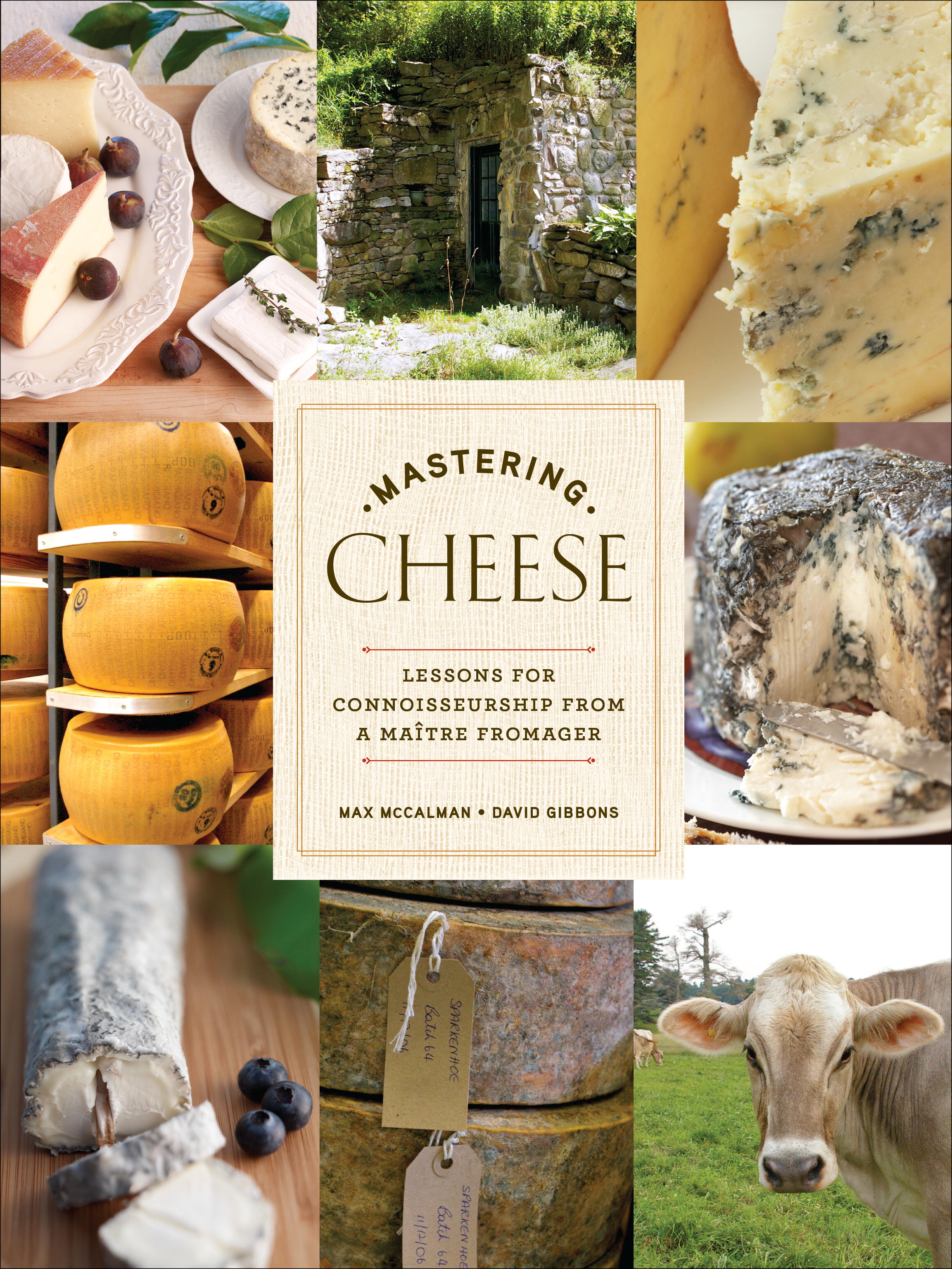
Max McCalman, the man who started the cheese department at New York city's Picholine and Artisinal Brasserie & Fromagerie, who has written books such as Cheese: A Connoisseur's Guide, and who heads the dynamic education program at Artisanal, has published a new book. Filled with knowledge ranging from the difference in sheep and cow milk production to overviews of American dairy pioneers and raw-milk cheeses, Mastering Cheese is a textbook fit to grace the bookshelf of any seriuos cheese lover. And it just so happens to look smashing next to your pillow if you, ahem, fall asleep with it.
In honor of this educational yet decadent cheese bible, I'm happy to announce that "It's Not You Brie" is hosting a book giveaway contest for one copy of Mastering Cheese AND featuring an interview below with the man himself, Max McCalman. Read to the end of the interview to find out what the book giveaway question is, and enjoy! By the end of the interview, if you can't understand why you would want to own a book written by this man, lord bless you, I can't help you.
Max McCalman and "It's Not You, it's Brie" Interview
What compelled you to write a 383 page cheese book, now?
Cheese has suffered for far too long, this primordial near-perfect food with a stellar track record for food safety, and a food that is amazingly complex at the same time, that when invited to write another book, this one to be titled "Mastering Cheese," at first I jumped at the opportunity, my attempt to answer the many questions that I have been asked for the past fifteen years and to allay fears and confusion, all within the cotext of a book that would offer "mastery." After realizing that the title suggested that it would be all-emcompassing, if not near-complete (as is cheese - nutritionally speaking) then I knew that I would need to stretch beyond the original word count that was budgeted. As it was, I exceeded that count by well over 40%; it had to be pared down. Quite frankly: I have a mission to rescue cheese.
What do you find to be the most understood thing about cheese in the United Sates? In Europe?
For the US I would say that the number one most misunderstood thing about cheese is that is actually is very good for you, or at least that it can be if it is produced and maintained well.
In Europe (for the most part) it seems to be largely receding in appreciation, sadly. As for most misunderstood thing about it? Very similar to the problem here in the US, but especially sadly to see: that it can be as good, both nutritionally and aesthetically, or that it may even be "safer" if it is produced with pasteurized milk. The trend throughout much of Europe is toward the production of cheese made with pasteurized (read: "compromised") milk.
What are the top three things that you wish people knew about cheese that they don't?
What genre or realm of cheese do you wish people would embrace, perhaps because it would surprise them, or maybe just because it is often overlooked?
I believe that we often look for the single best pairing partners for cheese: wines, beers, other foods and beverages. When instead I would like to invite people to enjoy cheese without relying on other people's recommendations or mandates for the ideal successes in pairing partners. Try multiple partners, share the assessments, applaud the wide range of cheese types that are available and have a little variety of types; look to the unexpected matches for new surprises and tolerate other people's confusion or dissatisfaction with a pairing that seems to work fine for you.
Secondly, I believe that the US is fertile ground for some world-class cheese making; this is where the real excitement is occuring; though not to discount what is still happening in other countries that are still (if not more so) in touch with its agricultural and gastronomic heritage.
What are your feelings about all the cheesebooks that are coming out right now? Excitement? Trepidation? Hunger?
It is great to see the new attention that is being brought to cheese. It is helping to affirm the value of cheese, a food that has been so profoundly misunderstood. Much of what appears to be coming out in print is highlighting the hard work and the passion that goes into producing, developing and maintaining fine cheese.
If you didn't volunteer to take charge of the cheese cart at Picholine, what do you think you'd be doing today?
It is hard to imagine that I would have found a mission that I would have embraced more passionately; I've loved cheese all my life. At a very early age my father told me that I might become a good teacher.
Book giveaway rules:
1. Leave a comment in the comment section in this post answering either of these two questions, and I will enter your name into a drawing to win the contest:
a) Does Max like raw-milk cheeses?
b) What's your favorite raw-milk cheese?
2. Unless you feel like sharing the cost of shipping this glorious, fatty book,with me, live in the continental United States. Kisses.
That's it, good luck!
Links du Fromage
 I'm super excited for this week's "Links du Fromage" because they promise more and more links to come. The important conversations that journalists and bloggers are having about the trails and tribulations of small-production dairies and the copious amount of new cheese books being published suggests that more cheese love, knowledge, and awareness will be shared in the future. Furthermore, we're seeing highly visible media figures, like Martha Stewart, focus on United States cheesemakers who, like Jasper Hill and Thistle Milk Farm, are once again bringing the United States dairy industry into the limelight. We're going to have a cheese-fabulous future, I can taste it!
Feel free to share your own insights and links in the comment section, don't miss the recipes below, and be sure to check back here in the upcoming weeks for some exciting things, such as a book giveway and interview one of the writers in the books mentioned below (so excited!). More cheese please.
Links:
An abundance of cheese stories, memoirs and focuses are hitting the bookstores and they're going to charm your socks off, says Publisher Weekly. And I'm going to host a book giveway for one of them!
Dairyman Dino Giacomazzi explains why direct government dairy subsidies that take cheese from Food Banks and leaves farmers with money is a load of ____*#.
Dairy prices climbing and farmers finally feeling things looking up-discussions at Capital Press Ag Website
Not to be missed, a discussion of French cheese named after body parts at Chezloulou.
Signed by the Prez himself, an Obama Cheesehead hat is coming to Ebay, at CheeseUnderground.
Recipes:
Savory Olive Gruyere cake at Chezloulou.
Homemade ricotta cheese at SassyRadish.
Homemade marscapone at Forging Fromage.
Gouda Ice Cream: What Not to Do
Inspired months ago by titillating 140-character cheese and dessert discussions on twitter, Pastry Chef Plinio Sandalio of Houston's Textile restaurant and I decided to collaborate on a gouda ice cream post. That is, he volunteered to supply the recipe and I would try to represent it to the best of my dessert abilities.
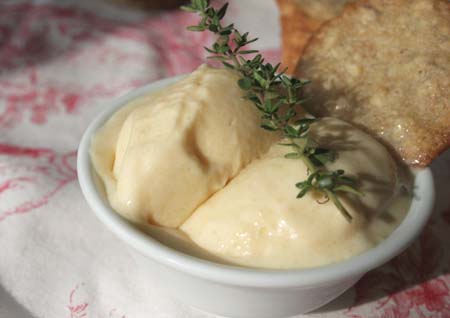
Inspired months ago by titillating 140-character cheese and dessert discussions on twitter, Pastry Chef Plinio Sandalio of Houston's Textile restaurant and I decided to collaborate on a gouda ice cream post. That is, he volunteered to supply a recipe and I would make it to the best of my dessert abilities.
Because cheese ice cream recipes on the net had been whispering sweet nothings to me for months, when I heard that I could have one of Plinio's creations in my own little, cheese-ripened hands, I said yes. Instantly.
Without further ado, here is a definitive list about what not to do when an outstanding pastry chef gifts you with the keys to a gouda ice cream palace, then, Plino's five-star recipe.
Gouda Ice Cream: What Not to Do
1. Don't worry about that the last time you used your ice cream maker, you weren't sure if it was working properly. It was your grandmother's. Of course it works.
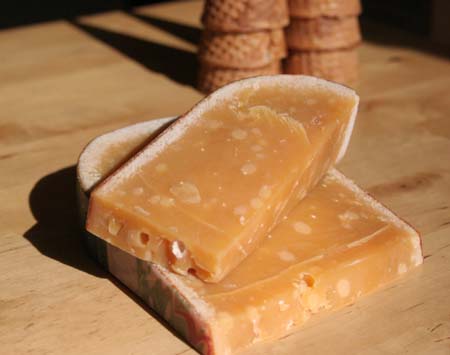
2. Forget that the pastry chef told you he used a 3 yr old gouda and buy a 4 yr old cow's milk gouda instead. Oops. A little intense. And don't think about using a goat's milk gouda, which would have lent a tangy, lively character to the sweet ice cream. Who needs a pesky flavor layer?
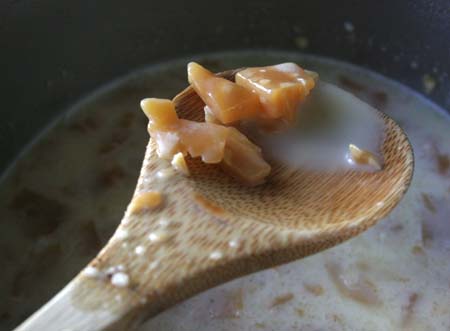
3. Depend upon your old strainer to extract the salty, caramelly gouda chunks from the custard base. Screw using a restaurant-quality chinois, cheese cloth, or butter muslin fabric. Everyone loves a chunky cheese ice cream. Yes?
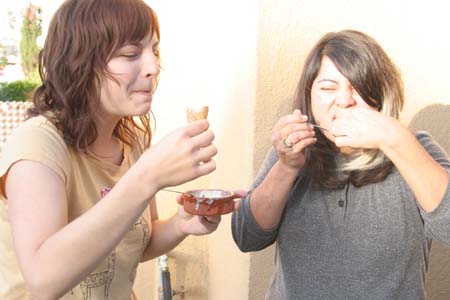
4. Ignore the directions on the ice cream maker to freeze the results for at least an hour before consuming. It's much more fun when the dessert melts before it arrives to your mouth. You gotta catch it dripping off the spoon that way, works off all that cream!
Gouda Ice Cream
1 1/2 cups sugar
1 1/2 cups milk
2 cups heavy cream
1/4 cup light corn syrup
1/2 tsp salt
pinch xanthan gum
12 oz aged gouda
Whisk all together in a large sauce pan and heat slowly over low heat. Do not boil. Continue cooking on low until the custard base is thick enough to lightly coat a wooden spoon. Remove from heat.
Blend mixture in a food processor or blender until very smooth. Strain through a fine chinois, or with a sieve lined with butter muslin to remove all chunks.
Chill completley.
Freeze according to ice cream maker's instructions.
Eat
* I didn't have time to play around with the recipe much, but because the flavor of aged gouda is so strong, all 12 oz isn't really needed. You might be able to get by with only 6 or eight ounces. Let me know!
* Please leave updates on this post if you try this or variations of the recipe. I'd love to know how things went!
Kreativ Bloggers: Seven Things
One of my favorite French and cheese-focused bloggers, Chez Loulou, was given a Kreativ Blogger award, and named me as one of the seven bloggers that should answer her Kreativ Blogger Award questions.
 One of my favorite French and cheese-focused bloggers, Chez Loulou, was given a Kreativ Blogger award, and she passed it on to me! In so doing, she named me as one of the seven bloggers that should answer the Kreativ Blogger Award question. My assignment: name seven things that others may not know about me, and then name seven bloggers who I would like to do the same. Thank you Chez LouLou!
Seven Things
- All the food in my earthquake kit has expired.
- First cheesemaker I visited: Rouge et Noir, Sonoma.
- Despite Legally Blonde II and Sweet Home Alabama, I will always respect Reese Witherspoon because of the movie Freeway.
- I do not have a favorite cheese.
- I researched U.S. funerary rites while at UC Berkeley and did my ethnography in funeral homes and crematoriums.
- I worked with Redman's father while completing my culinary externship in New York. He did not teach me everything I know.
- I planted my own garden for the first time this year.
I pass on the Kreative Blogger Award to some of my favorite bloggers:
Stephanie at Wasabimon.
Alexandra at Alexandra Cooks.
Olga at SassyRadish.
Zen at Zen Can Cook.
Jessika at Olde Sow Farm and Creamery
Jeanne at Cheese Underground.
Kate at Straight Outta Chocolate.
Halloumi: Cyprus Cheese "Crunchy Like a Bug"
Because it is so rare that a four-year old professes a love for cheese that's not pre-sliced and wrapped in plastic, or shaped like a stick and stringy, when Little Mikey wanted to share his halloumi adoration with "It's Not You, It's Brie," I said I'd happily create a space for his musings.
 Because it is so rare that a 3 1/2 year-old professes a love for cheese that's not pre-sliced and wrapped in plastic, or shaped like a stick and stringy, when Little Mikey wanted to share his halloumi adoration with "It's Not You, It's Brie," I said I'd happily create a space for his musings.
Mikey's favorite cheese, halloumi, is a firm and fresh mixed-milk cheese (bless these holy creations) made from sheep and goat's milk in the beautiful island of Cyprus. Vibrant, lightly salty, tangy, and nutty, its versatile and approachable flavor makes it a happy pairing for many dishes.

Although this cheese is firm enough to be sliced and eaten by the hand, haloumi's texture makes it most popular served grilled, seared, or baked. Unlike nearly any other cheese on the market, it doesn't spread, melt or become stringy with heated. If Mikey's adoration is telling, this also makes halloumi one of the best party tricks around. Forget the clown. Get the cheese.
Without further ado, Mikey's thoughts on halloumi (an interview conducted by his parents):
On why he favors the cheese:
"Its good. I love it for breakfast. I like how it squishes in my mouth. It looks like a black bug. It's crunchy. it reminds me of pot-stickers. I like to eat it with hot stuff, like chicken, omelette, or [here he pauses] hot chocolate! mmmmmmm....."
On what it smells like:
(Condescendingly) "Cheese."
Last thoughts on his beloved:
"I don't think other children will like halloumi. I don't know why I like it."
Here are some other of my favorite halloumi ideas and recipes on the web:
Grilled Halloumi with Sauteed Green Beans Recipe, 101 Cookbooks
Baked Halloumi with Honey & Thyme Recipe, A Wee Bit of Cooking
A Company that Sells Handmade Halloumi (I've tried it, it's awesome)
Making Halloumi at Home with Alessandra Zecchini
What cheese does your child like to eat?
Links du Fromage
 Because the world of cheese is wide and vast and I can't possibly meet all your dairy needs, here are some of my favorite Links du Fromage this month. Feel free to leave links to your own favorites in this post's comment section.
Alexandra Cooks: Tomato, Corn and Cheese Gallette
Pictured Above.
Creme-fraiche, you, and a gift certificate to Bellwether Farms. It's not cheese, but you can buy some with the winnings. May the force be with you.
Zen Chef's Acorn Sqaush Pizza with bacon, Shallot Confit, Taleggio, Agrula and Aged Balsamic.
Sassy Radish's Pumpkin Spice Cupcakes with Maple Cream Cheese Frosting
La Clarine Sierra Mountain Tomme
 La Clarine winery, farm, and cheese company first wins you over with its sweet husband and wife, small-production, all-natural approach story. Then, after a taste of their Sierra Mountain Tomme, the glory of the cheese itself hits and you consider calling to see if they need an intern.
Earthy, tangy and vibrant, La Clarine’s Tomme speaks to the virtues of biodynamics, living in the mountains, and raw-milk. A semi-hard cheese with a grey mold-dusted exterior, this goat's milk number exhibits a complexity that is entirely its own. Slightly salty and blessed with flavors of fruity green olives, grass, herbs and pepper, this cheese flips on its head the idea that goat cheese is sour, funky, and tastes like it came from a barnyard.
Instead, La Clarine's Tomme tastes like it came from a goat's heaven, full of fuzzy kids prancing about day and mother's grazing on whatever their little herbal and thistle-inspired hearts desire. Except tin cans.
Side Nibbles
Pair with something nutty and slightly sweet, like the Spanish fig cake pictured above, Medjool dates, or crispy apples. Alternatively, grate over a bowl of pasta cooked al-dente, drizzled with extra virgin olive oil, and sprinkled with salt and lots of freshly ground pepper.
Wine
Try a slice of La Clarine with a bright, light, and high-acidity red wine that will highlight the fresh, grassy flavors in the cheese, like Edmunds St. John Bone-Jolly Gamay or the Domaine de Collette Regnie Beaujoulais.