
The Cheese Blog
New Class + Glorious Winter Cheese
In attempt to thwart a cold before it hits full force, I'm taking a brief blog brake. I have to rest up so I can teach a couple classes this week, plus, save my energy for eating the next batch of Rush Creek when it's shipped to work in a few days. Priorities. Priorities.
 In attempt to thwart a cold before it hits full force, I'm taking a brief blog brake. I have to rest up so I can teach a couple classes this week, plus, save my energy for eating the next batch of Rush Creek when it's shipped to work in a few days. Priorities. Priorities.
In the meantime, wanted to share with you an event I'm participating in and an article I recently wrote.
The event- If readers will be in Petaluma late March, check out the California Artisan Cheese Festival! They'll be more cheese to taste there than there were (are?) munchkins in Oz, and people as awesome as Daphne Zepos and Gianaclis Caldwell of Pholia Farms will be teaching classes- check out Zepos's transhumance session & Caldwell's "A Day in the Life of a Cheesemaker session. Plus, I'll be teaching a Cheese and Wine Pairing 101 course with some of my favorite wines and cheeses from the area. Come say hi on Saturday! The festival lasts 3 days, the farm tours are already sold out, but the sessions and the "Curds, Cooks & Cuvées" still have space.
Also wanted to share an article I recently wrote for the Los Angeles Times called "Glorious Winter Cheeses." Yes, glorious is in the title. Because that's how winter cheeses roll.
Next week- Cougar Gold cheese in a can & Cougar Gold Balls recipe. Not to be missed.
Cheese Shines at The Fanciness
The Fancy Food Show rolled it's huge, convention center self into San Francisco this week, bringing with it Guy Fieri, a demonstrator or two wearing skirts shorter and heels higher than Tom Cruise standing next to Nicole Kidman, and... amazing cheese. There were all types of cheese.
 The Fancy Food Show rolled it's huge, convention center self into San Francisco this week, bringing with it Guy Fieri, a demonstrator or two wearing skirts shorter and heels higher than Tom Cruise standing next to Nicole Kidman, and... amazing cheese. There were all types of cheese. Blue cheddars were stacked next to huge firm Alpine wheels, and puddling, soft cow's milk cheeses threatened to ooze into tiny, upright spicy sheep's milk wheels that were innocently sitting next them.
It was a fine, fine time to do research. To ensure that my cheese palate stayed fresh, I diligently took breaks between eating dairy goods to cleanse with gluten-free cookies and Poco Dolce's olive oil chocolate bars. Later, I shared a drink with some of my favorite cheeseheads from around the country at Rogue Brewery in North Beach. It was a good day.
Here are some of my favorite cheeses that I tasted at the convention- these are ones that shined especially bright. I'm skipping some of the classics that I've talked about before on "It's Not You, it's Brie" so I'll have room to mention others that I haven't yet swooned over properly. In the future, I hope to get to more that I don't have the space to mention here- because there were many.
Marieke Gouda, Foenegreek- there's often a stigma against making flavored goudas in the high-end American cheese world since herbs and such can be used to cover up flaws in inferior products. Not here. Fresh milk and a little Fenugreek make an already compelling cheese pop.
Rogue River Flora Nelle- a new blue- funkier, sweeter than Rogue's others, with a slightly crunchy bite like fleur de sel sprinkled on a dish before a chef sends it to a table. Not sure when will be released.
Mozzarella Company Blanca Bianca- a soft, fresh, very young cheese with a washed rind. Has a steely, mineral finish and tang that is just aching for BLT season.
Tumalo Farms Jewell- a bloomy-rind, creamy, lively cow and goat blend. Creamy and lemony with a soft finish.
Kriek cheese from Belgium, Jacquy Cange- raw cow's milk, semi-firm cheese washed with the cherry Kreik lambic beer from Belgium. Lightly fruity and complex.
Willapa Hills Pluvius- semi-soft, with fresh butter, nut and lemon flavors. Surface ripened, with a thick velvety layer between the brown rind and slightly crumbly center.
Toma Brusca with Juniper- cow's milk, studded with Juniper. Like a milk gin and tonic. Amazing. Sharp, but charms the tongue. A little goes a long way.
Ricotta Stagionata- a ricotta salata made with sheep's milk whey. Classic. Creamy and buttery like manouri. Snow white.
Did you make it to the Fancy Food Show? Any cheeses that shined brightly for you?
A Cheese's Night Out: Classes & Events

It takes a lot of work to be the best cheese one can be. Prepping, grooming, coagulating, straining, primping, aging, convincing people that you're worth a chance even though your rind may be wrinkly or you smell like a (sweet, happy) locker room from time to time. But cheese keeps going despite the obstacles. It preservers. It shines. And sometimes it oozes.
Although it would never say so because, unlike caviar or foie gras, it's just not that type of food, it likes a little public adoration here and there. It likes for its hard work to be appreciated. It likes to know you care.
Show your cheese exactly how much you love it by checking out some of these awesome cheese events and classes near you. Not near you? I'd be happy to list your local events if you have them. Have an event to add? List it in the comment section below or email me a link at itsnotyouitsbrie@gmail.com.
Classes are in calendar order.
Classes I'm Teaching
Zinfully Good: Big Wine, Big Cheese- This lucky girl gets to co-teach with Daphne Zepos. Friday, January 28th, 6:30 – 8:30 pm, The Cheese School of San Francisco.
Iberian Cheese and Wine Class- All Iberian, all the time. Thursday, March 24, 6:45pm – 8:45pm, Solano Cellars, Berkeley.
Springtime Cheese, Loire Valley Wines- Tuesday, April 19, 6:30 – 8:30 pm, The Cheese School of San Francisco.
Classes Beyond "It's Not You, It's Brie"
The Raw Deal: What's the Deal with Raw Milk Cheese? January 20th, 6:30-8:00 pm Michael Anderson and Sascha Ingram, Murray's Cheese, Manhattan.
Exotic Teas and Cheese with Karen Tran Thursday, Jan 27 • 6:30 – 8:30 PM, C'est le Cheese, Sacramento.
Home Cheesemaking with Sheana Davis, Sunday, Febrauary 6, 1:00-3:00 pm, The Sonoma Valley Inn.
Decadent Chocolate & Sinful Cheese, Saturday, February 12th, 3:00-5:00 pm, Artisanal Cheese, Manhattan.
Basic-Plus Cheesemaking Shortcourse [3 days], February 16th-18th Washington State University.
Mozzarella & Ricotta Making Workshop with Ricki Carroll. Friday, March 4, 2:00 – 4:00 pm & 6:00 - 8:00 pm, The Cheese School of San Francisco.
Three-Day Intensive Cheese Education Program taught by Daphne Zepos, The Cheese Queen herself. April 10-April 12th. San Francisco Cheese School.
Heritage Breed Milk: Use it or Lose It
When I heard that dairy farmer and veterinarian Dr. Noreen Dmitri, the sister of NYDairyFarmer (lawyer, dairy farmer and activist Lorraine Lewandrowski) recently attended a specialty dairy conference to study cheesemaking with the milk of heritage cows, my heart did a little dance. And by little, I mean a choreographed Flashdance number that was complete with a torn sweatshirt and leg warmers.“Use it or lose it” is applicable to heritage breed cattle. Consumer interest in products produced from the milk of endangered livestock breeds is essential for breed survival.
 When I heard that dairy farmer and veterinarian Dr. Noreen Dmitri, the sister of NYFarmer (lawyer, dairy farmer and activist extraordinaire Lorraine Lewandrowski) recently attended a specialty dairy conference to study cheesemaking with the milk of heritage cows, my heart did a little dance. And by little, I mean a choreographed Flashdance number that was complete with a torn sweatshirt and leg warmers.
Let me explain. Imagine if you will dear reader, walking into a cheese shop where your choices of milk variety runs broader than the goat, cow, sheep, or the occasional feisty buffalo that are available now. Imagine being asked if you prefer Dutchie Belt or Randall Lineback milk for aged cheeses. Mmm hmm,.... and what about your fresh cheese preferences? The variety. The flavor range. The aesthetic benefit of having so many different types of cows in the field (so pretty).
Now imagine the cultural and farming impact of having these diverse, historical breeds in our country.
Lucky for us, Dr. Noreen Dmitri was happy to write about her experiences at the heritage cow and cheesemaking conference and about the importance of these rare breeds. We're only beginning to understand why heritage breeds are important and what we have to loose (cheese wise and beyond) if their legacy isn't preserved.
Her notes on the heirloom dairy conference follow.
A renewed interest in heritage livestock breeds is underway in the United States and Canada. The focus of a recent American Livestock Breeds Conservancy Conference held on November 11th and 12th, in Hamilton, New York, was making of cheeses from the milk of heritage breeds cattle.
“Use it or lose it” is applicable to heritage breed cattle. Consumer interest in products produced from the milk of endangered livestock breeds is essential for breed survival. Thanks to a grant from the Ceres Foundation, a workshop has been developed to produce cheeses from heritage breeds milk. This Dairy Processing 101 course was presented at the annual American Livestock Breeds Conservancy annual conference, with visits to five farmsteads producing value-added cheese products for sale to the public.
Learning About Heritage Breed Cattle

Guided by Shannon Nichols of Heamour Farm, Madison, NY, participants were provided with information on breeds who have all but disappeared from modern dairy farms. These include the Milking Devon, Kerry, Dexter, Randall Lineback, Canadienne, Dutch Belted, Pineywoods, Red Poll, Milking Shorthorn, Ayrshire and Guernsey breeds.
The milks from these various breeds had traditional uses. The Milking Devon’s milk was used for butter and clotted cream production. The Ayrshire cow was cow of choice for milk used to make cheddar cheese in Scotland. Others such as the Randall Lineback served as a reliable family cow in times of old. Today, some of these breeds are rarer than the endangered Panda. For example, America’s first cattle breed, the Canadienne, survives with a registered population of less than five hundred left in the world. SVF Foundation has launched an effort to use modern embryo transplant technology to speed up reproduction of Canadienne offspring for placement with volunteer farmers in coming years. Details on modern technology for heritage breeds is at www.SVFFoundation.org

For dairy farmers and cheese makers the idea of producing a product with the milk of heritage breed livestock is exciting. Here in Upstate New York, some of the older farmers can remember seeing heritage cows with some frequency grazing the fields of historic dairy farms. As a practicing veterinarian, I am delighted that modern livestock reproductive technologies can be used to bring endangered livestock breeds back from the cusp of extinction. Biodiversity in the livestock herds of North America is a worthwhile venture to preserve breeds who have faithfully provided humans with milk for centuries past. Cheese makers who develop cheeses from the milk of heritage breeds will help us to keep these breeds viable for future generations.
Consumers’ Role in Saving Heritage Breeds – Eat Heritage Breed Cheeses!
The consumers’ role in saving heritage dairy breeds will involve much less work than that of the farmer and cheese maker. To fulfill the mission of saving heritage dairy breeds, consumers simply need to purchase cheeses made with milk from heritage cattle. Since few herds are composed entirely of heritage cattle at this point, the American Livestock Breeds Conservancy has developed labeling requirements for cheese makers.

The terms “Heritage Milk” or “Heritage Milk Product” is reserved only for product that is “exclusively from animals that have been produced from the mating of registered, purebred parent stock.” It is recommended that the breeds of heritage cattle be stated on the product label. The term “Made with Heritage Milk” on the label is recommended for products where only a percentage of the milk comes from a heritage breed. It is recommended to producers that the heritage breed be identified and the percentage of heritage breed milk utilized be stated. In coming years, hopefully, dairy farmers around the country will work to renew the viability of heritage livestock breeds. Cheese connoisseurs can be part of the project simply by sampling and enjoying cheeses made with milk from the beautiful cattle breeds of old.

Some mid-west and east coast farms selling cheeses made with heritage breeds milk, and the breed(s) they focus on:
Heamour Farm. Honey Gouda, Homesteader, Tinker Hollow cheeses. Ayrshire/Kerry.
Finger Lakes Farm. Kefir Cheese. Dexter.
Crawford Farm. Vermont Ayr. Ayrshire.
Sister Noella Marcellino, a Benedictine nun from Regina Laudis Abbey, makes Bethlehem cheese. Dutch Belted.
Jasper Hill Farms. Winnimere, Constant Bliss, Bayley Hazen, Moses Sleeper. Ayrshire.
Scholten Family. Weybridge Cheeses. Dutch Belted.
Sweet Home Farm. Elberta, Bama Jack, and more cheeses..... Guernsey.
Woodbridge Farm. Gruyere & Tomme style cheeses. Milking Devon.
Bunten Farm. Gouda, Cottage Cheese, and Blue. Milking Devon.
Author: Dr. Noreen Dmitri, DVM is a practicing veterinarian and dairy farmer in Herkimer County, New York. Thank you Dr. Dmitri and Lorraine! And thank you, American Livestock Breeds Conservancy, for use of the photos.
Want to read more? Here's an excellent article on heritage breed cheeses from the Wall Street Journal.
"It's Not You, it's Brie" readers, do you have a favorite breed of cow whose milk you prefer? Have you tried any of the above cheeses?
2010: Cheese Bites to Take to 2011
When I was a child I always demanded to know people's favorites- my mother's favorite color, whether she preferred me or my father more, my dad's favorite number, my friends favorite cheese, my aunts favorite fruit, my dad's favorite cheese, Santa's favorite cookie, my uncle's favorite cheese (and maybe he could tell me my aunt's while he was at it).
 When I was a child I always demanded to know people's favorites- my mother's favorite color, whether she preferred me or my father more, my dad's favorite number, my friends favorite cheese, my aunts favorite fruit, my dad's favorite cheese, Santa's favorite cookie, my uncle's favorite cheese (and maybe he could tell me my aunt's while he was at it). Things like that. It was important to know who and what was at the top.
One day, while on a long vacation car ride, my mother grew a little tired of my preference requests. I can't remember if it was when I kept asking which brand of sugar-free jam was her favorite on wheat bread or whether she preferred Folgers or Yuban coffee - it was the eighties- for the fifth time, but I remembered her saying, "Kirstin, I don't have a favorite (although she really preferred Yuban). What's the point? My favorite could change next week."
I think it was just her and I in the car, otherwise I would have turned to my father and started asking him about his preferred pre-ground coffee, but instead I sulked. Years later when I stopped pouting and my mother's response had sufficiently simmered, I started questioning the idea of favorites. What does it matter if we have favorites? Why do we cling to them? Are we letting our favorites define us? Do we try to define our favorites?
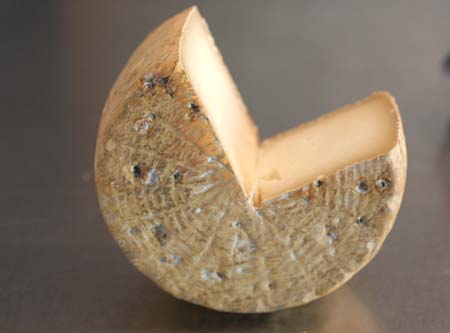
With this in mind, I'd like to present a list of a few cheeses I adored in 2010 that I hope you will try in 2011. But they're not my favorites. I admire them. I love their complexity. They're deliciously delicious. I want to eat them on a bi-monthly basis. But all good cheese changes with the season, with the moon cycles, when cheesemakers try a new washing brine, and so forth. So, with respect for cheese's transitive nature, I won't suggest that any will or should stay the same so they'll be that "favorite" that I remembered. All good artisan cheese changes. Try these awesome ones whenever possible.
This is just a short list in no particular order.
Juniper Grove Tumalo Tomme: firm, gouda- like goat's milk, sweet and lively.
Cobb Hill Ascutney Mountain: washed rind, firm, brown buttery pineapple Alpine style.
River's Edge Mayor of Nye Beach: washed rind, raw goat's milk, softer semi-firm, funky.
Secret du Couvent: washed rind, raw cow's milk, semi-firm, faint scent peanut butter, affinage Pascal Bellviere.
Cowgirl Creamery Inverness: tiny, lactic-acid set, Jersey cow's milk that tastes as tangy as a goat's.
Marzolino Rosso Del Chianti: tangy sheep's milk, firm, rubbed with tomato juice as ages.
Barinaga Ranch Txiki: Basque style, buttery, earthy sheep's milk.
Bleu Mont Clothbound Cheddar: funky, occasional crystals, meaty, mushroomy.
I'd also like to take this moment to say thank you, Sally Jackson, for making some of the most exciting cheese I've ever had, in 2010, and in years before. You will be missed with a vengeance.
Holiday Decadence: Triple-Cremes
 First of all, please excuse the slower blog posts this month. I work at a wine shop/wine bar. If in, or connected someone who works the food and wine industry, you know that during the winter holidays, we're busier than Fredrick's of Hollywood on Valentines day. But we sell Champagne rather than tiny pieces of hot pink lace (most months of the year, anyway).
After printing out hundreds of shipping labels and helping oodles of customers pick The Perfect Bottle, at the end of the day, I feel less like writing about cheese and more like seeing how many different types of it I can fit into my mouth. So today's post is going to be a quicky, about the holidayest of Holiday Cheeses.
The Triple-Creme.
There's no way around it, triple creme is the world's post popular cheese. It's the Reese Witherspoon of the cheese world, the Harry Potter of fermented milk, the golden retriever of the cheese shop. It's darling, it's charming, and gosh darn it, people like it.
When people ask me which cheese to serve during the holidays, I always go creme. OF COURSE you want to have other cheeses on your plate, but if for some silly reason you just want one, pick a triple. If you are buying more than one, slip a triple in.
A triple-creme is a holiday no-brainer. Here's why:
1. It's like cheese ice cream. It's lush, creamy, smooth, sweet, fatty and can be eaten with a spoon. Who doesn't like ice cream? Lactose intolerant people perhaps. They also probably don't like my blog. Moving on...
2. Grandmas, little kids, and cheese snobs like triple-cremes. All these people will probably at your holiday function. Let's go back to Reese Withersppon. My grandmother likes her because she's a super mom and acts in those family-friendly romantic comedies that we can watch together without dealing with the eh hm... sensual scenes. Kids like her because she's the voice in some of their favorite animated movies and she smiles a lot and probably gives them candy when their parent's aren't looking. Snobs like her because of Walk the Line and Freeway. No matter how you dish it up, there's reason to like triple-creme. There's the more mainstream, delicious Brillat Savarin, and there's the more dynamic Nettle Meadow Kunik cheese made with cow and goat's milk that always manages to say something witty.
3. Triple-Cremes love sparkling wine. Although we should all be drinking more sparkling wine on everyday occasions, we're still a long ways away from offering a guest a cold sparkling-brewskie when they come over to hang out. We save sparklings for special occasions. And because we don't often have sparklings, when we do the experience, cheese and all, should be exemplary. The bubbles and high-acidity of sparkling cuts through the fat of the triple-cremes and lifts the wine and cheese off to a better place.
Want to read more about triple cremes? Grab the new issue of Culture magazine. It's got the creamiest most decadent cheese you've ever seen on a cover.
What's your favorite triple-creme?
Cheese, with a Bow
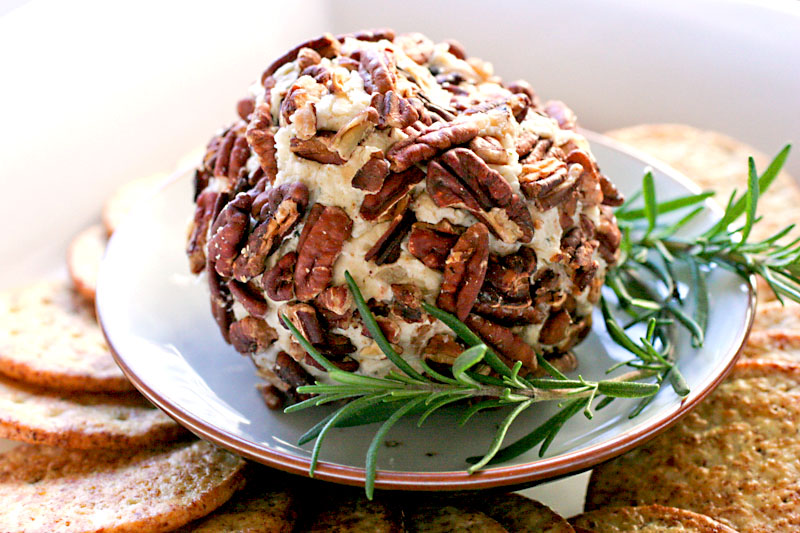
When the weather gets frosty and the flurries start swirling, I start to get readers and student requests for cheesy holiday gift ideas. Because I have not yet trademarked my idea for a cheeseball Christmas sweater and wouldn't want to walk past Stella McCartney one day and see a walnut-rolled Fourme D'Ambert ball/cashmere pashmina before I have time to register my notion, I'm going to stick to recommending cheese products and cheese lit. I hope you wont be disappointed.
 When the weather gets frosty and the flurries start swirling, I start to get readers and student requests for cheesy holiday gift ideas. Because I have not yet trademarked my idea for a cheeseball Christmas sweater and wouldn't want to walk past Stella McCartney one day and see a walnut-rolled Fourme D'Ambert ball/cashmere pashmina before I have time to register my notion, I'm going to stick to recommending cheese products and cheese lit. I hope you wont be disappointed.
Drum roll......., the "It's Not You, it's Brie" holiday cheese gift list extravaganza.
The List
Number One- Make your friend a cheeseball. This gift is an inexpensive gift that just keeps giving. Really- if you give it to one person, there will be leftovers for days. And if you bring it to a party, they'll be pictures that will last for years. Cheeseballs warm hearts. Enough said.
Here are some cheeseball recipes that I wrote for NPR last December.
Cheese and Champagne also has one of my favorite recipes for a cocoa-lavender ball. Very inventive and not sweet.
Ideas that cost money
Cheese Clubs & Classes
If you're in the Bay Area, check out the "It's Not You, it's Brie" cheese club I put together through Solano Cellars wine shop. Pick up only. I wrap up the cheeses with extra love.
If you need your club shipped, consider Artisanal's Cheese of the Month Club. I've seen this cheese being packed, and it's also wrapped with love. You'll be in good hands.
The Cheese School of San Francisco, Murray's Cheese, and the Brooklyn Kitchen all offer gift certificates and have awesome classes. So does Ramekins in Sonoma and C'est Cheese in Sacramento. Don't live on the coast? Check a cheese hot spot near you for advice where to go. There are plenty.
Cheese Lit
Artisan Cheese of the Pacific Northwest: A Discovery Guide: Tami Parr has one of the best cheese blogs to date. It features news, rumblings, cheesemaker descriptions, and it's inspiration. The woman knows what she's talking about when she tells you what's what in the Pacific Northwest cheese world, and she's a great writer.
A little broader is Sasha Davies's The Guide to West Coast Cheese: More than 300 Cheeses Handcrafted in California, Oregon, and Washington. Davies is a cheesemonger and sits on the American Cheese Society Board and has her finger on the pulse of small-production cheese. She'll put you to work- I have not heard of some of the Cali cheeses she mentions and I'm ready to seek them out.
Mastering Cheese is the big daddy. It has the basics, and much, more more. It’s one to which I refer back when I need a reminder why triple-creme cheese has less fat than their labels say (bonus!) or to find out which milking animal has more of which vitamins in their milk. Or to read about Capriole or Jasper Hill or… Here’s an interview with authorMax McCalman from “It’s Not You, it’s Brie.”
 The Cheese Chronicles trails Murray’s cheesemonger, buyer and educator Liz Thorpe’s visits to some of the best cheesemakers in the United States. It says a lot about American cheese and the devotion of its cheesmakers to perfecting their craft, as it does about Thorpe’s expertise and love for the subject. It’s lively and inspired, and also a fantastic culinary memoir.
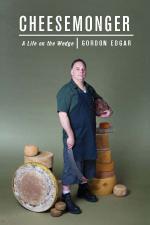
Cheesemonger, by Gordon Edgar, is one of my favorite books, period. Using humor as a guiding force, Edgar links his love for cheese to social activism and explains how what many see as nothing more than fermented milk can inspire a full and aware life. And it’s flippin funny.
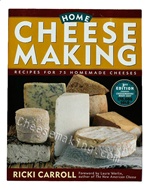
An oldie but a goodie,Home Cheese Making is a great guide to making cheese in your own kitchen. I’ve tried to make cheese with other books and have found a wrong temperature in a recipe or two that has thrown off my efforts. Then I end up frustrated. This one is exact. And has abundant recipes inside for the gorgeous cheeses on the cover.
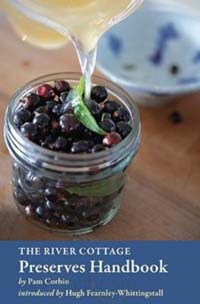 I know, it’s kind of cheating. The River Cottage Preserves Handbook is not about cheese. But it loves cheese. The recipes within it, like Melissa’s chestnut jam and apple-flower jellies want to be paired with Sierra Mountain Tomme and Garrotxa, for example. So does the ale chutney. Expect to see some trial recipes from this book on the blog in the future.
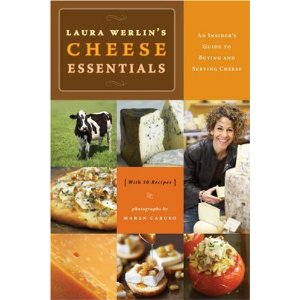 Laura Werlin’s The Cheese Essentialscovers, well the cheese essentials. It breaks down why a washed-rind is called a washed-rind and how to find other varieties like Époisses if you are hooked. It also has some great recipes for cheese accouterments, like pan forte. It is simple, friendly, easy to use, and Werlin does a great job in explaining why certain cheeses are how they are (nature vs. nurture?).
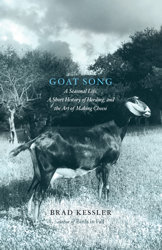 Goat Song tells the story of novelist Brad Kessler’s move from the city to the Vermont countryside to make cheese and raise goats, in vivid detail. Seriously, goat mating is described down the italicized T. It’s real, honest, and a great book. Kessler’s a skilled writer who explains his devotion to husbandry, why he and his wife moved from Manhattan to make goat cheese, and the profound impact the decision and the animals have had on his life.
Some local book stores that I like to buy these beauties from are: Omnivore, Walden Pond, Diesel, Pegasus books. Please share your favorites shops, especially if culinary-themed!
Lastly, your local cheese shop probably has gift certificates. This comes in handy if you're not sure whether the person you're gifting prefers light and mild fresh cheeses or funkier-than Bootsy Collins washed rinds.
Any other gift ideas?