
The Cheese Blog
Tomato & Olive Marmalade- Chèvre, Anyone?
 Books, it seems, take a lot of time. Writing them, sure. But then there's the promoting and marketing of them too, which requires one to plan writing, events, classes, and parties, all hopefully to be published or take place around the time the book comes out. My oh my, have I been doing a heck of a lot of that this month. Since my book comes out in November, I'm organizing it now. Thankfully, Perigee/Penguin has supplied me with a top-notch publicist to help, because, oh lordy, I had no idea how much work it was!
So whenever I have a chance to relax, I do a little cooking. As the summer heat forges on ahead, I've been thinking about ways to bring seasonal produce to the cheese plate. Tomatoes, I'm looking at you.
Cheese has a wide circle of friends. An extremely social animal, it loves hanging out with seasonal produce, honey, olives, salami, sugary tidbits, and pretty much anything preserved. One of the cheese’s closest friends is marmalade. A sweet-savory concoction, marmalade provides that extra bite that a jam lacks. Although traditionally made from citrus fruit, modern marmalade can be made from vegetables (or fruits that taste like vegetables, hey there, sneaky tomato fruit!). One of my favorite types of marmalade for cheeses- goat cheeses especially- is in a tomato marmalade. I make mine with heirlooms, a little butter for richness, herbs, vinegar, brown sugar, and oil-cured black olives.
Make a large batch and give out in the height of tomato season, or refrigerate and use within a week or two. Chevre, crottins, fromage blanc, teleme, ricotta, crencenza, .... imagine any of these slathered with sweet, punchy, tomato-olive marmalade over toasted focaccia or crostini. Mmm Hmmm.
Tomato & Olive Marmalade Recipe
Ingredients
2 ¼ pound multi-colored heirloom tomatoes
2 small green tomatoes
½ teaspoon salt
freshly ground pepper
2 tablespoons salted butter
3 tablespoons brown sugar
3 tablespoons balsamic or pomegranate vinegar
15 sprigs thyme
1 cup black oil-cured olives, pitted
Directions
Preheat oven to 275 degrees
Core the tomatoes and cut into halves and quarters. Place skin side down on a roasting pan and season with salt and freshly ground pepper to taste. Top the tomatoes with thin slices of butter, sprinkle evenly with sugar and vinegar, and scatter whole thyme sprigs over the dish. Roast in the oven for 45 to 55 minutes until the tomato skins are slightly wrinkly and the tomatoes have lost a fair amount of water and sweetened considerably. Let cool.
Once cool, chop the tomatoes into small and medium sized pieces, remove the whole sprigs of thyme, and save any excess cooking liquid. Put the tomatoes in a large mixing bowl. Roughly chop the olives and add to the bowl. Add as much cooking liquid to the bowl as you’d like- I like a juicier marmalade, many like it drier. Keep in the fridge and bring to room temperature before eating.
Cheese-Con: Like Comic-Con without Capes, and about Cheese.
Have I mentioned before that when one returns from the American Cheese Society Conference, they come back with a cheese baby? True story. One can earn a pound or two while having such a fabulous time. I've decided to to name mine "Fromage Hush-puppy Jackson." The middle name is a loving reference to the baskets of the southern treat I downed after eating slice after slice of fromage at the North Carolina conference (and no, I wasn't hungry, but that wasn't the point). Am also considering giving it the double last name of "Ribs-Jackson" in honor the meat cut (pork and beef, in case you're curious) I consumed quite frequently, with vinegar, a la mode North Carolina.
Have I mentioned before that when one returns from the American Cheese Society Conference, they come back with a cheese baby? True story. One can earn a pound or two while having such a fabulous time. I've decided to to name mine "Fromage Hush-puppy Jackson." The middle name is a loving reference to the baskets of the southern treat I downed after eating slice after slice of fromage at the North Carolina conference (and no, I wasn't hungry, but that wasn't the point). Am also considering giving it the double last name of "Ribs-Jackson" in honor the meat cut (pork and beef, in case you're curious) I consumed quite frequently, with vinegar, a la mode North Carolina.
Oh, the things I do and eat for my job... Taking one for Team Cheese! God bless Team Cheese for letting me play.
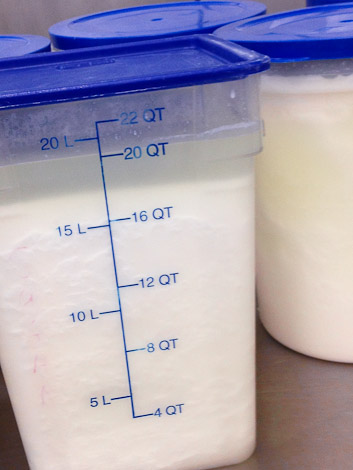
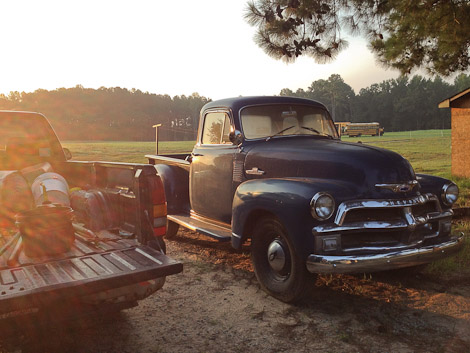
So my plans were to come back and show pictures of my time spent in North Carolina and of some of the awesome people with whom I got to hang out. Turns out though that all my pictures were of animals, cheese, and regional food. No people. But I swear, I did hang out with people! While eating. And drinking. I just, got distracted by all the food and local beer, I guess.
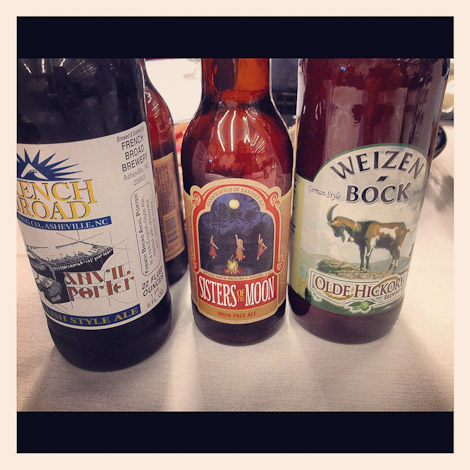
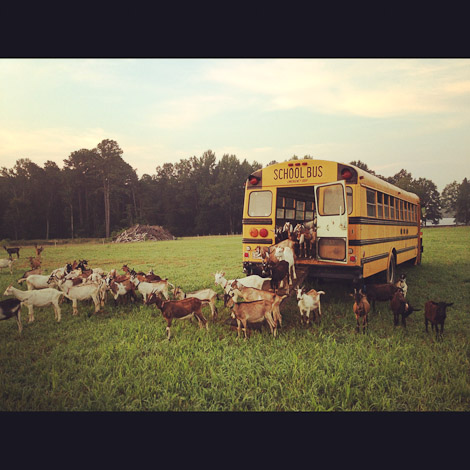
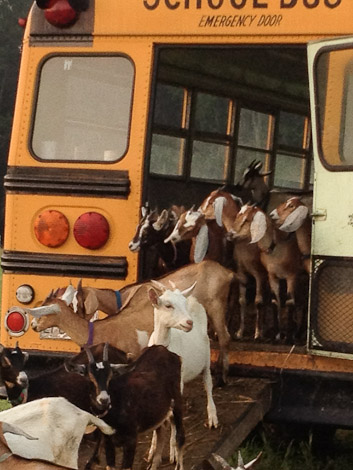
Here is a photo tour of what I did while at ACS. Or, mainly, what I ate, a couple restaurant recs, and some shots from one of my favorite Southern dairies, Prodigal Farm. Which reminds me, if you have a chance to try Southern Cheese, good god, do it! I was so happy to have the conference in Raleigh this year because it allowed us to taste some regional beauties that don't often make it to the west coast. I love you, southern cheese! Xoxoxo.
Lastly, congratulations to the ACS winners!
Some great southern cheesemakers won- was so happy! Just three were: Sequatchie Cove for Dancing Ferm (1st for farmstead- SUCH a big accomplishment for this newer dairy), Looking Glass Creamery, and Nature's Harmony Farm. More than 1,700 cheeses were entered in this competition. Full list of ACS winners here.
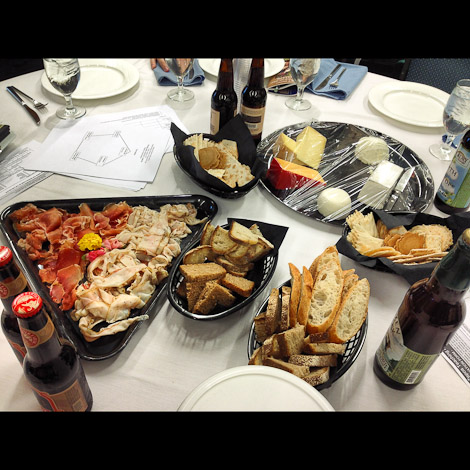
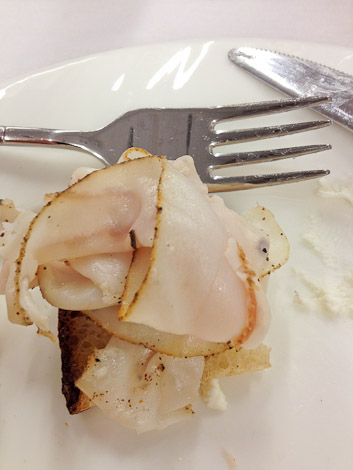
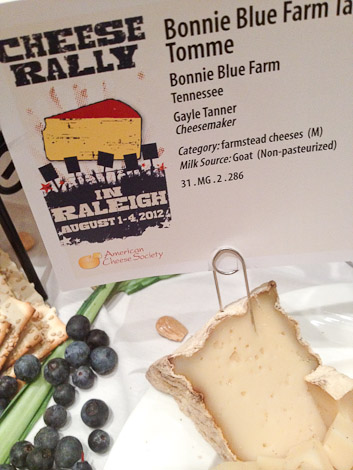
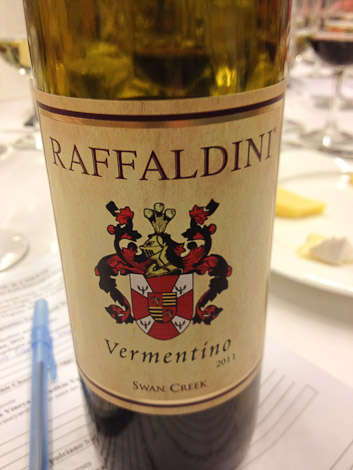
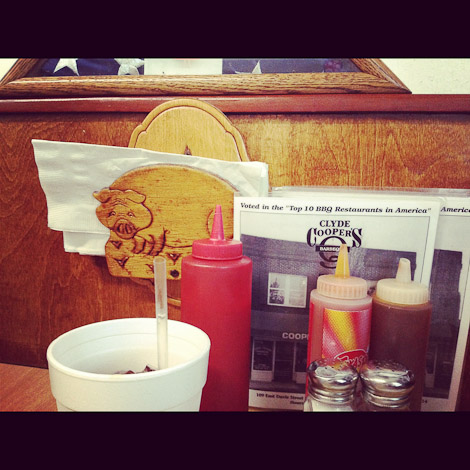
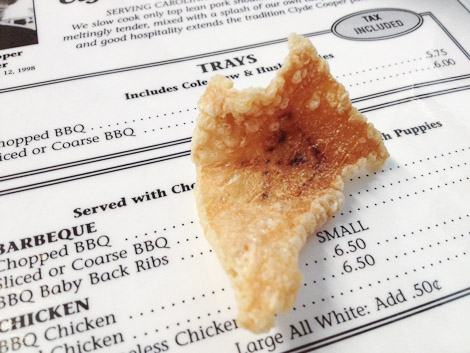
Soo... North Carolina was pretty awesome....
Want to read more about ACS? Cheese and Champagne updated A LOT (skills), and Cheese Underground, well, still prolific. The House Mouse on Meet the Cheesemaker. Gordonzola on Judging and Beyond. And I'm sure there's more.
Cheese Lit: Books for the Cheese-Obsessed
It’s an exciting cheese world out there, dairy girls and boys, and there are a plethora of books that explore its magnitude. So put down that slice of Alpine-style, pasture-fed raw milk cheese that’s only made from April to October for long enough to pick up one of these reads. Reconsider that slice with one of these books in hand, and you’ll feel closer to that fermented milk than you ever imagined you would.
 I'm off to the American Cheese Society Conference in North Carolina after teaching a California Cheese & Wine Class at the Cheese School of San Francisco this week. While I'm exhausting my capabilities to exist in weather warmer than 90 degrees or with any sort of humidity whatsoever (Bay Area weather pansy, right here) and enjoying the culinary wealth of the south, I wanted to give you a little cheese for thought. Before I do though, I want to congratulate my good friend Chef Fromager Tia Keenan on opening Murray's Cheese Bar last week! I couldn't imagine a better or more creative and skilled person to design and run this amazing program. Quick, to New York! But until then....
Introducing some of my favorite Cheese Lit.
It’s an exciting cheese world out there, dairy girls and boys, and there are a plethora of books that explore its magnitude. So put down that slice of Alpine-style, pasture-fed raw milk cheese that’s only made from April to October for long enough to pick up one of these reads. Reconsider that slice with one of these books in hand, and you’ll feel closer to that fermented milk than you ever imagined you would.
The following are a few of my favorite Cheese Lit books. When I say “lit,” I mean, well,… non-fiction or memoir styles. I’ve skipped the guidebooks and tutorials this time in favor of books focusing on odes to cheese, history, politics, and homages. These guys may be consulted for some general advice, but they’re overall better for cuddling up with for a good read (cat or dog at feet optional). Cheese guides to come!

The Cheese Room, Patricia Michelson
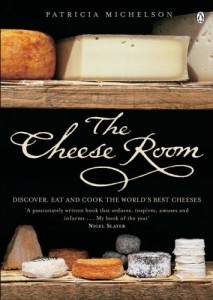
“The first taste of autumn for me comes when the cheese table in my shop displays Vacherin Mont D’Or.” How can you not want a book that starts with this line? It’s the ooziest, most loving cheese on the planet, and Michelson admits it right off the bat. The writer and owner of one of the best cheese shops in London follows up with a recipe for this luscious cheese, baked. Such deliciousness repeats.
The Cheese Chronicles: A Journey Through the Making and Selling of Cheese in America, From Field to Farm to Table, Liz Thorpe
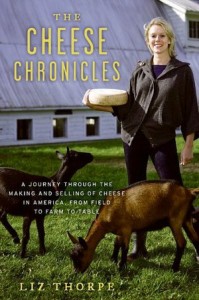 This fabulous writer and former Murray’s Cheese VP explains why she switched from a comfy desk job to standing long, long hours on her feet rubbing cheese rinds and flipping cheddars beneath the streets of Manhattan. She takes you on trips with her to train French Laundry’s staff. She tells how she fell in love with dairy. And she does it all with beautiful language and humor.
Cheesemonger: A Life on the Wedge, by Gordon Edgar
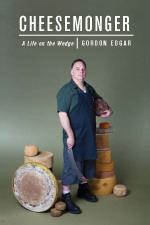
Here’s an author that doesn’t shy away from humor or politics. Edgar explores cheese culture and its reach in society by considering its often hidden role in our lives. He discusses conservative versus liberal cheesemakers, bridges the seemingly wide gap between cheese and punk culture, and looks at big farm business in the U.S. Entertaining and informing.
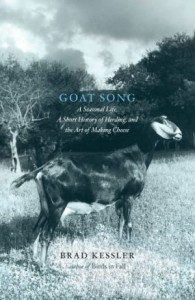
Goat Song: A Seasonal Life, A Short History of Herding, and the Art of Making Cheese, Brad Kessler
(see photo on top of post)
You may not know it yet, but you do want to know about goat’s mating life, trust me. From the point when he learns he needs to bring a stud to the farm in order to get his girls lactating to his making first tome, Kessler details his introduction to farm culture and how he fell in love with the goat. Vivid and heartwarming.
Swiss Cheese, Dominik Flammer
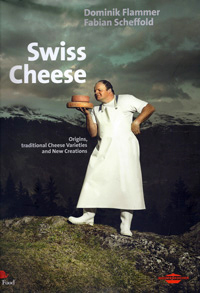
I admit, this is extremely hard to find in English. But it’s worth the hunt for the pictures alone. Gorgeous. And inspired. And I’m still looking for my copy. I’ve only been lucky enough to skim over this one at a friend’s and skim the beautiful photos with my fingertips. (The writer recently informed me it's much easier to get in Switzerland and France... so my idea... check out those country's Amazon lists from time to time too).
Cheese Lit: Books for the Cheese-Obsessed originally published on the Menuism Cheese Blog.
Updates from the conference to come, and Lastly – My book has a Facebook page! And the profile photo? A shot of my book cover! Publishes November 6th, but you can like my little ol page whenever you want!
Technical Difficulties
Due to technical difficulties, "It's Not You, it's Brie" will be taking a brief time-out. Much more to come. I'm crossing fingers that my techie pals and I can work out the huge kinks very soon. News from the American Cheese Society Conference and more en route!
Cheese (Hopefully Maybe) for the Lactose-Intolerant
Milk and its relatives, like ice cream or cheese, have been known to aggravate a few tummies in their day. Secure about itself and its place in the world, dairy just goes out there and does its thing without worrying about rubbing anyone in the wrong way. Many times this works out. Other times, not so much. If you have been rubbed wrong by straightforward dairyness, fear not. Different milks are made up of many components that affect (or don’t affect) people in various ways, and milk undergoes many chemical transitions on its way to becoming cheese. More likely than not, there is a way you can embrace the dairy world in cheese form.

Fleur Verte Chevre- "Summer" Cheese Parties with Ryan Reynolds
As I write this, I'm sitting outside a café in Mill Valley, a small Marin Valley town. It's adorable. The town square is complete with red bricks, redwood trees, a mountainous backdrop, and independent clothing shops and bookstores that are just dying to be cast in a romantic comedy starring Ryan Reynolds. I can see it now. Reynolds will of course be shirtless.
 As I write this, I'm sitting outside a café in Mill Valley, a small Marin Valley town. It's adorable. The town square is complete with red bricks, redwood trees, a mountainous backdrop, and independent clothing shops and bookstores that are just dying to be cast in a romantic comedy starring Ryan Reynolds. I can see it now. Reynolds will of course be shirtless.
He'll walk into the café I'm sitting in for his late afternoon jo. I don't actually live in Mill Valley, but I just happen to be at the coffee shop on this day because I'm writing before meeting my family in the area for dinner. For whatever reason (I'm guessing because the lotion he rubs on his chest is slippery and throws him off balance), Reynolds runs into me, knocks over my table, and accidentally breaks my laptop. I'll be upset for a few minutes, sure, because the computer is important to me and now I can't use it, but amends will be made once he invites me to the barbecue party that he's hosting on his tree house's deck in the redwood park just two blocks from here. He's single. I'll go, bring cheese, and then we'll get married.
But wait, something's not right.
It's a barbeque and it's summer time, so I tell him that I'll bring Fleur Verte to his par-tay. But we live in the Bay Area. And as I overheard Gordon Edgar recently say, our summer doesn't hit until September. So, as you can see, I'm in a tough spot. Will Reynolds notice that I'm bringing a summer cheese to a "spring" weather party? Will the tomatoes or watermelon I was hoping to have with the cheese be ripe enough to pair perfectly? Will Reynolds overlook my seasonal faux pas? And worse, if he doesn't even notice, puts his shirt back on and is having a bad hair day, will he still be up to my standards?
Note to self- discuss with screenwriter whether scenario can be moved to September.
So this cheese may not yet qualify for my bay area friends as a "summer" cheese, because, you know, we had a cloud clover thicker and fluffier than a cotton ball this past weekend, but, it'll do. Imagine with me. For non-bay area people, get ready for a summer party in a chevre.
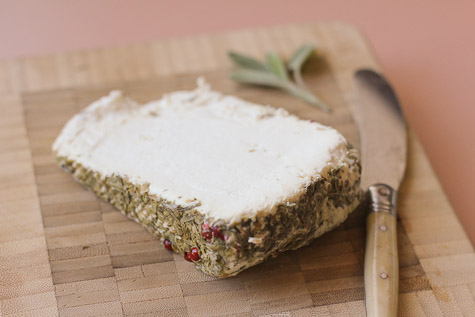
Fleur Verte is one of my favorite cheeses for the warm weather. Covered with dried tarragon and red peppercorns, it's one that I love slipping on a plate for a spring or summer cheese class, and one that brightens up a cheese board like red and yellow cherry tomatoes do a summer pasta salad.
If it's a really warm day, I don't want heavy cheeses. I want my dairy as light and refreshing as the season's produce. Like a Reynolds rom-com (not counting the dramatic part where I yell at him for breaking my laptop and almost ruin our future relationship). Especially if they're being served at the start of the meal. Essentially a chevre that's been covered in herbs, Fleur Verte keeps it light.
Even better, Fleur Verte comes with summer seasoning. That's right. That tarragon? That's summer (or spring) flavor right there. Imagine Fleur Verte crumbled over green beans or a quinoa salad, maybe with with a little chopped garlic, some tomatoes, and olive oil. And that's it. You don't need anything else. Except maybe a rosé.
Have any herb covered cheeses made by local producers near you that you adore? I've been loving Harley Farm's selections. What do you eat in summer? Or September?
Lastly - My book has a Facebook page! And the profile photo? A shot of my book cover! Publishes November 6th, but you can like my little ol page whenever you want!
Daphne Zepos
Today I'd like to pay respects to someone very important. Daphne Zepos, co-owner of the Cheese School of San Francisco and Essex Cheese and cheese advocate, passed away this morning. She was a role model to so many, extremely giving, an amazingly passionate and funny person, and had more knowledge and life in her pinky fingernail than most of us have in our entire body. And more. Those of us who have had the honor of learning from her, working for or with her, or just sitting next to her at table even once or twice know how lucky we are to have been blessed with her enchanting presence. I consider myself very lucky to stand in the long line of people who are in complete adoration of her. Rest in peace, Daphne. My heart goes out to all of her friends and family.
Here is an article that was written about her in Wine Spectator in April. While it doesn't capture her charisma and beauty, it explains her extensive professional reach and influence.
“Cheese educator, importer and innovator Daphne Zepos fed her obsession on the Greek island of Sifnos, where her family vacationed. “I helped the shepherd boys collect the goats for milking every summer,” she says. “Their mothers would make fromage blanc in the sink and we ate it with hot bread.”
But Zepos didn’t get serious about cheese until she was a line cook at Campton Place in San Francisco in the early 1990s. She was put in charge of the cheese service, uncommon in American restaurants at that time unless they were serving classic French fare. While convincing American diners to accept a cheese course presented its own challenges, there was also the problem of sourcing many of the cheeses we now take for granted, as well as finding food purveyors knowledgeable about cheese.
“Suppliers couldn’t tell me where the cheese came from other than it came from France, maybe Normandy if I was lucky,” Zepos says. “They might also tell me the butterfat. That was about it. It was infuriating.”
She broadened her cheese horizons by taking short sabbaticals to Neal’s Yard Dairy in London, as well as stints in the Basque country, the Jura and the Balkans. “It was like opening a box of treasure, a universe that was incredible. I was hooked,” Zepos says.
From 2002 to 2005 Zepos worked at Artisanal Premium Cheese Center in New York, where she chose and aged hundreds of cheeses in Artisanal’s caves. She also created an affinage (cheese aging) internship program, and, with Max McCalman (Artisanal’s maître fromager), Zepos put together a cheese master class program.
Zepos founded the Essex Street Cheese Co. in New York in 2006. Essex hand-selects only a few artisanal cheeses-Marcel Petite Fort St. Antoine Comté, Cravero Parmigiano-Reggiano, two kinds of Gouda (L’Amuse Signature and small farmstead Goudas, such as Wilde Weide) and a recently introduced small-production Manchego called 1602. Essex sells these cheeses to retailers, such as Cowgirl Creamery, Di Bruno’s and Bedford Cheese Shop. (See http://www.essexcheese.com for a list of retailers.)
Zepos works with cheese retailers in another capacity: as a teacher at The Cheese School of San Francisco. She hopes the school will help elevate the status of those who sell cheese. “Cheese retailers are not recognized in the food industry as craftsmen, like … sommeliers. But they should be,” Zepos says. “There is a craft to putting together an inventory, bringing cheeses back from shipping and a million things like that.” To formalize that recognition, Zepos has been involved in creating a certification program much like the one for sommeliers. The first Certified Cheese Professional exam will be offered in August at the American Cheese Society’s annual gathering, to be held in Raleigh, N.C., this year.
Of course, there wouldn’t be a push for certified cheese professionals if American artisan cheesemakers hadn’t started creating cheeses that compete with the best from Europe. Zepos can claim some credit for this, too. Prior to her time at Artisanal, she worked with the California Milk Advisory Board to develop a program for farmstead cheese, a concept foreign to many dairy cow farmers then involved.
To prove how far American cheesemakers have come, Zepos tells about one of her trips to France to buy Comté. She brought with her Andy Hatch, the maker of Pleasant Ridge Reserve, the Wisconsin cheese modeled after French mountain cheeses like Comté. Without anyone noticing, Hatch sneaked some of his cheese among those the Comté cheesemakers were tasting. “When they found out that it was made in the United States, they almost fell off their chairs,” Zepos says.
Zepos feels similarly. Recently she tasted a batch of Winnimere, a cow’s milk cheese made by Jasper Hill Farm in Vermont. “I had never eaten such a great cheese,” Zepos says. “It was like Vacherin Mont d’Or [one of the great Alpine cheeses] to the nth degree.”
Not surprisingly, when asked for an ideal cheese plate, Zepos included the Winnimere, along with Hoja Santa, a goat cheese from the Mozzarella Company in Dallas (offering “hints of sassafras,” Zepos says); Ossau Iraty, a Basque sheep’s milk cheese (”delicate texture, subtle layered flavors”); Monte Enebro, a goat cheese from Spain (try it with “oily Marcona almonds, preferably with the skin on”); and L’Amuse Gouda, which Zepos suggests having with “a shot of espresso or roasted cacao nibs.” Sounds like a great way to end a meal.”"