
The Cheese Blog
Mother's Day: Visiting Baby Goats and Cheese of the Month Club
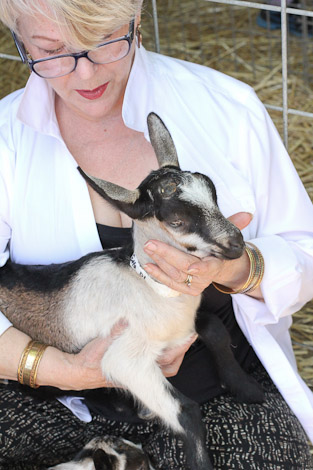
 Mother's Day is this Sunday. And if your mother is anything like mine, the day involves massive amounts of cheese (for breakfast, lunch, and day snacks), visiting a creamery, playing with baby dairy goats, and (mom, stop reading) possibly a Cheese of the Month Club present. Are you sensing a theme here?

Yup, to celebrate the woman who raised me, we're going full cheese force. But this isn't like gifting a host a bottle of wine you've been meaning to buy for yourself and hoping your friend opens it at the party. Nope, this was all her idea.
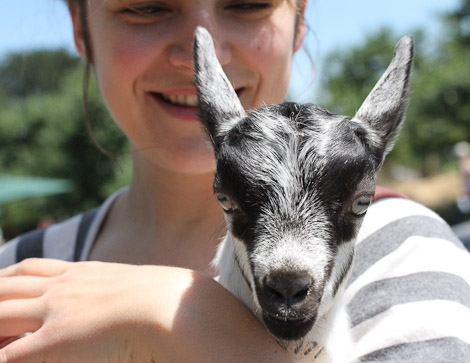
For the past two years on Mother's Day, my mother has requested we go to Redwood Hill Creamery's Spring Farm Tours. Or, rather, last year, my father walked into the wine shop where I work part-time, and informed me that they were going on a fabulous Sunday adventure! They were going to visit baby goats at one of their favorite creameries! I asked, Dad do you mean that you're going this Sunday, on Mother's Day? He replied, How about that! I guess so. Then after I asked if it was okay if I joined, since it was Mother's Day and all, he said that he'd get back to me. As I found out from one or two follow-up phone calls, and as demonstrated by the photos on this page, they decided to let me join!
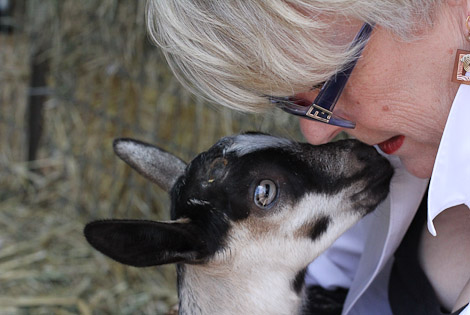
This year they're letting me join again! Better yet, they're letting Oma Olga come along too. Olga's my grandmother- not my blood grandmother, but pretty much my official grandmother due to copious amounts of grandmotherly love she dishes out and the fact that my own one has passed away. She's pretty much perfect. She's ninety-six, super sharp, thanks the mug of beer she drinks everyday for her longevity, and has become more comfortable with loudly remarking upon the fineness of Brad Pitt's appearance in theaters as she ages.
This is also our Mother's Day gift to her. That and some homemade cookies (stop reading here, Olga) because she likes to have a cookie with coffee for her first breakfast every morning. She grew up on a farm and visiting the babies brings up some lovely memories for her.
If your mom is the sort who loves cheese and baby goats or sheep too, I urge you to check out what farms are open near you for visitation. If not for mother's day, then soon after. It's baby goat and sheep season!
And if she's the sort that likes cheese of the month clubs, maybe she'd like to kick it off with May's "It's Not You, It's Brie" Cheese Club, which ships anywhere in the United States. One of my three cheese picks this month is a triple-creme like the beauty above. Kunik, from Nettle Meadow- goat's milk and cow's milk cream to celebrate the season. For moms into dairy: the club includes three cheeses, a custom recipe for one of the cheeses in the club (see a sample here), my write-ups, and a monthly club newsletter with more writing and photos galore. If you sign your mother up for twelve months, I'll throw in a signed copy of my book to say thank you.
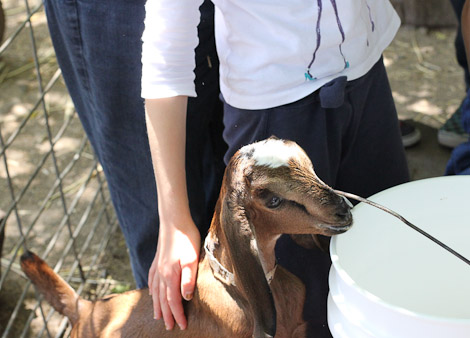
Whether you go full-cheese force, visit goats, or have a brunch, whatever you decide to do, Happy Mother's Day to all of you out there! I hope that you enjoy the day, whether you spend it with your own mom, someone else that means a lot to you, or just you, you're lovely too!
Candied cocoa nib walnuts- Hello again, Comté

If a regular reader of my writing, it's probably safe to assume that you're aware of my love for Comté. Alpine wheels in general have a special spot in my dairy drawer, and Comté was the first Alpine to really open my eyes to the magic of the hills. Before Comté, I knew you could ski down the Alps and Rhone-Alps around the Jura, sure, but since my slim wallet and my inability to stop or slow down while skiing without heading directly into a snow bank rendered me less interesting in snow sports, I hadn't paid as much attention to the region as I had, say, Tuscany, whose hills I could walk up and down.
Then one day Daphne Zeppos sliced me a piece of the cheese she imported for Essex (at room temperature of course) with a smile that could light up five rooms and explained the region's tradition of transhumance. I fell in love with the cheese (and her of course too, but, well, she was married, what could you do?). After that, I toured the Jura twice- once on a short wine trip and next with a group of cheese geeks who did nothing but think of Comté and drink amazingly weird and lovely Jura wine for five days. So this is to all say that I kinda like the region and its cheese.

The candied walnuts with cocoa nibs recipe is one that I created for my cheese club members. Every month I create a recipe for them inspired by one the cheeses in the club, and email the recipe and a little more about their selections to members after their three cheeses and condiment ship. This recipe was to pair with their Essex Marcel Petite Comté- one of my April picks. While I crafted the recipe to pair with Comté (and admit that's my favorite pairing for it so far), it would pair well with many cheeses- even some of the spring goat cheeses out right now. This with fresh goat cheese, over an arugula salad? Mmm hmmm. I'll share a recipe for a Comté, candied walnut and cocoa nib salad in a couple weeks, too.
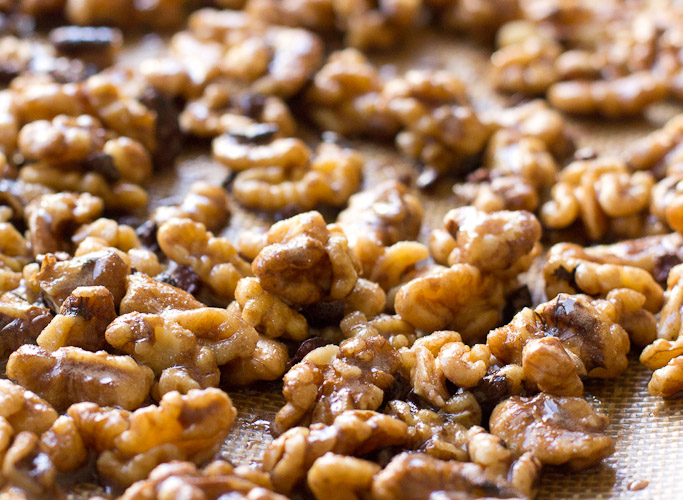 As for the inspiration behind the recipe, serving a handful of walnuts alongside a plate of Comté (and when I say plate, I mean plate, Jura country doesn't do just a slice or two) and a glass of Jura's vin jaune wine is a traditional way to welcome guests. Here, I wanted to honor that custom, but amped up. This recipe adds a little sweetness, a little salt, and a tad bit of chocolate. The cocoa nibs were inspired by a Cheeesmonger Invitational pairing (by Marnie Clarke of Claremont Cheese who paired Comté with cherry preserves and cocoa nibs) and brings the cheese's silky texture and sweet flavors to the forefront. You'll have extra walnuts. This won't be a problem. Give away or store in an airtight container for 1-2 weeks.

1 egg white 1 teaspoon cocoa powder 1/4 cup plus 2 tablespoons dark brown sugar 1/4 plus 1/8 teaspoon kosher salt 2 1/4 cup walnut halves 2 tablespoons raw cocoa nibs Comté slices
Preheat oven to 300 degrees.
Line a baking tray with a silicon baking sheet or parchment paper.
In a medium sized mixing bowl, whisk the egg white until loose. Add the cocoa powder, sugar and salt to the bowl whisk for a minute. Folding into the egg white mix with a spatula, add the walnuts. Once the walnuts are evenly coated, add the cocoa nibs and stir again. Pour the walnuts evenly over the baking sheet and spread out so they're one layer.
Cook for ten minutes, stir, and cook for ten minutes. Remove from the oven, give one final stir, then let cool.

Strawberry-rhubarb balsamic compote for spring goat cheese
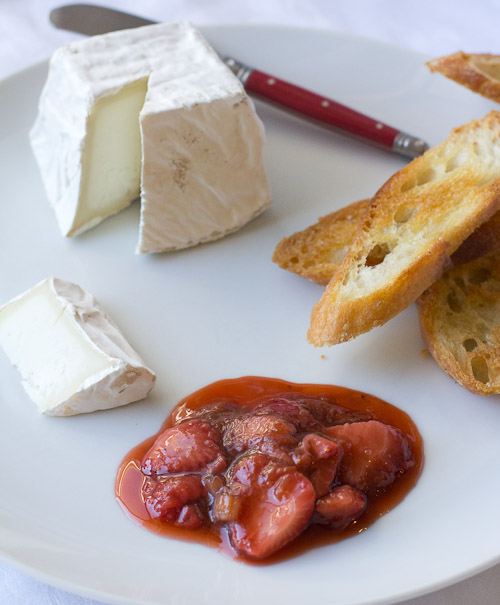
Springtime in CheeseVille means baby lambs, goat kids, clover in the fields, and… the return of delicious, small production goat and sheep's milk cheeses to the tables of dairy lovers everywhere. Party. Time. As is easy to forget when gallons of cow's milk are lined up 20, 30 in a row on dairy shelves at grocery stores, milk is a seasonal thing. American cows for the most part have been bred so they breed year round so we have that half-and-half for our coffee in the morning, every morning, but that's not always the case with goats and sheep.
In fact, if goats and sheep are completely in tune with the natural seasons, with when the sun rises and sets, with the changing leaves, they get a little frisky during the fall and winter. They can be cooped up in barn, get a little closer with their neighboors, it's understandable. This means they'll start having their babies around spring. If a creamery is completely in tune with the animal's natural birthing and lactating tendencies, that also means that they might be waiting to milk into now, too; at some farms, animals get a break during off-seasons. But now, when the mamas are birthing, there is milk aplenty. Fresh goat and sheep cheese fever! That's the first part of the story. The second part is that after dairy animals give birth, their milk is at its most nutritious, and very rich. This is good for us too.
Then there is the third part of the spring cheese story. Remember those clovers I mentioned in the first sentence? Well, the Sonoma and Marin hills are full of them, and a lot more. I'm thinking its similar at a farm near you. Think wildflowers just starting to bloom, and mustard and wild herbs. When the goats and sheep, who love prancing about and getting in the nooks and crannies of the fields (or just beyond the field, those rascals) eat the wild spring and summer vegetation, the flavors come through in the milk. If you've tasted a goat cheese in spring or summer and thought it tastes more herbal or vibrant then a wedge of the same cheese you had in winter, you were probably right. Those animals had been snacking.

To celebrate this season of cheeses, I created a recipe to highlight the flavors in the fields, made for goat cheese. But it would work equally well with young sheep's milk cheeses too. The cheese I created the recipe for is Pug's Leap Pavé, above. Pug's Leap is a much-loved Petaluma creamery that went out of commission for a while while transitioning to different ownership. Well, as of a couple months ago, it's back, and producing bloomy-rinded styles that are lively, thick and flaky, and slice-ready for being put on a crostini with strawberry-rhubarb balsamic compote.

With their crimson colors and green flare, strawberries and rhubarb were catching my eye at the market. Normally it's just about the start of fall when I think, I should really do something with rhubarb, except by then, it becomes I "should have really done" something with rhubarb. Not this year. To the compote I added balsamic vinegar. Its acidic and dark sweet tones bring out the citrusy flavors in the seasonal cheese. Then, inspired by Chef Courtney Burns's recipes from an article I wrote for Culture, I added a bit of freshly ground pepper. When I converted Burns's Bar Tartine dessert recipes from restaurant-ready to home cook-friendly for the article, I loved that she incorporated savory notes into her desserts. The black pepper was my nod to her and pairs with any herbal, peppery goat cheese notes. This compote's flavors is made though, to honor the goat. Or the sheep. It's also quick to make, produces about a 1 1/2 cups of compote, and the leftovers are pretty major on steel cut oats in the morning.


Ingredients
1/2 pound rhubarb- sliced half an inch thick
1/4 cup plus 1 tablespoon granulated white sugar
1 tablespoon honey
1/8 tablespoon freshly ground pepper
3 tablespoons balsamic vinegar
2 cups sliced strawberries- sliced a quarter inch thick.
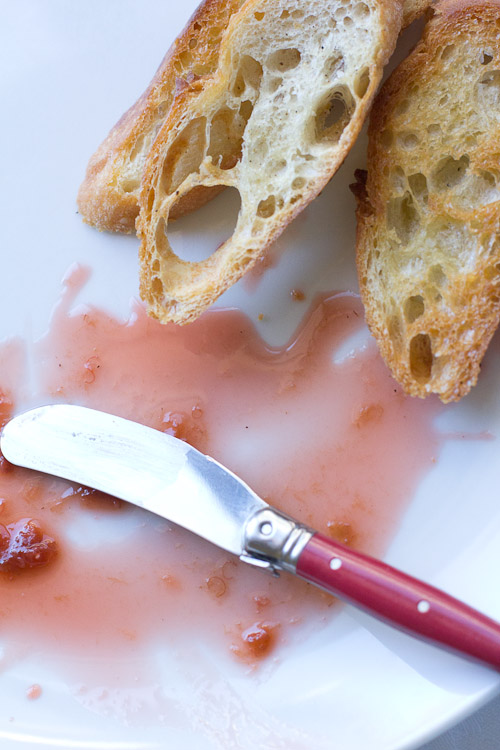
In a medium saucepan, combine the rhubarb, sugar, pepper, honey, and balsamic and stir with a wooden spoon. On high heat, warm until the balsamic starts bubbling. Once bubbly, reduce heat to medium-low. Cover the pot with a lid, leaving it slightly ajar so steam can escape. Cook for seven minutes, lifting lid to stir occasionally. Take off the lid and cook for two more minutes, or until half of the rhubarb in the pan is soft and dissolving, like in the fifth photo above. Add the strawberries to the pot and stir. Continue cooking on medium-high heat for ten to fifteen more minutes, until the strawberries start to soften, but still keep their shape.
What are your favorite things to eat or drink with your seasonal goat and sheep's milk cheeses?
Jersey Blue: A tale of cheese (and sports)
No one would have ever said I was an athletic child. As an asthma sufferer who grew up during the eighties, I belonged to the group of kids that was encouraged to sit on the sidelines, put on a leotard instead of knee guards and sneakers, and by all means, walk instead of run. At that time, a large sector of the medical profession was convinced that as soon as asthmatic child's heartbeat even considered rising above a very, very quiet sitting rate, the child would be in grave danger of having asthma attack immediately. So with an inhaler in my pocket, I grew up hanging out on the outskirts of the playground at lunch time (after I used my nebulizer every day in the nurse's room of course), watching others play dodgeball.
When accounting for my complete inability to dodge a round object, my lack of hand-eye coordination, my tendency to run into things, and my slow lap time, I point to this period in my life. It's possible that it's not related, but I'm hopeful.
With all this in mind, it's probably clear why I fell in love with blue cheese. Finding my classmates unimpressed by the way I could power-read for three hours straight in library corners, and without a way to prove my prowess through brute physical strength or athletic ability, I needed a way to prove my bad-ass-ery. I proved my strength through food. In the cheese world, blues were a measure of my fierceness.
Everyone could run faster than me. But no one, no one, could eat more blue cheese than me. Or stronger blue cheese. I think I even put it on a peanut butter sandwich once. Blue cheese dressing was always my salad topper of choice. Gorgonzola and Roquefort went on everything I could put it on. I couldn't run around two blocks, but I could crumble the hell out of a wedge of Stilton in an era when "sharp" Cheddar was considered an acquired taste.

It is through this attempt to prove that I had a vein of fierceness in my body that I fell in love with blue cheese. I love all sorts of blue cheese. The strong ones (I often will pair them with dried figs or honey- I admit, I'm a bit pansified now), the soft ones (solo), please, and the weird ones.
Today I still always have a wedge of blue at home. My most recent blue discovery? Jersey Blue.
Imported by the awesome Swiss cheese importer Caroline Hostettler, Jersey Blue is made in the Valais region of Switzerland by Willi Schmid. Willi Schmid, in case you don't know (don't worry, I haven't met him either), is a Swiss wondercheesemaker that's been turning heads in the country that used to be only celebrated for cheese with big holes. After Switzerland stopped rewarding mass market cheese producers with heavier subsidies, artisan cheese makers like Schmid have been freer to create, and compete in the market.
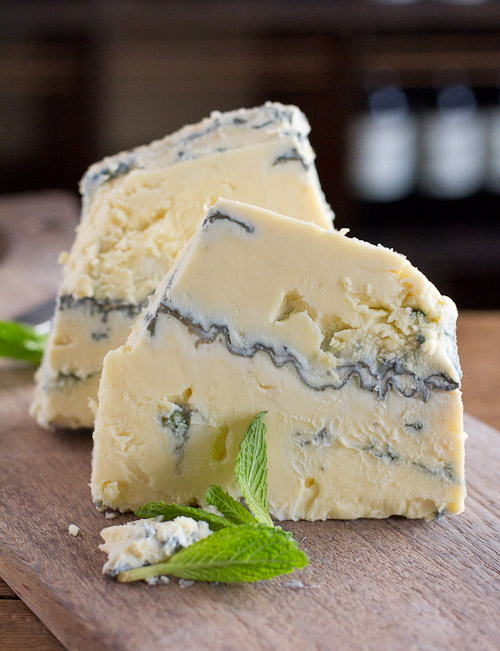
The buttery, creamy flavors and color of Jersey Blue is thanks to it being made with raw, Jersey, cow's milk. It has light veining, and the rind often acquires a wrinkled texture not unlike La Tur or Rochetta that, after sitting in a cheese fridge covered with foil for a bit, acquires quite a punch. Too feisty for you? Cut off the rind. Overall this is a rich, sweet blue that is fantastic for beginners and vein-lovers alike. I'm fond of it in thick slices, or, crumbled in a salad like the Fava, Sweet Pea & Blue Cheese Spring Salad.

And don't think less of me, but I wouldn't eat it on a peanut butter sandwich anymore.
Fava, Sweet Pea & Blue Cheese Spring Salad
 Nudging broccoli and parsnips into the corners of farmers market tables, sweet peas, asparagus and favas are taking over. Lambs are dotting the Sonoma hills, and the amazingly cute pics cheesemakers are posting of newborn goats are suggesting that winter has had its way with us. For now. The seasons have spoken. Bunnies, strawberries, goat's milk cheeses and lamb are ready to rule our world.

To celebrate this taste takeover, I'm sharing a recipe for one of my favorite spring salads. It combines favas, sweet peas, chick peas, and mint.
The first time I heard about the combination of blue cheese, peas and mint was from an ex that was attempting to help me deal with my cheese consumerist issues by finding us recipes to utilize my purchases. That day I learned of the combo, I had just gotten home from buying what was perhaps a pound too much of Roquefort. Normally this wouldn't be an issue. However, because a day or two prior, I went on a French cheese binge at Cheeseboard, we were also housing large amounts of Époisses, Comté, Tome de ____, Tomme de ____, and, you get it. I overbought, and every cheese was at it's ripest and gooiest, because that's how I roll at the cheese shop.
When he told me he thought we should test out a recipe he just read that combined mint, peas, and blue cheese I thought he was crazy. I thought the recipe writer was crazy too. But because I'm never one to turn down food when someone cooks it for me, especially when it involves any sort of dairy -this one also involved copious amounts of butter- I said I'd be willing taste it if he cooked it. I loved it.

The peas act as a sort of honey with the blue cheese, offering their sweetness to tame any overwhelming piquant notes, and the lively mint brings out the peppery notes in the blue without dwelling on the cheese's fierceness.
This salad could also be made with a fresh goat's milk cheese, as might be typical with the season, but if you haven't tried blue and cheese, try it. If your reasoning for wanting to substitute chevre is because you think you might miss out on the lively spring goat cheese, never fear- chèvre recipes are forthcoming!

I used Jersey Blue in this salad. Details about the cheese next week. If you can't find Jersey near you, try another creamy, buttery blue like Roquefort, something lush from Willapa Hills, or Rogue Blue. The rest of the salad is all snap and crunch, the cheese will serve to add a little softness.


Fava, Sweet Pea & Blue Cheese Spring Salad
makes 2-3 servings
Salad
3/4 pound fava beans, in pods and shells
6 oz sweet peas, de-stemmed
1 1/2 cup cooked chickpeas
2 green onions, white part thinly sliced
2 tablespoons finely chopped parsley
1/4 teaspoon salt
40 mint leaves, washed and patted dry
Vinaigrette
1 garlic clove, minced
1 teaspoon dijion mustard
3 teaspoons freshly squeezed lemon juice
3 tablespoons extra virgin olive oil
1/8 teaspoon salt
1 dash freshly ground pepper
1-2 ounces of blue cheese per person
Bring a medium pot of salted water (salt so it tastes like the sea) to a boil. While the water's heating, de-pod the favas. If it helps, think of the de-podding minutes as valuable time provided to you to space out, as I do. Once the water is boiling, drop the fava beans, skin-on, in the pot. After 3 minutes, take out a large fava bean (doesn't have to be the largest, but, a big one) and taste it. If its flavors are sweet and buttery, without any raw notes, it's good to go. If the bean tastes still slightly raw, give it 30-60 sec, and check another. When the beans are ready, take the pot off the stove, keep the water, but scoop out the beans from the pot, and toss the beans in an ice-bath to stop the cooking process. Bring the water back to a boil. Add the sweat peas to the pot and blanch for four to five minutes, until the pea's edible pod is still crisp, but no longer fibrous. Drain and cool.
Next, peel the favas. Use your thumb nail to break the fava skin, then pop the beans from their package. If the beans are tiny, don't worry about shedding the skin, it'll be thin and taste tender.
To a large bowl, add the chick peas, favas, and sweat peas. To this, add the white part of the green onions, parsley, and 1/4 teaspoon of salt. Chiffonade the mint. As is shown in photo six (above), stack about 6-10 leaves at a time, and roll them horizontally until they look like a mint cigarette. Slice with a sharp knife into thin strips. Toss 2/3 of the strips into the bowl with the chick peas. Lightly chop the rest of the mint and also add to the bowl.
In a separate small bowl, whisk together the garlic, dijion, lemon juice, olive oil, 1/8 teaspoon of salt, and pepper. Pour this vinaigrette over the chick pea mixture and lightly toss. Let set for at least 20 minutes if possible. Taste. If you think it needs more salt, add.
Divide the salad between 2-3 plates. It makes two hearty lunches, or three larger side portions. Crumbling into larger chunks, top with cheese.
I love this salad with a Chenin Blanc- dry, or lightly sweet.
Dorset: funky, sweet, and finally on the West Coast.
 Before you think I'm shirking my food writer duties by not writing about the glories of springtime produce or dairy, I'll have a post for you next week on that topic. With a recipe. In the meantime, let's talk Dorset.
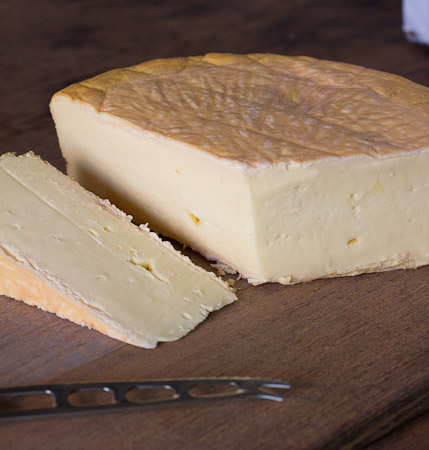
I'm not sure if it's the storm brewing outside (thank you, water, for occasionally falling on California) that makes me want to write about heartier fare, or if it's just that I long to tell you more about my favorite cheese styles, but today, I'm going to talk about a new washed rind to the west coast. It's funky, soft, and a newbie for us desolate Californians.
Dorset is new to the west coast as in, all you lucky east coasters have had it available to you forever, but we just got it. For some delicious reason, there is a plethora of gooey washed rinds congregating on the east coast that we can only droll over from a distance because of distribution. Here's looking at you, Keely's Across the Pond. If I sound jealous, it's because I might be. A little. Very.
Then there are some that are just recently hitting our shores, like Hudson Red, Hooligan, and Dorset.

Made by Consider Bardwell Farms in Vermont (or New York-depends which side of the farm you're strolling on), Dorset is a raw milk cow's milk cheese. As you can see above, Consider Bardwell has goats. They're actually a goat's milk creamery, but in the interest of supplying dairy lovers with more variety and supporting local farms nearby, they buy Jersey cow's milk from their neighbors and make cow's milk cheeses too. Points for everyone.
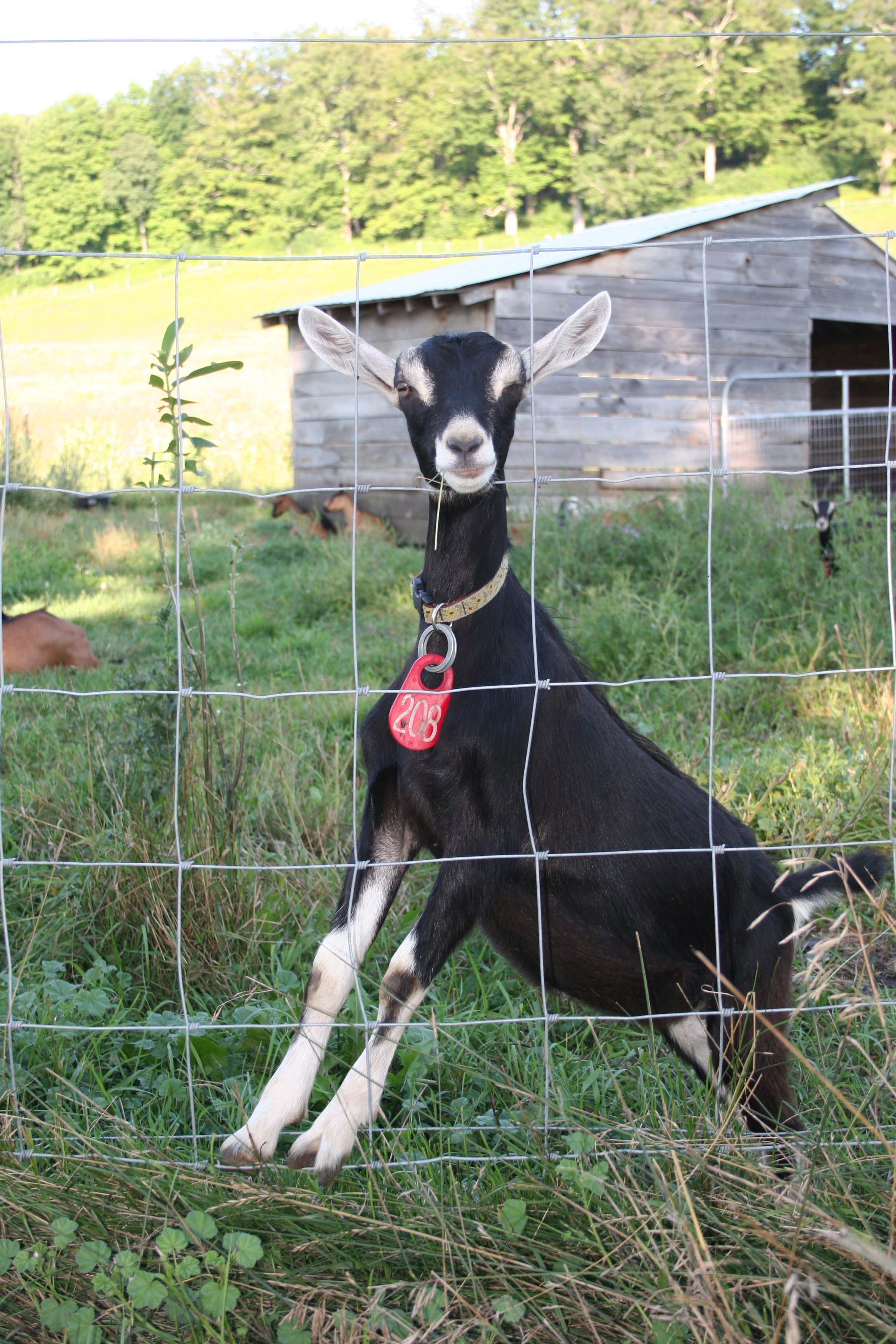
The creamery is a project launched by food literary agent Angela Miller and her husband Russel Glover, who started making cheese on the farm in 2003. The farm had been a creamery in its past life, and the two revamped it. They hired cheese consultant extraordinaire, Peter Dixon, and their wonderful cheesemaker of today, Chris Gray, to work their magic. The result is a creamery and small cafe that are open to visitors, a gorgeous site (Glover is an architect, and the swans floating on the property's pond don't hurt the ambiance either), and cheese that is the envy of… west coasters. I visited the farm while doing research for my book and fell in love with its idyllic nature and frisky, friendly goats (they say it's the breed).
Lucky for us, Cowgirl Creamery just started distributing Dorset in the Bay Area. Go, Cowgirl!
Dorset is a washed rind. As it ages, the cheesemaker "washes," or pats down, the rind with a brine solution of water and salt. This encourages the growth of the b.linens bacteria, and the delicious, delicious, sweet funk flavor. B.linens create the strongest smells in the dairy counter, but often the sweetest flavors. Which is the case with Dorset.
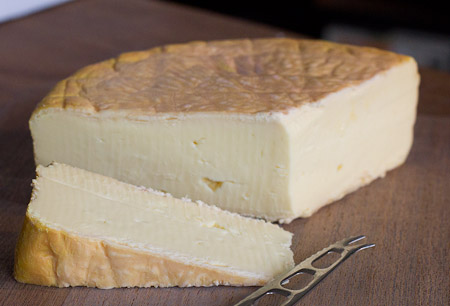
Creamy, in that cream-off-the-top-of-the-glass-milk-bottle type of way, Dorset is pretty lovable. If you're sensitive to scent, I have no doubt that a taste versus a whiff of Dorset will get you over this. It's just as sweet as the cream that tops the milk bottle. I swear. It can be a little floral too.
And it's lively. Despite its mouth-coating richness, it has a tang that keeps it all bright. Maybe because it's just made seasonally with the milk of cows grazing local pastures. You can taste the Vermont grass. And I can tell you from a visit to the farm, wow, that's some green grass.
I like the Dorset solo on a cheese plate, with orange blossom honey, or with apricot conserves. Or, melted in a grilled cheese sandwich. Serve with a Alsatian white, sweet Riesling, lush Pinot Noir, or ale with a hit of sweetness.
Behind the Scenes: Montebello ♥s Cali Cheese.
 March has been a happily busy month. There was that one week I spent in Alaska, where I had the awesome opportunity to see the aurora, dog sled, meet some of the nicest people in the world (smiles, smiles everywhere), and order 12-oz mocha breves made from half-and-half from multiple drive-through coffee shacks. After returning to the lower 48 states, I curated, ordered, developed recipes for my cheese club, and took pics of the dairy love. Then, of course I had to return to some solid, real work and finish eating that Idaizabal in my fridge from my last post in February. And the Bonne Bouche. And the Alpines. After that very important duty was completed, I tended to a bit more consulting and class work.

In short, March has been full of deliciousness. A highlight? In the middle of the month, this lucky girl got to curate the cheese for Ridge's first session Montebello tasting of 2014. In fact, I'm just going to go out on a limb and say this was the height of March deliciousness- not that mochas made with half-and-half aren't astounding.
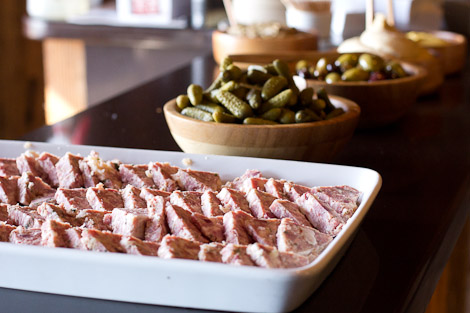
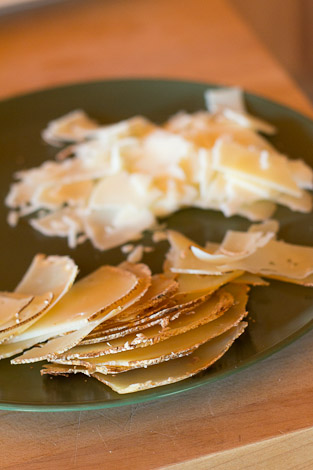
I wanted to include a few behind-the-scenes photos of the event, you know, just in case you were wondering who sliced or crumbled the cheese for the hundreds of Ridge members attending, what Fatted Calf charcuterie looks like before it's demolished, or which cheeses I picked to pair with this year's releases.

This first event - there are two more weekends of events- was the component tasting. That meant we got to taste the Merlot, Petit Verdot, Cab Franc, and all of the other grapes that make up the Montebello blend- solo. Then, a sampling of the 2011 Montebello (most recent release). The next weekend session tasting will be of this year's first take on the Montebello blend. The final weekend session will reveal the final Montebello blend. Customers have chances to buy futures, and other rare releases that just happen to be open that day. My job? To make sure that the cheeses highlight the wine.

The cheeses I picked were all from California- Ridge's rules- and I'd highly recommend any of these cheeses with aforementioned varietals, which have a fair amount of tannins and acidity (bless them) in their youth. Firmer, aged cheeses are the ones to lean on with the big grapes. They've garnered enough complexity during maturation that they can stand up to the wine.
My picks:
Mt Tam: to go with the Estate Chardonnay poured as members walked in. Triple creme, uber luscious, people piled this one on their plates like scoops of ice cream. Truth be told, not much of it made it back to the wine tables.
Barinaga Ranch Basseri- Raw sheep's milk cheese from a Marin ranch overlooking the Pacific. Basque style, brown buttery, with citrus notes. Great with the high acidity and tannins of the Bordeaux grapes.
Central Coast Seascape - A cow, goat blend that members named a gouda-cheddar hybrid. Semi-soft, but creamy tasting with herbal notes. Mild and lively.
Vella Mezzo Secco- A baby dry jack. Rubbed with olive oil and pepper as it ages. This cheese was created when the Vella's customers wanted a cheese that would hold up well in their ice box over the summer.
Do you have favorite cheeses for Bordeaux grapes?