
The Cheese Blog
Valley Ford- Sonoma Hills, Baby Cows and Cheese
The cheese trips that I've been going on lately have made be thankful for many things. 1. The cheesemakers. Whether they devote their lives to tending animals and making cheese, or focus primarily on making cheese and leave animal husbandry to others, they make our delicious, daily lives possible. Plus, if they weren't making cheese, I'd have to write about... beans... or .... radicchio.
 The cheese trips that I've been going on lately have made be thankful for many things.
1. The cheesemakers. Whether they devote their lives to tending animals and making cheese, or focus primarily on making cheese and leave animal husbandry to others, they make our delicious, daily lives possible. Plus, if they weren't making cheese, I'd have to write about... beans... or .... radicchio.
2. The animals. They're beautiful, even when they're being a pain in the butt and not going into the right milking stall. They give us glorious milk. And they're soooo.... cute when they're babies (even, I recently found out, when they blow snot rockets that have a three-foot projectile).
3. Friends. I love having other people who are also passionate about cheese attend my cheesemakers trips. Because I love them, sure, but another reason is because when they're in the car with me, they become official navigators. This is priceless because I get lost quicker than a child left alone in a supermarket. But even better- when my friends come along, they serve as photographer while I pester cheesemakers with questions. In the case of my professional photographer friend, Molly DeCoudreaux, this is the best news possible for everyone. All photos featured on this post are by her.

Recently my pal MollyD and I drove up to say hello to cheesemakers Karen Bianchi-Moreda and her son Joe Moreda at Valley Ford on possibly the prettiest day ever. Do you remember Valley Ford? They were the cheese company that I wrote about in the LA Times this October that switched from being "just" a dairy farm to also making cheese to be able to cope with the ridiculous pressures of the milk market.
We found Karen pressure-hosing the barn when we arrived. Now, even though I was already impressed by her ambition and passion, I'm now also impressed by her guns. But back to the farm. Karen also introduced us to her cheesemaker son, Joe Moreda, who graduated from Cal Poly with an emphasis on cheesemaking and decided to return to the farm to join the family business. He and Karen are a two-person mean cheese machine.


Then, she showed us her cheese room, and let us sample a bite or too from tasty wheels, like Estero Gold, Highway One, and the future release, Grand.


Next, with eyes lit up like a kid in Willi Wonka's Chocolate Factory, Bianchi-Moreda told us that she wanted to show us something. She led us towards a green and brown barn, the only original structure left from the first of the five Bianchis generations to live on the farm, and paused to glance at us with a wide smile. She slowly slid open the heavy door. Inside was around twenty stalls of calves. After waving us in, she introduced us to a two-day old Jersey that I like to call Ginger. When Karen opened her gate so we could scratch her a little under her chin, Ginger suckled. After a minute or two more of shyness that faded away with every chin scratch, Ginger got her visitor legs on and started polka-ing around her stall. Then she tried to prance out of her pen. "Oh, not so shy anymore are you?," said Bianchi-Moreda, shaking her head and laughing. "Tthis is why I do this."
All hail the baby cows.


All photos on this post are by DeCoudreaux. Note to readers- she is a rockin full-time photo professional, and this sort of photo excellence is only linked to Molly navigating my cheese trips. But, if you want her to navigate your own photo trips, weddings, portrait sessions, food shots, you can contact her here.
"It's Not You, it's Brie" About Town
And I’m here (a little late, for sure, but I’m okay with blaming the internet) to give you a little taste of recent “It’s Not You, it’s Brie” flavor. Next week, expect a photo tour of a recent California cheese trip or two. Shortly thereafter, you’ll see an interview with the uber-nice and talented Liam Callahan of Bellwether Farms. Yay...

It’s been a long week(s). Many calls to an out-of-town roommate to try to figure out why the internet wasn’t working -roomie’s back, internet’s not (but while I’ve had a low web presence, hey, I planted a vegetable garden). An amazing trip with a photographer friend to Sonoma to visit three beautiful creameries- Achadinha, Valley Ford and Délice de la Vallée. Taught a Burgundy class at the Cheese School of San Francisco (CSSF). Finalizing trip details for Wisconsin (gotta love that cheese book research, twisting your arm, making you go to some of the best creameries in the nation). And there’s been more. A few of them not-so-great, like making herbalist appointments that require you to drink teas that taste like thick licorice-compost, but most of it has been very, very lovely.
It's been action-packed around here lately.
And I’m here (a little late, for sure, but I’m okay with blaming the internet) to give you a little taste of recent “It’s Not You, it’s Brie” flavor. Next week, expect a photo tour of a recent California cheese trip or two. Shortly thereafter, you’ll see an interview with the uber-nice and talented Liam Callahan of Bellwether Farms. Yay...
In the meantime, here’s what’s going on around here:
This Thursday I published an article in the LA Times all about lush, creamy cheeses that go the distance- Beyond the Butter Bomb. Here’s the opening lines below, and here’s the link the article. I hope you enjoy it, it was really fun to write (gotta love an editor who doesn’t scratch your Jake Gyllenthal references).
"Cheeses whose creamy centers give like a soft-serve cone on a hot day will always have dates to the cheese prom. The spreadable, sweet demeanor of crèmes leads to instant popularity, and their snowy rinds and plush interiors make them some of the best-looking wheels around.... [more here]"
EVENTS
I have two events coming up that I’m cooking for/leading, the first is at Solano Cellars, the second at the CSSF.
Pinot Pairing Battle: Oregon's Ken Wright vs Burgundy's Patrice Rion
Thursday, May 19, 7pm – 9pm, Solano Cellars - 1580 Solano Ave, 510.525.9463
What happens when you pit the best Pinot Noir producer in Oregon against a Burgundian, Nuits-Saint-Georges heavyweight and pair them to four courses of passed apps? A wine fight till death, that's what. Ken Wright versus Patrice Rion. American against Euro. Smooth finish versus high acidity. Ripe fruit against barnyard funk. In a battle of Burgundies against American Pinot Noir paired to appetizers cooked by Solano Cellars’s Kirstin Jackson, who will win? Four appetizer courses, 8 wines. $65/person
Rieslings Rule
Wednesday, June 1,
6:30 – 8:30 pm, The Cheese School of San Francisco, 415. 346.7530
Rieslings, with their delicate balance of acidity and sweetness, provide some of the best pairings for food, and cheese is no exception. Whether at the light and refreshing or full bodied and deep end of the spectrum, Rieslings tend to be floral and fruity, and their subtlety and low alcohol levels make many Rieslings a wonderful warm weather wine. The spicy, honey-like qualities of the typical Riesling grape also offer a lovely counterpoint to savory, washed rind cheeses in particular. Learn – and taste for yourself why ‘Rieslings rule’ according to many as the most perfect of all wines to pair with cheese.
Not mentioned in the CSSF write-up- the Riesling class will expand beyond sweet wines. Rieslings are only sweet if the winemaker wants them to be, and we’ll try a full repertoire from sugary, with dazzling acidity, to mineral and dry as a bone. Riesling hating because of sweetness = not a viable option. Prepare to fall in love.
See you all soon!
Minnesota Lovin: Because there's Milk to the Left of Wisconsin Too.
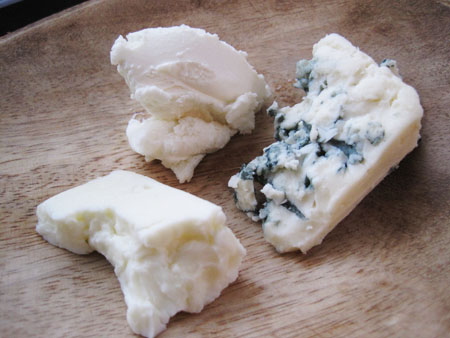
While its eastern neighbor tends to get the lion's share of attention when it comes to the dairy industry, Minnesota is quietly establishing a reputation for artisanal cheeses. However, if you don't live in the Midwest, chances are you haven't been exposed to these fine specimens yet.
We all know that Wisconsin has some rockin cheese. And this is good. But sometimes I fear that its neighboring states could be in danger of having a Cooler Big Sister complex. What if Wisconsin is the Cool Older Sister- you know, the one with the glorious hair, great skin, who everyone that you like has crushes on, that gets straight A's and still finds time to be on the swim team and go out after school- and the other states with great dairies feel overwhelmed because of her awesomeness, and shuffle their feet when it's their time to shine, even though they too have beautiful cheese?
Well, it seems that my only-child imagination has again proved too active. Here, the awesome Jill from Cheese and Champagne tells us that Minnesota cheese does more than just hold its own. On occasion its so good, it steals the cutie pie from the big sis while she's busy practicing laps. Dare I say watch out Wisconsin?... I've already got some on mail order.
Cheese and Champagne lays it out, Minnesota style:
While its eastern neighbor tends to get the lion's share of attention when it comes to the dairy industry, Minnesota is quietly establishing a reputation for artisanal cheeses. However, if you don't live in the Midwest, chances are you haven't been exposed to these fine specimens yet. While I don't have the time (or budget) to send you all care packages full of Minnesota cheese, I can offer you an introduction to three cheeses that hopefully will become more available nationwide as word spreads about their quality and deliciousness. As much as we Minnesotans love our local cheese, we're willing to part with some so our fellow fromage-philes in the east and west can enjoy them, too.
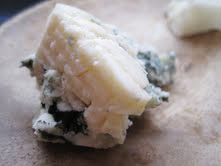
St. Pete's Select (Faribault Dairy) - If there's one Minnesota cheese you may already find in your cheese case in California or New York, it would likely be St. Pete's, a fantastic raw-milk blue made about an hour south of my Minneapolis home. Faribault's claim to fame is its sandstone caves that overlook the Straight River and provide the perfect environment to age a blue cheese that dances across the tongue but doesn't leave you shell-shocked. St. Pete's deep blue veining ensures that every bite is sharp, but the luscious paste lends a creamy backdrop to the zing. It's appropriate for blue-cheese newbies but complex enough for connoisseurs, and Faribault Dairy will mail it to you if you can't find it locally.
Fresh Chevre (Donnay Dairy) - How fresh is Donnay Dairy's chevre? When I stopped at the cheese shop last week, the mongers hadn't even had time to scoop their newest shipment into individual tubs yet. I got to watch as my monger packed my 8-oz. container to the brim with thick, rich goat cheese. I first discovered Donnay Dairy chevre two years ago when we celebrated local goat cheese week on Cheese+Champagne, and now I have a radar for when it shows up at my cheese shop every spring. Made by fourth-generation farmers using organic milk from their own goats, the chevre tastes as clean and local as can be - the Donnay's farm is about an hour northwest of my house. Per my co-blogger Colleen's suggestion, I am now obsessed with spreading it on whole-wheat toast and topping it with a drizzle of honey. Heaven on bread.

Herb and Garlic Queso Fresco (Shepherd's Way) - There is no better example of the tenacity of Minnesota cheesemakers than Steven Read and Jodi Ohlsen Read. They started making sheep's-milk cheese in 1994 and built up quite the operation over the years, but a 2005 fire destroyed most of their flock and forced Shepherd's Way Farm into foreclosure. Luckily for the Reads and Shepherd's Way fans, the cheesemaking carried on, and the future of the farm looks bright. While Shepherd's Way offers a range of cheeses, including a kickin' blue, I'm partial to its queso fresco, particularly the herb and garlic version I recently had. The garlic flavor is subtle enough that the cheese could be classified as first-date friendly, and the cool, creamy paste slides down the hatch quite easily. I've been told that aficionados like to pair the queso fresco with thick slices of tomato. Of course, this being Minnesota, I'll have to wait until late summer to sample that combination. For now, I'm satisfied to enjoy it solo.
So if you only associate Minnesota food with lutefisk, it's time to wipe that stereotype from your mind. Minnesota makes cheese that even Wisconsinites like myself can praise. You can't ask for a better endorsement than that.
Thank you Jill!
Readers, are there any Minnesota cheeses thought have caught your fancy? Teach us!
(all photos courtesy of Cheese and Champagne)
Fromage Blanc & Buckwheat Spring Salad Recipe
This salad recipe is an accompaniment to my "Spring Cheese: Keepin it Fresh" post. Give in to the urge to put fresh cheese in everything this spring!
 This salad recipe is an accompaniment to my "Spring Cheese: Keepin it Fresh" post. Give in to the urge to put fresh cheese in everything this spring!
I used Dairy Goddess fromage blanc for this recipe, but you may use any that tickles your fancy. My inspiration for this salad was wanting to create a spring salad with a lively, young cheese other than chevre. Would chevre work in it? Sure thing. But the delicious fromage blanc in my fridge was mighty tempting. The buckwheat brings an earthy, toastiness to the salad. However, use the untoasted greenish or light brown buckwheat available at your local health food market- the "toasted" doesn't seem to cook as evenly. This is the buckwheat recipe I use, but go with your favorite. Broccoli just happened to be my crisper at the time, but steamed or roasted asparagus, snow peas, or english peas would fare just as well. The cooking instructions for the egg are very precise- follow them exactly, and you'll have a bright yellow, slightly soft yolk.
Fromage blanc and buckwheat spring salad
serves two
1/2 small head broccoli
1 egg
1 teaspoon lemon juice
3 teaspoons extra virgin olive oil
1/2 teaspoon stone ground mustard
1 small clove garlic, finely minced
3/4 cups cooked buckwheat, at room temperature
2-3 ounces fromage blanc
3 ounces toasted walnuts

Place your egg (or two, if each person wants one of their own) in a small saucepan and cover with cool water. Bring to a boil. Lower heat to medium. Cook for only 7 minutes. Remove eggs from pot, place in a bowl, and run a slow stream of cool water over them for 1 minute. Set aside.
While egg is doing its thing, cook your broccoli. If steaming, cook for 6-8 minutes, until still lightly crunchy. If blanching, drop in boiling, salted water and cook for around 5 minutes (lightly crunchy is key here too), then drain. Set aside to cool.
Put your lemon juice, olive oil, mustard and garlic in a small jar and shake vigorously. Or, mix well in a small bowl.
Once your broccoli is cool, place it and the buckwheat a medium-sized bowl. Loosely break up buckwheat kernels. Add walnuts. Pour in the dressing and lightly mix. Salt and pepper to taste.
After egg has cooled your liking, peel and slice in half, lengthwise. Lightly salt and pepper the cut side of the egg.
Divide salad between two plates. Crumble the fromage blanc over the salad and top with egg.
Spring Cheese: Keepin it Fresh
As a seasonal spring cheese class I'm teaching draws near, I find myself thinking of freshness. Milk, fresh with the flavors of green grasses and young flowers growing on the spring Sonoma and Marin hills. Young cheese, un-aged and meant to be consumed with days to a short week or two from production. And perhaps needless to say, I'm also thinking of Doug E. Fresh's mad beatboxing skills. But that's another hip hop cheese story.
 As a seasonal spring cheese class I'm teaching draws near, I find myself thinking of freshness. Milk, fresh with the flavors of green grasses and young flowers growing on the spring Sonoma and Marin hills. Young cheese, un-aged and meant to be consumed with days to a short week or two from production. And perhaps needless to say, I'm also thinking of Doug E. Fresh's mad beatboxing skills. But that's another hip hop cheese story.
Spring is the time to eat all the young, fresh cheeses that you can possibly fit on your appetizer plate, in your salad, with your entrée, and in your strawberry tart. It's the time when artisan cheese-milking animals are out munching some of the best grass they'll ever get their ruminant mitts on.
Why isn't any aged cheese eaten in an especially fresh season like spring enough? Why does the cheese itself have to be fresh if you want to taste what spring's all about?
If one was to eat an aged cheese now, they'd be tasting the flavors of cheese in whichever season the cheese was made. For example, an aged, 4 month-old cheese consumed now would be made mid-December. The cheese would taste different. It would be richer because winter milk has more fat, and it wouldn't have as many light bright, fresh grassy notes as a cheese made in spring or summer because the animals were eating more hay and dried grasses. It would still be delicious, but it would have noticeably different notes to it.
What to see if you can taste the freshness?
Try some of these beauties :
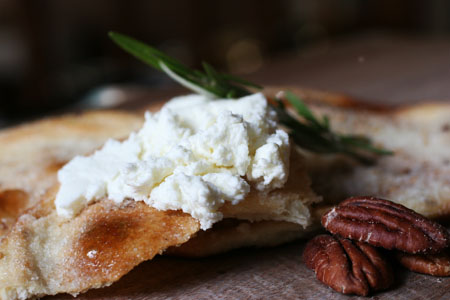
Dairy Goddess Fromage Blanc (pictured above, recipe with coming soon) An established dairy, but new creamery in Central California, the Dairy Goddess's "Naked" flavor shows the season's flavors best, and their chocolate hazelnut fromage blanc begs to be topped with orange zest and warmed in a crepe. I've also been very happy with Cowgirl's, Bellwether's and Vermont Butter and Creamery's, but try cheesemaker Barbara Martin's if you can- she's new and is doing a great job.
Bellwether Farms Sheep's milk Ricotta/Salvatore Byklyn Ricotta- I love these folks's ricotta, but if you can't find them near you (they sell out fast and don't travel far), look for a freshie made from small-batch local milk. And please, share which regional ones you love in this comment section.
Redwood Hill Chevre- These baby goats were the happiest kids I've ever visited. They munched on my belt buckle and stole my heart, but I'd suggest going with your favorite local chevre- the more local, the less distance it has to travel, and the more fresh the seasonal milk flavors will be.
The above samples are just a few of many great spring cheeses out there. It doesn't have to be this fresh- the cheese could be aged for a bit and still taste of spring, this is just to give you a primer. Ask your cheesemonger for cheeses they think are showing best this season- they probably have something else waiting just for you. If you're very nice to them, what they have behind the counter may be a local mozzarella that demands to be eaten in two days (oh, the stress!).
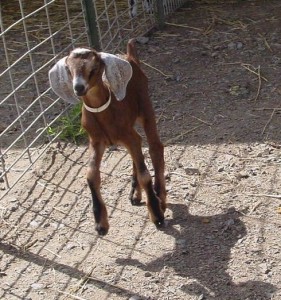
Also, check out these great goat-themed spring events in the SF Bay Area. Most are free. Some promise baby goats.
Mark Scarborough & Bruce Weinstein • Goat: Meat, Milk, Cheese, a book reading, Omivore Books- Saturday, April 16th, 3pm
3rd Annual Goat Festival- April 16th, San Francisco Ferry Plaza
Goat Cheese Making Workshop with Nicole Kramer (All proceeds will be donated to Cobb Elementary School in San Francisco), Omnivore Books, Sunday, April 17th, 4-5pm
Redwood Hill Open House- Sebastopol, May 7 & 8th between 11 am and 3pm (scroll until you see this baby Nubian photo on Redwood's webpage)
What are you eating now near you?
Mt Townsend's Seastack- is it a goat, a cow, a ...?
While it doesn't provoke questions as perplexing as the recent discovery of a lamb-puppy in China, Mt Townsend's Seastack also leaves people with their eyebrows raised, wondering "which animal is it?" A cheese made in Port Townsend, Washington, Seastack weighs in at eight ounces and reaches an inch and a half high. It's creamy, buttery, tangy, and has a thin coating of ash beneath its plush white exterior.
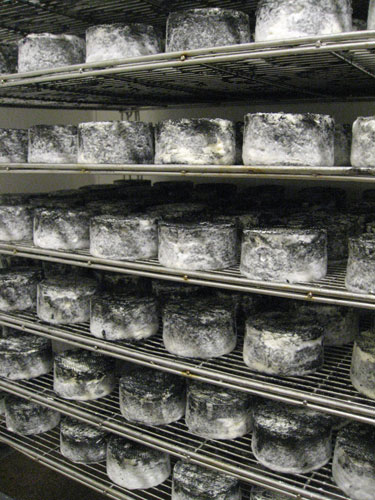
While it doesn't provoke questions as perplexing as the recent discovery of a lamb-puppy in China, Mt Townsend's Seastack also leaves people with their eyebrows raised, wondering "which animal is it?" A cheese made in Port Townsend, Washington, Seastack weighs in at eight ounces and reaches an inch and a half high. It's creamy, buttery, tangy, and has a thin coating of ash beneath its plush white exterior.
Like Selles-sur-Cher, and numerous other goat's milk cheeses styled after the Loire Valley chevre crew, Seastack gets a dousing of vegetable ash after the curds have set. This inspires the growth of the penicilum candidum mold- the mold that creates the plush, brie-like rind on cheeses like Mt. Tam, camembert, Humboldt Fog, and Kurtwood Farm's Dinah. The mold helps the cheese look pretty, and keeps the inside soft and moist.
A slice of Seastack reveals a layered cheese. First comes the plush bloomy rind. Then, underneath the bloom, a thin strip of ash. Next, there is a soft, thin, off-white layer that glistens like silk. It's creamy and gooey. Beneath the silky goo is a slightly crumbly center. As the cheese ages, the silk goo takes over. It inches its way in, and the crumbly center has no choice but to submit to the cream (not a bad ultimatum).
It's rare one sees this type of layering with a cow's milk cheese. The layering resembles what happens with a goat's milk or mixed-milk cheeses as they mature- for example, like with Zingerman's Lincoln Log or mixed-milk La Tur. But Seastack is made entirely with cow's milk from Port Townsend dairies.
So how did the lamb come out looking like a puppy, you ask? I have my suspicions, but let's stay focused.
Seastack comes out layered and crumbly like a goat's milk concoction because it undergoes more lactic acid fermentation and gets less rennet than many soft bloomy-rinded cow's milk cheeses. After pasteurization, the milk is left out for hours to start acidifying and curdling on its own, rather than being provoked to coagulate early with rennet. The lactose sugars convert themselves to lactic acid, and when this happens, curds form just like when rennet is added to the milk. But different style curds form, and the cow's milk assumes tangy, slightly lemony flavors like it were goat's milk from this style of coagulation. Rennet is also added to Seastack, but it's prominent flavors and later textures are shaped by its lactic acid fermentation.
Besides the lemony flavors and awesome layers, Seastack tastes like fresh milk, a little like mushrooms depending on the batch, and like lively, cultured butter. It loves dried or fresh figs, sour cherry jam, Sauvignon Blanc, crémant sparklings and Cava or Prosecco. Like a certain girl I know.
Want to read more?
Have you tried Mt. Townsend cheeses? Do you have a favorite of theirs?
Pistachio Cream- Cheese's Circle of Friends
As mentioned previously on “It’s Not You, it’s Brie,” cheese has a wide circle of friends. It’s a social animal. Circulating only amongst its own kind has no appeal to cheese; it knows that it is only as well-rounded and nuanced as those it keeps in its company and that discriminating against non milk-based products would ultimately make life less tasty.
 As mentioned previously on “It’s Not You, it’s Brie,” cheese has a wide circle of friends. It’s a social animal. Circulating only amongst its own kind has no appeal to cheese; it knows that it is only as well-rounded and nuanced as those it keeps in its company and that discriminating against non milk-based products would ultimately make life less tasty.
And we all know that dairy likes to be tasty.
One thing that nearly always pairs well with cheese is nuts. Some pair better with different styles of cheeses. Pecans love blues, toasted walnuts love Alpine cheeses, hazelnuts are fond of chevre. But they like to mix it up too. Nuts and cheeses have an open relationship and sometimes (if they and their more committed partners discuss it beforehand), chevre will be seen out on the town with pecans rather than with hazelnuts, or blues will go get a drink after work with a walnut or two.
But even though a nut has a vibrant social life, sometimes it gets bored in its plain state or yearns for a little more excitement than the inside of a toaster oven.
Being pulverized and zested does the trick.
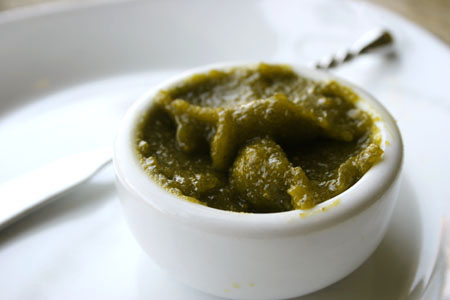
I was inspired to make this pistachio cream-paste one day while standing in the bulk aisle at a grocery shop. I was reaching for the walnut bin with plans of later toasting the walnuts to serve with Comté and Vin Jaune as the classic Jura region pairing, when bright little green pellets caught my eye.
When coming up with a cheese pairing, I consider the flavors of a cheese. Comté can taste like brown butter, butterscotch, cream, coffee, walnuts, and hazelnuts. If Comté can exhibit nutty flavors, I thought it could probably handle a little pistachio attention rather than just toasted walnuts. Since it was such a rich cheese, I knew it could handle a little zest and acidity too. Coincidently, two days prior to seeing the green nuts at the shop, I saw an article about how pastry chef Pierre Hermé makes his own pistachio paste to fill pastries. And this was how the pistachio cream was born.
Pistachio Cream
Pair with a mild Alpine-style cheese like Comté, Gruyere, or Mountina. Or, with young goat cheese or mild blues. This is a loose pistachio cream recipe, not meant to be followed precisely, so add however much more sugar, honey, lemon, water, etc, that you like to achieve the textures and flavors that please you. For a twist, add a splash of rose water at the end. Or, add two tablespoons of cream to soften the flavor.
1 1/2 cup shelled pistachios
1/4 cup sugar
1/4 cup water
zest of 1 lemon
1/2 teaspoon lemon juice
Put pistachios in a food processor and grind until nuts are the texture of cornmeal. Add sugar, water, lemon zest and lemon juice and blend until a smooth paste is achieved. Add more water and blend more if the mixture isn't shiny and smooth.
(Also delicious with chocolate!)
What do you like to eat with your Alpine style cheeses?