

The Cheese Blog
Abbaye de Belloc- Finding Comfort in Fermented Sheep's Milk
Sometimes, after a long day of tasting wine, eating artisan cheese, talking about new and novel cheeses, and slicing the said sophisticated pieces of fermented milk for others (following the one-for-them/one-for-me rule), I like to return back to my comfort cheese- the Basque Abbaye de Belloc. This is the French cheese that got me into sheep's milk.
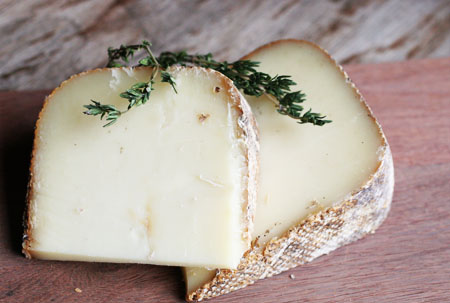 Sometimes, after a long day of tasting wine, eating artisan cheese, talking about new and novel cheeses, and slicing the said sophisticated pieces of fermented milk for others (following the one-for-them/one-for-me rule), I like to return back to my comfort cheese- the Basque Abbaye de Belloc. This is the French cheese that got me into sheep's milk.
Now, I love all styles, but sheep's milk cheese is likely my favorite cheese genre. I love sheep's milk's buttery, sweet, rich, spicy notes. But back when I first started eating cheese, my dear friends, I leaned towards the more mild sheep's milk cheeses. It's true. Maybe you were the same. It's a common progression- start light, then, later, reach deeper. You hear a similar story in wine- people tend to lean on the fruit-foward, smooth finish, friendly styles and work their way towards the high-acidity, more complex, even funky wines.
The first sheep's milk cheese that I fell in love with (this was back when sheep's milk dairies numbered under 1 or 2 in Cali) was Abbaye de Belloc. It's rich, creamy, tastes of brown butter and caramel, and is as comforting as being swaddled in a towel fresh from the dryer. It's also good for sheep's cheese novices because underneath all that butter and sweetness, it has a little of that sheep meatiness that sometimes people need a little time to learn to love. Abbaye helps edge them in.
What does the sweetness come from, you ask?
Among other things, the high quality milk, and the washing and cooking of the curds. After cheesemakers have seperated the curds from the whey, they can do a number of things. Washing, or rinsing, the curds with warm water rids the curds of some of their lactose, which will later turn into lactic acid. Many Basque cheesemakers wash their curds. Cheddar cheesemakers, on the other hand, actually let their curds sit to develop more lactic acid to increase sharpness in their cheese. If you wash some of the lactose off early on, you limit how sharp your cheese can become. Even though "washing" doesn't increase the actual residual sugar in the cheese, the cheese ends up tasting sweeter. With Abbaye, they also cook the curds at low temperatures. This helps to sweeten the milk by slowly caramelizing the sugars (lactose). These three things make for a lovely, friendly, comforting sheep's milk cheese.
I love eating this cheese with Pinot Noir- domestic styles, because they're rich like the cheese, but a more robust wine works too, like a Madiran from the Pryenées region. A fuller-bodied Chardonnay, white Rhone or Champagne also scores big points.
As for eating- bring to room temperature and just go at it. Slice thin. Doesn't need any condiments, but it sure does make one of the best mac n' cheeses and grattins I've ever had. It melts like a dream. As might your heart when you dig in.
What's your comfort cheese, and did you have a specific cheese that showed you the beauty of sheep's milk?
Sparkling Wine & Cheese Pairing: A Class Guide
Last night I taught one of my favorite classes ever at the Cheese School of San Francisco- Cremes & Bubblies, and in its honor, I’m creating a guide to pairing sparkling and creamy cheese today. Why is it my favorite? Two reasons. One, I love cremes and bubbles. Separate, together, at a dinner table, at a party, on the side of the road, however, wherever. Two, I loved this class because the students were into it.
 Last night I taught one of my favorite classes ever at the Cheese School of San Francisco- Cremes & Bubblies, and in its honor, I'm creating a guide to pairing sparkling and creamy cheese. Why was it one my favorite classes? Two reasons. One, I love cremes and bubbles. Separate, together, at a dinner table, at a party, on the side of the road, however, wherever. Two, I loved this class because the students were into it.

The first sign of whether students are going to be down with the class is if they laugh at the name of my blog. These guys did- hearty chuckles. If they don't, I know it's going to be a loooooong night, and it's very likely my jokes will fall flat. But these guys didn't just assuage my fragile ego by making me feel funny, they asked questions, they commented on flavors rather than starring at me questioningly when asked "what do you taste?," they contributed fun information to the class, and they ate and drank like pros. As a side note, I also attribute the class's success to listening to Def Leopard while crossing the Bay Bridge to teach- I was inspired, and the students felt it. Do you want to get rocked? Why yes, yes I do (get those cheese class engines revving!).

In short, it's hard to get a bad pairing with bubbles and cremes. Cremes are creamy, soft cheeses that are high in moisture and taste especially rich. If you nibble on them with a sparkling, you've got a win-win situation- the bubbles (like the carbonation in beer) and the acidity in wines like Champagne help cut the fat in the cheese and uplift the pairing experience. I always imagine the bubbles wrapping themselves around the creamy cheese molecules and taking them to a happy place, like cheese heaven. Truth be told, it's hard to fall flat when matching bubbles to creamy cheeses, almost everything tastes at least good. But some pairings are much better then others. Below I divulge the pairings in the class that were the favorites, and why they worked to create a light and easy pairing guide for sparklings.
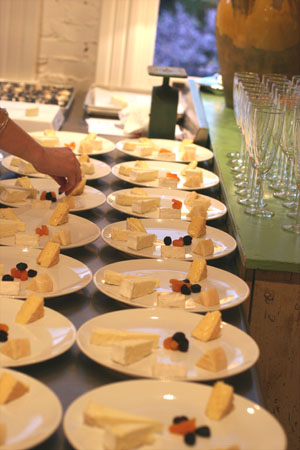 A 4-Step Guide to Sparkling and Cheese Pairings
1. Light, lively cheeses like light, lively bubbles.
La Tur (cow, sheep and goat) from Piedmont Italy, and Crémont (goat and cow) with Prosecco. When you have goat cheese, think light, low-oak, and unoaked sparklings. Proseccos. Cavas. If you don't know if they're low oak or un-oaked, ask your wine salesperson. You can go fruity, but don't go bold and heavy with your wine. Your spunky little goat cheese or milk blends like to shine without heavy oak getting in the way.

2. Richer cremes like richer wines.
Nettle Meadow Kunik (triple creme cow, sheep and goat) and Brillat-Savarin (triple cow) with cremants or Champagnes. Cremants are sparklings made in the Champagne Method that are not from the Champagne region. They age in barrels, accumulate a light creamy, yeasty flavor. Champagnes generally (but not always) achieve a greater creamy, yeasty flavor and have more acidity than cremants. When I'm pairing creamy triples with sparkling, I either go cremant or Champange. Cremants are less expensive, so I often go there. When triple cremes are still clean-flavored and buttery like Kunik and Cremont, you don't need the richness and earthiness of Champagne.
3. Sultry cheeses like sultry, full-bodied, earthy Champagnes.
Old Chatham Nancy's Camembert (sheep and cow) and Bent River Camembert with Champagne. A full-bodied champagne is yeasty, toasty, creamy, earthy, sometimes mushroomy. They replicate what's going on with these cheeses. Sheep's milk cheese? Earthy, buttery, toasty. Camembert? Earthy, yeasty, mushroomy. These are easy pairing matches made in heaven. It's also possible to get an earthy cremant if you don't feeling like dishing out the dough for a Champagne- ask your winemonger, they should be able to direct your choice.

4. Washed rind creamies with rosés.
Rush Creek Reserve (cow) and Pont L'Eveque (cow) with sparkling rosés. This is a pairing inspired by the regional Époisses and Burgundy pairing. The stinky washed rind Époisses is traditionally matched with a Pinot Noir, so when I think of other creamy washed rinds, I let this guide me. A rosés light red fruit goes with the washed rind funk. Most sparking rosés are going to be heavy on the Pinot, but a rosé need not be Pinot Noir to pair well. But it helps.

Lastly, I'm teaching a class at the Cheese School that I'm super excited about. Southern Cheese & Spirits in March. I'm very excited about it. Think artisan cheese, paired to southern beer and .... moonshine. If you're in the SF area, please come! Geek out and feel the moonshine burn with me.
Dairy Farm Animals: A Cute-off
I woke up inspired this morning to share some favorite adorable photos from cheesemaker's dairy farms I visited while traveling for the book. Not of cheese. While taking pictures of cheese is gratifying, one just doesn't experience the same excitement level they do when taking pictures of dairy animals. Cheese is alive, ever-changing, sure, but cheese always holds still. It's cute, but not baby lamb adorable. Then again, it's a heck of a lot easier to get it to hold still for the camera.
 I woke up inspired this morning to share some favorite photos from dairy farms I visited while traveling for the book. But the photos aren't of cheese. While taking pictures of wheel after wheel of fermented milk is gratifying, one just doesn't experience the same excitement level they do when taking pictures of dairy animals. Cheese is alive, ever-changing, sure, but it always holds still. It's cute, but not baby lamb adorable. Then again, it's a heck of a lot easier to get it to pose for the camera.

Here are some of the photos that warm my heart the most. I'd love to hear which ones tickle your fancy too.....I'm not saying that one has to vote on which animal is the cutest (although if one wanted to express their preference, they could leave it in the comment section) because we don't want to hurt the animals feelings, but, umm... one could. It'll be between you and I. The animals will never know if they've been slighted because we won't tell them. If you're not into that sort of thing, than just enjoy the pictures. It's my little ode to the animals that make it all possible.


The Prairies are a Bloomin: Prairie Cheeses
This one is made by Branched Oak Farm in Nebraska. They're an organic creamery run by the Dittman family, and you haven't heard the last about them from me here- I'm featuring another one of their cheeses in my book.
 Prairies here, prairies there, Prairies Blooming everywhere. It seems that every which way I turn these days, I get word of a prairie doing something. Active little buggers. Being the perfect home for succulent, tiny Pinnated Grouses -i.e prairie chickens- in Mark Twain's Feast. Offering mineral rich land for cattle to graze on in places like Nebraska. Offering its name up for a soft cheese called Prairie Bloom. Offering its name up for another soft cheese called Prairie Bloom.
Wait, two creamy cheeses with the same name?
At first I thought my week had gotten to me. On my four days off from my day job managing a wine bar, I wrote an article on soufflés for Cheese Connoisseur and created an original soufflé recipe for their spring issue. I might have gotten a cheese headache from how much I ate for recipe testing (and beyond). I'm writing up my first article for Kinfolk magazine. I had a call with my book agent about promotion and marketing and marketing and promotion (eek) and am expecting my manuscript back any day now (take your time, lovely editor). So, I thought, it was likely that I just thought there were two cheeses named Prairie Bloom because I was overwhelmed. I mean, hey, why, not? It's a great name.
Nope. There are two of them! Plus, another similarly named one mentioned below.
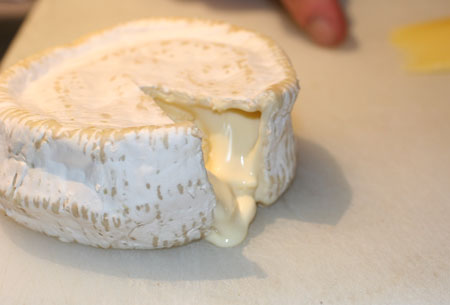
I've only tasted one of them (photo above). This one is made by Branched Oak Farm in Nebraska. They're an organic creamery run by the Dittman family, and you haven't heard the last about them from me- I'm featuring another one of their cheeses in my book. About six years ago they started out as a meat and poultry farm. Then, their CSA members asked them to start selling milk. They did. Next up? You guessed it. Cheese. They fell in love with being dairy farmers and cheesemakers so that that they almost entirely swtiched over from meat production (they only sell chickens now).
Their Prairie Bloom cheese is a camembert style that never fails to charm. It's cow's milk, spreadable, milky, clean tasting, and a little buttery. It's refined comfort cheese. It's going in the cheese club I run at Solano Cellars soon.
But I never tried the other Prairie Bloom from Goatsbeard Farm in Harrisburg Missouri. This one is goat's milk. There's even another goat's milk cheese called Little Bloom on the Prairie from Prairie Fruits Farm in Illinois. Haven't tried that one either.
Have you had a chance to try any of these beauties around you? Or, have you spotted another prairie themed cheese near you?
Getting Our Cheese Recipes On
First things first. People often ask how I come up with recipe ideas. Here goes 1. I get inspired. I eat out. I read cookbooks. I visit farmer's markets. I think seasonally. I read menus. I see what others are doing
 If, unlike me, you've been keeping up to date with this blog, you have noticed that I've been away for a while. Sorry guys. This is because writing my cheese book kicked me in the booty. While I'm sure there's still a little gentle kicking action in my future, the big part is done. I think. I've heard? I'm afraid to ask my editor? At least, I interviewed or visited 40 or so cheesemakers, wrote their cheese up, created 16 recipes, tested them, and turned the first draft in just in the nick of time. I'm seeing a very, very fuzzy light at the end of the tunnel. I've even seen a low resolution draft of my cover (also fuzzy).
When I asked readers and my twitter followers a few months back what they wanted to hear more about on my blog, many of them said that they wanted to hear about the process of writing this book. Well, here I am. Waiting to get my first draft back. Almost hoping that I don't get it back for a month or more because seeing the edits is scary, but knowing that getting it back in two or three weeks means that someday indeed it will be published, and that this is a good thing.

Part of the process of writing the book was recipe testing. The main part of the book is writing- cultural, historical cheesy background about cheese types and specific cheeses, but there are also 16 original recipes, created for a particular cheese or cheese style.
So I thought I'd go into how I created these recipes as part of exploring the book writing process, and include pictures of a testing-tasting party that I threw to get recipe feedback. All photographs were taken by my good photographer friend Molly De Coudreaux, who I would highly recommend for any of your photo endeavors. She takes amazing photos, plus she's just a cool girl to have around. The photos are of recipes that will be included in my book when it's published in November 2012. We'll see if I can pre-publish any recipes here, but I'm not sure how that works in the biz with rights and all that.


First things first: People often ask how I come up with recipe ideas. Here goes:
1. I get inspired. I let inspiration strike anywhere. I eat a lot, at a lot of different places. I think seasonally. I go to farmer's markets. I read cookbooks, magazines, and look at menus. I think about how flavors and ingredients I taste might work with specific cheeses. Again, I let inspiration strike anywhere- if I had a delicious dessert custard that especially touched me, I won't rule it out as inspiration for a cheese recipe just because cheese doesn't often get put in sweet custard.
2. I think about what a specific cheese needs and let it speak for itself. I hold therapy sessions with the cheese. "What do you want?" I ask it. "What would make you happy?" "Do you feel like having a partner would make you more complete, or do you want to go out and experiment and discover things on your own?" I make no assumptions. After tasting and talking to the cheese, I determine whether the cheese would rather be paired to matching flavors or contrasting flavors. This can be apparent right off the bat- if a cheese tastes dead-on like chantrelle mushrooms, there's a fair chance that I'll make a recipe that includes chantrelles. Of course, it can be fun to go the opposite direction too.

3. I ask how I can highlight the ingredient- the cheese- or include the cheese in a fun recipe that introduces the cheese in a new way. One of my favorite people that introduces cheese to people in new ways is Chef Fromager Tia Keenan- girl made white chocolate bacon ganache to pair with Winnimere for pete's sake. That's awesome. So I'll keep some recipes classic, and then get a little fun and crazy with others.

The main point though, is always creating a recipe that lets the cheese shine. Once I think I've done that, I test the recipes. Sometimes they come off without a hitch. Sometimes I have to work on them, testing them anywhere from one to eleven more times. Very occasionally (thank god) they completely crash and burn.

One thing I like to do is make four or five recipes all at once and then invite friends to come over and eat the food. And critique it. If I'm asked to serve seconds, I know I'm doing okay.


How do you come up with your cheese recipes?
A Comeback - A Very Slow One
Working on my comeback here on "It's Not You, it's Brie." I just turned in the first draft of my manuscript last Wednesday and, let me tell you, I had a doozy of a time getting this thing together. More than 45 interviews, 1,032 follow-up questions, lots and lots of writing, testing cheese recipes galore (and tending to a sensitive stomach after sampling about five batches of each cheese dessert I created), and.... less sleep than I would wish for.
While it was crazy, but I had a hell of a time. I feel very, very lucky to have been given this opportunity to meet and write about some fantastic people and their cheeses. Like, amazingly lucky.
That said, I need another week off. Expect to see me more here soon. Until then, check out some classes I'll be teaching at the Cheese School of San Francisco. Cremes and Bubbles for VDay, and Southern Cheese & Spirits because they rock. I'd love to see you there.
Southern Cheeses & Spirits Instructor: Kirstin Jackson | Sunday, March 25 (5:30-7:30pm) | $75
Let’s name the great cheesemaking regions of the US: California, Wisconsin, Vermont,… Georgia? The South is indeed rising again. Creameries like Georgia’s Sweet Grass Dairy, Texas’ Mozzarella Company, and Alabama’s Stone Hollow are turning out great cheese and getting national attention for it. Cheese blogger and wine maven Kirstin Jackson will lead and pair her selections with her favorite Southern spirits.
A Little Behind...
I admit it, I'm overwhelmed. My book proposal is due in under a month and I'm working overtime to wrap it up right. Doesn't help that it's the busiest season of the year at the wine shop where I work. I can't keep up, dear readers. I apologize for my absence. I'm sending you my holiday cheese love as I write this today and I promise to be back as soon as I can. It won't be long. Think good writing thoughts for me. Sending me chocolate works too. In the meantime....
There's a big party going on at Cheese and Champagne.
THE CHEESEBALL INVITATIONAL.....
We're all invited. It promises to be one of the best bashes of the season.