

The Cheese Blog
Behind the Scenes: Montebello ♥s Cali Cheese.
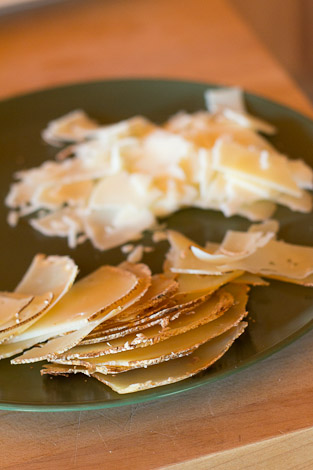 March has been a happily busy month. There was that one week I spent in Alaska, where I had the awesome opportunity to see the aurora, dog sled, meet some of the nicest people in the world (smiles, smiles everywhere), and order 12-oz mocha breves made from half-and-half from multiple drive-through coffee shacks. After returning to the lower 48 states, I curated, ordered, developed recipes for my cheese club, and took pics of the dairy love. Then, of course I had to return to some solid, real work and finish eating that Idaizabal in my fridge from my last post in February. And the Bonne Bouche. And the Alpines. After that very important duty was completed, I tended to a bit more consulting and class work.

In short, March has been full of deliciousness. A highlight? In the middle of the month, this lucky girl got to curate the cheese for Ridge's first session Montebello tasting of 2014. In fact, I'm just going to go out on a limb and say this was the height of March deliciousness- not that mochas made with half-and-half aren't astounding.
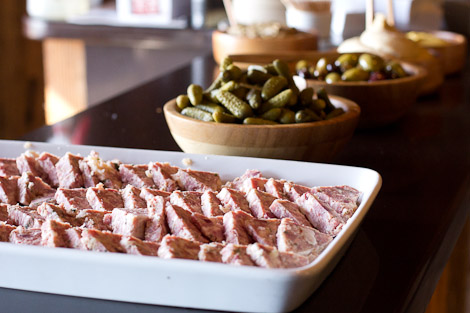
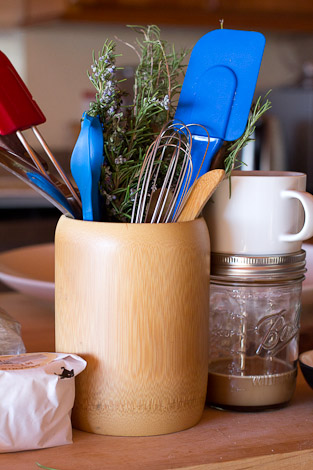
I wanted to include a few behind-the-scenes photos of the event, you know, just in case you were wondering who sliced or crumbled the cheese for the hundreds of Ridge members attending, what Fatted Calf charcuterie looks like before it's demolished, or which cheeses I picked to pair with this year's releases.

This first event - there are two more weekends of events- was the component tasting. That meant we got to taste the Merlot, Petit Verdot, Cab Franc, and all of the other grapes that make up the Montebello blend- solo. Then, a sampling of the 2011 Montebello (most recent release). The next weekend session tasting will be of this year's first take on the Montebello blend. The final weekend session will reveal the final Montebello blend. Customers have chances to buy futures, and other rare releases that just happen to be open that day. My job? To make sure that the cheeses highlight the wine.

The cheeses I picked were all from California- Ridge's rules- and I'd highly recommend any of these cheeses with aforementioned varietals, which have a fair amount of tannins and acidity (bless them) in their youth. Firmer, aged cheeses are the ones to lean on with the big grapes. They've garnered enough complexity during maturation that they can stand up to the wine.
My picks:
Mt Tam: to go with the Estate Chardonnay poured as members walked in. Triple creme, uber luscious, people piled this one on their plates like scoops of ice cream. Truth be told, not much of it made it back to the wine tables.
Barinaga Ranch Basseri- Raw sheep's milk cheese from a Marin ranch overlooking the Pacific. Basque style, brown buttery, with citrus notes. Great with the high acidity and tannins of the Bordeaux grapes.
Central Coast Seascape - A cow, goat blend that members named a gouda-cheddar hybrid. Semi-soft, but creamy tasting with herbal notes. Mild and lively.
Vella Mezzo Secco- A baby dry jack. Rubbed with olive oil and pepper as it ages. This cheese was created when the Vella's customers wanted a cheese that would hold up well in their ice box over the summer.
Do you have favorite cheeses for Bordeaux grapes?
Idiazabal: A story of two smoked cheeses

I was fourteen the first time I tried a smoked cheese. It was a gouda and belonged to my friend's parents who were known for enjoying "cultured" and bohemian activities like going to plays, drinking wine they made themselves, and, my friend told me, even keeping something that may have been marijuana-related in a wooden box under their bed. It was a very exciting night.
We were sitting on a blanket at a Shakespeare in the Park performance the evening of my smoked cheese introduction. When my friend's parents withdrew the delight from our picnic basket while we waiting for Taming of the Shrew to start, I was elated. I first knew it was important based just on its looks alone. It looked nothing like the white cheddars or goat cheeses my parents stocked in our fridge. This one was encased and protected in a bright red rubber coating. And it was European- the label said.
Then I tasted it. Though it was semi-soft, it had a creamy texture that dissolved on my tongue and tasted lightly sweet. It also tasted like smoke. A lot like smoke. Maybe even more like smoke than cheese, which I was pretty sure was a flag of European distinction to which my untrained American palate would later familiarize. To the amazement of my hosts, I finished most of the wedge myself, spreading it over water crackers with the pocket knife that we also used to slice the Pepperidge Farm salami.
Years later I realized that the cheese I savored that night was flavored with liquid smoke. It was the gouda of my childhood. It was, well, not officially gouda either. But, and perhaps also because I sneaked a sip of wine or two from my friend's mother's plastic wine glass that night, that evening still rang as success to me- even years later when I learned of the mass production methods of making that style of cheese for easily charmed Americans such as myself.
Now, however, I'm a little pickier about smoked cheese (not my plays though, sign me up for Midsummer's Nights Dream any night). Now I find that the subtleness of the smoked flavor is often proportional to the cheese's deliciousness.
Idiazabal is one of my top smoked cheese choices. Truth be told, it pays to taste around on this Spanish Basque beauty. Some shops sell ones that taste like they've been smoked in an incinerator- others like they've merely walked past a campfire. I get mine from Cowgirl Creamery (they often ship), who imports a smaller production one than many stores carry, crafted by one producer.
Made from the especially rich raw milk of Latxa sheep, this Idiazabal is layered. It tastes of butter, a little of the Provencal luque olive, and a smattering of herbs. Then there's the subtle flavor of the the beechwood over which its smoked.
I love this on its own, with olives, or fig jam. If you're feeling handy with the knife and have a lot of Idiazabal on hand, chop the cheese into small cubes and marinate with extra virgin olive oil, rosemary, thyme, and crushed whole garlic cloves. It's a perfect appetizer to munch with a glass of dry sherry while cooking dinner.
Have you tried a subtle Idiazabal before? A strong one? What's your favorite smoked cheese?
Chocolate Cherry (or not) Bread with Cheese: Alexandra Cooks Guest Post
 I am honored, excited, and stoked that today's post is not my own. That's right, it is the guest post from Alexandra of Alexandra Cooks that I promised last week. How did this happen? Via Twitter. I saw Alexandra, whose tweets and posts I follow religiously, asking what cheese to pair with chocolate. There was a little back and forth (other lovely bloggers contributed), and I admitted how much I'd love to have her post someday on my blog. After all, I've only been admiring the gorgeous photos, straightforward recipes, and the care she takes in her writing for… oh, I don't know, years. Lucky for us here on "It's Not You, It's Brie," she said yes. Yes! So here goes. If you don't know Alexandra yet, meet one of my top-five favorite bloggers.
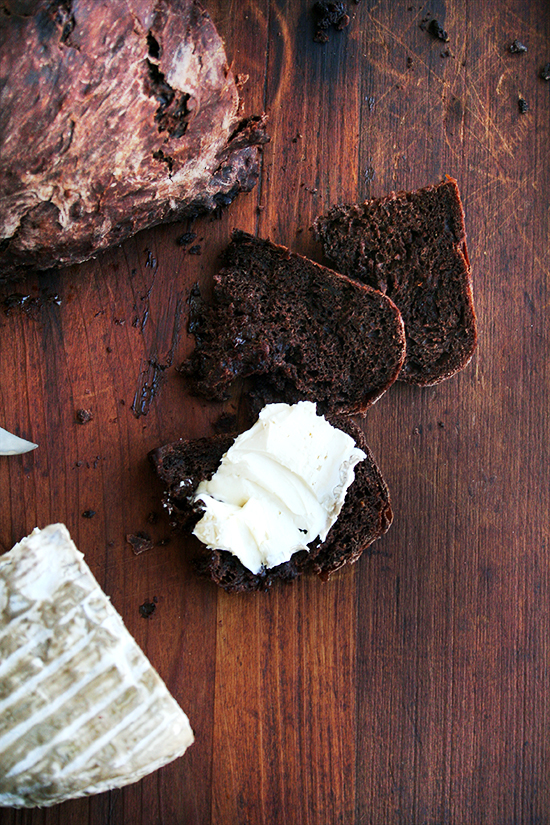
Chocolate Cherry (or not) Bread with Cheese
For most of my time in Philadelphia I lived on South 10th street between Fitzwater and Catharine half a block from Morning Glory Diner. Living this close to one of the most popular brunch spots in the city had its perks, namely that I never had to fight the crowds on the weekend because I knew that on any day of the week I could loaf across the street for a cup of coffee and an order of, among other treats, griddle-toasted chocolate-cherry bread. More than the monkey French toast and the goat cheese frittata, this toasty chocolate bread, made by Philadelphia's Metropolitan Bakery, was what I craved most from this corner diner.
When I left Philadelphia, I found myself longing for this bread and a couple of years ago, after grumbling in a blog post that the Metropolitan Bakery cookbook failed to include the recipe for my favorite bread, a Reader emailed me a link to the recipe online. Flavored with orange zest and brown sugar, loaded with dark chocolate and dried cherries, the bread turned out beautifully.

I have now made the bread countless times, but most recently I've simplified the recipe, which was a little fussy, calling for making a sponge and requiring a few rises including a long one overnight in the fridge. The recipe included here still calls for an overnight rise (outside the fridge), but the mixing process is simple, taking no more than five minutes to whisk together. It bakes Lahey-style in a covered preheated Dutch oven and emerges with a crisp edge and soft, intensely chocolatey crumb. Sometimes I make it with the cherries, but often I don't — I've come to prefer the simple combination of orange and chocolate.
I've always topped this chocolate bread, freshly baked or toasted, simply with a smear of butter, but last week, a Twitter exchange with a few friends, led to a new (for me at least) idea: chocolate bread smeared with cheese. And so, based on a few suggestions from Kirstin and others, I made a four-cheese cheese plate with brie, a chevre with honey, a Humbolt Fog-esque goat cheese, and blue d'Auvergne, and I sampled each with the chocolate bread. Much to my surprise, all of the cheeses — including the blue! — paired incredibly well with the chocolate bread but my favorites were the brie and the honey chevre. And now the gears are turning: what other unconventional cheese pairings might be unsuspecting successes? Chocolate bread panini with honey chevre and lingonberry jam? Chocolate bread French toast with fresh ricotta? Goat cheese gelato with toasted chocolate breadcrumbs? The possibilities are endless. My Valentine's Day dinner menu is promising, at the very least, to be unique. I hope yours is too.
Note: This bread does require planning a night in advance, but the dough takes no time to mix together. The original recipe can be found here. Because dried sour cherries are hard to find, I have been omitting them, but if you can find them, they do add another dimension of flavor and texture. Otherwise, the bread tastes delicious simply with the grated zest and chopped chocolate.
Chocolate-Cherry Bread
Inspired by Metropolitan Bakery's Chocolate Cherry Bread recipe Yield = 1 large loaf or 2 small loaves
14 oz. (394g) all-purpose flour 3/4 teaspoon instant yeast 1.5 oz (42g) unsweetened cocoa powder 2 oz. (56g) brown sugar 1.5 teaspoons kosher salt 1.5 cups (12 oz) water 7 oz. chocolate (a mix of semi-sweet (4 oz) and bittersweet (3 oz.) is nice) 5 oz. dried sour cherries, (optional)
zest of 1 orange
In a medium to large mixing bowl, whisk together the flour, yeast, cocoa, brown sugar, and salt.
Add the 1.5 cups of water and stir to combine. The mixture will be a sticky, wet mass. Cover bowl with plastic wrap or a tea towel and let sit overnight or for 12 to 18 hours.
One hour before baking, place a dutch oven into your oven and preheat the oven to 350ºF. Let the pan preheat for at least 45 minutes.

Meanwhile, roughly chop your chocolate. (You can do this in the food processor if you feel like it.) Roughly chop your cherries (if using). Add both to the bowl with the dough. Zest orange right over top of dough.
Using a spatula, stir ingredients to combine. This might take a little bit of time — there is a lot of chocolate that needs to be worked into the dough.
 Place a large sheet of parchment paper (about the size of a sheet pan) onto a cutting board or pizza peel or something that you will be able to move close to your oven. Turn dough out onto a lightly floured surface. Flour your hands. Working quickly, shape dough mass into a ball, folding the edges of the dough over and under.

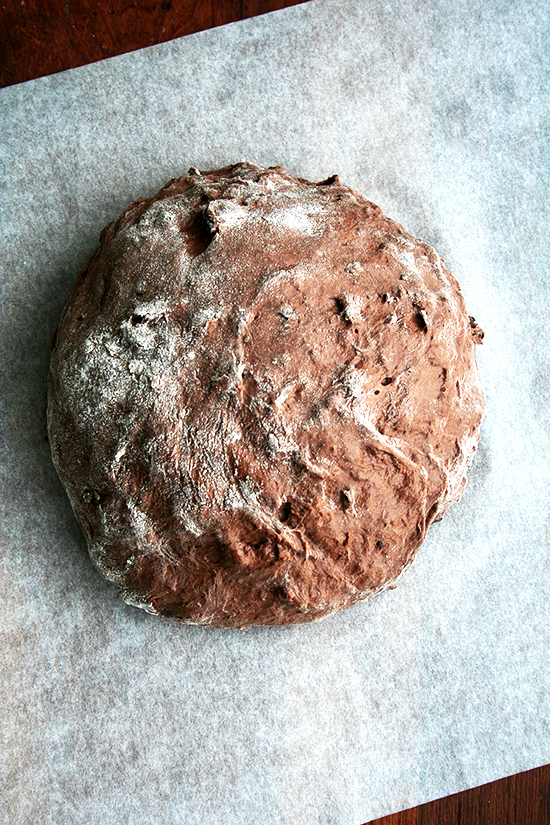
Transfer dough to parchment paper. (Note: At this step, you can divide the dough in half and make two smaller loaves. You also can freeze the dough at this step. Thaw at room temperature for at least 2 hours before baking.)

When your pot is preheated, carefully remove it from the oven and take off the lid. Grab the sides of the parchment paper and carefully drop it into your pot. Return cover to pan and place it in the oven. Bake for 30 minutes.

Remove pan from oven. Grab the sides of the parchment paper again and transfer loaf to a sheetpan.
Continue baking for another 20 to 25 minutes or until the bottom of the loaf sounds hollow when tapped. Cool on rack for at least 20 minutes before serving.


Thank you, Alexandra!
Briar Rose's Lorelei: Goat Cheese ♥'s Beer
 Awakening this blog from a deep winter slumber induced by holiday wine retail frenzy, the launching of my cheese club, backs being thrown out, sneaky asthma, and being caught flightless in New York City during Polar Vortex I (but in what a wonderful place to be caught) is Briar Rose's Lorelei. Could be the best possible way to emerge from hibernation in the history of, well, …. emerging from hibernation.
Lorelei is a beer-washed goat's milk cheese with a rich flavor alternating between bacon and freshly baked, yeasty bread whose texture lends itself to being thickly spread on a baguette. It's named after German river siren with a reputation for luring sailors to their doom (crashing their ships into rocks) with her song (noted, said sailors may have heard wailing wind and also been slightly tipsy).
Ever since I shared a basket of fried pork rinds and a cup of sweet tea with cheesemaker Sarah Marcus in North Carolina at the American Cheese Society conference, I had an eye on this creamery. I had earlier heard about the magic of her goat cheese and chocolate truffles a year or so prior, but because Briar Rose was so small production, I couldn't get my hands on her other cheeses to try in California. Back then she was mainly dealing with fresh goat's milk cheeses, and didn't age any, or as many of her creations.
But now, man oh man does she age her cheese.

Woman knows her way around a cheese cave. The maker of such beauties as Freya's Wheel, Madrona, and Iris, Sarah Marcus launched Briar Rose in 201o in Willamette Valley, Oregon. Before Oregon, Marcus worked at the Cowgirl Creamery cheese shop, and spent time in England learning about Ticklemore (Freya's a beautiful nod to this cheese). She started making Lorelei March of 2013.
It is from local dairy Tideland Dairy Goats from Tillamook, Oregon that Marcus gets her goat's milk. And it is from the alfalfa growing on the coastal hills of Tillamook that the goats get their nourishment. Oh, Oregon goat cheese...
After Marcus gets the milk, she pasteurizes it, adds cultures and rennet, lets it set, then cuts the curd. From there, the curds go into robbiola-style square molds. They're left to firm, then are later salted and put on racks. A week later, she starts washing Lorelei down with Steam Fire Stout from Fire Mountain, a brewery ten miles from the creamery where Brewmaster Henry brews in a garage where he used to build three to four-person planes. Lorelei is doused with Steam Fire three to four time a week for around three weeks, then sent out the door.
I prefer Lorelei older- about six to eight weeks. Its then that it gets a little more sultry, softer around the edges, and easier to spread on a baguette. Marcus loves Lorelei with a beer related to its creation like a stout, porter, or nut brown ale. Agreed on this end too. If pairing with a wine, try with lightly yeasty, but mineral and un-oaked Muscadet made from the Melon de Bourgogne grape from the Loire Valley. Or maybe Harper Voight's Pinot Blanc from Oregon.
Marcus's cheese can be found around the west coast, in select stores nationwide, and ordered directly from the source.
Next posts- upcoming events, and.. a guest post from the wonderful Alexandra Cooks!
Pacific Northwest Cheese: A History
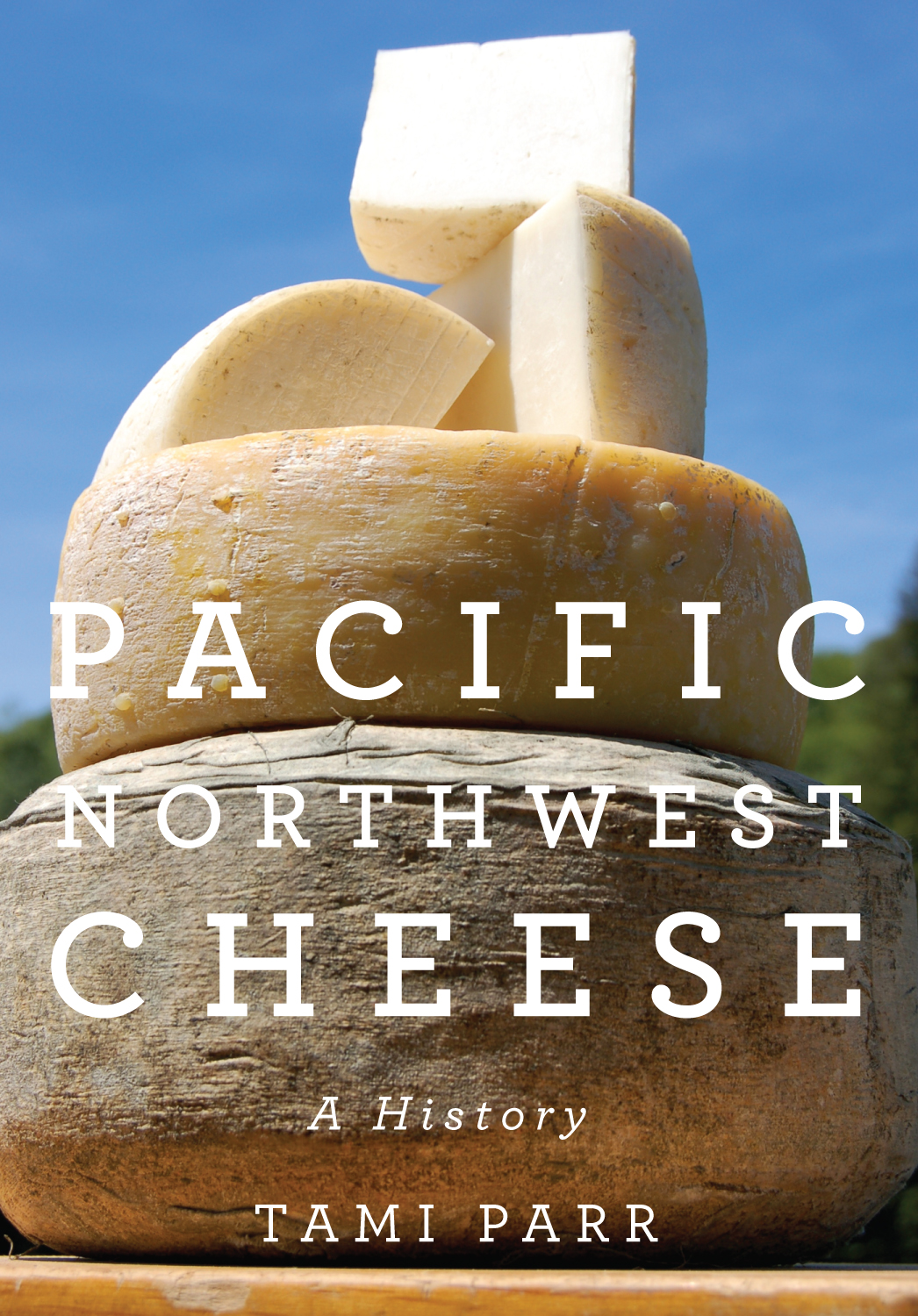
Tami Parr's new book, Pacific Northwest Cheese: A History, is a read fit for history buffs, cheese geeks, and anyone who appreciates research that connects things as seemingly distant as the onset of tuberculosis to the rise of dairy goats in Oregon. It's the type of book that would compel those who loved Cheese and Culture: A History of Cheese and its Place in Western Civilization, or a reader that would seek out a 1970's copy of The World Atlas of Cheese (yup, that's me). Put it on the list for your cheesemonger friends.
Parr sets the scene with a chapter tracing pioneers's treks to the Pacific Northwest, connecting the journeys to the Lewis and Clark Expedition and government pushes to populate the resource-rich region. The first milkings begin, in fact, along the trek, when Parr notes that the rocking motion of the pioneer wagons meant hands-free churned butter. Dairy for early Pacific Northwesterners meant survival. Milk was quickly turned into butter or fermented into cheese so the milk wouldn't spoil. It wasn't until later that it became an industry.
One of my favorite parts of the book was Parr's exploration of goats. I've always found Oregon and Washington's goat cheeses to have a je ne sais quoi, a certain vivaciousness and depth to them that suggests they've been doing it for a year or hundred years longer than the rest of the country. According to Parr, this is true. The region always welcomed dairy goats, especially during the bovine tuberculosis scare, the milk flourished here during world war rationing, and the animal stayed on and thrived. Those mountains are great climbing fun for our chèvre friends, too.
Parr covers Cougar Gold (quite possibly the only tasty canned cheese in the world), the invention of rindless cheese, Oregon and Washington's attachment to blue mold, and the start of the artisan cheese back-t0-the-land movement in the area.
Though it might seem a bit dry at times for readers attached to lots of metaphors and colorful similes, Paar is a very good writer and skillfully sums up a wealth of research in a way that would make many academics jealous. And as with the butter churning bit above, she's not opposed to sprinkling her findings with the fun facts of early cheese life, such as those detailing the duties of an early cheese cooperative inspector.
"One of Christensen's first tasks," says Paar, "was reportedly weeding out the heavy drinkers among the cheesemakers and substituting sober ones- a move that no doubt had an immediate positive effect on the quality of the region's cheese."
I also like that Paar notes emerging styles and non-Euro focused cheese makers like the Ochoa Family in Oregon and doesn't shy away from talking about the colonization of the area, even as it relates to dairying.
All in all, I would highly recommend this book for those ready to dive into the deep subject of cheese or Pacific Northwest history. It, and a wedge from a modern artisan producer she discusses in her book, like Briar Rose, Juniper Grove, or Tumalo Farms, would make a caseophile very happy.
Parmesan foam with pears and hazelnuts
 In the middle of Turkey Month, otherwise known to some as November, I had the good fortune to be invited to a Parmigiano Reggiano event called Parmigiano Reggiano Academy. At first I wasn't sure I could go. I mean, I was busy researching shipping logistics and fine tuning details for the launch of a particular cheese club (ahem, read here!), trying to work with chefs schedules for writing articles, and, selling wine for Turkey Month at the shop whose wine bar I manage. I was a tad zonked. But then I thought, if I can't take a break for Parmigiano Academy, who am I, really?
If I said no to a night of wine pairing, eating, and tasting the difference between 12, 18, and 36 month-old Parm, I was sure the people handing out cheese geek cards would ask me to turn mine back in. A bigger fear was that they would ask me to turn back in the cape and leotard I plan to wear to CheeseCon (i.e. the American Cheese Conference). So,... I said yes.
And it was delicious.
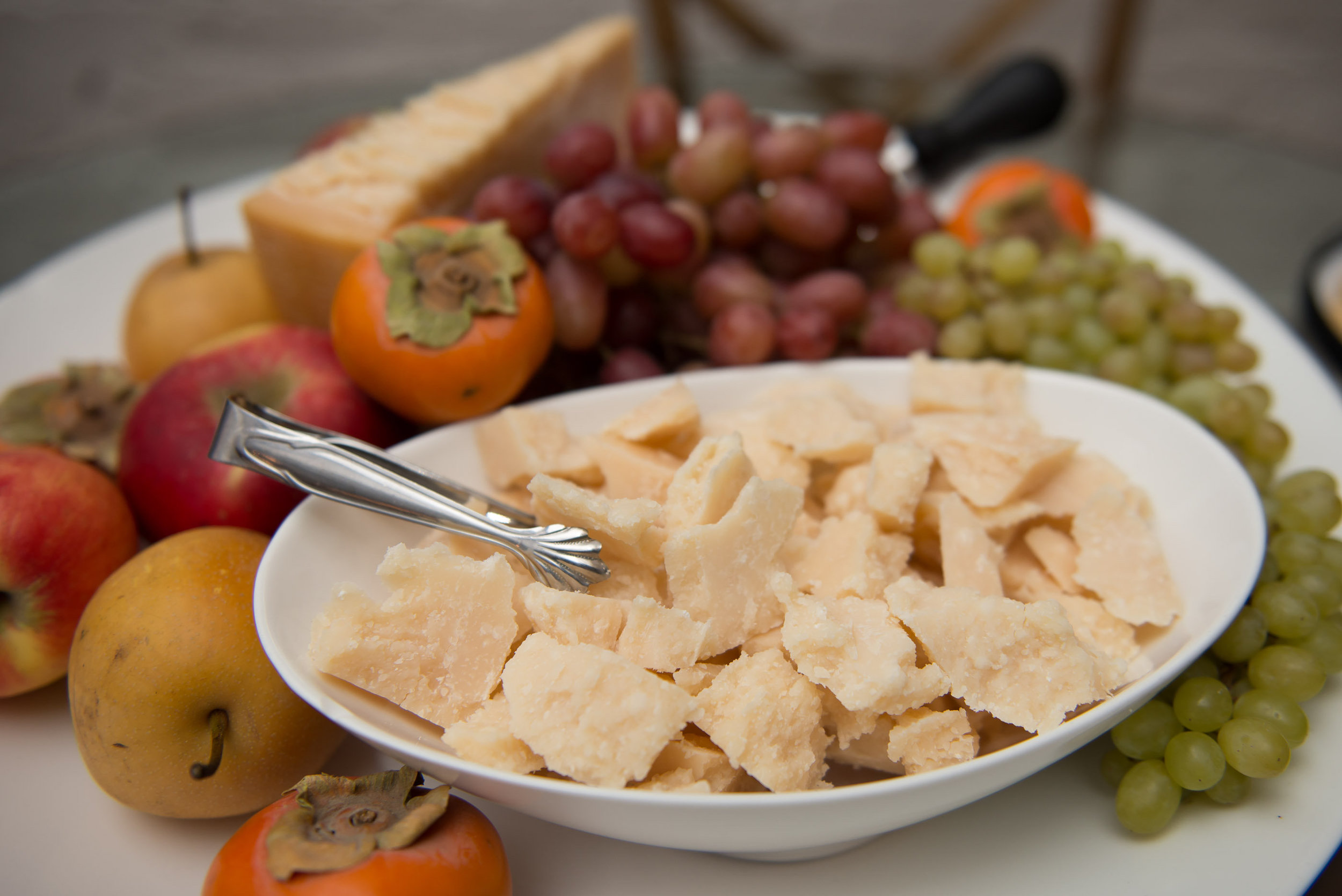
My favorite part of the event was the eating. Drinking- also lovely. I arrived, was handed a glass of wine, and we were sent around tables to explore the different Parm ages. I may have hit one table three times.
And then they passed the hors d'oeuvres. Cue holiday party.

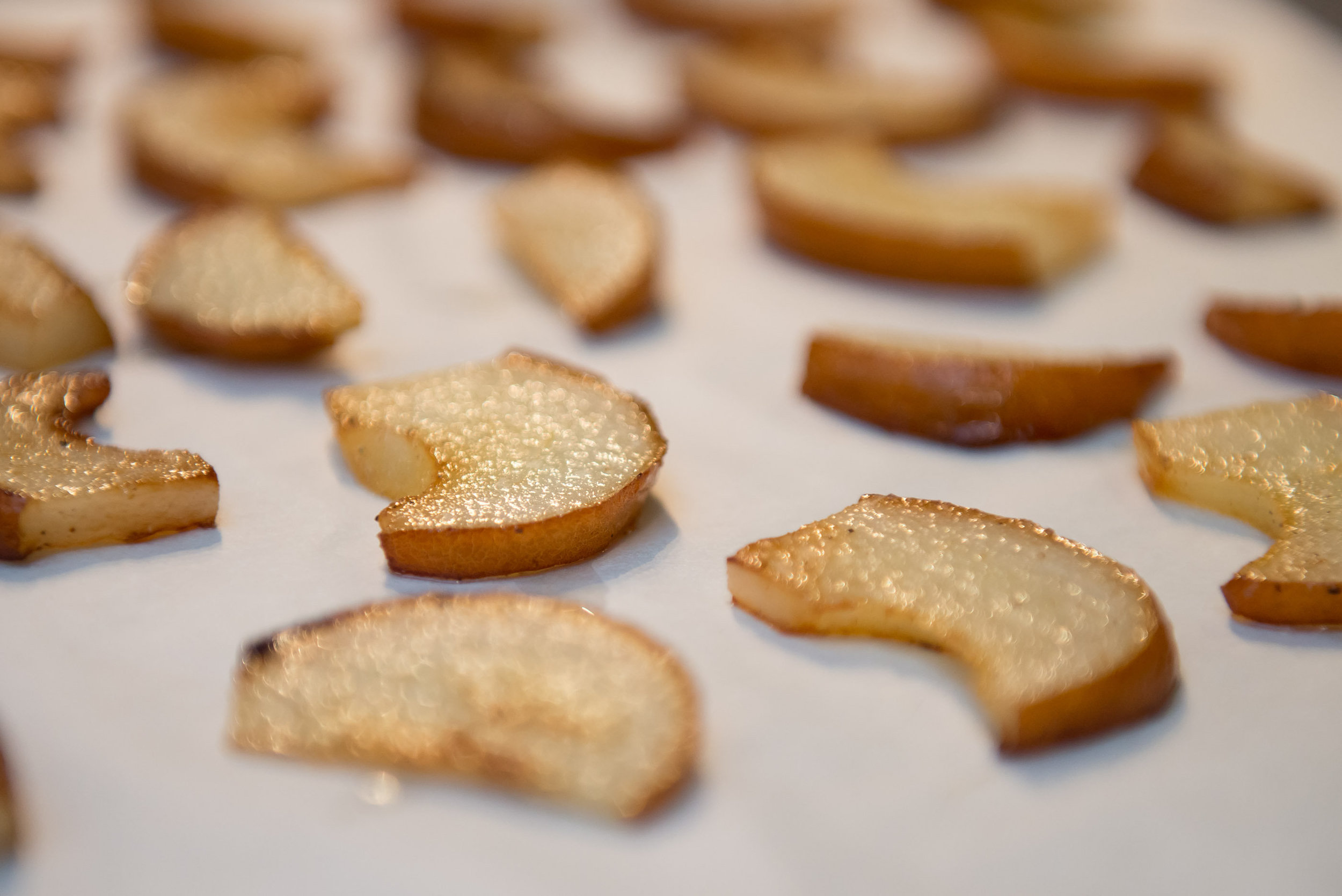
Chef Jordan of Jordan's Kitchen created three dishes for the night. My favorite, and my Facebook and instagram followers favorite (says the "like" buttons), was sliced pears, rosemary, hazelnut, and parmesan foam.
This would be a fabulous dish for a holiday party served while people are walking around with a glass of sparkling in their hand. Chef Jordan served it in a ramekin, but I think I might serve it in a shooter glass, and small dice the pears after searing so a spoon isn't needed.
Thank you Parm Academy and Chef Jordan for sharing the recipe! Winter parties are calling.
Sliced pear with hazelnuts, rosemary and Parmigiano foam
2 pears, ripe but firm to the touch
¼ cup hazelnuts, toasted and chopped
1 ½ teaspoons rosemary, very finely chopped
2-3 tablespoons Balsamic vinegar
4 tablespoons Extra Virgin Olive Oil
Salt and freshly cracked black pepper to taste
Foam
1 cup cream
1 cup milk
2 cups Parmigiano, coarsely grated
Pinch of nutmeg
Pinch of freshly cracked black pepper
¼ - ½ teaspoon salt
1 teaspoon soy lecithin (INYIB note- deemed optional, but helps keep smooth, if don't use, make as close to serving as possible)
In a saucepan combine the cream, milk, cheese, nutmeg and black pepper and bring to a simmer. Simmer until the cheese is completely melted. Pour the mixture into a blender and puree until smooth. Strain the cheese sauce and season with salt to taste. Measure one and one half cups of the cheese sauce and return it to the saucepan. Stir in the soy lecithin and keep warm (INYIB note- soy lecithin is optional, but helps keep sauce smooth, if don't use, make as close to serving as possible).
Halve and core the pears and then slice them into one-quarter inch pieces (you should have about twenty four slices). Heat two sauté pans over medium heat and coat them with olive oil. Cook the pears on both sides until golden brown, about two minutes per side. Season with salt and black pepper to taste and remove to a paper towel to blot any excess oil. Using a hand held immersion blender, froth the cheese sauce until a nice, frothy foam develops. In a shallow bowl plate a teaspoon or two of the foam and top with a piece of the pear. Using a pastry brush, glaze the pear with a touch of Balsamic vinegar and top with chopped hazelnuts, and a pinch of rosemary.

All photos by Stephanie Secrest.
Lastly, have you heard I launched the "It's Not You, It's Brie" cheese club with Scardello Cheese? True story. Read more here.
Cheese Club: "It's Not You, It's Brie" Launches, Ships
 Today is a day that I've been looking forward to for quite a while, dear readers. As I sit down to write this, I have a huge smile on my face, butterflies doing happy dances in my stomach, and a lightness in my heart from finally being able to share something I've been working on for a very long time. After months of navigating the details, guestimating how much space three pieces of cheese and two ice packs take in various box sizes and waiting for insulated sample after sample to test my theories, spending hours on the phone with shipping companies, and finding the perfect cheese shop to do the cheese care, packing and shipping work for me, I am launching my first shipping cheese club.
That's right. As of December of 2013, the "It's Not You, It's Brie" Cheese Club is going live. Scardello Cheese and I have been working on the details of this for quite a while to make sure everything is perfect, and we're very excited to announce that it is live and kicking (and delicious). I hope you will join me in my cheese explorations!

The Club.
If often distracted with thoughts of an aged sheep’s milk cheese drizzled with chestnut honey, pairing that triple-crème in the fridge with a Blanc de Blancs, or the liveliness of the Texas queso blanco you stuffed with sage into butternut squash last week, then we have the club for you.
Kirstin Jackson, cheese and wine educator, and author of the book and blog “It’s Not You, It’s Brie,” and Scardello Cheese are joining forces to create a monthly cheese club that promises to nurture your inner cheese child (or that of your favorite cheese geek).
Every month, Kirstin will pick three of her favorite artisan cheeses from around the world and a condiment or side that highlights one of the selections, and write about them and their pairing preferences in the lively style found in her book and writings for LA Times and NPR. Scardello will lovingly package the selections and descriptions, and ship them from their home in Dallas to yours. After the club is shipped, members will receive an email from Kirstin divulging more information about the cheeses, their makers, photographs, and an original recipe for one of the cheeses the club. This club could be the most delicious thing you’ve found greeting you once a month on your front porch... ever.
Through teaming up with Scardello, who has a reputation for shipping artisan cheese in prime condition, Kirstin’s happy to have the opportunity to introduce enthusiasts to the favorite cheeses she’s found through her mongering, writings, and traveling.

If you sign up for the cheese club in November or December, I will send you or your beloved giftee a note expressing holiday wishes that lets them know that their first shipped club will arrive in January (pick-ups at Scardello start December). If you sign up for a twelve months worth of the club, I'll also send you or your giftee a complimentary signed copy of my book.
Quick Details:
The It's Not You, It's Brie Single Share Club: club is priced at $46, plus packaging and shipping, and includes around a pound of cheese and a condiment.
The It's Not You, It's Brie Share the Love Club: club is priced at $66, plus packaging and shipping. It includes around a pound and a half of cheese, and two portions of the side or condiment. This shared club is intended to offset the price of shipping to two separate parties who live in close proximity, or infuse a cheese lover’s life with a half pound more cheese for nearly the same price to ship one. It will be shipped in one package and can be wrapped for one or two parties.
Unless located in Texas or Oklahoma or picking up at Scardello Cheese in Dallas, Texas, all clubs will be shipped via 2-day Fed Ex. There is a three month minimum subscription.
Have any questions? Email me at itsnotyouitsbrie@gmail.com. Want to join the club?
Email cheeseclub@scardellocheese.com.
The Details… Every Club:
- Includes: Three stylistically different and delicious individually wrapped artisan cheeses and a tasting portion of a condiment or side such as Georgia peach preserves, or cornmeal and anise crackers to pair with the cheeses. One of the club cheeses will be ripe and ready as soft heirloom tomatoes in late July, and the other two will hold happy in your fridge for a couple weeks.
- Packed with the club: Kirstin’s lively and unique descriptions detailing the cheeses, what to pair them with or how to treat them in the kitchen. Sent in an email once shipped: more information and photographs highlighting one or two of the cheeses and its maker, and a simple recipe for one of the cheeses.
- Excepting Texas and Oklahoma clubs, clubs are shipped with Fedex 2-day on the second Tuesday every month. Club members are automatically charged for the club before shipment and sent an email with tracking information notifying them when their club has left Scardello. Members are encouraged to return the packaging with the return-shipping label included in with shipments for use in the next club to reduce packaging costs. Dallas residents have the option of picking up their clubs at Scardello.
- Members can sign up to receive clubs every month, or every other month. There is a three-month club minimum, and please email Scardello to estimate shipping and packaging costs.
Disclosure: The cheese will be sourced and packed with the utmost care and experience by Scardello, and will arrive on your doorstep in optimal condition. Scardello does not accept responsibility for the condition of the cheese if not put the refrigerator on the day of arrival.
Have any questions? Email me at itsnotyouitsbrie@gmail.com. Want to join the club? Email cheeseclub@scardellocheese.com.