
The Cheese Blog
Considering a Career in Cheese? 5 Jobs from Monger to Maker

If you are one of the obsessed cheese lovers (like, you read cheese books instead of novels in bed) who are considering leaving your stable job behind to devote yourself to a life of spreading the cheese gospel, but are unsure of your options...
Here are 5 Career in Cheese Options for your consideration.
The first time I officially worked with cheese was when I arranged a slice of Morbier next to Dolce Gorgonzola on a cheese plate when working the dessert station in a San Francisco kitchen about 18 years ago (omg my 20 year high school reunion is this October). Things have changed a little since then. Not only has the number of artisan cheesemakers skyrocketed, the number of people aching to pack their fridges with cheese has soared, and so has the number of jobs to sell that cheese to them. Or to make it. Or to teach them about it. The industry is ripe right now, my friends.
But which job or career in cheese is for you?
If you've been dreaming of starting your own creamery, opening a cheese shop, mongering, or teaching, but are confused about which direction to go in, read below. To help you dig a little deeper, I sum up the pros and cons of 5 of themost commonly coveted careers in cheese. Some I've worked myself, others I've seen people working close-hand, and others I've learned about because I've considered them too. Read before you leave your desk job, and happy cheesing.
5 Careers in Cheese: Pros & Cons


1. Cheesemaker:
As Anthony Bourdain said “You have to be a romantic to invest yourself, your money, and your time in cheese.” Nowhere is this more true than being a cheesemaker. If you own your herd, expect to have to milk them at 4am and 7pm. If you don't, expect to obsess over the milk anyway. Expect long hours, heavy lifting, following set sanitation rules to a T, frequent and surprise food and safety checks by the FDA, cleaning making up more than 60% of your day, learning a lot of chemistry, no vacations for years, and talking more about acidity than a than a vinegar maker. The pay is low and opening your own creamery will be more expensive than raising a child. But expect to feel extreme feelings of love when you get it right and see your cheese baby age from infancy to maturity, and by knowing you're connected to a noble tradition that goes back thousands of years. You will also develop impressive arm muscles.

2. Cheese Shop Owner:
Cheese is expensive but margins are low. It's not only hard to break even, it's hard to convince people to pay for farmer's and cheesemaker's love, sweat, and tears in the form of fermented milk. But once you do,..... ah!!!!! It's heaven. And while you may not be able to pay yourself a salary for years, you get to write off cheese travel as a business expense. Expect to spend most your time on your feet behind a counter or on excel spreadsheets or cleaning cheese wires and grating machines more than thirty times a day, and prepare to work holidays for the rest of your life and to cry when doors shut on the day before Thanksgiving because it's finally over. The trick is diversification (sell condiments, books, classes), and giving people what they want until they trust you. Oh, and finding good employees that love cheese as much as you do and doing everything you can to get them to stick around. Speaking of which....

3. Cheesemonger:
Cheesemongers help the world go round. But they don't get paid much (be nice to them). You get to eat insane amounts of cheese, meet makers, and help customers ease their way from being Fromage D'Affinois lovers to funky Époisses dreamers. Like when owning a cheese store, expect to spend most your time on your feet behind a counter or cleaning cheese wires and grating machines, and prepare to work holidays and to cry at when doors shut on the day before Thanksgiving because it's finally over. You also have to talk to a lot of people. Cheesemongers are awesome people though, and I think every career in cheese should include a stint as one. You learn so much, and there is an opportunity to compete in this.

4. Cheese Importer/Distributor:
Whew. Lots of competition, and have you seen how confused the FDA is about European cheese shipments these days? Prepare to wait a very long time for some of your stock to arrive. Plus, shipping and distributing cheese in college should be its own major. Think barges soaring across the ocean, trucks driving from NY to CA (all Euro cheese arrives to NY then gets sent west), arranging in-city-transport, and making sure as little cheese goes bad before this is all completed. And you really have to network. But... you get to meet and visit cheesemakers all over the world, and you will always have enough cheese at your fingertips to make fondue. And a cheese sculpture. And a cheese plate. And mac n'cheese. Or,.... you could just work for a cheese importer or distributor.

5. Cheese Educator:
Love it. It's gratifying. I learn every time I teach. I love my students. I eat amazing amounts of cheese and get to take pretty pictures of it. It also requires a lot of background knowledge and there is a lot of competition. That's to say... it takes tons of work to make it pay the bills, so plan on piecing this together with something else to make a career in cheese if that's what you want. But it's so fun! In addition, know your role as facilitator can alternate between being a cheese expert, a chemistry teacher, a cat herder (yup, alcohol is often involved), a caterer (you have to lug a lot around), and an entertainer.
Want to hear more? If you're interested in learning about more careers in cheese, I'm happy to oblige- email me at kirstin@itsnotyouitsbrie.com, and check back for interviews with these folks below here soon.

Chèvre, Coconut & Guava Sandwich Cookies from Shortstack Chevre

If you've ever searched for a killer goat cheese recipe online- say you've already made that chèvre and arugula salad and are aching to put the extra six ounces of the log to tasty use, you'll likely have noticed most chèvre recipes are savory. That is to say, not sweet. Beet and goat cheese salad. Chèvre and quinoa bowls, you get the picutre. Which might lead one to believe that that's all chèvre is good for.
Not true.
While I would never turn down a goat cheese tart, my hands-down favorite way to enjoy chèvre (fresh goat's cheese/goat's milk fromage blanc) is sugared up.

When sweetened with sugar, dark chocolate, fruit, or honey, chèvre transforms whatever dish into which its incorporated into a bright, luscious, sunny dish. Its lemony notes help lift sweet and rich creamy desserts to lighter places, bring out layered notes in chocolate, and add a subtle creme fraiche or buttermilk flavor to baked goods.
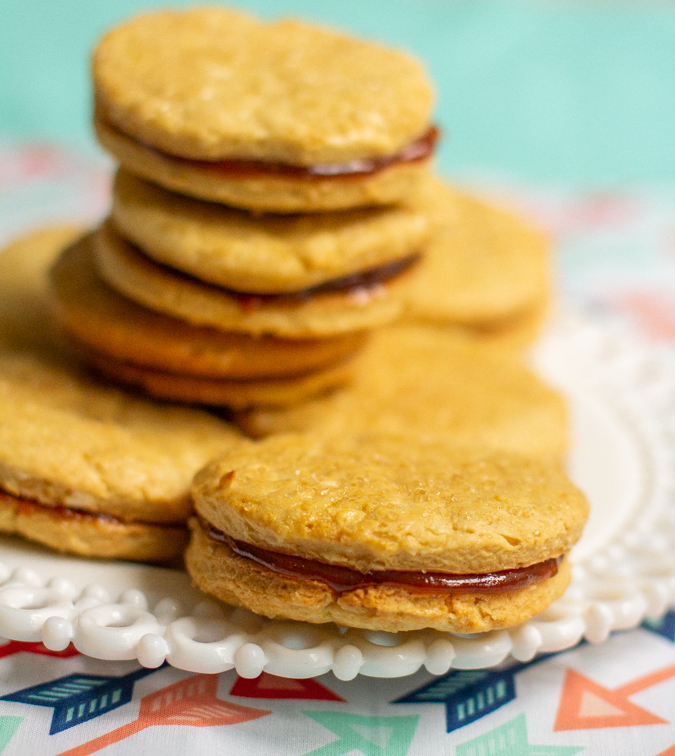
So I'm very happy to share with you Tia Keenan's Chèvre, Coconut & Guava Paste Sandwich Cookies from her latest cheese book- Chevre- a slim yet dense Shortstack book.
Now my friend Tia is skilled (she opened Caselulla and Murray's Cheese Bar in NYC), so it's not the only recipe I'm batting my eyelashes at, but it was the first one to scream "make me now," or to put it more accurately, "eat me first." When Tia describes the recipe in the intro and says the chèvre gives the cookies a buttermilk biscuit flavor rather than a chèvre flavor, she's spot on. I might even try them with an extra thin layer of chevre spread over the guava if I was serving them to a fierce goat cheese crowd, but they're charmers as is. I served them at a Memorial Day party, and they off the cookie plate fast. And I brought my friend and her husband two for a treat and my friend ate them both. I did not tell her husband.
Thanks for sharing these Tia! The recipe follows. Buy the book here for more chèvre love.
Chèvre, Coconut & Guava Paste Sandwich Cookie Recipe
These hearty, biscuity sandwich cookies are best with a big ol’ mug of milky tea or coffee. The chèvre lends a buttermilk biscuit twang to the cookie, which is a nice contrast to the sweet filling made from guava paste. Guava paste is the working-class cousin of cheese-plate-stalwart quince paste—and a more affordable and readily available fruit paste for pairing with cheese.
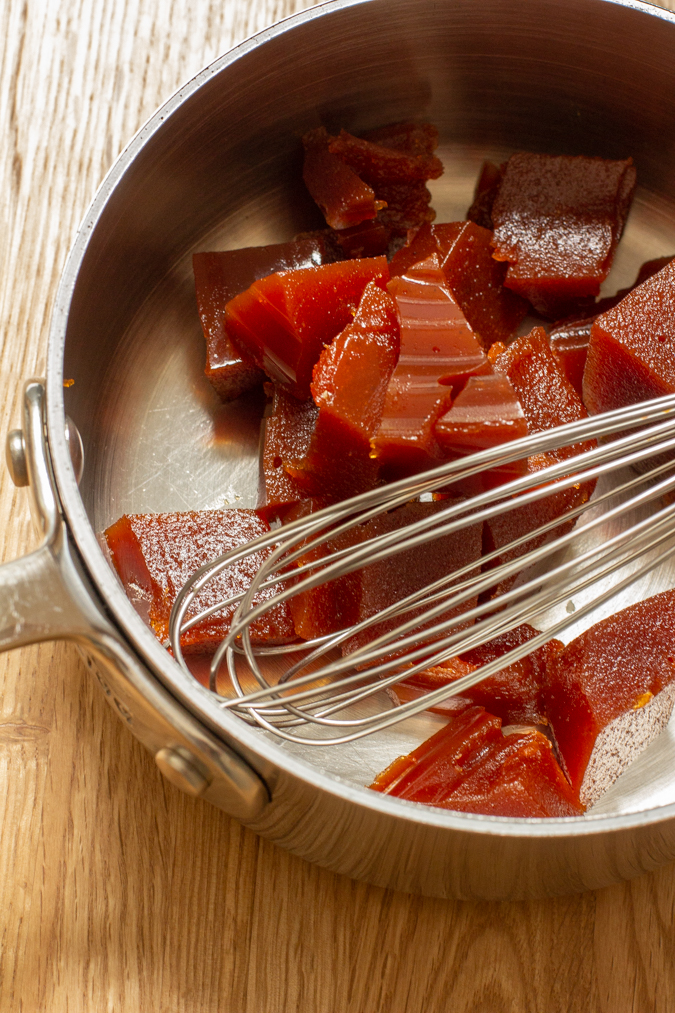
3 1⁄2 cups cake flour, plus more for rolling out the dough 1⁄2 cup granulated sugar 1⁄2 cup packed light brown sugar 2 tablespoons baking powder 1 teaspoon baking soda 11⁄2 teaspoons kosher salt 4 ounces (1 stick) cold unsalted butter, cut into cubes 6 ounces chèvre, crumbled 1 cup unsweetened coconut flakes 1 egg 1⁄2 cup heavy cream 2 teaspoons demerara sugar 16 ounces guava paste (such as Goya brand; available at super- markets), cut into 2-inch cubes
Preheat the oven to 425° and place racks in the upper and lower thirds of the oven. Line two baking sheets with parchment paper. In a food processor, combine the flour, granulated and brown sugars, baking powder, baking soda and salt and pulse to combine. Add the butter, chèvre and coconut and pulse until the mixture resembles coarse meal. In a small bowl, whisk together the egg and cream; set 3 table- spoons aside in another bowl. Add the remaining egg mixture to the flour mixture and pulse until the dough begins to pull away from the sides of the bowl.
Turn the dough out onto a lightly floured surface and knead gently to bring it together. Roll the dough flat to a 1⁄4 inch thickness and cut out rounds with a 21⁄2-inch cookie cutter or rim of a drinking glass. Place the cookies 1⁄2 an inch apart on the baking sheets, 16 cookies per sheet (you’ll have less than that for the last sheet and will need to bake in 2 rounds for 4 sheets total).
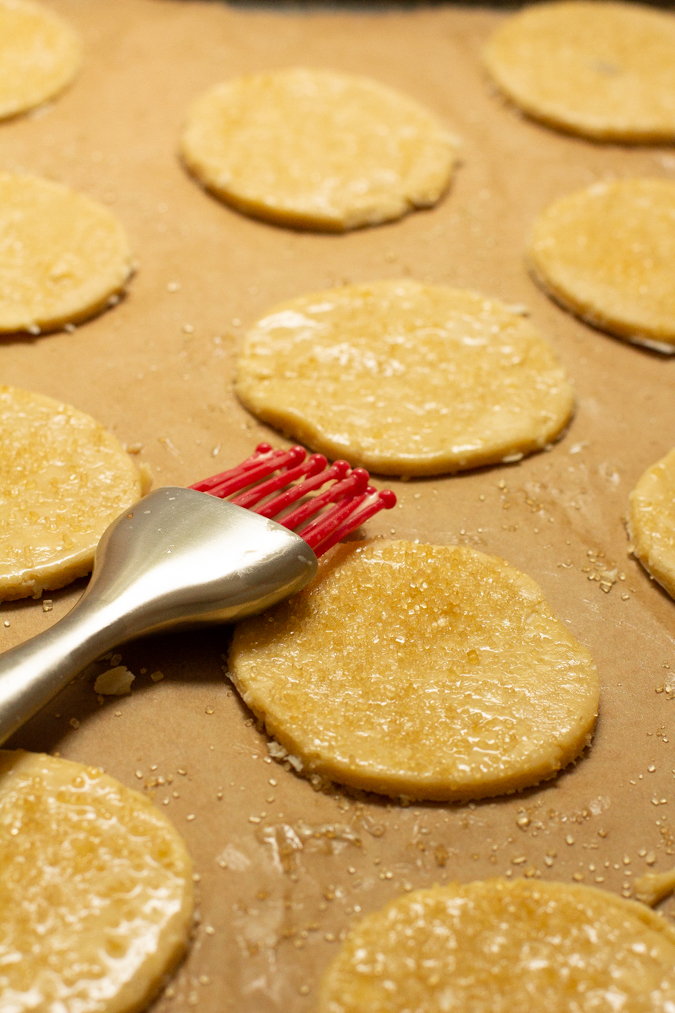
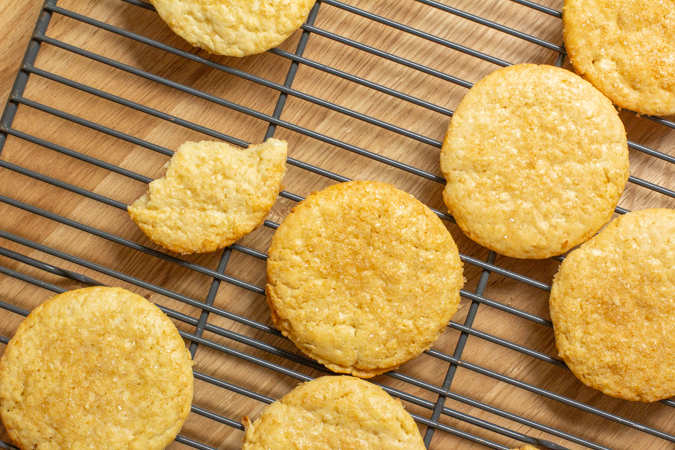
Brush the cookies with the reserved egg mixture and sprinkle with the demerara sugar. Bake for 10 minutes, rotating the sheets between the upper and lower racks halfway through baking, until the cookies show just a bit of color. Let the cookies cool on the baking sheets for a few minutes, then, using a spatula, transfer them to a cooling rack.
Place the guava paste and 1⁄4 cup of water in a small saucepan. Melt the paste over medium heat, stirring occasionally at first, then more frequently as the paste melts, 15 minutes. You will need to stir vigor- ously, forcing out any lumps in the last minutes of cooking.
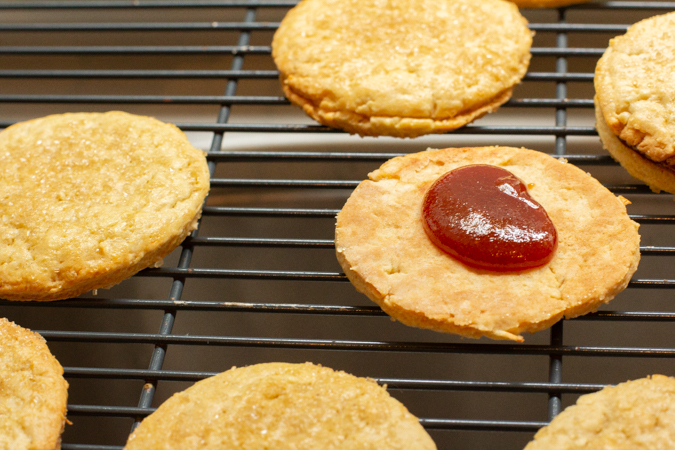
Drop a 1⁄2 teaspoon of the hot filling onto the bottom half of a cookie, then place another cookie on top of the filling to make a sandwich (if the filling cools and gets stiff before you finish assembling the cookies, reheat the filling to make it easier to work with). The cookies will keep in an airtight container for up to 5 days.

Reprinted with permission from Short Stack Editions Vol. 33: Chevre, by Tia Keenan (shortstackeditions.com).
What Makes Cheddar Orange? Or, When I Met Annatto in Jamaica

The most common question I get in my classes besides "when did you become so obsessed with cheese?" is ...
What makes cheddar orange?
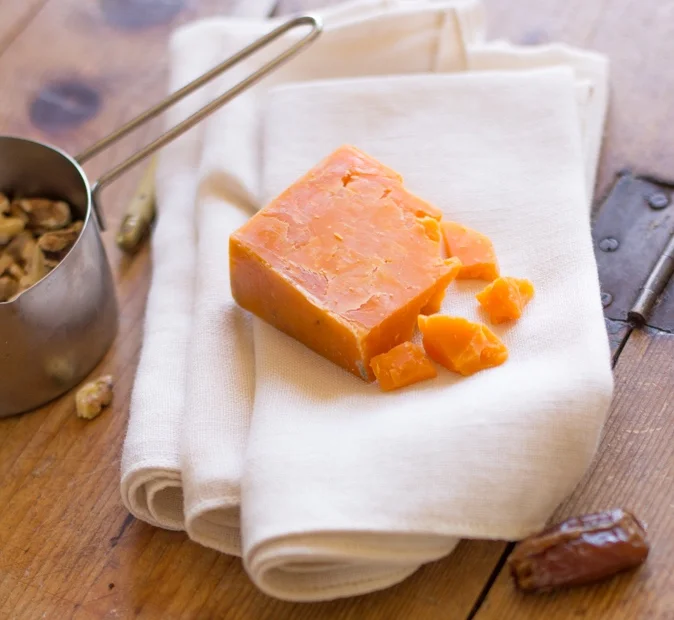
From the neon-orange blocks chilling on grocery store shelves to the farmhouse wedges like Fiscalini's bandage wrapped cheddar in gourmet shops, cheddar ranges in hue from vivid tangerine to creme brûlée. But the majority of the cheddar that Americans grew up with was as orange as the Vermont leaves tourists flock to view in autumn.

Let's take a brisk stroll down the path to orange-dom.
Back in 17th century England, a few thrifty cheesemakers dyed their cheddar orange to imitate the hue of aged cheddar made with the milk of cows who grazed summer pastures. If animals are eating the best of summer fields- herbs, grasses, and wildflowers- the high doses of beta-carotene in what they're munching on turns their milk a buttery hue. When aged, their cheese turns deep yellow. Because English Jersey and Guernsey cow's milk from which Cheddar was originally made is especially rich and beta-carotene sticks to butterfat like a five-year-old does an ice cream cone, sometimes that cheddar turned orange!
When English cheesemakers realized they could make higher profits by skimming the cream from milk, using the cream for butter, then making the leftover low-fat milk into cheese that resembled delicious summer cheese if they added orange dye, tricksters did it. It sold. Many American cheesemakers followed suit. But slowly, consumers realized something was missing- butterfat and flavor- and sales dropped. Though the success of the heist wasn't long-lived, the effect of the coloring was.
Dying cheddar-milk stuck, and most big American companies continue to dye their cheese to this day. To add a little extra spin, Wisconsin cheesemakers often dye their cheddar, they say, to differentiate their wedges or curds from cheddar around the rest of the country.
But what exactly makes cheddar orange?

Annatto.
Among all the natural dyes available, annatto quickly became the fave. A tropical bush or short tree, annatto loves growing in humid, hot, damp locals close to the equator.
Have you ever seen the plant in person? I hadn't until recently. Yup, that meant when I told students that annatto made many cheddars orange, I had no idea really the fruit looked like.
This all changed when I went to visit a friend working in Jamaica (she worked, I vacationed) and we went on a eco farm tour to a working coconut farm that grew mainly native Jamaican plants so tourists could see what the land was all about. I'd highly recommend Sun Valley Farms ecotourism tours- think nutmeg and banana trees, coconuts, vanilla, jicama, soursop..... and yes, you get to taste most of the them.

And just like that, I met annatto.
Annatto is awesome. With the power to stain skin as easily as cheese, annatto can also be used as a lipstick, or to tint cheeks. The farmer made his fingers red simply by rubbing the seed. I can see why the power of the seed quickly popularized.
The pulverized powder is known in Mexican cuisine as achiote and can be found gracing dishes like the red-skined achiote-rubbed pork, and to add vibrancy to chorizo. Eaten solo, it's a bit peppery and sweet. Mixed in with cheddar, it's either undetectable or slightly... annatto-ish (ahem, sorry).
Now most smaller producers who dye their cheddar use annatto, and larger ones do their own thing (another type of natural cheddar dye that some bigger commercial creameries use is here).
Long live cheddar, and may all of us one day have the opportunity to rub our fingers on the annatto plant.

Making a Mother's Day Cheese Plate? Turn it up to 11.

If your mom is anything like my mine, she'd appreciate a Mother's Day cheese plate that rocks the dairy boat.
She'd like a Mother's Day cheese plate that was so unusual she'd have to ask twice if the cookies really were supposed to go with the cheese (yessss, Mom). One that featured fermented vegetables and preserved fruit. One that let her enjoy the many layers of her favorite cheeses in ways she never had before.
For Mother's Day, turn your mother's cheese plate up to 11.
Of course you can build a simple plate packed with cheese, and maybe a little honey or dried fruit. But a more contemporary option is pairing cheeses that you know your mother (or the mother-figure in your life) adores to exciting sides and condiments that she'd never cozy up to her favorite wedges on her own. Do the daring leg work for her.

My mom (isn’t she cute?)
Should you be afraid to go bold in your pairings? If you reach out of bounds, will flavors get too extreme or clash?
No, and maybe. In case you're wondering, I can now speak from with confidence that dried mango with chili powder does not play nicely with cheese. Play around after Mother's Day- here are some pairings that are good-to-go now
Tried and tested, these are my picks!
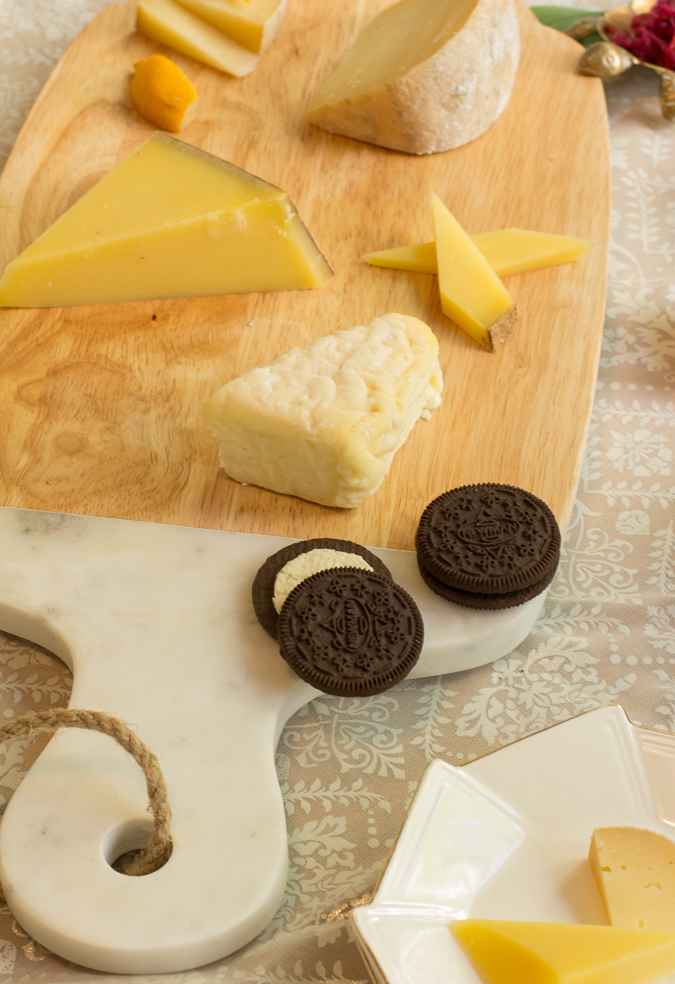
My Mother's Day cheese plate features the lovely Comté: Stepladder Creamery's Cabrillo, Tomales Farmstead Teleeka, preserved lemon, Oreo's or Newman's O's, and Cultured's gingery sauerkraut.
Full disclosure, the Comté Association sponsored my post and asked me to pick 2 more cheeses to feature on the plate. More disclosure, Comté was already one of my top 10 cheeses (so, yay!).
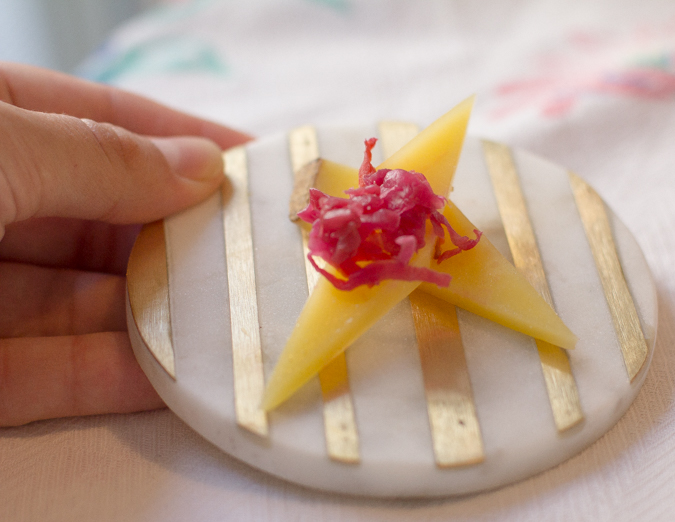


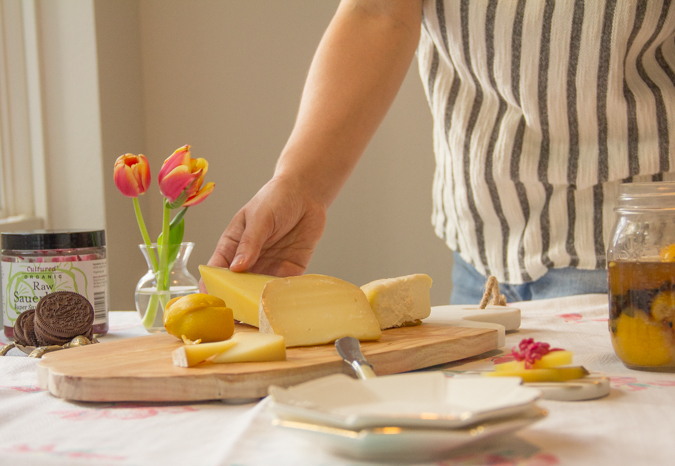

Comté with Cultured's "Super Sauerkraut Salad:" I've recently discovered the joy of pairing krauts and fermented cabbage with this Alpine-style cheese. This one is one of my favorite duos. The kraut's gingery and tangy flavor slices through Comté's richness like a bright acidity wine does a triple-creme, while allowing the cheese's brown buttery and hazelnut nuances shine through. Pair a gingery and bright beet-hued kraut with golden Comté, or go a little bolder and pair with Kimchee (really- it's not to spicy-start with a tiny piece and go as bold as you like it). Even more pairing, you ask? Throw an off-dry Riesling in the mix. But the next way I'm trying this combo is in a grilled Comté and kraut grilled cheese sandwich with buttered country bread.
You can read more about Comté's culture and history here.
Steppladder Creamery's Cabrillo: A goat and cow's milk hybrid, Cabrillo already shows light notes of lemon from its goat's milk so matching it to a preserved, salty lemon felt natural. It made it even more sunny and bright. I also tried it with goji berries, and... well, let's pretend I didn't. Together the preserved lemon and the Cabrillo offer a liveliness fit for a cheese plate, or light appetizers. Another cheese option? Garrotxa, Panteleo, or Pennyroyal Boot Corner.
Tomales Farmstead Teleeka & Chocolate Cream Sandwich Cookies: Goat, sheep, and cow's milk- are you sensing a California theme here? Yup, when goat and sheep's milk cheesemakers don't have enough milk from the tiny producers (goat and sheep provide less milk during certain seasons), they often buy cow's milk from dairy farmer neighbors. This cheese is like a robiola, and the grassy hints of the goat's milk shine through while the sheep and cow's milk provide a thick, creamy texture. I've always loved fresh chevre with chocolate so I decided to test these cookies out here. Delicious. Bright and sweet and earthy. At one point I scraped out the cream filling from the cookie sandwich, replaced it with Teleeka, and liked the cookie even better. Another cheese option? La Tur, Tomales Farmstead Kenne, or Vermont Creamy's Crémont.

Enjoy your Mother's Day with an amazing woman in your life.
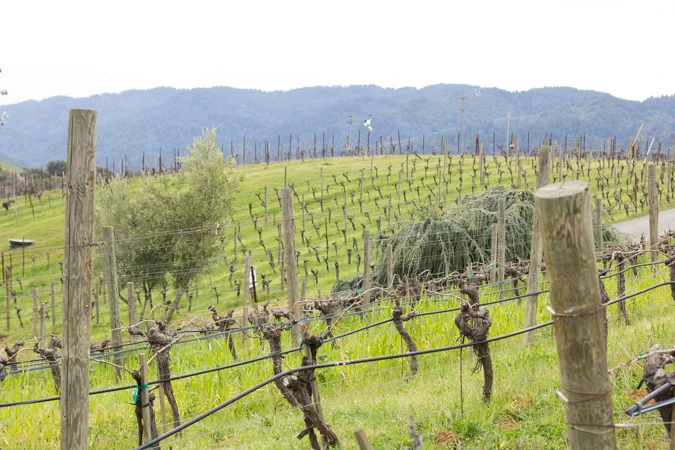
New Ridge Montebello Release + Cali Cheese = Spring!
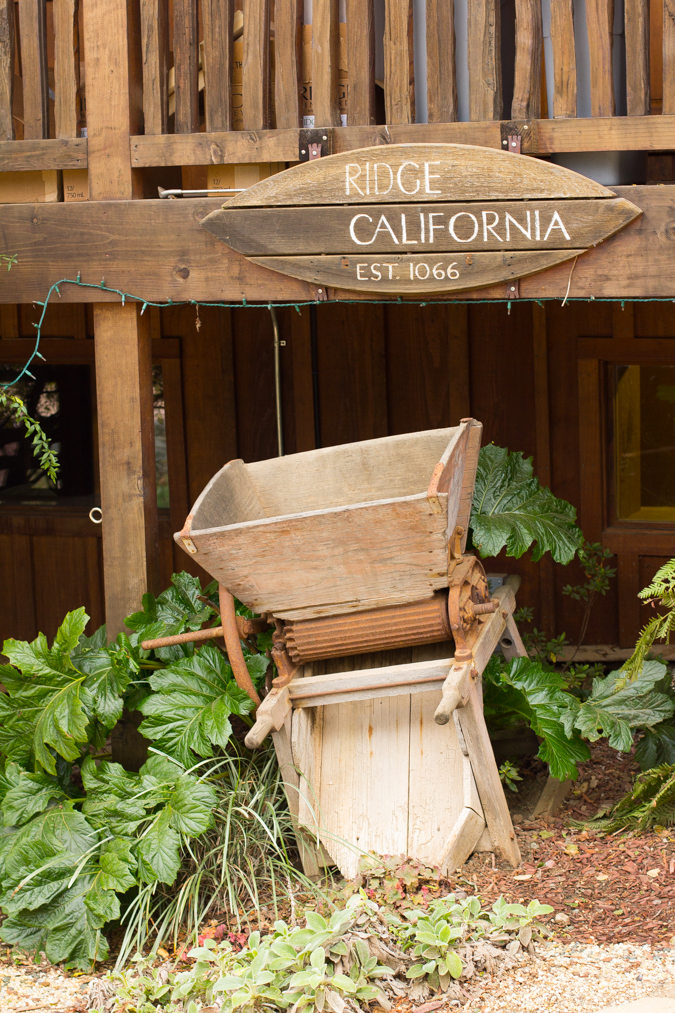
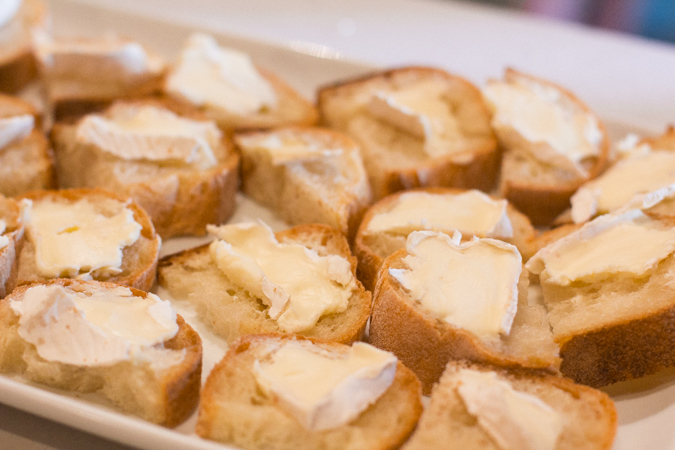
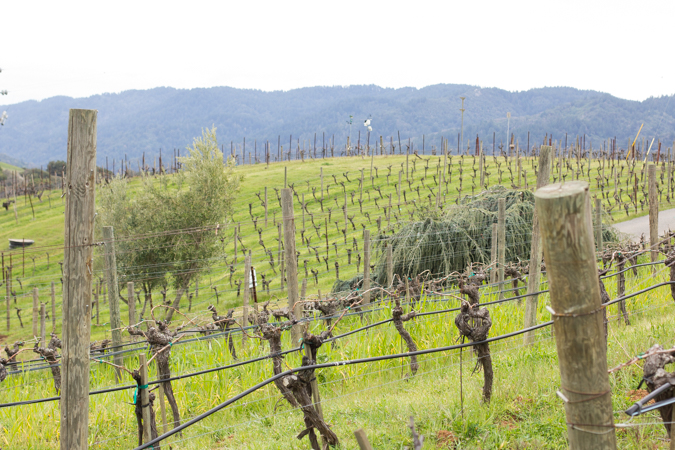
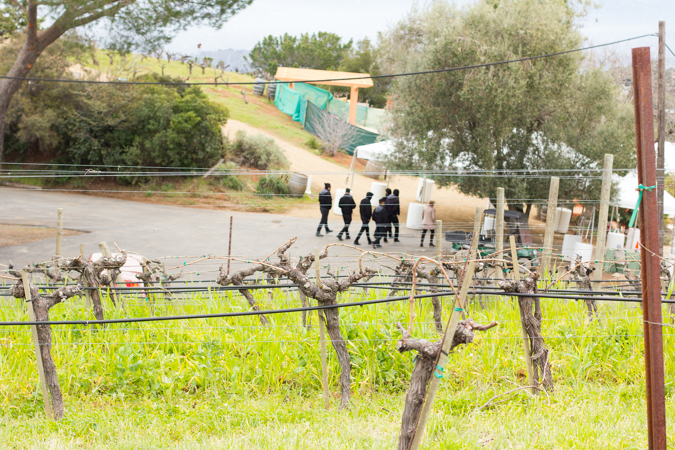
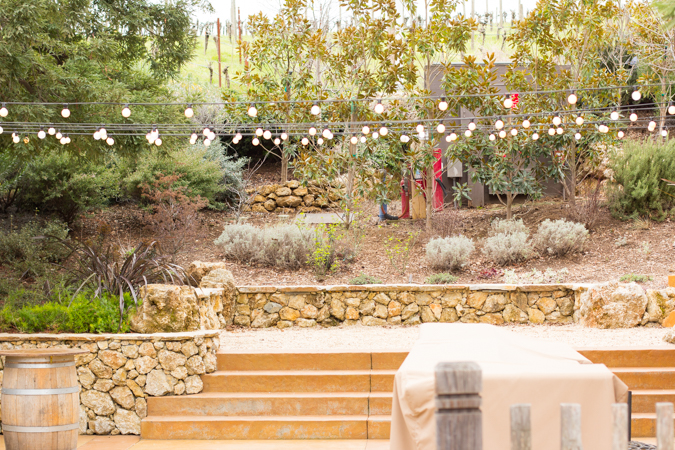
One of my favorite times of the year, besides the day egg nog hits grocery store shelves or when the summer blackberries are ripe at my hiking spot, is serving the cheese at the annual RidgeMontebello releases.
The Ridge Montebello Release spells spring like strawberries, bunnies, and blooming flowers.
And sometimes Ridge Montebello even smells like blooming flowers. And black pepper, and boysenberries, and red currants, and herbs and... ah... Ridge Montebello.
Considered one of the best wineries in California and easily one of the top Bordeaux-grape focused producers anywhere, Ridge Winery helped to put the country on the wine map. When it and other Cali producers like Chateau Montelena took top scores at the 1976 Paris Judgement, they proved that California didn't just make ooey-gooey, boring wines meant for boxes. It made lively, age-able, well-structured wines that could fool French wine journalists into thinking they were swirling Bordeaux. And they did it again 40 years later.
How I come into the story beyond admiring the winery, and years of selling and swilling Ridge Montebello release at tastings and wine shops and hoping that someone offers to share their bottle, is that I am the lucky girl who gets to select the cheese for releases every year.
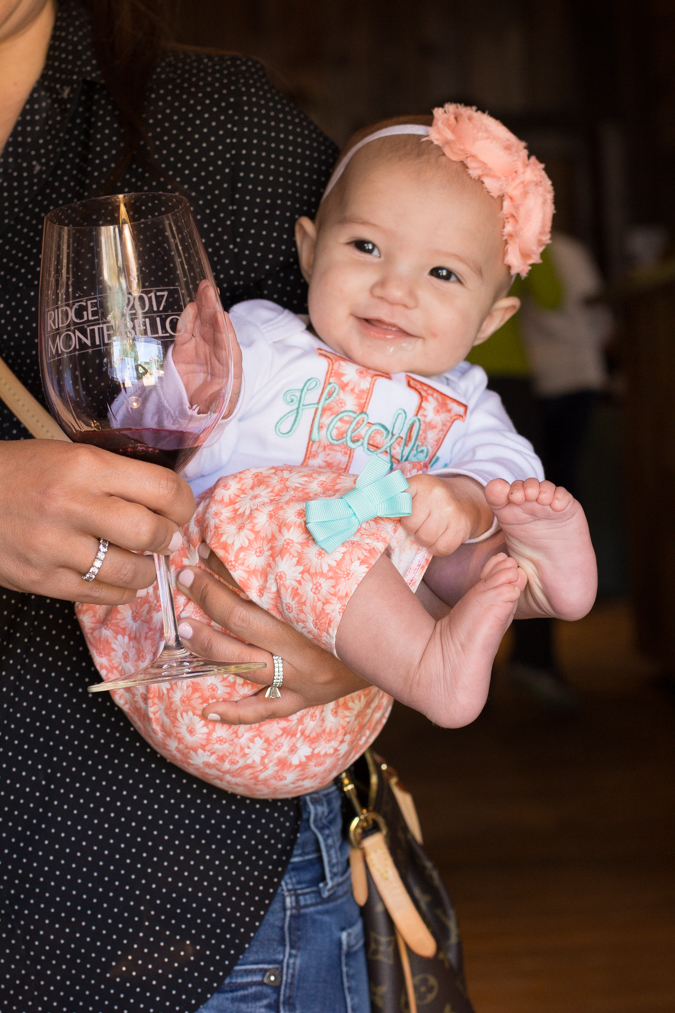
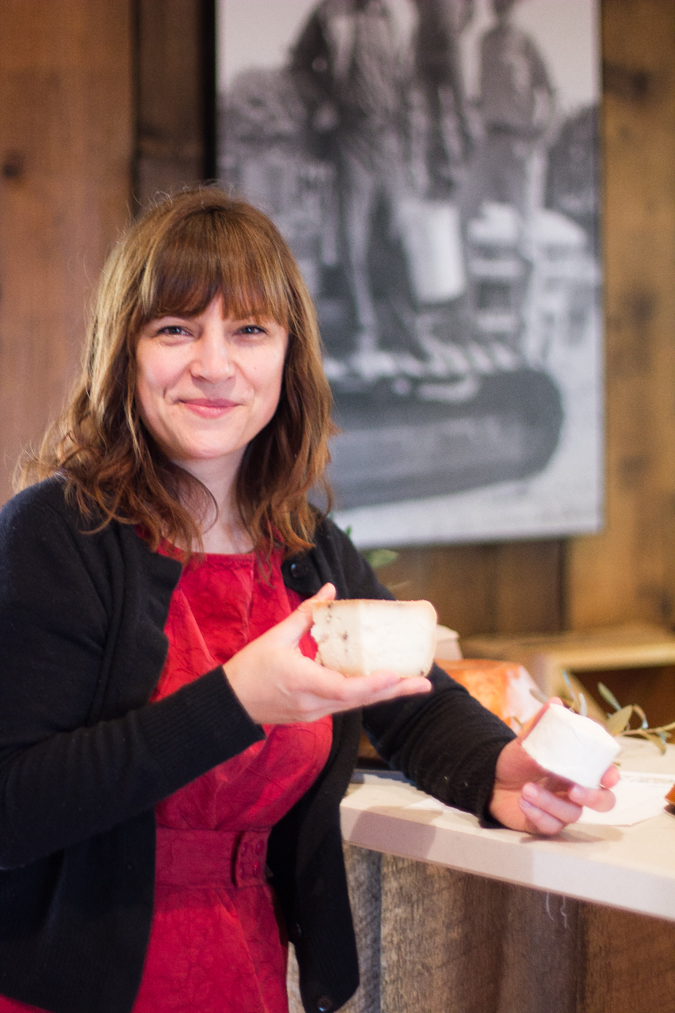
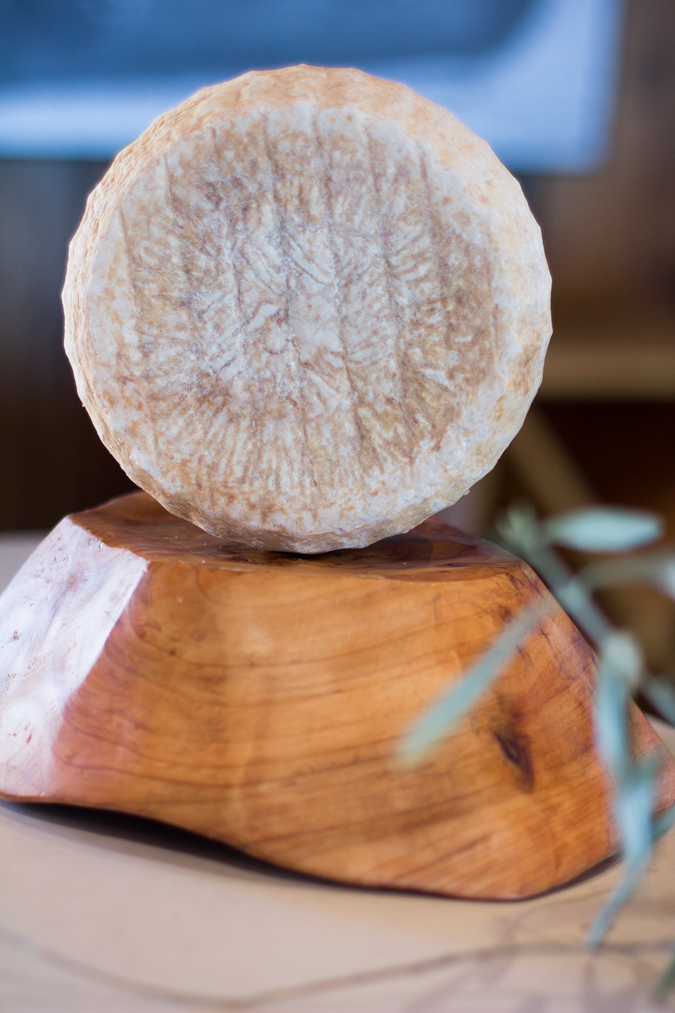
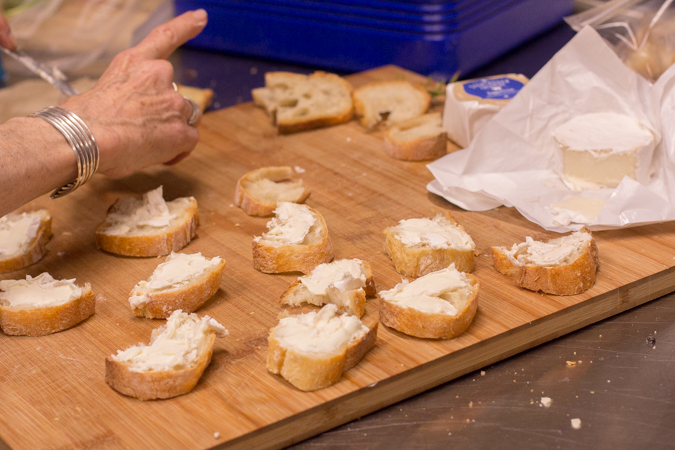

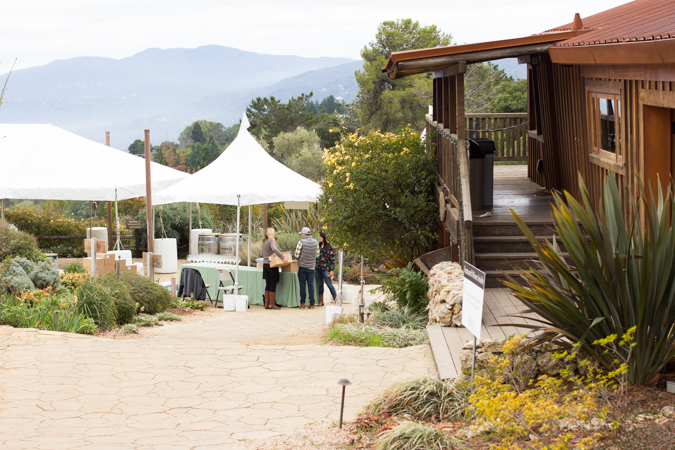
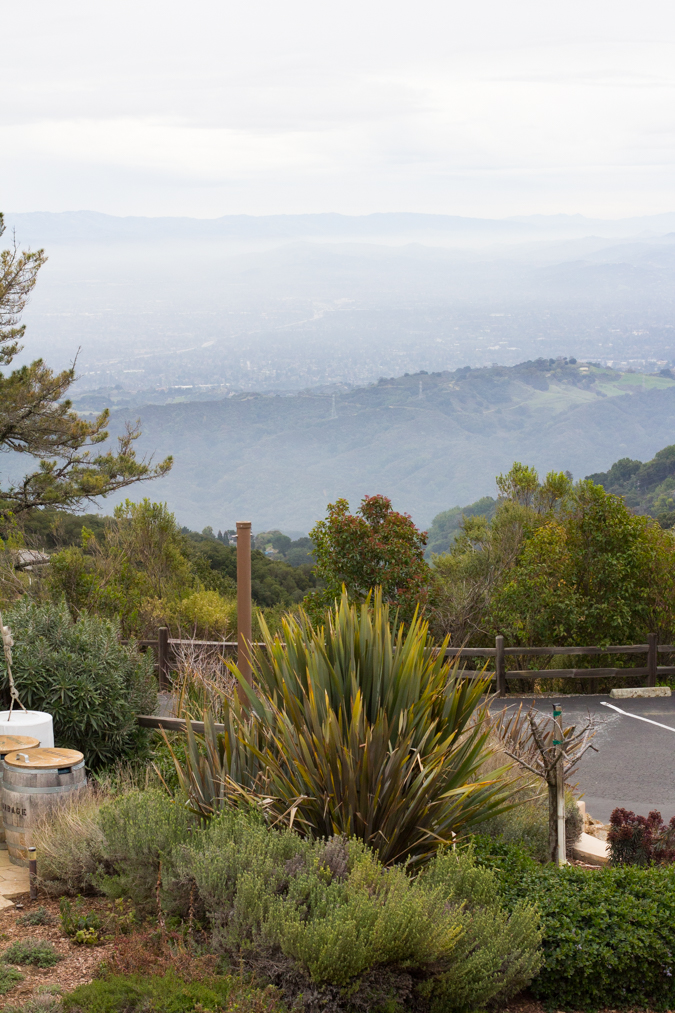

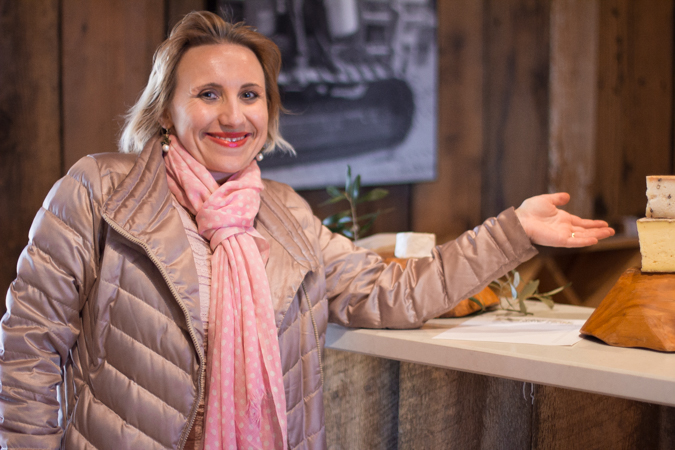
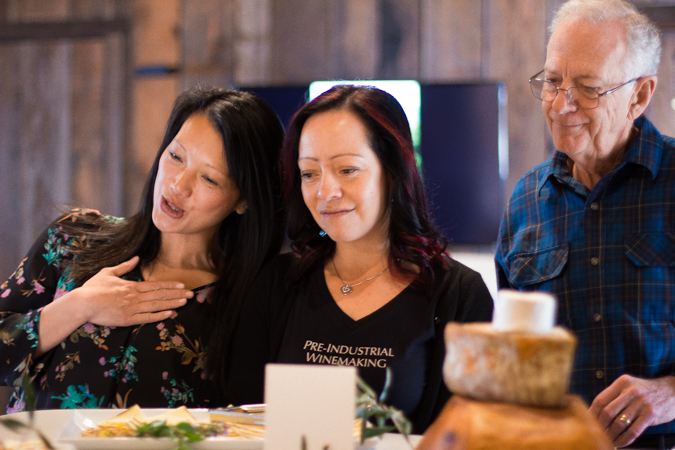
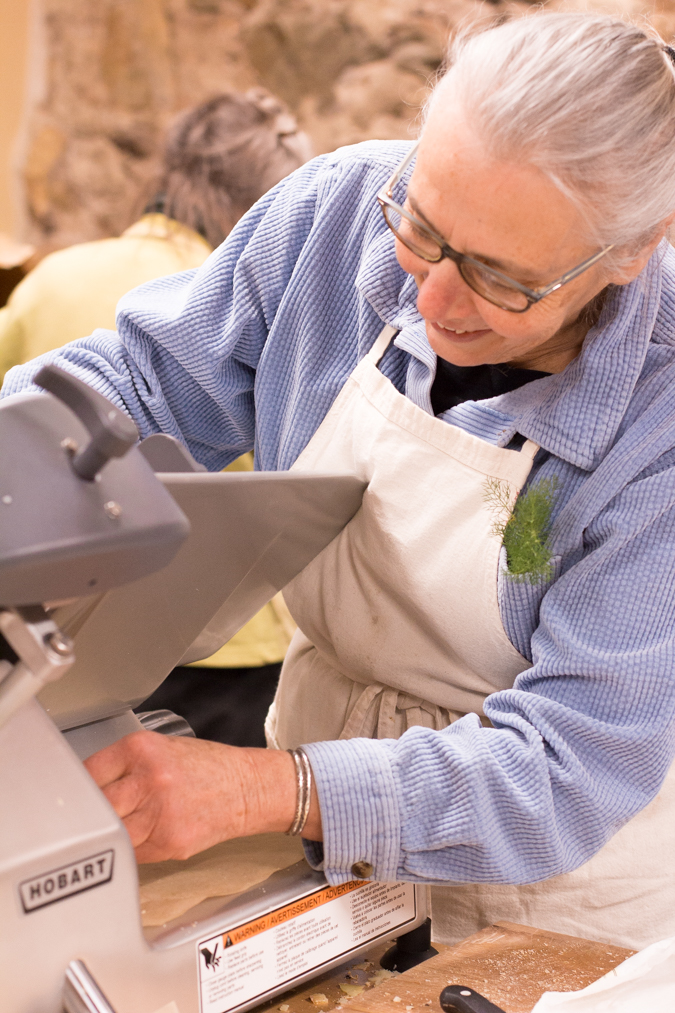
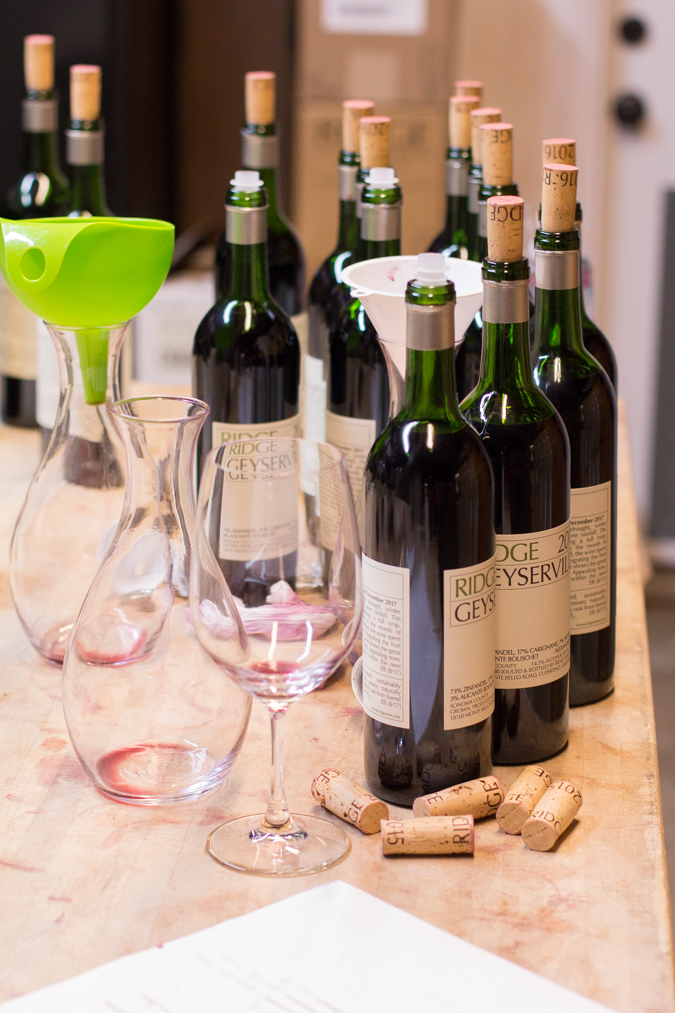
For one weekend a month, three months in a row, I present cheeses from my favorite California cheesemakers (Cali only- Ridge rules) that shine with the wine. The Montebello blend is made up of the winemaker's favorite vineyards and aged in the best oak and is always a blend of Bordeaux grapes- Cabernet Sauvignon and Franc, Merlot, Petit Verdot. Then there is always a Chardonnay as crisp as an apple, and single varieties like Cab Franc (my fave) and splashes of their age-worthy Zins to try.

Tomales Farmstead’s Assa
Choosing the cheese for it is an extreme pleasure. Plus, I get to work to with really cool people, like Ridge's chef of over twenty years, Kathy Martinich.
I'm already gearing up for April and May's.
Hope to see you there!

Oh, Hello Goat Cheese: I'm Back, Oozing Wheels & ❤️ Shapes

Oh, hello there! It's been a while, cheese lovers. Goat cheese lovers, this post is for you.
I'm sorry I've been away from this blog for so long (hopefully you've had your dairy needs met in other ways), but I promise I've been away for an amazing reason.
My cheese class business has been as busy as a hummingbird in spring.
As always, I've been teaching public classes at places like 18 Reasons and Preserved (<-- a new one for me, love it), but in the past few months, my private class business has ramped up to 11. It's been wonderful and I'm very lucky! So while I've talked about cheese, paired it, and made it, because I've been doing it so much front of other people, and working on my next book, I haven't had time to blog my heart out here.

Luckily, I just hired a couple wonderful people for inspiration and to help me with the nuts and bolts of the business (oh, hello invoicing and newsletter links). Meaning I'm back!. I'm excited to tell you about what I've been doing while away, too.
I'm been making those oozing goat cheeses! And the little heart shaped one? Yup, made that too. I ❤ making ❤ cheeses (the next time you can learn how to make something like this with me is at 18 Reasons later this month, or in a private class).
I hadn't played around with goat's milk much since I taught a queso fresco fundraising class at Tomales Farmstead (I got to use their own milk, yay!) so I've been having a blast. Using what I learned from making cheese with Sleight Farms, and reading books and testing recipes from some of my favecheesemakingbooks, I developed these little guys here. Of course there was a lot of research and tasting.
Did I mention they ooze? They do. I maaaaay have forgotten one in my cheese cave (otherwise known as wine fridge) for a week too long. Oops.
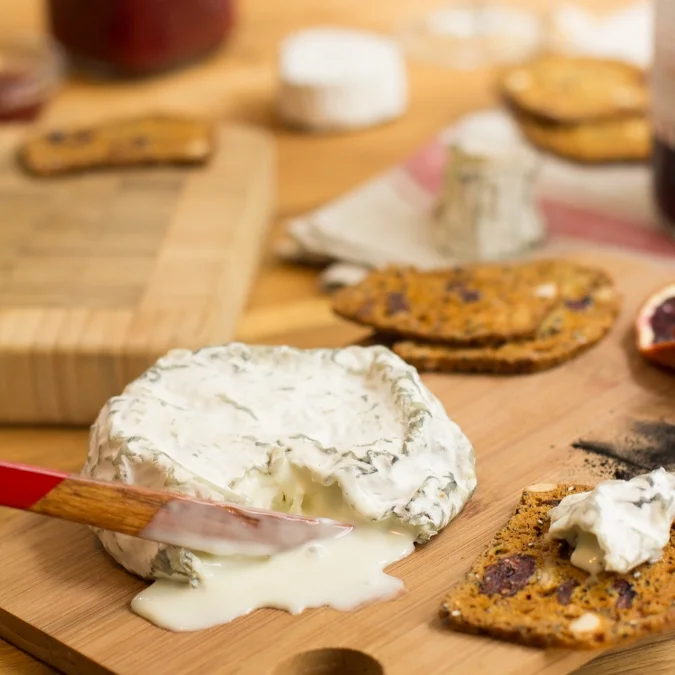
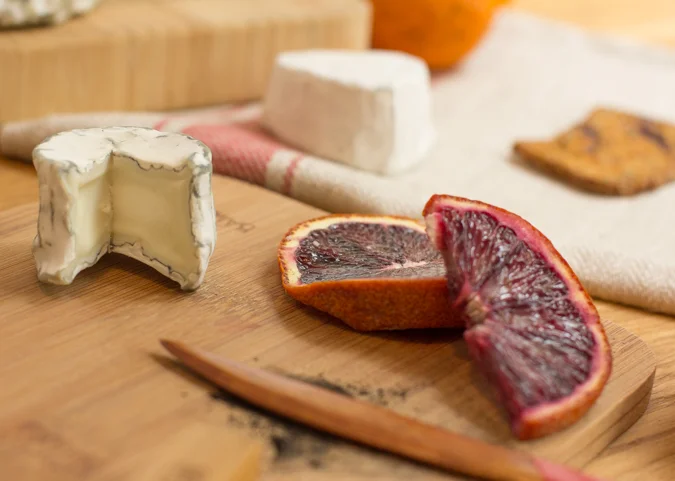

I was also excited to make these cheeses because it's an amazing time to use goat's milk. Those green hills around California from all the rain = tons of delicious grasses and herbs for the ladies to snack on.
This also means it's a great time to buy goat cheese because many goats around the country are likewise getting their nibbles on. My northeastern friends, we've got your back until your goats can prance outside. Stay warm please.
A goat cheese or two I'd give 5 starts to are those made by Stepladder, Capriole's Sofia or Wabash Cannonball, Bonne Bouche, Prodigal Farms beauties, and Ruggle Hill's gems. Just to start. There's a lot of exploring to do, my friends.
Pair with Sauvignon Blanc, unoaked whites and sparklings, Gamay, or Cabernet Franc, and enjoy in front of a fire or Burning Log watching it rain or snow.
Playing with Point Reyes Creamery's Milk & Wine Geek Speak

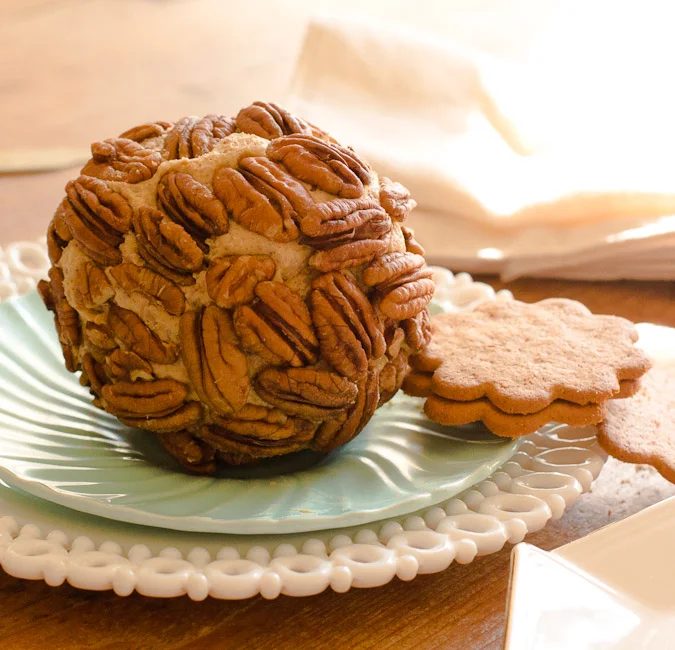
It's Christmas-lights-up, menorah-on-mantel, tinsel-in-trees, frosty mornings time. And yes, that is a stellar holiday cheese ball pictured above (and yes since you asked, I did make it!). Sure, the daytime temperatures are still in the mid-60's in California, but in general terms, it's winter. Accordingly, it's packed with classes- many of which I'm very excited about.
This winter I'll be teaching Wine 101 at 18 Reasons in San Francisco. Many of you know that while I was firmly establishing myself as the cheese lady (Capitalize- Y or N?), I managed the wine bar at Solano Cellars Wine Shop for 10 years, and I love returning to my viniferia roots. There, in our Wine 101 class (known by some as WTF is Wine, Anyhow?), we transformed millions from wine week to wine geek by breaking down the building blocks of wine like tannins, body, and oak so people could better appreciate their beverage of choice. It was one of our most popular classes, and I loved teaching it. I'm happy to say that in January I'll be at 18 Reasons teaching my rendition of the class. And yes, there will be wine tasting involved.

(above photo by Anna Voloshyna)
Peninsula cheese fans- I'm teaching public class in Menlo Park and Palo Alto in February at Draeger's.
In February I get to play with the same milk they use for the highly awarded Point Reyes Creamery cheeses to make homemade cheese! And so do you. For a gorgeous day of farm tours, visiting cows, cheesemaking, lunch, and a cheese tasting, please consider joining me at Point Reyes Creamery February 2nd. Speaking of February, I'm teaching a Daring Duo's & Surprising BFFs class on Valentine's Day...
More details & MANY MORE public classes follow. As always, please contact me at kirstin@itsnotyouitsbrie.com for private events. Classes fill up early. Happy Holidays and I hope to see you around!

Winter Public Events
Cheesemaking 101: Paneer, Fromage Blanc & Handmade Butter
January 10th, Wednesday 6:00-9:30pm
San Francisco, 18 Reasons
Making cheese at home is much easier than you think! From how to culture milk to making your own fluffy paneer, this class will teach you the delicious basics of cheesemaking. You'll learn how to make India's top cheese, how to ferment milk into fromage blanc (and when to add herbs to make the perfect party cheese), and how to make your very own rich, sweet butter by hand. After a cheese science overview and mini-tasting, we'll roll our sleeves up and don aprons to transform milk and cream into some of the best cheese and butter you've ever tasted, made better knowing you made it yourself!
Burrata By-Hand
January 18th, Thursday 6:00-9:30pm
San Francisco, 18 Reasons
The most exciting cheese on the cheese board needs little explanation: burrata is fresh mozzarella filled with luscious cream and more cheese. You get to make your own in one short night. And eat it too! In this action-packed evening class, you will learn the basics of cheesemaking, including which milk to use, where to find cultures, and options for rennet. You will also leave with a deeper understanding of the science behind the process...
Wine 101: From Tannins to Acidty- The ABC's of Wine
January 24th, Wednesday 6:30-9:00pm
San Francisco, 18 Reasons
If you've always had dreams of swirling a glass of Pinot in Burgundy while talking about its acidity, grow shy when handed the wine list at a restaurant, or just wonder what people mean when they say "fruit bomb" or "bold tannins," this Wine 101 tasting seminar is for you. In an approachable and lighthearted manner, It's Not You, It's Brie author, 18 Reasons cheesemaking teacher and wine expert Kirstin Jackson will break down the basics of wine culture and terminology for you with delicious wine examples....
Point Reyes Creamery: Artisan Cheesemaking at Home w/Kirstin Jackson, Farm Tour & Lunch
February 2nd, Friday 9:00-2:00pm
Point Reyes, Point Reyes-The Fork
Kirstin Jackson fell in love with cheese at a young age. Driving around Northern California and taking tours of creameries with her parents was Kirstin’s entry into the world of cheese. Says Kirstin, “A good way to bond and keep a teenager in the car with you is to give her cheese at the end of the trip.” Fast forward to 2007, when Kirstin decided to stop writing her wine and food pairing blog “because it wasn’t enough of an escape for me from my everyday work life working in a wine shop,” and committed to her passion for cheese online. With that decision, It’s Not You, It’s Brie, was born.... This tour includes a farm tour, lunch and cheesemaking- cultured butter, creme fraiche, queso fresco and ricotta.
Basics of Cheesemaking: Paneer, Mascarpone & Fromage Blanc
February 4th, Sunday 11:00-2:00pm
San Francisco, The Cheese School
Paneer, mascarpone, and fromage blanc are the cheeses that make appetizers and main courses sing. In this hands-on class, cheesemaker Kirstin Jackson will teach you how to make the cheeses that will become staples in your fridge for many more meals to come. You'll try your creations in class and bring some home to share, or not....
SF Beer Week: Drakes Beer & Cheese (and Me!)- More Info Soon Save the Date
February 13th, Tuesday
Oakland, The Dealership
Valentine's Day Daring Duo Class at 18 Reasons, More info Soon Save the Date
February 14th, Wednesday
San Francisco, 18 Reasons
Peanut butter and chocolate, Cabernet and steak, pumpkin and pie, cheese and... cookies? Clearly, wine and cheese have a longstanding friendship. But on this Valentine's Day, we're testing relationship boundaries by pairing everyone's favorite fermented dairy with a secret crush or two. It's Not You, It's Brie author and recent American Cheese Society "Dairing Pairings" conference presenter Kirstin Jackson will teach the class with a wealth of research experience under her belt, a list of do's and don'ts, and adventurous advice. Expect fromage drizzled in caramel, seaweed, cookies, sip tea, and... maybe even witness a polyamorous combo or two.
Making Feta Cheese from Scratch
February 15th, Thursday, 7:00-9:00pm
Oakland, Preserved
Rich, salty and crumbly, feta is one of the world's most popular cheeses. Join us as we explore the magic of cheesemaking at home. In this workshop, we'll DISCUSS the basics of cheese science, what milk to use and how to age your feta cheese to perfection. We will get HANDS-ON as we move through the stages of cheesemaking: fermenting the milk, curd cutting, pitching, forming and brining. Plus we will TASTE some of our favorite finished versions of feta. Everyone will TAKE HOME their own cheese to age at home, and enjoy 3-4 weeks later!
Beginning Cheesemaking: Queso Fresco, Ricotta & Fromage Blanc
February 24th, Saturday, 11:00am
Menlo Park, Draeger's
• Fresh, Handmade Queso Fresco • Fresh, Handmade Whole Milk Ricotta • Fromage Blanc Culturing Demo and Hands-On Fromage Blanc Prep and Seasoning • Tasting of Commercial Queso Fresco, Fromage Blanc and Ricotta • Crostini Topped with Seasonal Fruits, Preserves and Just-Made Cheese Learn about cultures, enzymes, shelf life, what milk to buy, serving possibilities and more. After nibbling on our creations in class, all participants take home samples of their cheese to share.
•Note this is at the Menlo Park Draeger's Location.
Mozzarella & Burrata by Hand
March 6th, Thursday, 6:30pm
San Mateo, Draeger's
• Fresh, Handmade Mozzarella • Fresh, Handmade Burrata (Mozzarella’s Cream-Filled Cousin!) • Comparative tasting of commercial cow and buffalo milk mozzarellas or burrata • Winter fruit and toasted nut salad with the cheese we just made Learn about cultures, enzymes, shelf life, what milk to buy, serving possibilities and more. After nibbling on our creations in class, all participants take home samples of their cheese to share.
•Note this is at the San Mateo Draeger's Location.