
The Cheese Blog
All wrapped up with somewhere to go...

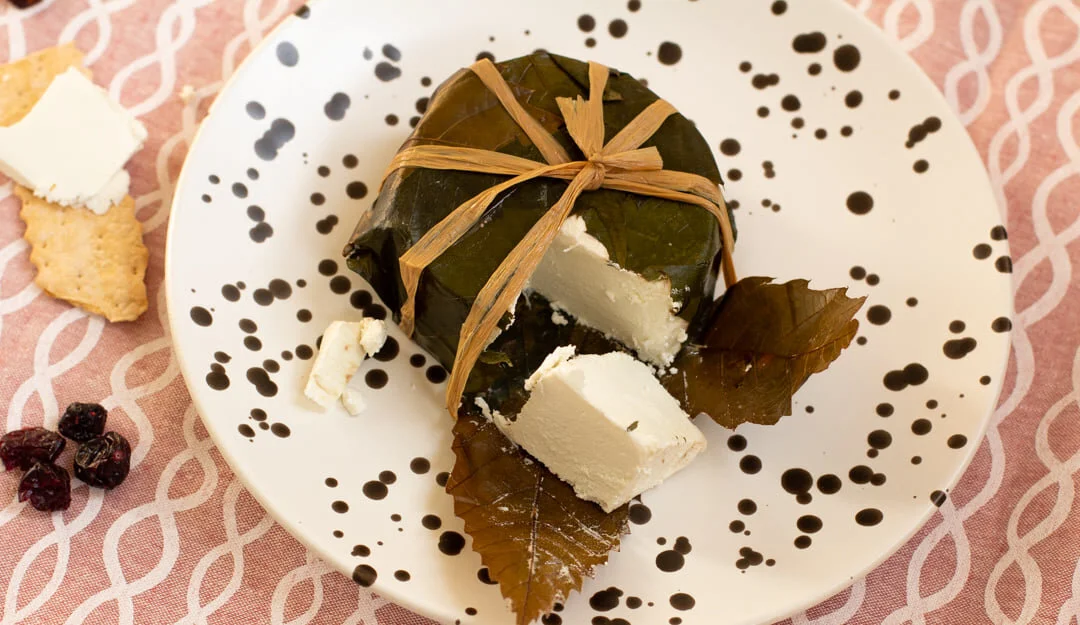
Maybe because I could imagine Frodo carrying one on his Lord of the Rings trek for snacking, I’m a sucker for leaf-wrapped cheeses. They look ancient and majestic, they have their own little handy wrapper, the leaves flavor the cheese, they’re good for baking (more on this soon), and damn they look good on a cheese plate.
One leaf-wrapped cheese that has always had my heart is Capriole’s O’Banon. Inspired by the French Banon goat cheese that’s wrapped in chestnut leaves, this one is made in Indiana and also wrapped in chestnut leaves. But these chestnut leaves have been soaked in bourbon.
Uncurl the leaves and inside you’ll see a bright white cheese with leaf imprints. The cheese is young, so is sweet on its own, but it also takes on slightly green flavors from the leaves and a sultry headiness from the bourbon.
And then I love the cheese because of its creator, Judy. The owner of Capriole, Judy Schad, bought her farm in the late seventies just to live on. No cheese intended. Soon enough though, they bought goats, and then soon enough again, the goats had babies! Cheesemaking became a way to use the milk, and this catapulted them into opening their own creamery. * A little cheesemaking secret is that some of our best cheesemakers ended up mastering their craft and earning a creamery on accident * And Judy is one of the original movers and shakers of the American artisan cheese movement. And she’s also really funny.

Do you have a favorite leaf-wrapped cheese? Another I love is Hoja Santa by Mozzarella Cheese Company. One of the coolest things about this style is that it can be super-local and reflect a region. Hoja Santa, for example, is a leaf found mainly in Mexico and former parts of Mexico, and hoja santa leaves grow in Texas, where the cheese is made. Chestnut trees are found in Indiana, so O’Banon earns a regional title too. Some amazing Italian leaf-wrapped cheeses can be found in the states, too.
And coming soon- you can also bake or grill these cheeses right in their leaves. If you have a favorite leaf-wrapped cheese, tell me over on Instagram!
Where in the Cheese World is Kirstin Jackson?
Have I been so busy pitching a cheese reality show that I’ve had no time to rest?
Have I been so obsessed with the new Taylor Swift and Megan the Stallion releases I’ve locked myself in my bedroom for months? Rewatching What we do in the Shadows nonstop? Excellent guesses, but nope. But I’d love to tell you what I’ve been doing and what’s to come!
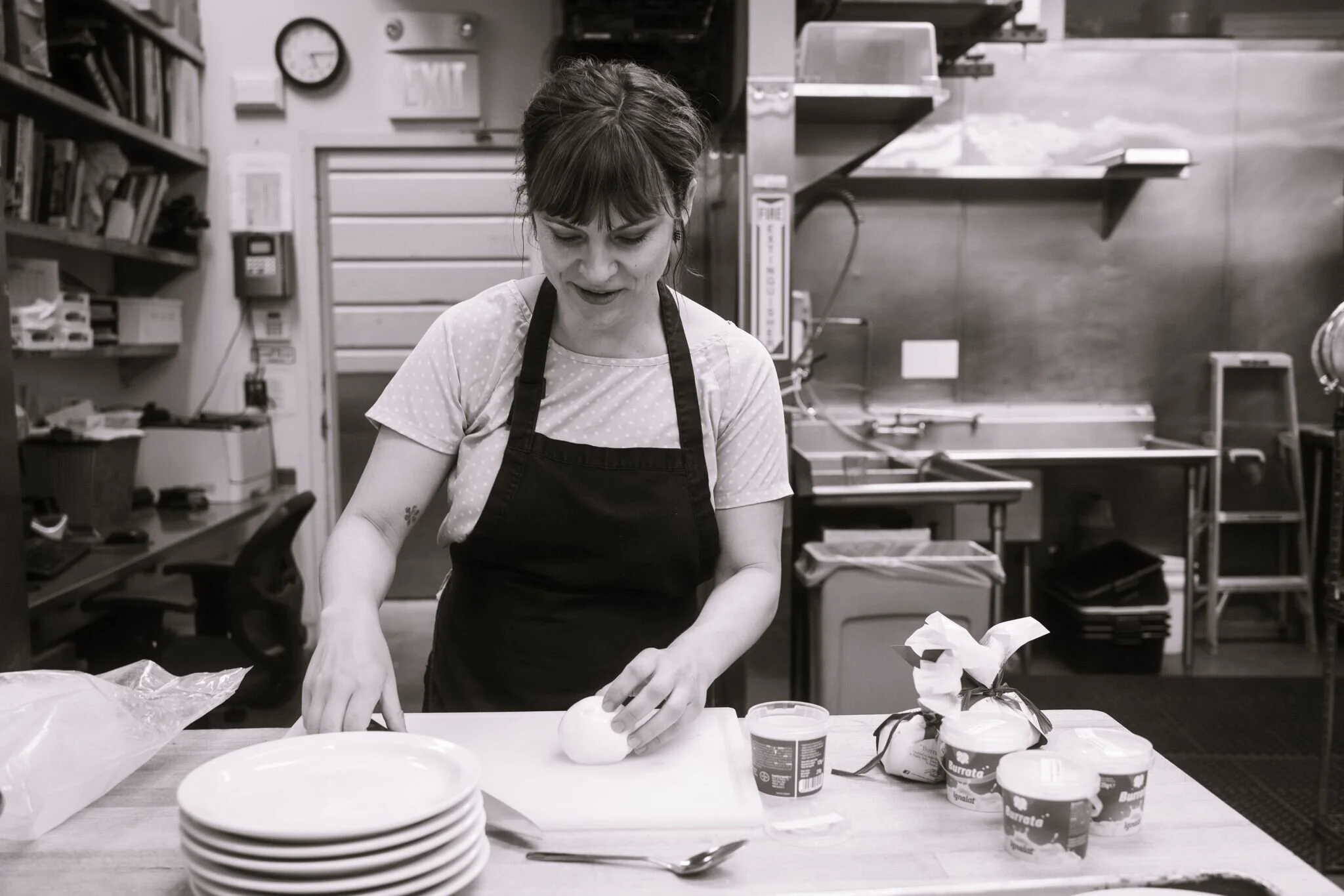
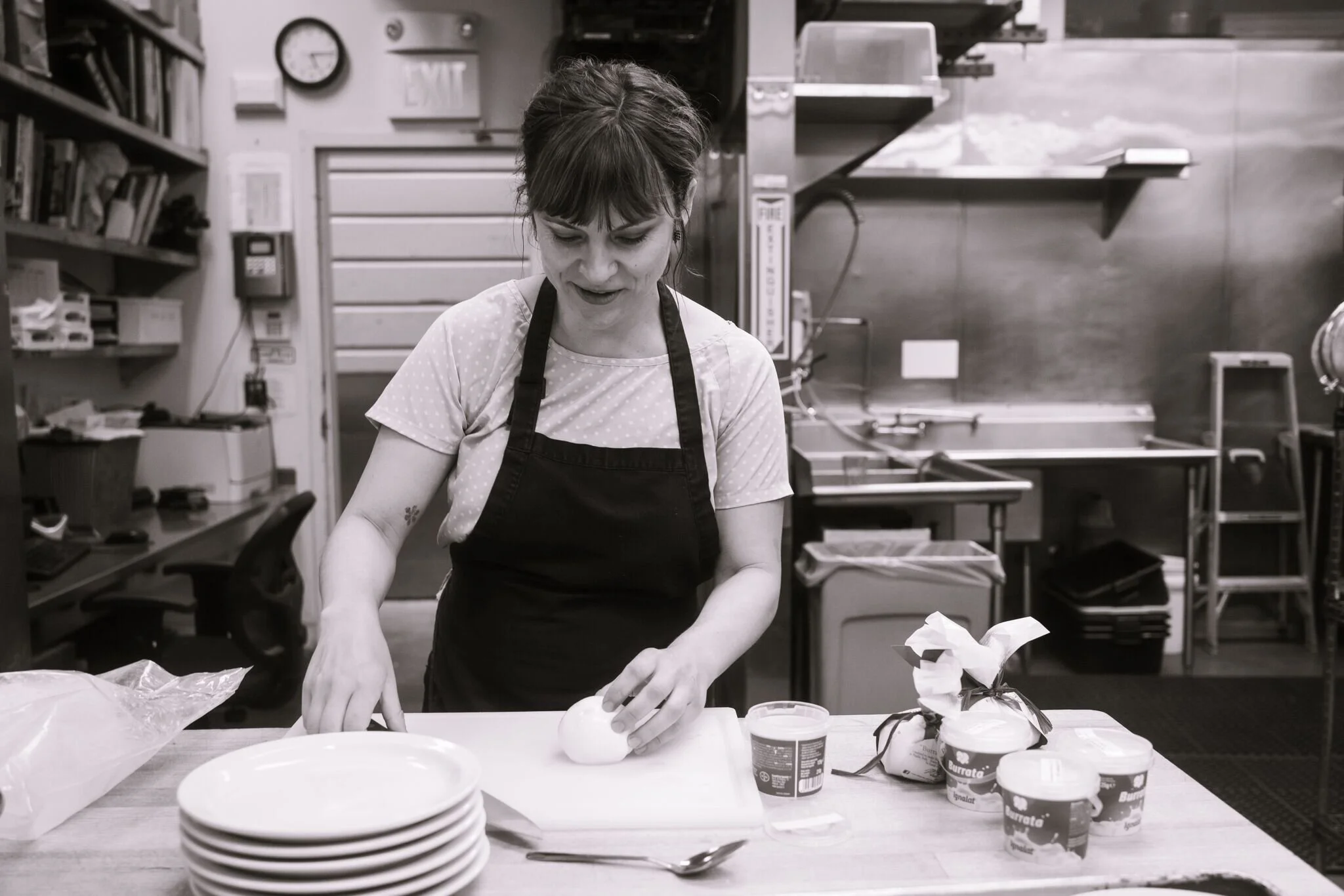
🧪 For the past two semesters I’ve been knee-deep—gut-deep?—in nutrition classes.
I’m going back to school to become a dietician! One that vouches for cheese and wine and chocolate and… fill in the blank… as part of a healthy diet and who thinks that how you feel and being healthy, not what you weigh, is importanto.
(Btw, let me tell you, I’ve just finished my second semester and going back to school at 40 has been interesting. Also interesting—trying to pass chemistry classes during a pandemic.)
📚 I’ve also been editing a book I’ve been working on about a cheesemaking trip I took to the British Isles.
During my school break I’ve been testing a few recipes (apple and Wensleydale hand-pies, anyone), and I’ll soon be pitching the book out into the world. Scary? A little. But wow it’ll feel good to do it, too.
🐶 As a side note, I also got a puppy! A maltese-shih tsu mix that we named Walter. After hiring a trainer and re-learning everything we thought we knew about dogs, we now have a very fun puppy that only bites us on accident and at nearly five months, is requiring a lot less clean up. He likes eating leaves, belly scratches, hates leaf blowers, and is so cute.



What to expect this year from It’s Not You, It’s Brie:
First off, becoming a nutritionist will take a while! Like a few years. Because I was a liberal arts major, not science , I have to take lots of pre-med and chemistry courses, then, earn another degree. You’re not loosing me, don’t worry! I’ll be here, friends.
But I’ll be mixing it up more. I’ll share more recipes. Such as, next up—a recipe for wild mushroom and ricotta crostini, for example. One of the things I love most about health and cheese is that they can go hand in hand. Plus, cheese, right?? Who doesn’t love cheese recipes?
More consistency. I just hired a wonderful person to help me keep up with things so you’ll hear more from me here—I’ll be sending out a newsletter once a week, and be updating my social media platforms more.
More, and different content—I’ll be talking more about the basics, as in how to pick out wine at various price points, easy cheese recipes and how-to-cook-with-cheese guidelines. I’ve also been listening to your feedback and really appreciate you telling me more what you want to hear. Thank you. I’ll incorporate all of it.
Whatever else you want to hear. I’m always happy to hear more of what you want! Let me know.
That’s it, cheese lovers. I wanted to write a quick note to tell you that I’ve been thinking about you and am excited for what’s to come. Thank you so much for reading and for your support.
Why is Gouda Sweet?

WHY is gouda sweet?
Let’s talk about one of my students’ favorite questions.
WHY is gouda sweet?
Have you been curious, too? I bet. So was I. It’s a weird answer, so buckle up your seatbelts.
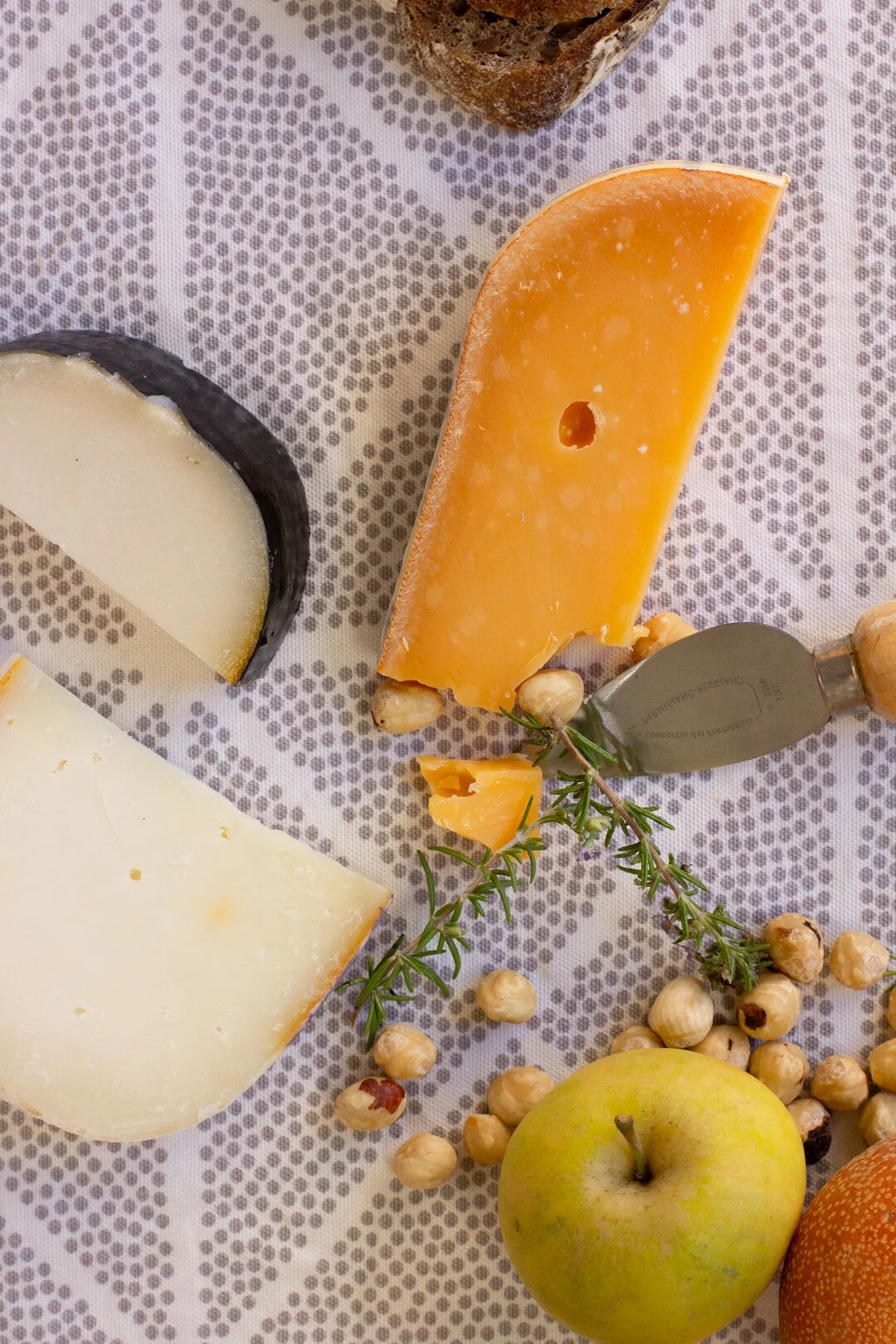
Gouda is sweet not because of those crystals you can find in it, but because of the way it’s made (pinky promise we’ll talk about 💎s soon, though). There’s a crucial step in gouda making that makes it different from many other cheeses that makes it sweet. It’s called de-lactosing, or curd-washing, and it’s totally counterintuitive.
Making cheese is fermenting, firming, draining, and often aging, milk. To do that you add cultures (bacteria) to the milk. The bacteria eats the lactose (milk sugar), and coverts it to lactic acid. After you add the culture and the rennet enzyme that binds the milk into a firm curd, you cut the curds to capture the protein and butterfat, stir them in their whey until they firm, and then drain the whey (mainly milk water) to capture the solids.
Here’s the kicker.
Gouda is sweet because after you cut the curds, you delactose/wash/remove some of lactose from the vat as you stir the curds to firm them up. I know, I know. You’d think you’d want to keep the sugar in there for sweetness, yes? Nope. Any lactose that’s left in the milk or curd is just going to transform into acidity later. Ah, chemistry.
Instead of stirring the curds around in all that whey water after the curds are cut, with gouda, you pour out some of that whey, and replace it with warm water to “wash” the curds. For comparison, at the opposite of the spectrum you have cheddar. In cheddar you let lactose hang out much longer in the curd to encourage it to transform into lactic acid. That acid gives cheddar its tangy, sharp taste and the lack of it keeps gouda sweet!
Does cheese chemistry blow your mind or is it just me?
Fondue & Bubbles Class- Ooozy Cheese Class Almost Full!

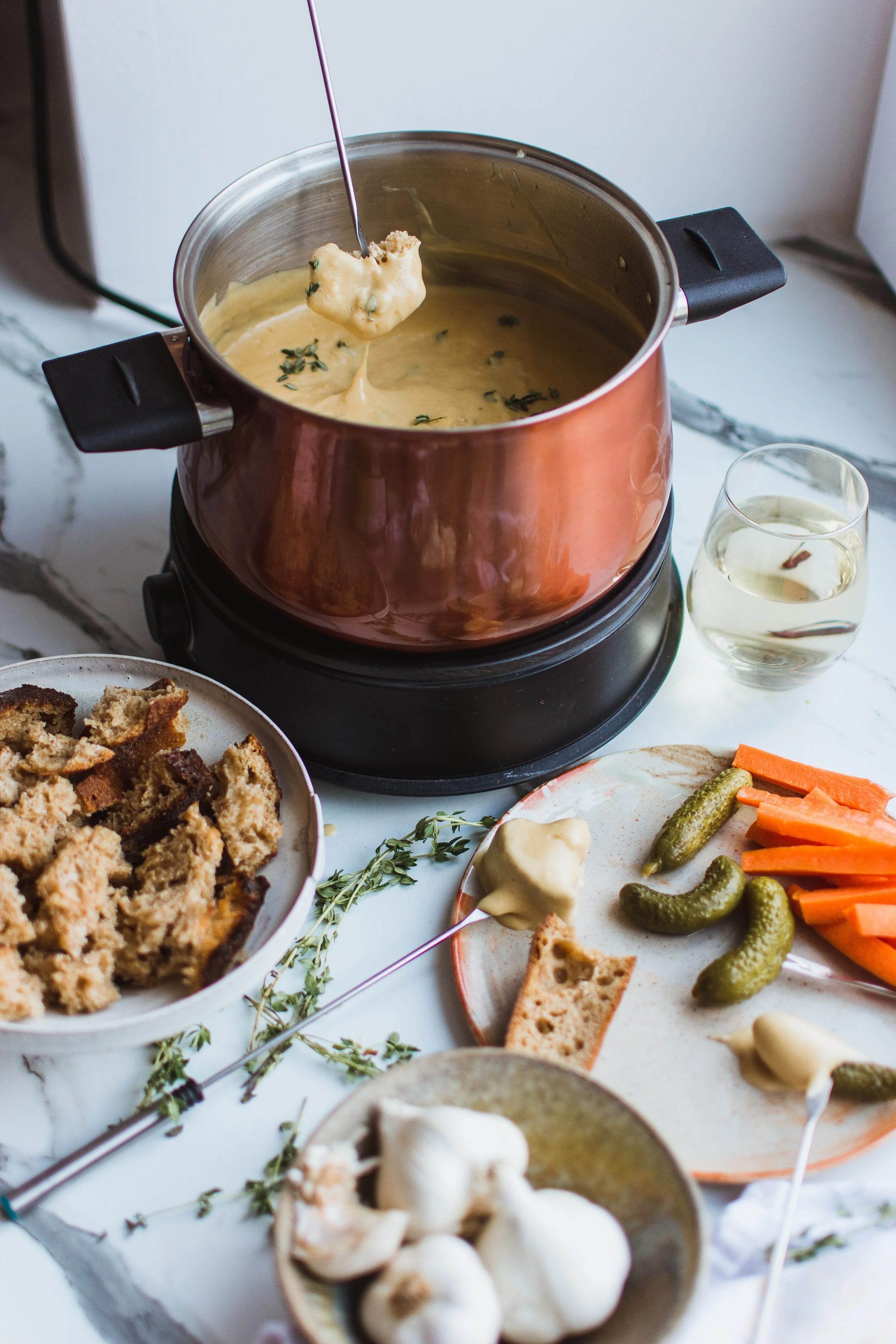
Hello friends! I’ll be back with more cheese geekery next week, but I wanted to give you a quick heads up before then. I’m teaching a fondue and bubbles class Dec 11th through 18 Reasons and it’s almost already full.
Want some melty cheese in your life?
I know I want something festive right about now. Pour everything sparkling in my glass, please! I’m betting you might, too.
Read more below, and sign up here. I hope to see you online for some oozy cheese action soon!
Fondue & Bubbles Class
“Winter is the best time to enjoy hot, oozy cheese in the comfort of your own home, and sparkling wine loves rich, cheesy dishes. In this class we'll talk all things cheese and fondue, melt cheese and wine together, then toast to our new, amazing fondue skills with a glass of bubbles. We'll start with covering the fondue basics from cheese melting science to the battle over which country really has the true fondue recipe. Then we'll make our own fondue and a light salad for dinner, and chat fondue and wine pairing.”
Photo by Klara Avsenik on Unsplash

My First Online Wine & Cheese Pairing Class- Pick-up in SF, Pop it Open at Home!

Wine & Cheese Pairing Class: Pick-up-pack in San Francisco
Local San Francisco Bay Area friends, please join me Friday, Sept 25th, 7pm for my first public wine & cheese pairing class since… forever! But really, since the start of quarantine, so you know what I mean, since FOREVER. I’m going back to the delicious basics with Wine & Cheese Pairing 101 and hope you can join me.
“Wine country brochures make it seem like cheese and wine are easy to pair, but if you’d ever had a pairing bomb, you know that the two can be a difficult duo. Don't worry, it's not you! In this class, Kirstin will give you the tools to harmoniously enjoy the two at home without fear. We'll equip you with three wines that pair like a dream, and six cheeses that'll teach you how to charm any bottle you throw at them.”
How do you join and find all the wines and cheeses you need for the tasting? Such a good question!
Sign up online here for the zoom class with 18 Reasons.
The night before the class pick up a delicious and ample cheese and wine pairing kit custom-packed with love by moi. (Seriously, it’s 6 oz of cheese and 12 ounces of wine, you’ll have a good night ;) ).
Hop online with me and other cheese and wine lovers for the 6 cheese, 3 wine pairing on .Friday, Sept 25th 7pm. It will be very fun. See that photo above? I like drinking wine, and I also like talking about it.
A great bonus—when you join a class at 18 Reasons during these times you’re also supporting a great non-profit that’s distributing food to those with food insecurities right now.
Thanks for reading, hope to sip with you soon, and until next week!
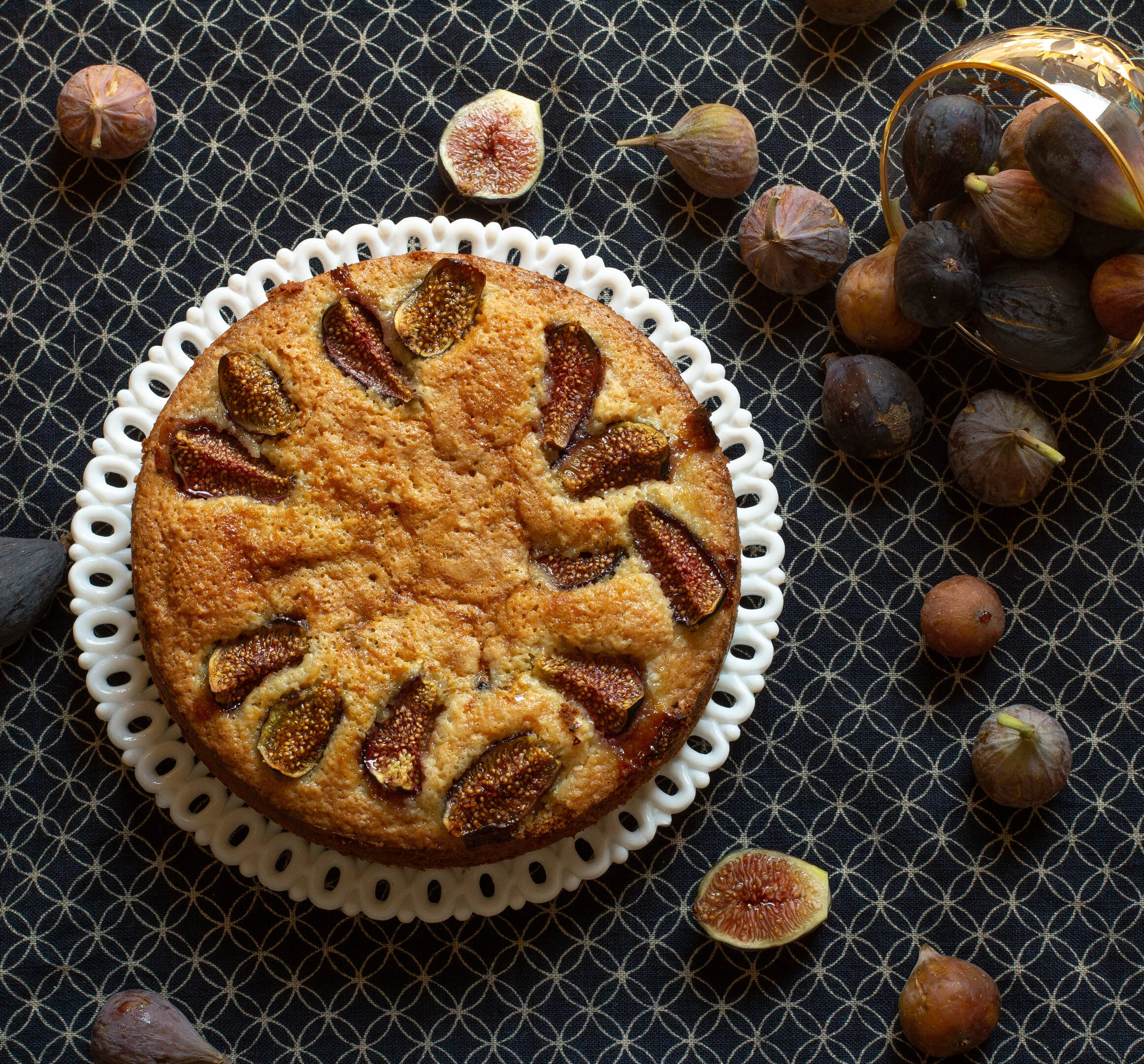
Fig and Comté Almond Cake Recipe

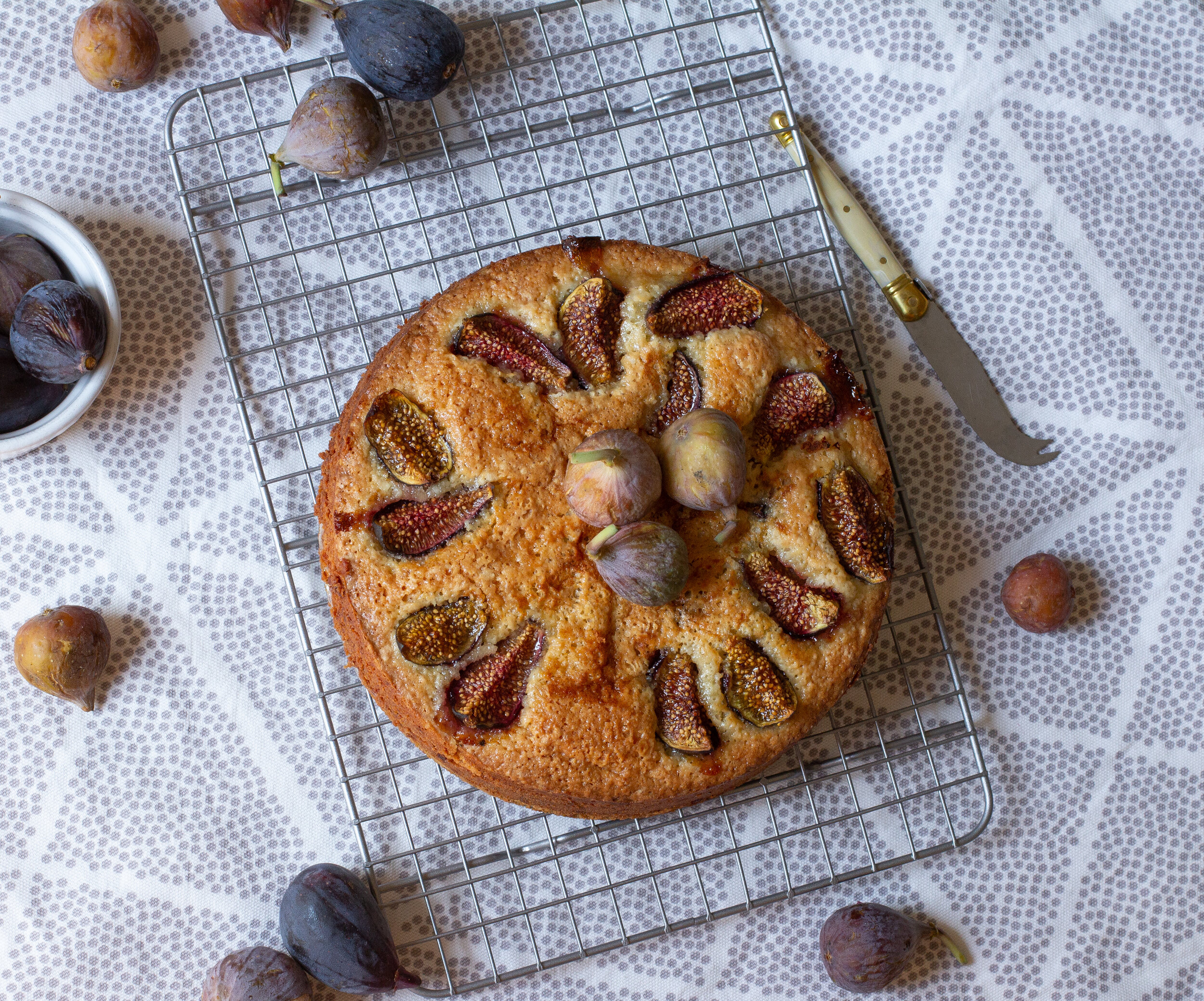
Hello, fall. Hello, fig and Comté Almond Cake.
The second of the two recipes the Comté Association hired me to create, this fig and Comté almond cake took a while to perfect. I wanted to make something that welcomed the fall fruit and highlighted the cheese both, but because figs have a delicate flavor and the cheese is rich, my first two cakes kept on coming out too heavy (but yes, we ate them anyhow). My third attempt, however, delivered in deliciousness! And as unusual as it is to see grated cheese in a cake recipe, this is one now of my favorite Comté dishes around.
In this dessert, Comté cheese provides subtle nutty and rich caramel notes that you would ordinarily only get by caramelizing sugar, the almond flour makes the cake taste almost Basque-like, and the figs keep it fresh and seasonal (though I think you could use pears or apples, too). It is the perfect dessert, coffee, or breakfast cake, and it’s also super easy to make. I ate A LOT of this cake, friends, and if you’re a fig or Comté lover, I think you will, too!
*A few helpful hints—Pretty green figs won’t stay pretty and green when baked, so just grab what looks tasty. If feeling especially decadent, you can use up to 4 ounces of Comté for a much richer cake. Lastly, note the recipe asks for almond flour, not meal.
Fig and Comté Almond Cake Recipe
135 grams almond flour (4.75 ounces)
200 grams sugar (7 ounces)
1/4 teaspoon salt
1/2 teaspoon almond extract
3 large eggs
86 grams unsalted butter, room temperature (3 ounces)
86 grams Comté, grated, at room temperature (3 ounces)
1/4 teaspoon baking powder
45 grams all-purpose flour (1.5 ounces)
6 small figs, tops cut out and quartered vertically
Preheat the oven to 350°F. Butter an 8-inch cake pan and line the bottom of the round with a circle of parchment.
Put the almond flour, sugar, salt, and extract in a food processor and pulse until well combined. (If you don’t have a food processor, use a whisk and vigorously stir the ingredients together in a medium-sized bowl.) Add the eggs and butter, and pulse again until the mixture is smooth and a touch fluffy. Add the Comté, baking powder, and flour and pulse until flour is no longer visible.
Scrape the batter into the cake pan with a spatula and tap the filled pan against the counter to help even out and get rid of any air bubbles.
Bake the cake for 40 minutes in the center of the oven. After 40 minutes, take the cake from the oven and gently place the sliced fig quarters, face up, on top. Return the cake to the oven and bake for 25 to 40 minutes more, or until the top of the cake gives when pressed and when inserted into the center, a toothpick comes out clean. Keep in mind that this is a rich, dense cake and may take longer to bake than you think. Set aside to cool.
Using a thin paring knife, trace the inside wall of the pan to un-mold the cake. Remove the parchment, and flip the cake over to serve fig-side up.
"Revel in Nostalgia": Cheesemonger Alisha Norris's 5 Pairing Tips

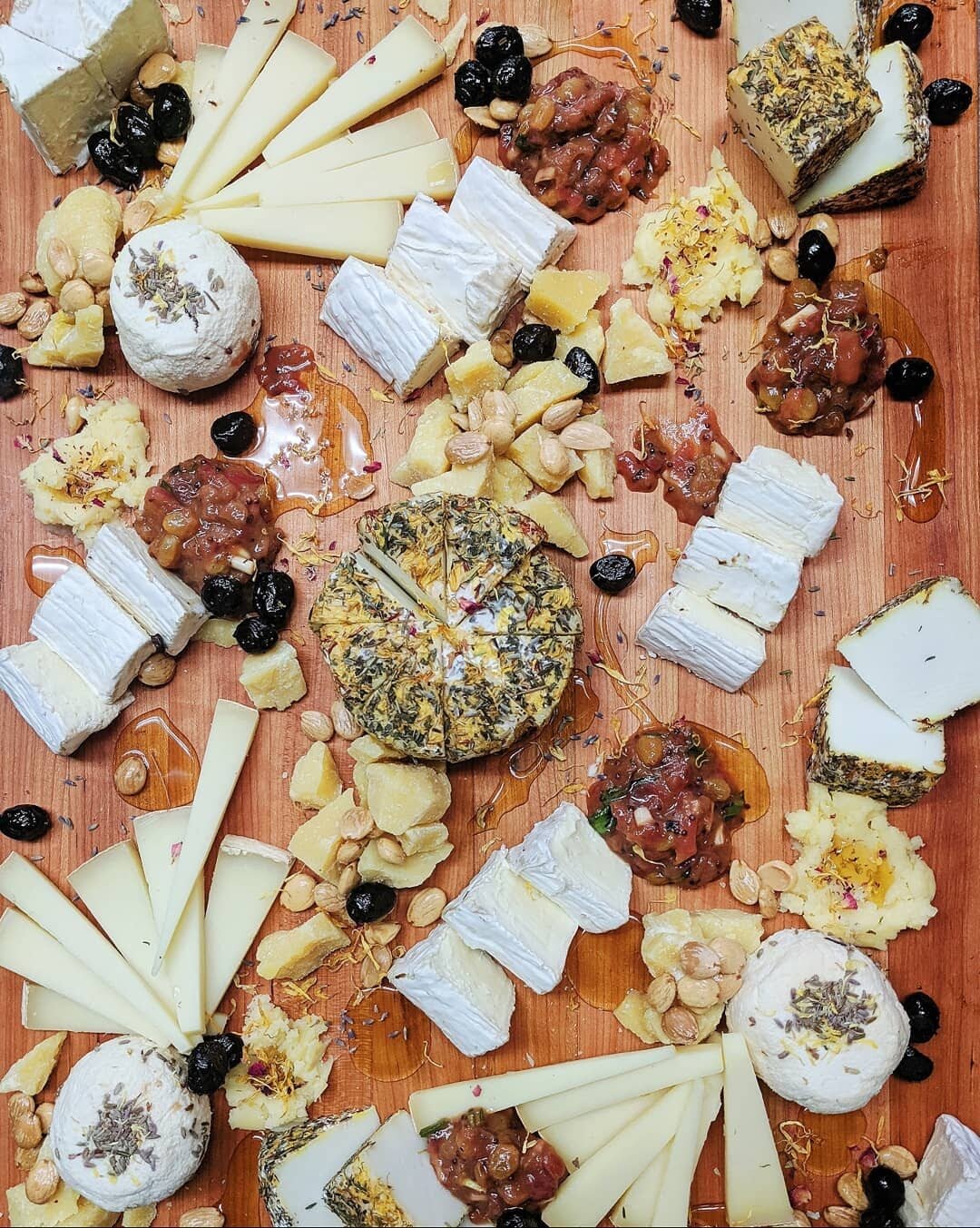
Friends, I ❤️ cheese plates. But I especially love Alisha Norris’s plates, pictured above. Her boards and cheese pairing descriptions are gorgeous, and as thoughtful as they are lighthearted.
If you’re already following Alisha on Instagram, you’re nodding your head right now. If not, I’m glad to introduce you.
It was Alisha’s artistic presentations and her musical descriptions first caught my eye, but soon enough I was charmed by her flavor combos (mortadella mousse, anyone?). We started talking, and when I asked her if she’d be willing to share her inspirations with you cheese lovers, she said… yes!
And she also let me interview her, so keep reading after her pairing ideas to learn more about this cheese maven. Her answers are just as cool as her pairing tips. Thank you, Alisha for sharing your love for cheese! If you’re in Chicago, keep an eye on her, she sells her plates to-go.


Alisha’s 5 Pairing Principles
Identify- This is 101 material, but it’s worth repeating. Take the time to know your cheese. Pretend you’re judging at a cheese competition. What notes do you pick up? Butter? Cream (there’s a difference!)? Onion? *Spring* Onion? The more specific you get, the more information you have to work with.
Compliment and Contrast- So take the information you have from step 1 and see how you can either compliment or contrast your cheese. One could try pairing ‘like with like’- for example a grassy orb of Capriole Wabash Cannonball with a grassy cup of matcha. Or one could try contrasting flavors, the traditional pairing of Brie with bubbles is a good example (i.e. using acid to cut/contrast your cheese).
Texture- There’s so much room for play here, especially when you realize that ‘squeaks’ (like you would find in cheese curds) are a fantastic contrast to ‘snaps’ (like caramelized walnuts or peanut brittle). Words to incorporate into your texture lexicon: crunch, crisp, CRONCH, fudge, grind, squeak, squish, slick, shred, pop, fizz, melt, drip, pool. You get the idea.
Terrior- We know this works with cheese and wine, why not extend it further? Pair Manchego with tinned fish, marmalade made with Seville Oranges , and Spanish olives- explore the whole country if you can. Cheese isn’t made in a culinary vacuum and I believe cheese boards should reflect that.
Emotion and Memory- Revel in nostalgia. Pair Challerhocker with potato chips to recreate the buzz you got from eating Sour Cream and Onion chips for the first time. If you’re excited about an upcoming season, lean into that season’s produce and search for cheeses with similar notes. You never know where your emotions will take you, but at least cheese is involved ❤️
The Interview
1. Where do you work when it's not a pandemic?
Pre Covid-19, I worked at Marz Community Brewing as cheesemonger, bartender, sometimes host, and occasional brewery cat wrangler.
2. What was the first cheese you fell in love with? Or, what cheese did you grow up eating?
I grew up eating Kraft Singles and had two categories for cheese- sharp and not sharp :) The first cheese I truly fell in love with was Upland Cheese’s Pleasant Ridge Reserve, there was something compelling about how nutty + earthy it was. I’d never had anything like it before.
3. What are 2 things you wish others knew about cheese or the cheese industry?
1) Many have said this before me, but the only bad pairing is the one you don’t like. I feel like a lot of people get hung up on creating the ‘perfect’ match, which loses sight of seasonality, the guest’s own palate, and play. Cheese plates are meant to be enjoyed, don’t be so serious!
2) BIPOC mongers exist! And it’s hard! I’ve dropped distributors and vendors for talking over me and insisting that they speak with the ‘real’ head of the cheese department. I’ve also gotten used to rattling off my resume to *guests* just so they’ll let me recommend a cheese- i.e. do my job. Black and Brown bodied folks in this industry face a ton of invisible (as well as blatant) barriers, those who stick it out are some of the fiercest, beautiful souls you’ll ever meet. Be kind and don’t make it weird.
4. What does cheese mean to you?
Oh that’s a hard one! When it comes down to it, cheese is a vehicle for pleasure and storytelling (which is pleasurable in it’s own right). You can view cheese through so many lenses- culture, science, religion, class + wealth, labor rights, art, etc. It’s an amazing way to tell the story of a movement, time or place- with a delicious prop that almost everyone enjoys.
5. How did you get so damn artistic and inspired with cheese?
I’ve always wanted to be a visual artist but I’ve got what they call ‘dumb hands’ lol. Seriously though, one can compare cheese plates to still lifes. Do I want a plate that communicates bounty, abundance and M O N E Y like the Dutch Masters- or do I want something bright, geometric and slightly decentering like Picasso? What about balance in terms of flavor, color, and volume? And so on and so forth. All of my boards are anchored in art and places in time & feeling.